 Lynden
 Blaine's Marine Climate Puts Real Demands on Siding
Blaine sits right on the water at the northwest corner of Whatcom County, a few minutes from the Canadian border, which means homes here take on a combination of weather that inland siding jobs simply don't deal with. Salt-laden air off the water works into fastener heads and cut edges over time. Driving rain, pushed sideways by wind coming off open water, gets tested against every seam, joint, and penetration in a home's exterior. And because so much of the area stays damp and shaded for long stretches of the year, moss and algae get a real foothold on north-facing walls, under eaves, and anywhere airflow is limited.
None of this is exotic — it's just what coastal Whatcom County weather does to a house, year after year. Siding that's installed correctly handles it without much drama. Siding that's installed with shortcuts — even good siding — starts showing problems within a few winters. That's the gap this page is about: what a correct installation looks like for a Blaine home, and why the installation matters as much as the material.
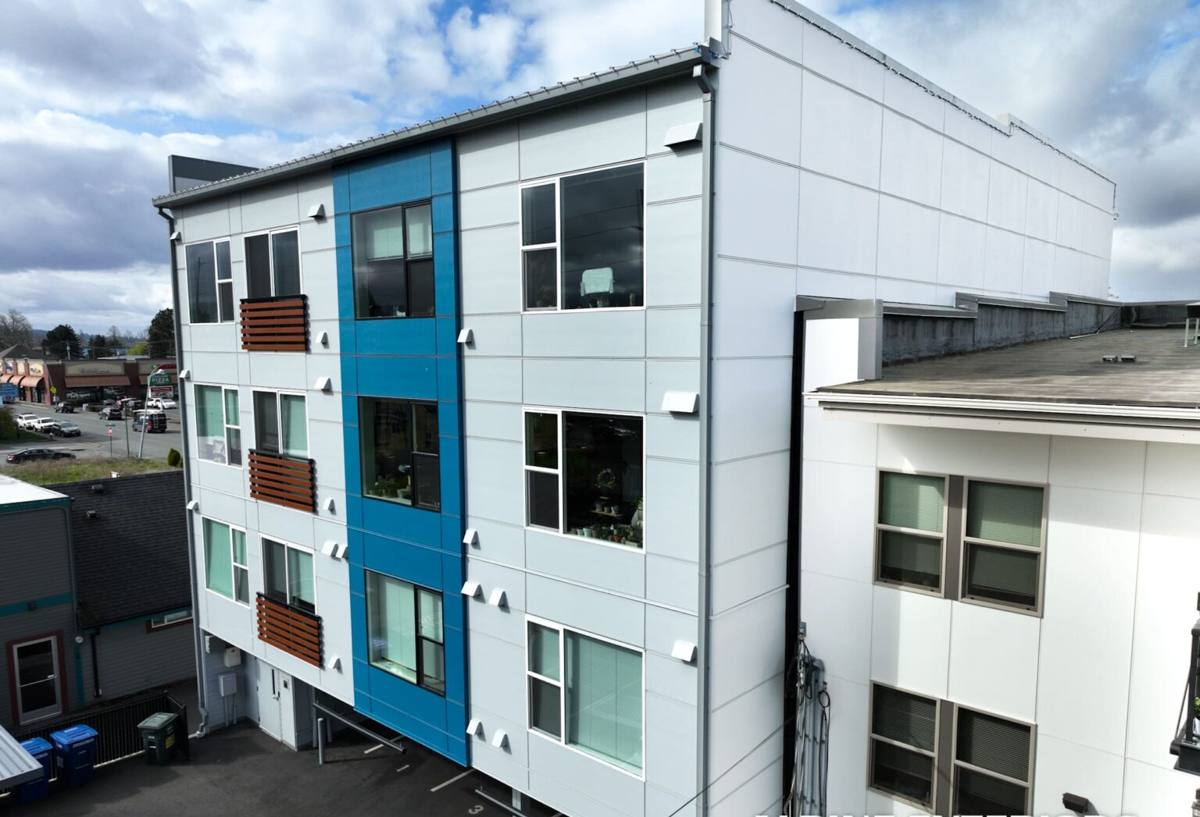
What "Correct" Siding Installation Actually Means
Siding is a system, not a single layer. The visible boards get most of the attention, but the parts nobody sees — the water-resistive barrier, the flashing, the fastening pattern, the gaps left at joints — are what actually determine whether a wall stays dry for the next 30 years or starts rotting from the inside in five.
The Water-Resistive Barrier and Flashing Come First
Before a single piece of siding goes up, the wall needs a continuous, properly lapped water-resistive barrier (WRB) underneath. Every window, door, and penetration needs flashing that directs water out, not behind the WRB. In a wind-driven rain climate like Blaine's, this layer is doing more work than the siding itself — the siding sheds most of the water, but the WRB and flashing are what stop the water that gets past it from ever reaching the sheathing or framing.
Fastening, Clearances, and Butt Joints
Fiber cement has specific fastening requirements — nail type, spacing, and placement relative to the board edge all affect how well a wall performs and whether the manufacturer's warranty stays valid. Ground clearance and clearance from roofing, decks, and grade matter just as much: siding installed too close to the ground or to a hard surface stays wet longer and is exactly where we see moss and staining show up first on Blaine homes. Butt joints — where two boards meet end to end — need to be caulked and, ideally, backed with flashing tape, not just butted together and painted over.
Why We Install James Hardie and Nothing Else
We don't install vinyl, LP SmartSide, Cemplank, Allura, primed spruce, or cedar. That's a deliberate standard, not a lack of options. In a climate that combines salt air, sustained moisture, and long moss seasons, we've found that fiber cement from James Hardie gives the most consistent long-term performance with the least maintenance burden, and we'd rather stand behind one product system we know well than juggle several.
James Hardie's HZ5 product line is engineered specifically for climates with sustained moisture exposure like the Pacific Northwest coast, and it's non-combustible fiber cement, which matters in a region where wildfire smoke and ember exposure have become a real seasonal concern even for coastal towns. The factory-applied ColorPlus finish is baked on under controlled conditions, which holds up better against salt air and UV than a field-applied paint job, and it comes with its own finish warranty separate from the product warranty. None of that is marketing — it's the specific reason we standardized on this one system for homes in Whatcom County's coastal weather.
Our Installation Process, Step by Step
- Assessment and measurement — we walk the home, check the existing wall assembly, and identify problem areas like poor drainage, existing rot, or past patch jobs that need to be addressed before new siding goes up.
- Removal and substrate check — old siding comes off and the sheathing underneath gets inspected. Anything soft, rotted, or water-damaged gets repaired or replaced before we move forward — covering a problem with new siding just hides it.
- Weather-resistive barrier and flashing — a new WRB goes on with proper laps, and flashing is installed at every window, door, and penetration.
- James Hardie installation — boards, panels, or trim go up to manufacturer spec: correct fastener type and spacing, proper clearances, and staggered or flashed joints.
- Caulking and touch-up — joints and cut edges are sealed, and any field-cut edges get touch-up paint so the factory finish stays protected.
- Final walkthrough — we go over the finished job with the homeowner before calling it done.
Installation Mistakes That Show Up Fastest in a Climate Like Blaine's
Most siding failures we get called out to inspect trace back to a handful of repeated shortcuts. In a marine climate, these problems surface faster than they would inland:
- Missing or undersized kick-out flashing at roof-to-wall intersections, which dumps runoff straight down the wall instead of away from it.
- Siding installed too tight to grade, decks, or roofing, leaving no clearance for the wall to dry out between rain events — a fast track to moss and staining.
- Face-nailing errors or overdriven fasteners, which crack the board or break the factory seal at the fastener head, giving salt-laden moisture a way in.
- Caulk used in place of flashing at butt joints and trim — caulk is a backup seal, not a substitute for proper flashing, and it's usually the first thing to fail.
- No gap left at butt joints, so the boards can't expand and contract without buckling.
What Affects the Cost of a Siding Installation in Blaine
Every home is different, but the same handful of factors drive most of the cost variation we see on installations in this area.
| Factor | Why It Matters |
|---|---|
| Substrate condition | Rot or water damage found under old siding needs repair before new siding goes on, which adds labor and material. |
| Home shape and trim detail | More corners, dormers, and window/door openings mean more cutting, flashing, and caulking time. |
| Siding profile chosen | Lap siding, shingle-style panels, and board-and-batten all install differently and carry different material costs. |
| Exposure to wind and rain | Walls facing open water or prevailing wind often get extra flashing detail, which is worth the added cost. |
| Access and site conditions | Tight lots, slopes, or limited staging area can add time for scaffolding or material handling. |
Why Hiring a Crew That Already Works in Blaine Matters
A crew that regularly works this part of Whatcom County already knows how exposed walls behave here — which elevations catch the worst of the wind-driven rain, where moss tends to establish first, and how much clearance actually holds up against salt air over a full winter, not just on paper. That's the kind of judgment that doesn't show up in a spec sheet but shows up in how the wall performs five years later.
Local familiarity also means fewer surprises with permitting and inspection expectations, and a crew that isn't learning the area's weather behavior on your house. If a contractor can't speak specifically to how they handle flashing and clearance for homes exposed to coastal wind and salt air, that's worth asking about directly before signing anything.
Caring for Hardie Siding After Installation
Fiber cement installed correctly is genuinely low-maintenance, but "low-maintenance" isn't "no-maintenance," especially this close to the water. A yearly rinse-down removes the salt film and organic buildup that feeds moss before it gets established. Keep an eye on caulked joints and touch-up paint at cut edges, and have any gutter or downspout issues fixed quickly — misdirected runoff is still the most common cause of premature siding problems we see, regardless of the material.
A Quick Checklist Before You Get Quotes
- Ask what water-resistive barrier and flashing details they use, not just what siding brand they install.
- Confirm they're installing to the manufacturer's written specifications, not a generalized approach.
- Ask how they handle ground clearance and clearance from decks, roofing, and grade.
- Ask whether they've worked on homes with similar wind and water exposure nearby.
- Get the warranty terms in writing — both the product warranty and the installer's workmanship warranty.
If you're weighing a siding project on a Blaine home, we're happy to take a look and walk you through what your specific walls need — no pressure, no obligation. Use the form below to request a free estimate.