 Lynden
 Why Roofs in Blaine Wear on Their Own Schedule
Blaine sits right on the water, and that changes what a roof has to survive. The salt air coming off Semiahmoo Bay and Drayton Harbor gets into metal fasteners, flashing, and vent components faster than it would a few miles inland. Add in the wind-driven rain that blows straight off the water during winter storms, and a roof here is doing more work than the same roof would on a dry, sheltered lot in the county. Then there's the moss. Whatcom County's long wet season — often eight or nine months of the year with real moisture in the air — gives moss and algae a head start on any north-facing slope or shaded valley. None of this means Blaine roofs fail early. It means they need the right materials, the right ventilation, and the right details at the edges, or the small problems compound faster than homeowners expect.
Signs a Blaine Roof Needs Replacement, Not Another Patch
Every roof reaches a point where repair stops being the honest answer. We look for a combination of these, not just one:
- Granule loss heavy enough that you can see bare asphalt on multiple slopes, not just one worn spot
- Shingles that are cupping, curling, or cracking across a wide area rather than a single damaged section
- Soft spots or sagging in the decking when walked, which usually means water has been getting through longer than it's been visible
- Flashing around chimneys, skylights, or wall intersections that's rusted, lifted, or was never properly stepped in the first place
- Persistent moss growth that keeps coming back within a season or two of cleaning, a sign the surface underneath is holding moisture
- Daylight visible through the attic roof deck, or staining on attic sheathing
A roof showing two or three of these at once is usually past the point where patching makes financial sense. We'll say so plainly, and we'll also say when it isn't — a roof with isolated damage and otherwise sound materials often just needs a repair, and we'd rather tell you that than sell a replacement you don't need yet.
Age Is a Clue, Not a Verdict
Asphalt shingle roofs in this climate typically start showing real wear in the 18-22 year range, sometimes sooner on slopes that face the water directly or stay shaded and damp most of the day. But we've seen 25-year-old roofs still doing fine because they were installed with good ventilation and quality underlayment, and 12-year-old roofs already failing because of a ventilation mistake made at installation. We inspect before we quote — age tells us where to look closer, not what to assume.
What a Correct Roof Replacement Actually Involves
A roof replacement is more than swapping old shingles for new ones. The parts you don't see are what determine whether the roof lasts.
Full Tear-Off and Deck Inspection
We remove the existing roofing down to the deck on every job — we don't install over old layers. That's the only way to actually see the condition of the sheathing, catch soft or rotted sections, and replace them before anything new goes down. Layering over an old roof hides problems instead of solving them.
Underlayment and Water Barrier Details
Given how much wind-driven rain this area gets off the bay, underlayment quality and placement matter more here than in drier parts of the state. We use synthetic or ice-and-water shield underlayment at eaves, valleys, and any low-slope transition, since these are the spots where wind can push rain up and under standard shingle laps.
Flashing Done Right the First Time
Chimneys, skylights, sidewalls, and roof-to-wall transitions fail more often at flashing than anywhere else. We step-flash sidewalls, counter-flash masonry, and replace pipe boots as a standard part of the job rather than reusing old flashing to save time.
Ventilation That Matches the Attic
Balanced intake and exhaust ventilation keeps the underside of the deck dry and keeps shingles at a temperature where they age evenly. We size ventilation to the actual attic, not a generic formula.
Choosing Materials for Salt Air and a Long Moss Season
Not every roofing product handles this environment the same way. Here's how the common options compare for a Blaine property:
| Material | Salt air / corrosion resistance | Moss and algae resistance | Typical lifespan here |
|---|---|---|---|
| Standard architectural asphalt shingle | Good, if fasteners and flashing are corrosion-resistant | Fair — benefits from algae-resistant granules | 18-25 years |
| Algae-resistant asphalt shingle | Good | Better — copper-infused granules slow algae growth | 20-25 years |
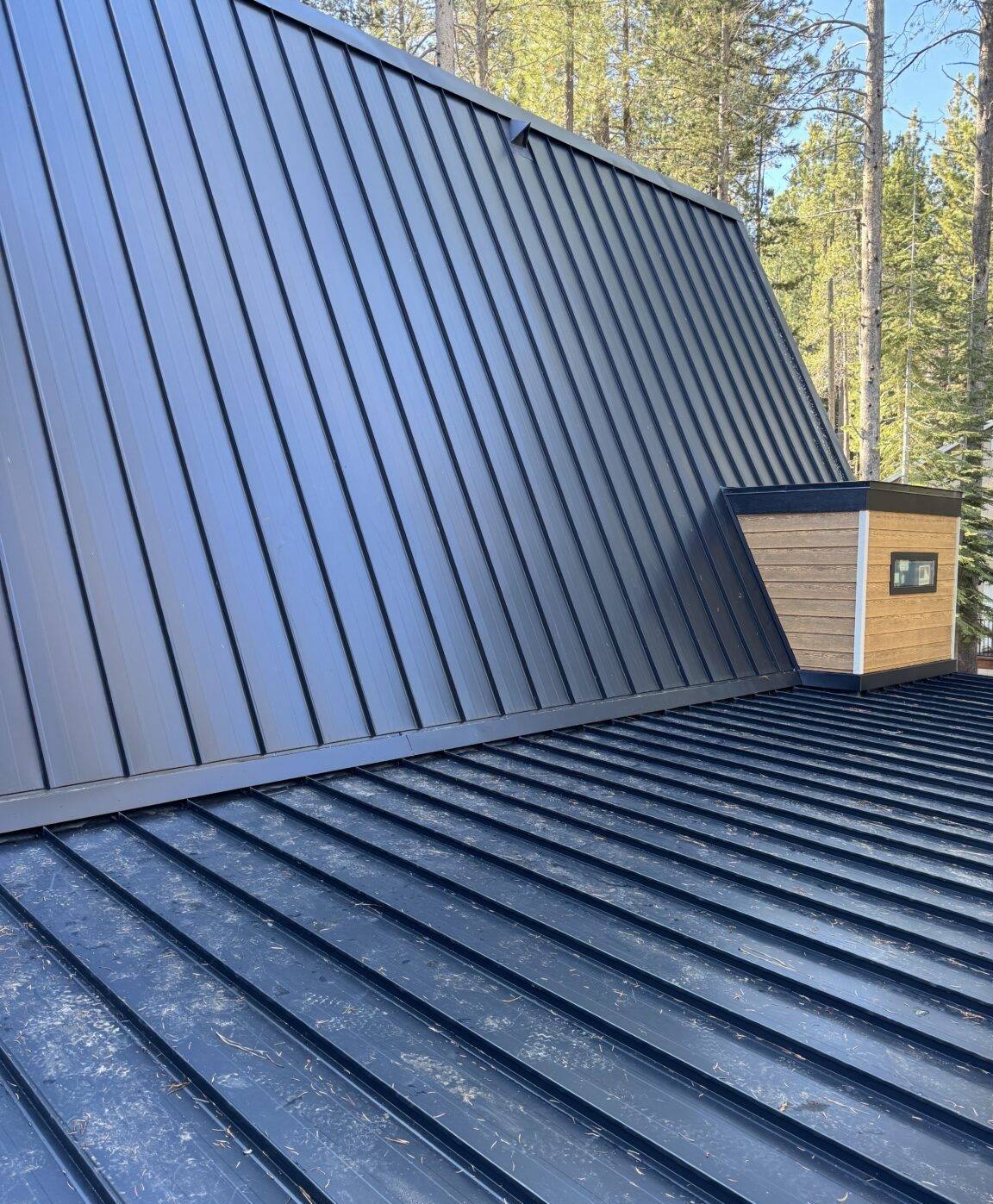
| Standing seam metal | Very good with marine-grade fasteners and coatings | Very good — smooth surface sheds moss and debris | 40-plus years |
| Cedar shake | Fair — needs regular maintenance near salt air | Poor without ongoing treatment | 15-20 years in this climate, shorter without upkeep |
We don't push one product on every home. A well-vented asphalt roof with algae-resistant shingles and corrosion-resistant fasteners is a solid, cost-effective choice for most Blaine homes. Metal earns its higher upfront cost on homes closer to the water or on owners planning to stay long-term and wanting to be done with roofing decisions for decades. We're honest that cedar shake, while attractive, asks for more maintenance in a marine climate than most owners want to keep up with — that's a maintenance-and-moisture tradeoff, not a knock on the material itself.
Moss and Algae Prevention Built Into the Job
Cleaning moss off a roof after the fact only buys time if nothing changes underneath. We build prevention into the replacement itself:
- Zinc or copper strips installed near the ridge on shaded or north-facing slopes, which release trace metal ions in the rain that discourage regrowth
- Algae-resistant shingle granules on the whole roof, not just the visible slopes
- Trimming recommendations for overhanging branches where we see shade contributing to a damp roof surface
- Proper valley and gutter flow so standing water and trapped debris don't give moss a place to start
None of this eliminates the need for occasional gentle cleaning, but it significantly slows how fast moss comes back — which matters in a county where the wet season gives it months to work.
Ventilation and Moisture: The Part Homeowners Rarely See
A roof can look perfect from the ground and still be failing from the inside if attic ventilation is wrong. Trapped moisture from cooking, showers, and daily living rises into the attic and, without a clear path out, condenses on the underside of the deck. In a climate this wet, that condensation combines with any exterior moisture pressure and rots sheathing from below — often before it ever shows on the exterior. Part of every replacement estimate includes an attic check: intake at the soffits, exhaust at the ridge or near the top, and insulation that isn't blocking the airflow path. This is one of the most common things we find wrong on older Blaine roofs, and it's cheap to fix during a replacement and expensive to fix after.
Our Process, Start to Finish
- Inspection and estimate — we walk the roof and the attic, not just look from the driveway, and give you a written scope with real material options.
- Material selection — we go through the tradeoffs in the table above based on your home's exposure and how long you plan to stay.
- Permitting — handled on our end where required, so you're not chasing paperwork.
- Tear-off and deck repair — full removal, deck inspection, and replacement of any compromised sheathing.
- Underlayment, flashing, and ventilation install — the parts that determine how long the roof actually lasts.
- Final roofing installation — shingles or metal installed to manufacturer specification, not shortcuts.
- Cleanup and magnetic sweep — yard and driveway cleared of debris and stray fasteners.
- Walkthrough — we go over what was done and what to expect from the new roof.
Why a Crew That Already Works Blaine Matters
A roofer who mostly works inland doesn't always think about corrosion-resistant fasteners, extra flashing attention at wind-exposed edges, or the specific moss pattern that shows up on shaded Whatcom County roofs near the water. Working this area regularly means we already know which slopes tend to hold moisture, what wind exposure does to loose flashing over a winter, and how to schedule around the wet months without cutting corners on drying time between tear-off and dry-in. That local pattern recognition shows up in fewer callbacks, not just faster quotes.
What to Ask Before You Hire a Roofer in Blaine
- Are you licensed and bonded in Washington, and can you provide proof of liability insurance?
- Will you do a full tear-off, or are you proposing to install over the existing roof?
- What underlayment and flashing details do you use at eaves, valleys, and wall transitions?
- Will you inspect and correct attic ventilation as part of the job, or only the visible roofing?
- What's included for moss and algae prevention, and is it built in or an extra add-on?
- What does the written warranty actually cover — materials, labor, or both — and for how long?
A contractor who answers these clearly and specifically, without dodging into vague reassurance, is usually one worth hiring.
If your roof is showing wear, or you just want an honest read on how much life it has left, we're glad to come take a look. The estimate is free, there's no pressure, and you'll get a straight answer about whether you need a full replacement or something less — just fill out the form below to get started.