 Lynden
 Blaine's Coastal, Border Climate Asks More of Siding
Blaine sits at the northern edge of Whatcom County, close enough to Semiahmoo Bay and Drayton Harbor that salt-tinged air reaches most properties in town, not just the handful with a direct water view. Add in a spot near the Canadian border where Pacific storm systems make landfall with real force, and you've got a town where an exterior wall works harder than it would twenty or thirty miles inland. We're based just up the road in Lynden, and Blaine is regular territory for our crew, which means this isn't a theoretical description of the climate — it's what we see on tear-offs and service calls year after year.
This page is specifically about James Hardie fiber cement siding for Blaine homes: what the local climate demands from it, what a correct installation actually involves, how our process works from first walkthrough to final inspection, and why it matters that the crew doing the work already knows this stretch of coastline rather than treating it like any other job.
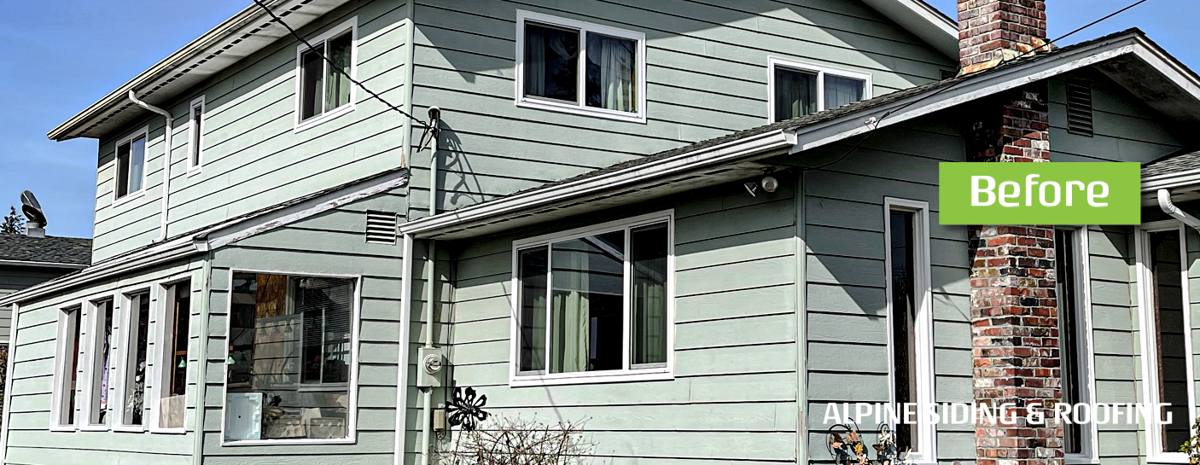
What Salt Air, Driving Rain, and Moss Do to a Wall Over Time
Salt Air, Close to the Water
Salt-laden air speeds up corrosion on fasteners, flashing, and any exposed metal trim, and it wears down lower-quality finishes faster than a drier inland climate would. That matters most at the details — the fastener heads, the trim joints, the flashing laps — because those are the spots where a marginal material or a rushed install shows its age first.
Wind-Driven Rain
Storms off the water don't just fall straight down; wind pushes rain sideways into lap joints, window flashing, and the seams where trim meets siding. That sideways load is a harder test on a wall assembly than the same rainfall total would be in a calmer climate, and it's exactly the kind of moisture that finds any gap a less careful installation left behind.
A Long Moss Season
Mild temperatures and near-constant moisture give moss and mildew a growing season that can run most of the year on shaded or north-facing walls. Any siding surface that holds moisture even a little becomes a growth surface over time, and in Blaine that shows up early on tree-covered lots and walls that don't get much winter sun.
Why James Hardie Fits This Climate Specifically
We install James Hardie fiber cement exclusively, and in a town like Blaine that's a practical decision, not a brand preference. Fiber cement is an inorganic blend of Portland cement, sand, and cellulose fiber, so it doesn't have a wood-based core that can swell, rot, or feed insects the way organic siding materials can, and it's non-combustible.
The HZ5 Line
Hardie engineers its boards for different climate zones, and we install the HZ5 product line, built for regions with sustained moisture and freeze-thaw cycling. That's a meaningfully better match for Whatcom County's wet, mild winters than a board engineered mainly for hot, dry climates.
ColorPlus Factory Finish
Rather than field-applied paint, most Hardie siding we install carries the ColorPlus finish — baked on in multiple coats under controlled factory conditions before the boards ever reach the job site. That finish resists fading and chalking better than site-applied paint holds up against salt air and constant UV and moisture exposure, and it carries its own warranty separate from the substrate warranty.
A Transferable Warranty
Hardie backs its products with a transferable, non-prorated limited warranty, provided the installation follows their spec. If a Blaine home sells before the warranty period ends, that coverage generally moves with the house, which is worth knowing given how often exterior condition comes up in coastal home sales.
Choosing the Right Hardie Product for a Blaine Home
James Hardie isn't a single product — it's a family of siding profiles, and which one makes sense depends on the home's style and exposure, not just personal taste.
- HardiePlank lap siding: the most common choice on Blaine homes, a horizontal reveal that works with traditional and craftsman styles alike.
- HardiePanel vertical siding: often used as an accent on gables or a more modern elevation, and it reads clean against the flatter, overcast light this area gets much of the year.
- HardieShingle: a shingle profile that gives shadow lines and texture, generally used on accent walls, dormers, or homes going for a more traditional coastal look.
Most Blaine projects end up as HardiePlank on the main field with trim and accent decisions layered on top, but we walk each property before assuming that's the right call — exposure, roofline, and existing architectural detail all factor in.
What a Correct Installation Actually Looks Like
Hardie siding performs the way it's engineered to only when it goes on correctly, and in a coastal, wind-exposed town like Blaine, skipping a detail shows up faster than it would somewhere sheltered. A few things we won't cut:
- Rain screen gap: a small drainage cavity behind the siding lets any moisture that does get past the surface drain and evaporate instead of sitting against the wall sheathing.
- Manufacturer-specified clearances: proper gaps at grade, roofline, and deck connections keep splash-back and standing water away from board edges.
- Correct fastener type, spacing, and depth: corrosion-resistant fasteners placed per spec are one of the biggest factors separating a siding job that lasts from one that doesn't, especially this close to salt air.
- Properly lapped house wrap and flashing: every seam and penetration needs to shed water downward and outward, particularly on walls that take wind-driven rain directly.
- Sealed joints and trim transitions: open or poorly sealed joints are where salt-laden moisture finds its way behind the siding first.
- Factory-cut edges used wherever possible: this preserves the ColorPlus finish's protection at the edges that would otherwise be most exposed.
None of this is exotic — it's Hardie's own published installation spec, followed consistently rather than shortcut on the parts that are hardest to see once the job wraps up.
Our Process, Start to Finish
- Site walkthrough and assessment: we look at the home's exposure, existing siding condition, trim detail, and any signs of moisture already behind the walls before quoting anything.
- Tear-off and substrate check: once the old siding comes off, we inspect the sheathing and framing underneath for rot or hidden damage — this is where surprises turn up, and we'd rather find them now than have them turn into a callback later.
- Weather barrier, flashing, and rain screen installation: the water management layer goes in before a single piece of Hardie board is hung, since this is the layer doing the real work if anything gets past the siding surface.
- Installation to manufacturer spec: boards, fasteners, and joints go in following Hardie's published details, not a generalized approach carried over from a different siding product.
- Final walkthrough: we go over the finished job with the homeowner before calling it done, rather than treating the last coat of caulk as the finish line.
James Hardie Compared to Other Siding Options in This Climate
We only install James Hardie, but Blaine homeowners deserve an honest comparison rather than just being told what we won't do. Here's how the categories stack up against this specific climate:
| Material | Salt Air / Moisture Behavior | Moss Resistance | Ongoing Maintenance |
|---|---|---|---|
| James Hardie fiber cement (HZ5) | Inorganic core, engineered for sustained moisture and freeze-thaw | Factory finish and hard surface resist growth better than organic materials | Occasional gentle washing; no repainting on ColorPlus finish |
| Vinyl siding | Doesn't rot, but seams and J-channels aren't built to shed wind-driven rain the way this coast delivers it | Moderate; can trap moisture behind panels in shaded spots | Low, but prone to cracking and fading over time in direct sun and cold |
| LP SmartSide (engineered wood) | Wood-fiber core depends on every field cut and fastener penetration staying sealed for decades | Lower; organic core is more hospitable to growth if coating fails | Higher; coating and caulk need consistent upkeep in a wet climate |
| Cedar / primed spruce | Organic and moisture-sensitive; performance depends entirely on paint or stain schedule | Lowest; natural wood surface is an easy growth surface when damp | Highest; regular refinishing required to hold up here |
Each of these products has a place in the broader market, and homeowners who choose them aren't making a mistake — they're making a different trade-off. We made a professional call to install one system we fully stand behind in a climate this demanding, rather than offer something cheaper that quietly shifts maintenance risk onto the homeowner a few years down the road.
Living With Hardie Siding in Blaine: What Maintenance Actually Looks Like
One of the real advantages of a correctly installed Hardie system is how little it asks of you afterward, but "low maintenance" shouldn't mean "no attention at all," especially this close to the water.
- Rinse the siding gently once or twice a year to clear salt residue and organic buildup, especially on shaded, north-facing walls.
- Avoid high-pressure washing directly at joints and edges — it can drive water behind properly sealed seams instead of just cleaning the surface.
- Check caulked joints and trim transitions periodically, since caulk is the one component in the system that does wear out before the board itself does.
- Keep gutters and downspouts clear so water isn't sheeting down the wall face during heavy storms.
- Trim back vegetation that keeps a wall shaded and damp longer than it needs to be.
Why a Crew That Already Works Blaine Matters
A crew that installs Hardie siding across Whatcom County regularly sees how salt air, driving rain, and moss actually behave on real Blaine houses over a full year, not just how the product performs on a spec sheet. That experience shapes decisions on install day: which walls take the most direct exposure, where extra flashing attention pays off, and which fastener and joint details are worth the extra time so a homeowner isn't dealing with a callback after the next storm off the water. Blaine's exposed, coastal position isn't identical to more sheltered towns further inland in the county, and a crew that knows the difference builds accordingly instead of applying a generic approach.
If your Blaine home needs new siding or you're weighing James Hardie against another product, we're glad to walk the property and give you a straightforward, honest assessment. Reach out using the form below to schedule a free, no-pressure estimate.