 Lynden
 Why Board & Batten Fits So Many Blaine Homes
Board and batten has become one of the most requested siding styles in Whatcom County, and it's easy to see why. The vertical lines read as modern farmhouse on newer builds and as classic coastal cottage on older ones, and it works equally well as a full exterior or as an accent on gables, dormers, and entry features. In Blaine, where homes sit close to open water and take the weather head-on, that vertical orientation isn't just a style choice — it changes how the wall sheds rain compared to standard horizontal lap siding.
The look is simple: wide flat boards run vertically, and narrow battens cover the seams between them. That simplicity is deceptive. Board and batten has more vertical joints per square foot than lap siding, and every one of those joints is a potential entry point for moisture if the material and the install aren't both right. That's the core issue this page is about.
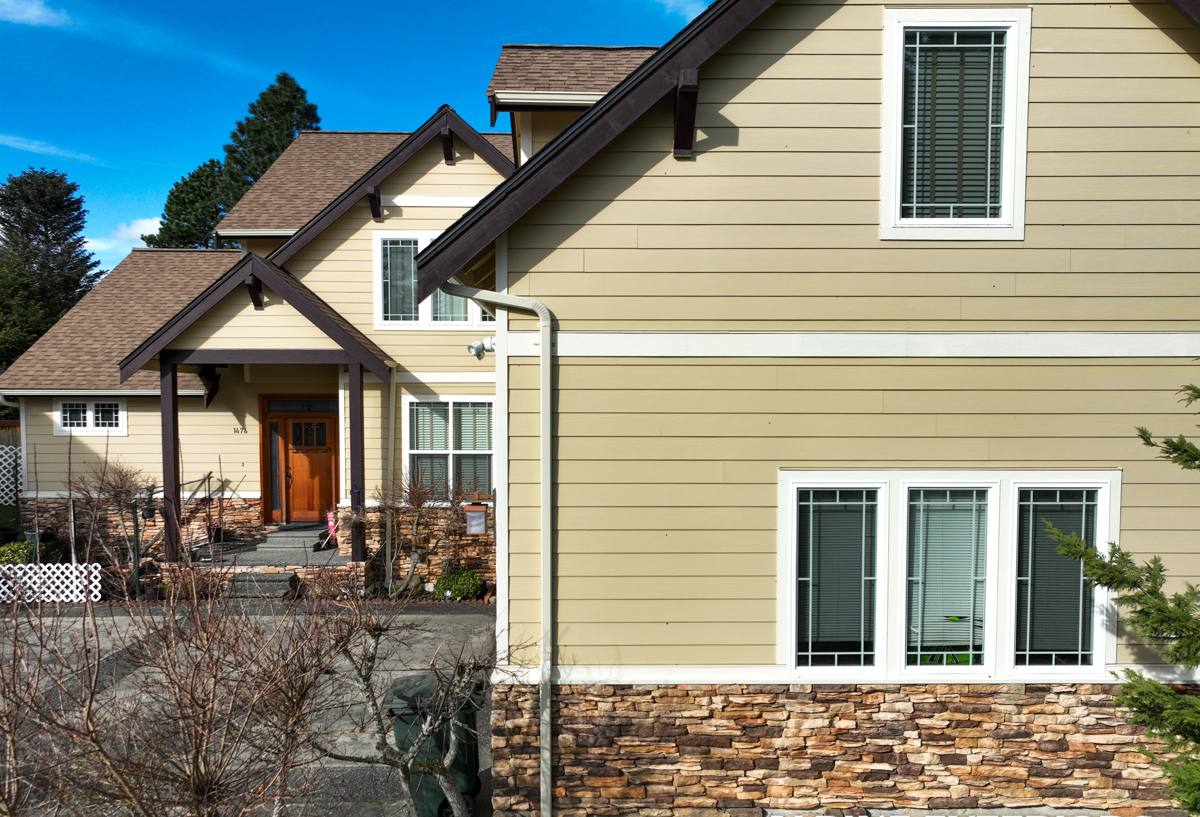
What Blaine's Marine Climate Does to Vertical Siding
Salt Air and Fasteners
Blaine sits right on the water, and homes here take on salt-laden air in a way that inland Whatcom County properties don't. Salt air accelerates corrosion on exposed metal — fasteners, flashing, and trim accessories — faster than it does further inland. On a board and batten wall, the battens themselves are typically face-nailed or blind-fastened at regular intervals, which means there are more fastener penetrations exposed to that salt-laden air than on a lap profile.
Driving Rain and Seam Exposure
Storms coming off the water don't just fall straight down — wind-driven rain pushes water sideways and upward into seams that a calmer climate would never test. Every vertical joint and every batten seam on the wall is a place where that wind-driven rain gets a chance to work its way behind the surface if the drainage details underneath aren't correct.
Moss Season and Shaded Walls
Western Washington's long wet season means moss and algae growth on north-facing and shaded walls for much of the year. On board and batten, moss tends to establish first in the batten seams and at the bottom of boards, where moisture sits longest. A material that absorbs water lets that moss take hold and stay damp against the wall; a material that doesn't absorb water dries out and sheds it.
Why the Material Behind Board & Batten Matters More Than the Look
Board and batten can be built out of several materials, and the differences show up specifically at those seams and battens — the parts of this style that see the most weather exposure.
- Solid wood board and batten looks great on day one but is genuinely wood — it absorbs moisture at the batten seams, and in a wet, salt-air climate that means more frequent repainting, more caulk maintenance, and a real risk of rot at the joints if upkeep slips even one season.
- Vinyl board and batten panels won't rot, but they're thin, they expand and contract more with temperature swings, and the battens are often molded-in rather than true separate pieces — so impact damage or UV fading over time is harder to spot-repair without replacing a whole panel run.
- Engineered wood products like LP SmartSide use treated wood strand substrates. They perform reasonably in dry climates, but any cut edge, seam, or fastener penetration that isn't perfectly sealed becomes a place where the wood-based core can take on moisture and swell — a real concern on a wall with as many seams as board and batten has, in a climate as wet as Blaine's.
This is exactly why we standardized on James Hardie fiber cement for every siding job we do, board and batten included. It's not that these other materials are worthless products — it's that we've made a professional judgment that in a driving-rain, salt-air, moss-prone climate, our name and our warranty go on a material that doesn't rot, doesn't have an organic core to swell, and holds its factory finish without the ongoing maintenance the alternatives demand.
The James Hardie System We Install for Board & Batten
For board and batten, we install Hardie's vertical panel siding paired with Hardie trim boards used as battens, rather than a wood or vinyl substitute. Fiber cement is made from cement, sand, and cellulose fibers — there's no wood core to rot, swell, or feed moss, and it's non-combustible, which matters to some homeowners regardless of climate.
Hardie builds its siding in climate-specific formulations, and for the Pacific Northwest that means their HZ10 product line, engineered for regions with high moisture exposure. The factory-applied ColorPlus finish is baked on before the boards ever reach the site, which gives it better fade and moisture resistance at cut edges than field-applied paint — and it comes with a stronger, more useful warranty against exactly the kind of weathering Blaine's climate causes.
What a Correct Board & Batten Installation Involves
The material is only half the equation. Board and batten fails early far more often from installation shortcuts than from the siding itself. A correct install includes:
- A drainage plane and rainscreen gap behind the panels, so any moisture that does get behind the siding has somewhere to go instead of sitting against the sheathing.
- Fastening into structural framing at the spacing and pattern Hardie specifies for the panel and batten combination being used — not just into sheathing.
- Correct flashing at every horizontal seam, window, door, and roofline intersection, since these are the highest-risk points on any vertical siding style.
- Sealing and finishing all field-cut edges before installation, since factory edges are treated but cut edges are not.
- Batten placement and fastening that follows manufacturer detail, not a shortcut version that skips proper blocking behind seams.
Skip any one of these steps and you can end up with board and batten that looks right for a year or two and then shows staining, streaking, or soft spots at the seams — problems that trace back to the install, not the product.
Our Process for Board & Batten Projects in Blaine
We walk the exterior first and look specifically at exposure — which walls face the prevailing weather, which stay shaded and damp longer, where the existing siding is already showing moss or staining. That assessment shapes decisions like rainscreen detailing and flashing priority before a single board goes up.
From there, our process is straightforward: remove the old siding down to the sheathing, inspect and repair any water damage we find underneath (this is common on older Blaine homes and is worth catching before new siding goes over it), install the drainage plane and flashing package, then install the Hardie panels and battens to spec. We clean up thoroughly and walk the finished job with the homeowner before calling it done.
Comparing Board & Batten Siding Options
| Material | Performance in Salt Air & Driving Rain | Moss/Moisture Risk at Seams | Ongoing Maintenance |
|---|---|---|---|
| James Hardie fiber cement | Strong — non-combustible, engineered for wet coastal climates | Low — no organic core to absorb moisture | Occasional wash; factory finish holds up |
| Solid wood | Weak without diligent upkeep — absorbs moisture at joints | Higher — wood retains moisture at seams | Regular repainting/staining and caulk checks |
| Vinyl panels | Moderate — won't rot, but thin and impact-prone | Low absorption, but traps moisture behind if installed poorly | Low, but repair often means full panel replacement |
| Engineered wood (LP SmartSide) | Moderate — depends heavily on sealed edges and seams | Higher if any cut edge or seam is compromised | Edge sealant and paint maintenance over time |
Maintaining Board & Batten Siding in Blaine's Climate
Even the right material benefits from a little seasonal attention, especially this close to the water:
- Rinse salt residue and airborne grime off exterior walls once or twice a year, particularly on sides facing open water.
- Check batten seams and any trim joints for gaps or failing caulk before the wet season sets in.
- Keep gutters clear so water isn't sheeting down the wall face during heavy rain events.
- Trim back vegetation and tree cover that keeps shaded walls damp longer than necessary, since that's where moss establishes first.
- Address any moss growth promptly with a gentle wash rather than pressure that can damage the finish or force water behind the panels.
Why Hiring a Crew That Already Works Blaine Matters
Board and batten installed to a generic spec doesn't account for what Blaine's specific exposure does to a wall. A crew that already works this area knows which elevations take the worst of the wind-driven rain, how early moss shows up on shaded north walls compared to more inland Whatcom County properties, and where salt air does the most damage to fasteners and flashing over time. That local pattern recognition shapes real decisions — where to add extra flashing attention, which walls need the most rigorous rainscreen detailing — not just which product goes on the wall.
If you're weighing board and batten for a home in Blaine, we're happy to walk the exterior with you, point out what your specific site exposure means for the install, and give you a straightforward, no-pressure estimate. There's a form below — reach out and we'll get you scheduled.