 Lynden
 Birch Bay's Coastline Is Hard on Roofs
Birch Bay sits right on the water, and that changes what a roof has to survive compared to homes a few miles inland in Lynden. Salt-laden air moves off the bay and settles on every exposed surface — including your roof's metal components. Add wind that drives rain sideways instead of straight down, and a long, damp moss season that never really lets a north-facing slope dry out, and you've got three separate stresses working on the same roof at the same time. None of them are dramatic on their own. Together, over years, they shorten the life of a roof that would have lasted longer a few miles east.
A roof replacement in Birch Bay isn't just "the same job as everywhere else, but near water." The materials, fasteners, flashing details, and ventilation choices all need to account for that coastal exposure. That's the difference between a roof that looks fine at year five and one that's still performing at year twenty.
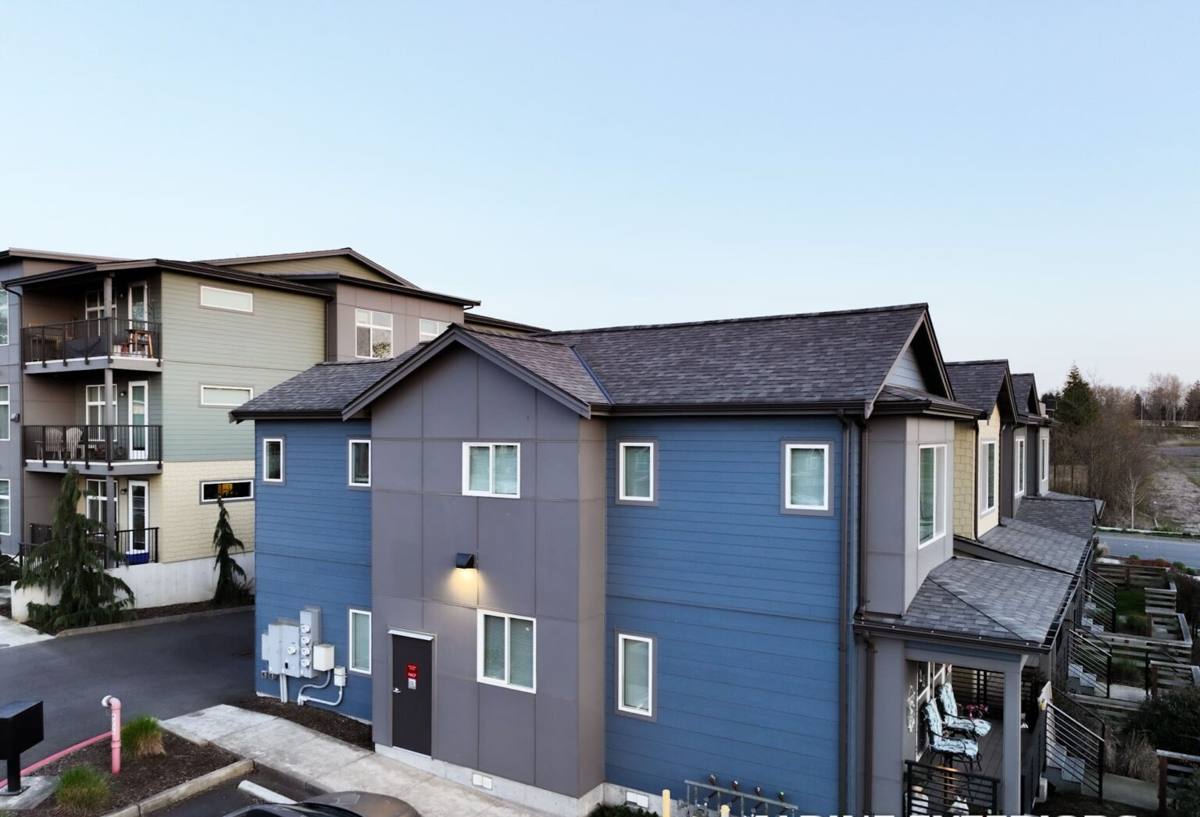
How Salt Air, Wind-Driven Rain, and Moss Actually Damage a Roof
Salt Air and Corrosion
Salt in the air accelerates corrosion on any unprotected or lower-grade metal — nail heads, flashing, vent stacks, and gutter hardware. Once corrosion starts on a fastener, it can work its way into the shingle or decking around it, creating small leak points long before the roof looks obviously worn out. This is a slower, quieter failure mode than storm damage, which is part of why it gets missed on roofs that only get looked at when there's an obvious problem.
Wind-Driven Rain
Birch Bay gets exposure to wind coming off the water that pushes rain up and under roofing edges, into valleys, and around anything that penetrates the roof plane — chimneys, vent pipes, skylights. A roof that would shed a straight-down rain just fine can still take on water when the rain is coming in at an angle. This is almost entirely a flashing and underlayment issue, not a shingle issue, which is why so many "the shingles look fine but we still have a leak" calls trace back to a wind-driven rain event.
Moss and Moisture
Whatcom County's tree cover and long wet season give moss everything it needs: shade, moisture, and time. Moss doesn't just sit on top of shingles — it roots into the granule surface, lifts shingle edges as it grows, and holds moisture against the roof deck underneath it. A moss mat on a north-facing slope can keep that section of roof damp for weeks after the rest of the roof has dried out, which speeds up decking rot in exactly the spot you're least likely to notice it from the ground.
Signs a Birch Bay Roof Has Reached Replacement, Not Repair
Not every roof problem means a full replacement. But there's a point where patching individual leaks stops making financial sense and a full tear-off is the honest recommendation. Signs we look for:
- Granule loss heavy enough that you can see bare, shiny patches on shingles
- Shingles curling, cupping, or cracking across multiple slopes, not just one spot
- Moss mats established on the roof surface rather than just a light green film
- Soft or spongy spots when walking the roof, which usually means deck damage underneath
- Repeated leak calls in different locations each time, rather than one recurring spot
- Visible daylight or water staining in the attic along the roof deck
- A roof already at or past its expected service life for its material and exposure
If we find one or two of these, repair is often still the right call. If we find several at once, especially moss-related deck softness, replacement is usually the more honest recommendation — patching a roof that's failing in multiple places at once tends to cost more over a couple of years than doing the job right once.
What a Correct Roof Replacement Involves on the Coast
Tear-Off and Deck Inspection
We don't install new roofing over old material or over a deck we haven't inspected. A full tear-off lets us see the actual condition of the sheathing — including any soft or rotted sections hiding under moss mats or old flashing — and replace only what's actually bad. Skipping this step is how homeowners end up with a brand-new roof surface over a deck that's already failing.
Underlayment and Flashing Built for Wind-Driven Rain
Given the wind exposure Birch Bay gets off the water, we pay particular attention to self-adhering waterproof underlayment at eaves, valleys, and roof-to-wall transitions — not just the minimum code requirement, but the areas that actually see wind-driven water intrusion. Step flashing at walls and chimneys, and kick-out flashing where a roof edge meets a wall, get installed correctly rather than caulked as an afterthought. Caulk is a maintenance item, not a waterproofing strategy — proper flashing is the difference.
Fasteners and Metal Components That Can Handle Salt Air
We use corrosion-resistant fasteners and appropriate-grade metal for flashing, vents, and other roof hardware rather than the cheapest standard-grade option. We're also careful not to mix incompatible metals in the same assembly, since dissimilar metals in contact with each other can accelerate corrosion in a coastal environment. It costs a little more up front and saves you from fastener failure a decade before it should happen.
Ventilation That Discourages Moss
Balanced intake and exhaust ventilation keeps the underside of the roof deck drier and closer to outside temperature, which reduces the condensation that helps moss and algae take hold. On shaded or north-facing slopes especially, we look at algae-resistant shingle options and make sure ventilation is actually balanced — not just present — before calling the job done.
Roofing Material Options for a Coastal Whatcom County Home
There isn't one "correct" material for every Birch Bay roof — it depends on your home's exposure, roof pitch, budget, and how much maintenance you want to take on. Here's how the common options compare for this specific climate:
| Material | Salt Air Performance | Moss Resistance | Typical Maintenance | Relative Cost |
|---|---|---|---|---|
| Algae-resistant asphalt shingle | Good, with corrosion-resistant fasteners | Better than standard shingle, not immune | Periodic moss/debris removal recommended | Lowest to moderate |
| Standard asphalt shingle | Adequate, shorter fastener life expected | Lower — moss establishes faster | More frequent moss treatment needed | Lowest |
| Metal roofing (properly coated) | Very good when correctly specified | High — sheds moisture, little for moss to grip | Low, mainly fastener and seam checks | Higher upfront |
| Cedar shake | Moderate, needs regular upkeep near salt air | Low without treatment — moss-prone | Highest — regular treatment required | Higher |
For most Birch Bay homes, an algae-resistant asphalt shingle paired with correct flashing and ventilation is the most practical balance of upfront cost and long-term performance. Metal is a strong option for homeowners who want to minimize maintenance and are comfortable with the higher initial investment. We'll walk through the trade-offs for your specific roof rather than defaulting to one answer.
Our Roof Replacement Process
The process itself isn't complicated, but the details inside each step are where a roof either holds up on the coast or doesn't.
- On-site inspection and estimate — we look at your current roof, attic ventilation, and any problem areas before quoting anything.
- Material selection — we go over options suited to your roof's exposure and your budget, no upselling to the most expensive product by default.
- Full tear-off — old roofing and underlayment come off completely so the deck can be properly inspected.
- Deck repair — any soft, rotted, or moss-damaged sheathing gets replaced before anything new goes down.
- Underlayment and flashing — waterproof membrane at vulnerable areas, correct step and kick-out flashing, corrosion-resistant fasteners throughout.
- Roofing installation — installed to manufacturer spec, not just "close enough."
- Ventilation check — intake and exhaust confirmed balanced before we call it finished.
- Final walkthrough and cleanup — we review the completed roof with you and clear the site of debris and old materials.
Why Local Experience in Birch Bay Matters
A roofing crew that works Whatcom County's coastal areas regularly already knows which slopes take the brunt of the bay wind, which lots stay shaded enough to grow moss year-round, and which flashing details tend to fail first in this specific environment. That's not something you get from a crew that mostly works drier, more sheltered inland neighborhoods and treats every coastal job as a one-off. We also understand that many Birch Bay properties fall under community or association guidelines, and we're used to working within those requirements rather than treating them as a surprise mid-project.
Familiarity with the area also means fewer surprises on your project timeline. We know what Whatcom County's coastal weather patterns tend to do to a roofing schedule, and we plan tear-off and dry-in accordingly so your home isn't exposed longer than it needs to be.
A Practical Checklist Before You Commit to a Roof Replacement
- Get a full inspection, not just a driveway estimate — ask what they found on the deck and in the attic
- Confirm the underlayment and flashing plan for valleys, walls, and penetrations, not just the shingle brand
- Ask what fastener and flashing metal grade will be used, given the salt air exposure
- Confirm ventilation will be checked and balanced, not just assumed adequate
- Get the warranty terms in writing — both manufacturer and workmanship coverage
- Ask how tear-off debris and disposal are handled
- Confirm start and completion timeline expectations before signing
If a contractor can't answer these questions clearly before you sign anything, that's worth noticing.
Ready to Talk About Your Roof?
If your Birch Bay roof is showing its age, holding onto moss, or you've had more than one leak call this year, it's worth getting an honest look before winter weather makes the decision for you. We offer free, no-pressure estimates — use the form below to get started, and we'll walk your roof with you and tell you plainly what we see.