 Lynden
 Building Decks for Birch Bay's Coastal Exposure
Birch Bay sits right on the water, and that changes what a deck has to survive compared with one built a few miles inland around Lynden or elsewhere in Whatcom County. Salt-laden air drifts off the bay and settles on every exposed surface, driving rain comes in sideways off the water through fall and winter, and the long stretch of damp, low-light months keeps moss and algae working on anything that doesn't drain and dry properly. A deck that would hold up fine on a dry inland lot can start showing corrosion, soft spots, or slick green growth within just a few seasons out here.
We build and repair custom decks around the Birch Bay area regularly, and most of what separates a deck that lasts two decades or more from one that needs major repair after five comes down to material selection, fastener grade, and how the structure sheds water — not how nice the surface looks on install day.
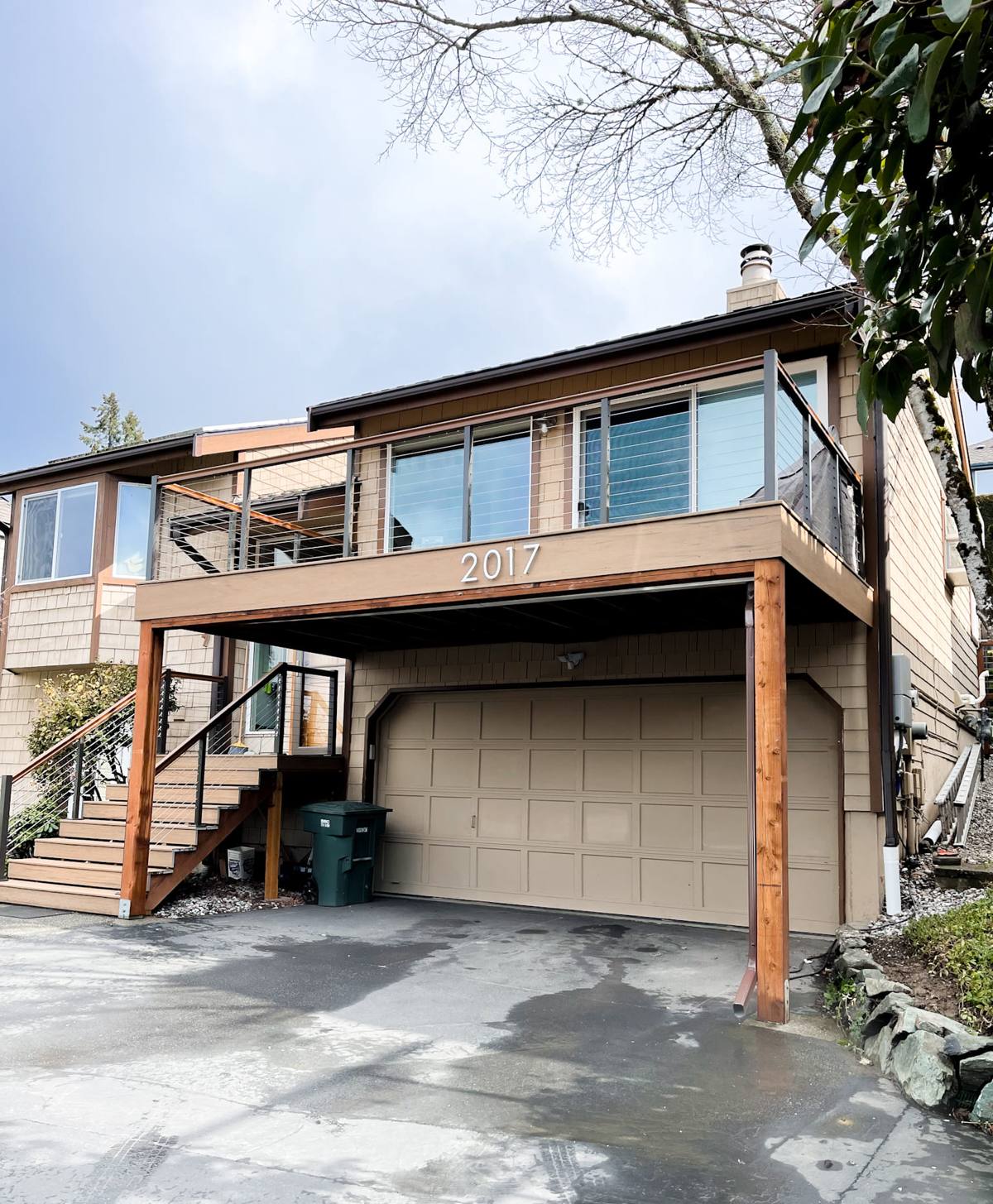
What Salt Air and Moss Season Actually Do to a Deck
Salt Air and Corrosion
Airborne salt is corrosive to metal, and it doesn't take direct ocean spray to cause damage — it settles as a fine residue on hardware, fasteners, and connectors even on days with no visible mist. Standard coated deck screws and light-duty brackets that would last for years inland can start rusting at the heads within a season or two near the bay. Once a fastener head corrodes, it weakens, stains the surrounding wood or composite, and eventually needs to be pulled and replaced — which is a lot more work once the decking is already installed.
Extended Moss and Algae Season
Whatcom County's wet season runs long, and shaded or low-airflow decks near Birch Bay stay damp for extended stretches. Moss and algae take hold anywhere moisture sits — between deck boards, in end-grain, under furniture, and along the base of railing posts. Beyond looking bad, a mossy deck surface gets genuinely slick and dangerous underfoot, and trapped moisture underneath it is what eventually leads to rot in the boards and framing below.
Driving Rain and Wind-Driven Moisture
Storms off the water don't just fall straight down — wind pushes rain sideways into ledger boards, under railings, and into any gap in flashing or trim. A deck built without that in mind will see water intrusion at the house connection point long before the decking surface itself shows wear.
Decking Material Options for a Birch Bay Property
There's no single "best" decking material for every home — it depends on budget, how much upkeep you want to do, and how close the deck sits to the water. Here's how the common options actually compare under coastal Whatcom County conditions:
| Material | Upfront Cost | Coastal Durability | Maintenance | Typical Coastal Lifespan |
|---|---|---|---|---|
| Pressure-treated lumber | Lowest | Good if sealed and maintained | Annual cleaning and resealing | 10–15 years |
| Cedar | Moderate | Naturally decay-resistant, but softer surface | Regular sealing to prevent graying and checking | 12–20 years |
| Composite / capped composite | Higher | Excellent — doesn't absorb moisture or salt residue | Periodic washing, no sealing or staining | 25+ years |
| PVC decking | Highest | Excellent — fully synthetic, no wood fiber to hold moisture | Occasional washing | 25–30+ years |
Composite and PVC decking generally make the most sense the closer a home sits to the bay, simply because they don't have wood fiber for salt residue and moisture to work into over time. That said, plenty of homeowners still prefer the look and feel of real wood, and cedar or pressure-treated lumber can absolutely last if it's finished correctly and someone actually keeps up with sealing on schedule. We'll walk through the honest trade-offs for your specific lot and how close it sits to open water — not just push whatever has the best margin.
Framing, Fasteners, and Hardware That Actually Hold Up
Fastener Grade Matters More Here Than Almost Anything Else
This is the single biggest difference between a deck built for Birch Bay and a deck built inland. We use stainless steel or heavy hot-dip galvanized fasteners and structural hardware rated for coastal exposure — not the standard coated screws that are fine for a dry, inland yard. It costs a little more upfront, but replacing corroded fastener heads under finished decking is a far more expensive and disruptive fix down the road.
Post Bases, Joist Hangers, and Structural Connectors
Every hidden connector — post bases, joist hangers, hurricane ties, ledger bolts — gets the same treatment. These pieces are load-bearing and hardest to inspect once the deck is finished, so we'd rather over-spec the hardware grade at build time than deal with hidden corrosion five years in.
Framing Lumber Selection
Framing gets treated lumber rated for ground contact where it's close to grade, with attention to how each board is oriented so end grain and cut edges aren't left to wick up standing moisture.
Ledger Attachment, Drainage, and Structural Details
The ledger board — where the deck attaches to the house — is the single most common failure point on any deck, coastal or not, and it's even less forgiving here with wind-driven rain in the mix. Proper flashing at the ledger, correct fastener spacing, and a small gap or drainage plane between the ledger and the house siding all matter more in a climate that stays wet for months at a time than they would somewhere drier.
Beyond the ledger, drainage across the whole structure matters: gaps between boards sized to shed water rather than trap it, joists sloped slightly away from the house, and airflow underneath the deck so the framing has a chance to dry out between rain events instead of staying damp all winter. A deck that traps moisture underneath it is a deck that rots from the inside before it ever looks bad from the top.
Our Process for a Birch Bay Deck Project
We keep the process straightforward and give you real information at each step rather than surprises later:
- On-site visit and measurement. We look at the lot, sun and wind exposure, proximity to the water, existing structure condition if this is a rebuild, and how the space will actually be used.
- Material and design discussion. We go over decking material options, railing style, and layout, with honest pros and cons for your specific exposure and budget — not a one-size answer.
- Written estimate and permit review. You get a clear scope and price before anything starts, and we handle figuring out what permitting applies to your project.
- Build. Framing first, with all structural connections and fasteners at coastal-grade hardware, then decking, railing, and finish work.
- Final walkthrough. We go over the finished deck with you, including basic care guidance specific to the material you chose.
Permits and Whatcom County Requirements
Birch Bay is unincorporated, so most deck permitting there runs through Whatcom County rather than a city building department. Whether a permit is required generally depends on factors like the deck's height above grade, whether it's attached to the house, and its overall size — small, low, freestanding platforms are sometimes exempt where a raised deck attached to the home almost always needs a permit and inspection. Requirements can shift, and every lot is a little different, so we confirm what actually applies to your project before work starts rather than assuming. If you're near critical shoreline areas, there can be additional review involved as well, which is worth checking early rather than after materials are ordered.
Keeping a Birch Bay Deck Looking Good Year-Round
Coastal decks need a bit more attention than inland ones, but it doesn't have to be complicated. A simple seasonal routine goes a long way:
- Sweep debris out from between boards regularly so moisture and organic matter don't sit and feed moss growth
- Rinse salt residue off the surface and railings periodically, especially after storms
- Check exposed fasteners and hardware once or twice a year for early rust or staining
- Keep gutters and downspouts near the deck clear so runoff isn't dumping extra water onto the structure
- Reseal wood decking on the schedule the finish product calls for — don't wait until it's visibly gray or dry
- Inspect the ledger flashing and post bases at the start of the wet season for any signs of water intrusion
- Trim back vegetation that shades the deck and keeps it from drying out between rains
Why a Local Crew That Already Works Birch Bay Makes a Difference
Anyone can build a deck that looks good on a sunny day. The real test is how it holds up after a few winters of driving rain and salt air, and that's where local, hands-on experience actually pays off. Because we work throughout Lynden and the surrounding Whatcom County communities, including the Birch Bay area, we've seen firsthand which fastener grades hold up out here, which decking materials handle the moisture and salt exposure well, and where a deck built to a generic, inland standard tends to fail early. That's knowledge you don't get from a spec sheet — it comes from building and repairing decks in this exact climate.
It also means we're not guessing at local permitting norms or disappearing after the final board is screwed down. We're a phone call away if a question comes up two years from now about maintenance or a hardware detail, because this is the area we actually work in.
If you're planning a new deck or replacing an aging one near Birch Bay, we're happy to take a look and give you an honest, no-pressure estimate — just fill out the form below and we'll be in touch.