 Lynden
 New Roof Installation in Bellingham: Built for This Coastline, Not a Catalog
Bellingham sits close enough to the water and low enough in the valley that its roofs take a different kind of beating than roofs twenty miles inland. Salt-laden air off Bellingham Bay accelerates corrosion on anything metal — flashing, fasteners, vents, gutters. Driving rain off the Strait pushes water sideways under poorly lapped shingles and around loose flashing. And the long, wet, shaded moss season that runs from fall through spring keeps roof surfaces damp for months at a stretch, which is exactly the environment moss, lichen, and moisture-loving rot organisms want. A new roof installed here needs to be specified and installed with those three things in mind from day one, not treated as an afterthought once the shingles are on.
We're a Lynden-based crew that already works in and around Bellingham on a regular basis. That matters more than it sounds like it should — a roof job done by a crew that understands this specific stretch of Whatcom County climate looks different in the details than one done by an out-of-area outfit working from a generic spec sheet.
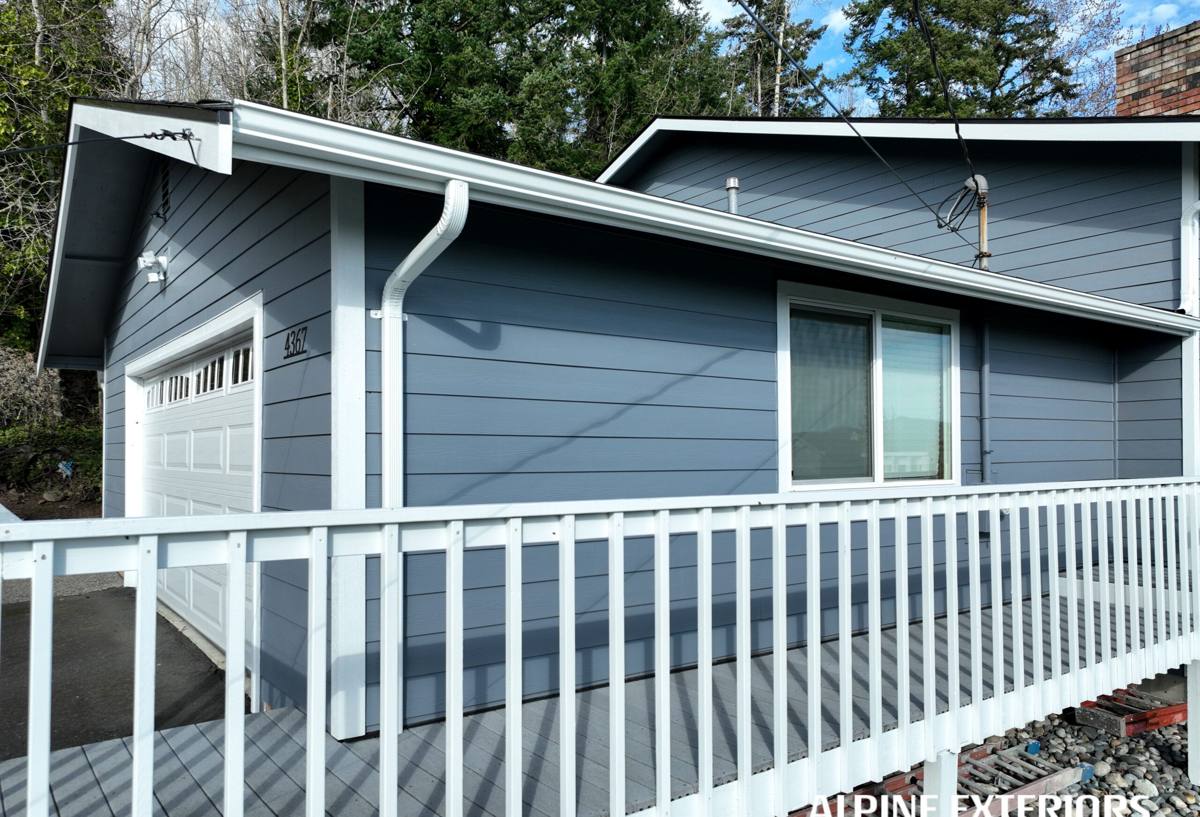
What Bellingham Homes Actually Need From a New Roof
Moisture Management First
Whatcom County gets a lot of rain, but volume isn't the only issue — it's duration. Bellingham roofs stay wet longer than roofs in drier climates because of cloud cover, tree canopy in many neighborhoods, and the marine layer that rolls in off the bay. A correctly built roof assembly manages that moisture at every layer: underlayment that sheds water even if wind-driven rain gets past the shingle course, properly lapped and sealed flashing at every penetration and valley, and ventilation that lets the attic dry out between storms instead of trapping humidity against the roof deck.
Salt Air and Metal Components
Any exposed metal on a roof — drip edge, step flashing, valley metal, roof vents, fasteners — is exposed to airborne salt whenever the wind comes off the water. Bare or poorly coated metal corrodes faster here than it would twenty or thirty miles inland. We treat metal component selection as part of the roofing decision, not an afterthought, favoring coatings and fastener types that hold up to that exposure over the life of the roof.
Moss and Organic Growth
Moss doesn't just look bad — it holds moisture against the shingle surface, works its way under tabs and lifts them, and shortens the life of the roofing material underneath it. Shaded, north-facing, and low-slope sections of Bellingham roofs are the most common trouble spots. A new roof installation is the best time to address this at the source: proper slope and drainage detailing, zinc or copper strips where appropriate, and shingle products with algae-resistant granules where moss and moss-adjacent organic growth are a known local issue.
What a Correct New Roof Installation Actually Involves
A new roof is not just stripping old shingles and laying new ones. Done right, it's a sequence, and skipping steps is where roofs fail early — usually in exactly the wet, shaded, or wind-exposed spots this climate creates.
- Tear-off and deck inspection: full removal of the old roofing so the deck underneath can actually be inspected, not just re-covered
- Deck repair: replacing any soft, delaminated, or water-damaged sheathing before anything new goes down on top of it
- Underlayment: a synthetic or ice-and-water-shield product appropriate to the roof's slope, valleys, and exposure — not just whatever is cheapest
- Flashing: new step flashing, valley flashing, and counterflashing at every wall intersection, chimney, and penetration — reused old flashing is one of the most common causes of early leaks
- Ventilation: intake and exhaust balanced so the attic can dry out between the region's frequent wet stretches
- Field installation: correct nailing pattern, exposure, and fastener count for the specific product and local wind exposure
- Detail work: ridge, hips, valleys, pipe boots, and edge metal — the parts of the roof most likely to leak first if rushed
- Final walk-through: a clear explanation of what was done and what maintenance, if any, the roof will need going forward
Roofing Material Options for Bellingham's Climate
There's no single "best" roofing material for every home — it depends on budget, roof slope, architectural style, and how much long-term maintenance a homeowner wants to take on. Here's how the common options stack up against Whatcom County's specific conditions.
| Material | Moisture & Moss Resistance | Salt Air / Coastal Durability | Typical Lifespan Here | Maintenance Load |
|---|---|---|---|---|
| Architectural asphalt shingle (algae-resistant) | Good, with proper ventilation and slope | Good when metal components are properly coated | 25–30 years | Low to moderate |
| Standard 3-tab asphalt shingle | Fair — more moss-prone without AR granules | Fair | 15–20 years | Moderate |
| Metal (standing seam) | Excellent — sheds water and moss struggles to hold on steep runs | Very good with marine-grade coatings and fasteners | 40–50+ years | Low |
| Cedar shake | Requires diligent upkeep in this climate — holds moisture | Fair, salt accelerates weathering | 20–25 years with upkeep | High |
We'll walk through these trade-offs honestly during an estimate rather than pushing whatever has the best margin. For most Bellingham homes, an architectural asphalt shingle with algae-resistant granules hits the right balance of cost, appearance, and performance against moss and moisture. Homeowners planning to stay long-term, or with steep, shaded rooflines where moss is a constant fight, often find metal roofing pays for itself in reduced maintenance and a much longer service life.
Why We Don't Push Every Product on the Market
Cedar shake looks great and has genuine appeal, but in a climate that stays wet as long as Bellingham's does, it demands a level of ongoing maintenance — cleaning, treating, monitoring for rot — that most homeowners don't want to sign up for. We'll install it if that's what a homeowner wants and understands the upkeep involved, but we won't recommend it as a low-maintenance choice, because here it isn't one. Same logic applies to any product: our recommendation is based on how it actually performs in this specific climate over the long run, not just how it looks on day one.
Our Process for a Bellingham Roof Replacement
1. On-Site Assessment
We look at the current roof from the ground and, where safe and necessary, up close — noting slope, ventilation, valley and flashing condition, moss and staining patterns, and any signs of past leaks or deck damage.
2. Straight-Talk Estimate
You get a written estimate that spells out material choice, scope of work, and price — no vague allowances, no surprise change orders for things we should have caught during the assessment.
3. Scheduling Around Weather
Roofing is weather-dependent work everywhere, but especially here. We plan installations around forecasted dry windows and won't leave a roof deck exposed longer than necessary in a region where an unplanned shower is always a possibility.
4. Installation
Tear-off, deck repair as needed, underlayment, flashing, field installation, and detail work — done in that order, with the deck never left exposed overnight without protection.
5. Cleanup and Walk-Through
Full site cleanup, including magnetic sweep for stray nails, followed by a walk-through so you understand what was installed and why.
Timing a Roof Replacement Around Bellingham's Seasons
Late spring through early fall is the most predictable window for roofing work in Whatcom County — longer dry stretches, more consistent temperatures for shingle sealing. That said, roof failures don't wait for good weather, and we install roofs outside that window when needed, adjusting scheduling and materials to account for cooler, wetter conditions. If your roof is showing signs of trouble heading into fall or winter, it's better to address it before the long wet season sets in than to patch through it and hope.
Signs a Bellingham Roof Needs Replacing, Not Patching
- Granule loss heavy enough to see bare asphalt on multiple shingles
- Shingles curling, cupping, or lifting at the edges
- Moss or dark streaking covering large sections, especially on shaded or low-slope areas
- Daylight visible through the roof deck from inside the attic
- Repeated leaks in different spots after previous patch repairs
- Sagging areas in the roofline, which can indicate deck or structural damage
- Roof age at or past the material's expected service life for this climate
Why a Local Lynden Crew Makes a Real Difference
A crew that already works Bellingham and the rest of Whatcom County regularly isn't guessing about what this climate does to a roof — we see the same moss patterns, the same salt-air corrosion on old flashing, and the same wind-driven leak points on tear-off after tear-off. That experience shows up in the small decisions: which underlayment to spec on a shaded north slope, where to add extra flashing detail on a valley that catches wind off the bay, which fastener coating actually holds up here. It also means we're accountable locally — this is where we live and work, not a territory we drive into once and leave.
Get a Free, No-Pressure Estimate
If your Bellingham home needs a new roof, or you're just not sure whether it's a repair or replacement situation, we're happy to take a look and give you a straight answer. Use the form below to request a free estimate — no pressure, no obligation.