 Lynden
 Roofing in Custer's Marine Climate
Custer sits in the northwest corner of Whatcom County, close enough to the water that the air carries a steady trace of salt, and squarely in the path of the rain systems that move through this part of Washington from fall through spring. A shingle roof out here doesn't fail the same way a roof in a drier inland climate does. It's not one big storm that causes the damage — it's the accumulation of a lot of small things: months of damp air, wind-driven rain finding its way under laps that would stay dry in gentler weather, and shaded rooflines that never fully dry out between rains.
None of that means asphalt shingles are a bad choice for this area. They're still the most practical, cost-effective roofing option for most homes here. It means the details of the job — the underlayment, the flashing, the ventilation, the shingle line itself — matter more in Custer than they would somewhere with a milder, drier roof climate. Get those details right and a shingle roof holds up well for decades. Skip them and you'll see problems well before the shingles themselves are actually worn out.
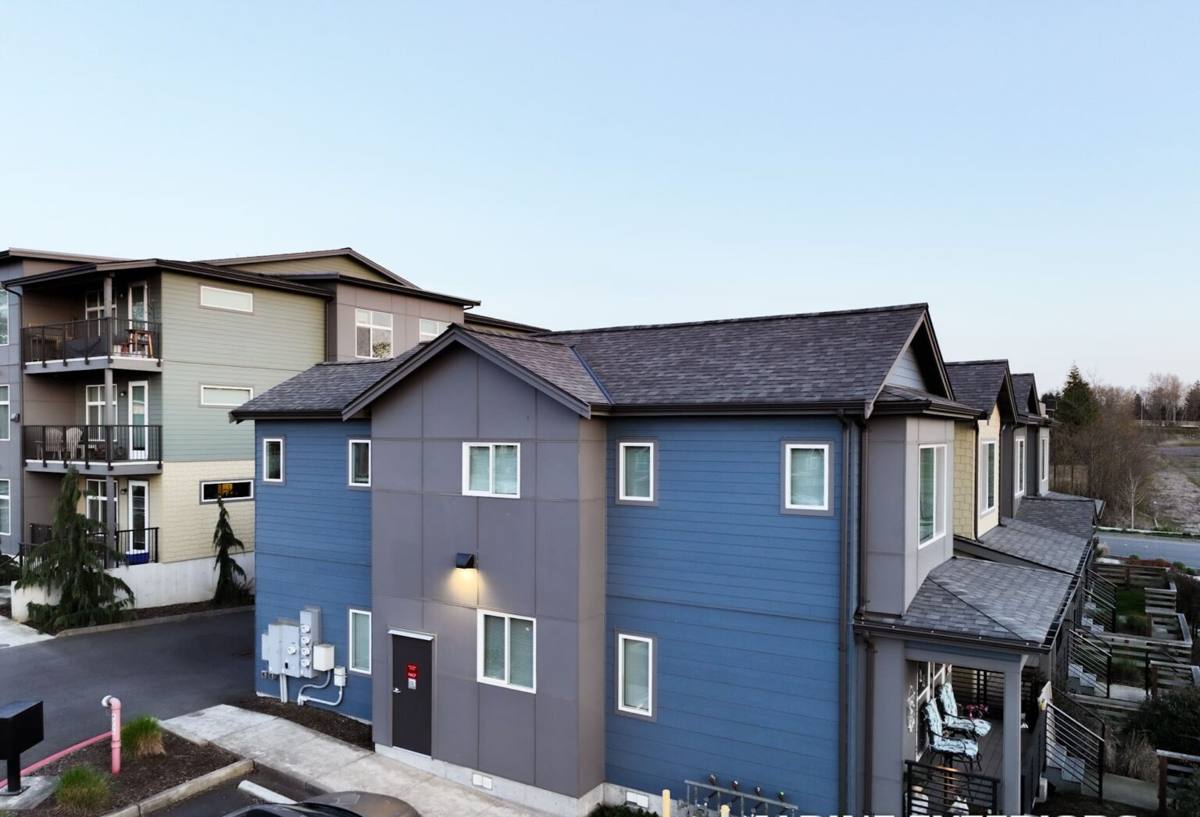
What Salt Air, Rain, and Moss Actually Do to a Roof
Salt air and metal components
Salt-laden air doesn't damage the shingles themselves much, but it's hard on everything metal on your roof — flashing, drip edge, nail heads, and vent housings. Lower-grade or exposed fasteners corrode faster in this environment, and once a nail head starts rusting away, it stops holding the shingle down the way it's supposed to. This is why fastener choice and flashing material matter more here than they would fifty miles inland.
Driving rain and wind-driven water
Straight-down rain is easy for any roof to shed. The problem in this area is wind-driven rain — water pushed sideways and upward under shingle edges, at valleys, around vent pipes, and along the eaves. A roof that's only built to handle vertical rainfall will eventually leak at these spots, even though the shingles look fine from the ground.
Moss and prolonged moisture
Shaded, north-facing slopes and roofs near fir or cedar trees stay damp longer after every rain, and that's exactly what moss needs to take hold. Moss doesn't just look bad — as it grows, it lifts shingle edges, holds water against the roof deck, and works its way under the shingle tabs. Left alone through a full wet season, that lifted edge becomes an entry point for water long before the shingle itself is worn out.
Building the Right System for This Location
A shingle roof is a system, not just a single product. In a climate like Custer's, every layer of that system earns its keep.
Underlayment and water barriers
We treat synthetic underlayment as the standard here rather than an upgrade, and we install self-adhered ice-and-water membrane at eaves, valleys, and around every roof penetration — the exact spots where wind-driven rain and ice-dam-style backup are most likely to find a way in. This is our standard approach for this climate, not an add-on we push to increase the price.
Flashing and fasteners
Step flashing at walls and chimneys, properly lapped valley metal, and corrosion-resistant fasteners are non-negotiable in a salt-air environment. Reused or patched flashing is one of the most common causes of a "mystery leak" on an otherwise sound roof, and it's an easy thing to get wrong on a rushed job.
Ventilation
Balanced intake and exhaust ventilation keeps the underside of the roof deck dry and close to outdoor temperature. Without it, moisture from inside the house condenses against the sheathing, which shortens the life of both the deck and the shingles from below — a problem that has nothing to do with the weather outside but shows up just as fast in this climate.
Shingle selection
For homes with shaded rooflines or nearby trees, we generally recommend algae-resistant (AR) shingle lines, which use copper-containing granules to slow the black streaking and biological growth that damp, shaded roofs are prone to. It's a reasonable upgrade for a lot of Custer properties, though not something every roof strictly needs — we'll tell you honestly whether your specific site calls for it.
What a Correct Tear-Off and Install Actually Involves
A quality reroof isn't just laying new shingles over old ones. Here's what should happen on a proper job:
- Full tear-off to bare decking — never a layover on top of existing shingles
- Inspection of the deck for soft spots, rot, or delamination, with damaged sections replaced before anything new goes down
- Synthetic underlayment across the full roof, with ice-and-water membrane at eaves, valleys, and penetrations
- New drip edge at eaves and rakes
- Properly lapped step and valley flashing, not just caulked patches over old metal
- Correct nailing pattern for the shingle manufacturer's wind rating — nailed, never stapled
- Ridge and soffit ventilation checked and corrected for balanced airflow
- Full site cleanup, including a magnetic sweep for stray nails
Skipping any one of these steps might not show up as a problem in year one. In a climate that stays wet as long as this one does, it tends to show up by year three or four instead — as a leak, a soft spot in the decking, or moss and staining that come back no matter how many times it's cleaned off.
Shingle Roofing Cost Factors for Custer Homes
Every roof is priced from an on-site inspection, but the factors below are what typically move a Custer estimate up or down. We don't publish flat prices because the honest answer always depends on your specific roof.
| Cost Factor | Why It Matters Here | Typical Cost Impact |
|---|---|---|
| Existing layers to remove | Multiple old layers add disposal and labor time | Moderate |
| Roof pitch and access | Steeper or harder-to-access roofs take longer and need more safety setup | Moderate to High |
| Deck repair needed | Damp climate roofs more often have hidden rot at eaves and valleys | Variable, found at tear-off |
| Valley and flashing complexity | More valleys, chimneys, and penetrations mean more flashing labor | Moderate |
| Ventilation upgrades | Older homes often have inadequate soffit or ridge venting | Low to Moderate |
| Algae-resistant shingle upgrade | Worthwhile on shaded, tree-covered lots common in this area | Low |
Our Process, Start to Finish
- On-site inspection. We walk the roof (or use a lift/drone if pitch and safety require it) and check the deck, flashing, and ventilation, not just the shingle surface.
- Written estimate. You get a clear scope of work and pricing before anything is scheduled — no verbal-only quotes.
- Scheduling around weather. We plan tear-offs for realistic dry windows and keep the roof dried in the same day whenever weather is uncertain.
- Tear-off and deck inspection. Old material comes off, the deck gets inspected in daylight, and any repairs are reviewed with you before covering them up.
- Install. Underlayment, flashing, shingles, and ventilation go in to the standard described above.
- Cleanup and walk-through. Full site cleanup including a magnetic nail sweep, followed by a walk-through so you know exactly what was done.
Keeping a Custer Roof Ahead of Moss
Even a well-built roof benefits from a little seasonal attention in this climate. A few habits go a long way:
- Trim back tree branches that keep a section of roof shaded and damp longer than the rest
- Check north-facing and shaded slopes each fall, since these are where moss establishes first
- Never power wash a shingle roof — it strips granules and shortens shingle life
- Keep gutters and valleys clear so water isn't sitting against the shingle edge
- Deal with moss while it's a thin growth, before it has a chance to lift shingle tabs
- Watch for granules collecting in gutters, which can signal a shingle nearing the end of its life
Why Local Experience in Custer Matters
A crew that only sees this climate occasionally tends to build roofs the way they would anywhere else — because that's what they know. A crew that regularly works this specific corner of Whatcom County knows which slopes on which lot orientations grow moss fastest, where wind-driven rain actually causes problems versus where it doesn't, and how to sequence a tear-off around a stretch of weather that can turn quickly. That familiarity shows up less in any single visible detail and more in the roof simply not giving you problems five years down the road.
If you're weighing a repair against a full reroof, or just want an honest read on how much life is left in your current roof, we're happy to take a look. Reach out for a free, no-pressure estimate using the form below.