 Lynden
 Why Aldergrove Windows Need to Work Harder Than Most
Aldergrove sits in the same weather pattern that shapes everything we build for here on the Whatcom County side of the border: wet Pacific systems that roll through the Fraser Valley and Whatcom lowlands for months at a time, wind-driven rain that hits window frames sideways instead of straight down, and a salt-tinged, humid air mass moving in off the nearby Strait of Georgia and Puget Sound. None of that is dramatic on any single day. The problem is duration. Windows here spend a much larger share of the year wet, damp, or condensing than windows in a drier climate, and that changes what "good" actually means for a window and its installation.
Add in a moss season that can run from early fall through late spring, and you get a second, quieter problem: constant surface moisture and organic growth around anything that traps water — sills, bottom rails, and the joint where a window meets siding. A window that's fine on paper can still fail early here if it wasn't installed with this specific climate in mind.
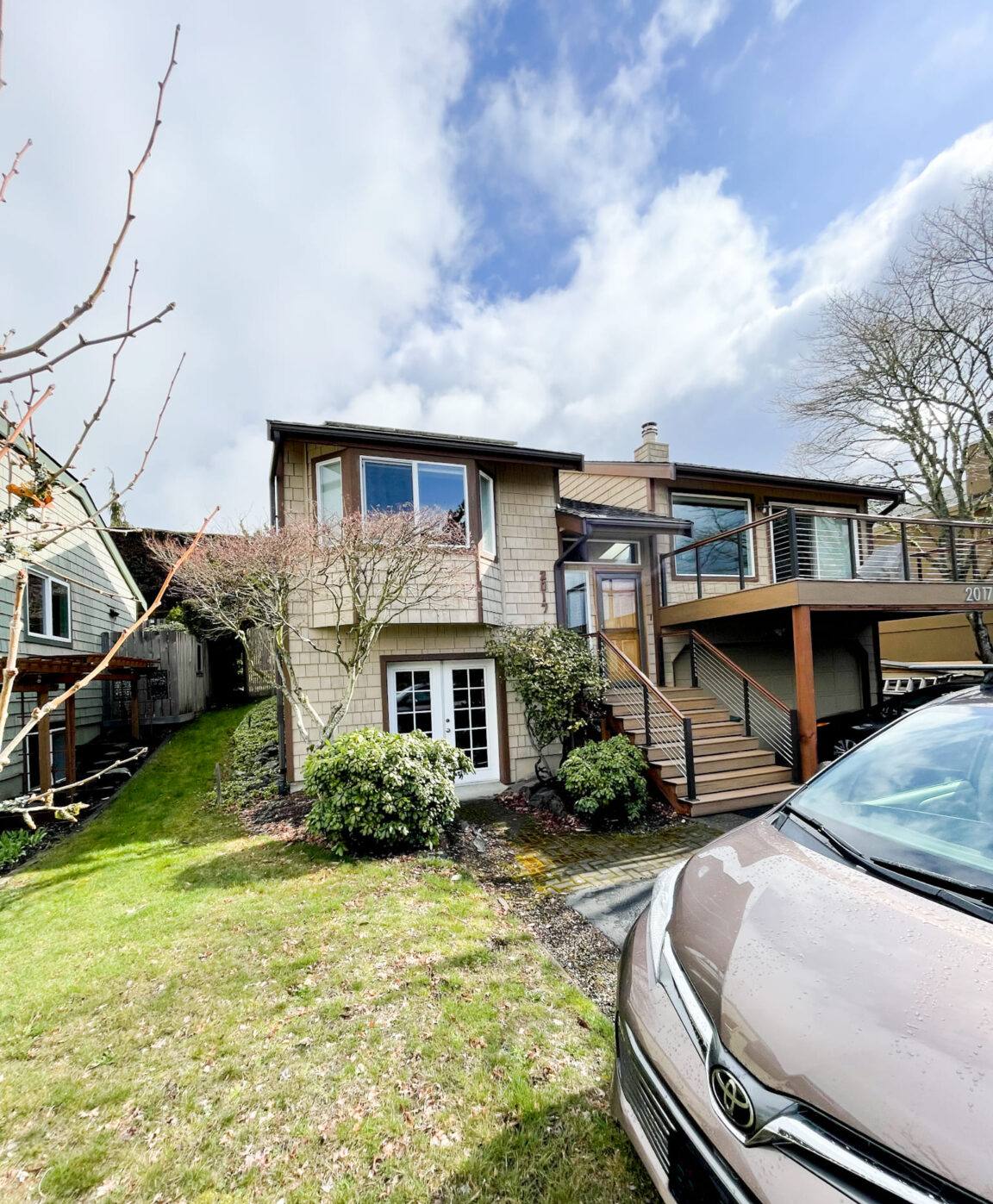
Signs Your Current Windows Are Losing the Fight
Most window failures in this area don't show up as a cracked pane. They show up slowly, as symptoms homeowners get used to and stop noticing:
- Fogging or a hazy film between the panes of a double-pane unit (a sign the seal has failed and the gas fill is gone)
- Persistent condensation on the inside of the glass, especially on cold mornings
- A noticeable draft near the frame even when the window is latched
- Soft or discolored wood at the sill, or paint that keeps failing in the same spot
- Sashes that stick, don't latch flush, or have shifted slightly out of square
- A heating bill that climbs faster than the size of the house explains
Any one of these can be a minor fix. Several at once usually means the window or its installation has reached the end of its useful service life for this climate, even if it still "works."
What a Correct Energy-Efficient Window Installation Actually Involves
Moisture Management Comes First
The glass and frame get the attention, but in a climate like this, the flashing and sealing details around the window are what actually determine whether it lasts. A correct installation includes a sloped sill pan so any water that gets past the sash drains back out instead of pooling, properly lapped flashing tape integrated with the wall's weather-resistive barrier (not just caulk smeared around the edge), and a nailing fin sealed in a way that sheds water downward and outward, never trapping it against the framing.
Skipping or rushing this step is the single most common reason a window that looked fine on installation day causes rot, mold, or a soft spot in the wall two or three winters later. It's invisible work — nobody sees it after the trim goes back on — which is exactly why it's worth asking a contractor to explain how they handle it.
Glass and Frame Performance
For actual energy performance, three specs matter more than brand names:
- U-factor — how well the window resists heat loss; lower is better for our winters
- Solar Heat Gain Coefficient (SHGC) — how much solar heat passes through; a moderate rating suits this climate's mild, often overcast summers
- Low-E coatings and warm-edge spacers — these reduce heat loss and cut down on the interior condensation that's so common in humid coastal climates
Double-pane, argon-filled units with a quality Low-E coating are the standard baseline for this region. Triple-pane is worth discussing for north-facing rooms or homes with chronic condensation problems, but it's not automatically the right upgrade for every window on every house.
Choosing a Window Type for This Climate
Frame material affects maintenance and moisture behavior as much as it affects price. Here's how the common options compare for a climate with sustained damp, salt air, and heavy rain exposure:
| Frame Type | Moisture Resistance | Maintenance | Typical Lifespan |
|---|---|---|---|
| Vinyl | Very good — won't rot or corrode | Low; occasional cleaning | 20-30 years |
| Fiberglass | Excellent; very stable in wet/dry cycling | Low | 30-40 years |
| Aluminum-clad wood | Good exterior protection, interior wood needs care | Moderate | 20-30 years, more with upkeep |
| Bare wood | Poor without diligent upkeep in this climate | High | Highly dependent on maintenance |
We generally steer homeowners here away from unclad wood exteriors, not because wood is a bad material, but because a climate with this much sustained moisture and moss pressure punishes any exterior surface that needs regular repainting and sealing to stay water-tight. Vinyl and fiberglass hold up with far less ongoing attention, which matters most on windows you don't want to think about for the next two decades.
Windows and Siding Are One System, Not Two Jobs
Water doesn't care where a window ends and the siding begins — it just looks for the easiest path in. That's why window replacement done in isolation, without attention to how the new unit ties into the surrounding wall assembly, is one of the most common sources of hidden leaks. The flashing has to lap correctly with the weather-resistive barrier under the siding, the siding has to be cut back and re-fitted cleanly around the new frame, and the sealant used has to be compatible with both the window material and the cladding.
Because we work on siding and building envelopes as our core trade, we look at a window replacement the same way we look at a wall: as one continuous drainage plane. That perspective matters most on older Aldergrove homes where the original siding and window details were never designed to work with modern, higher-performance window units.
How the Process Works
- On-site assessment — we look at existing windows, framing condition, and how they interact with your current siding before recommending anything
- Product selection — matched to the window's exposure (a south wall facing prevailing wind-driven rain needs different attention than a sheltered wall)
- Careful removal — checking the rough opening and sill framing for hidden rot or moisture damage before the new unit goes in
- Installation with full flashing integration — sill pan, flashing tape, air sealing, and insulation around the frame, tied properly into the existing wall
- Siding and trim restoration — cut back cleanly and refinished so the repair doesn't look like an afterthought
- Final check and cleanup — operation, seal, and drainage confirmed before we call it done
Why a Crew That Already Works in Aldergrove Makes a Difference
Aldergrove sits just across the line from Lynden, connected by the Aldergrove–Lynden border crossing, so it's a natural part of our service area rather than a special trip. That proximity means we're familiar with the specific way weather behaves on this side of the Fraser Valley — which walls take the worst of the driving rain, how fast moss establishes on north-facing trim, and how humid coastal air tends to concentrate condensation on certain window orientations more than others.
It also means practical continuity: the same crew that installs your windows can speak to how they'll hold up against your home's actual siding and exposure, and can come back if something needs attention down the road. If you're getting quotes from a contractor working in BC, it's fair to ask directly how they handle local permitting through Langley Township and what coverage or licensing applies to their crew — a straight answer to that question tells you a lot about who you're hiring.
Questions Worth Asking Before You Hire Anyone
- Will you explain exactly how you'll flash and seal the window into my existing siding?
- What U-factor and SHGC ratings are you recommending, and why for my specific walls?
- Do you check the rough opening for rot or moisture damage before installing, not just after?
- What's your warranty on both the window product and your installation labor, separately?
- Can you show me how the siding will be restored around the new frame?
- Are you set up to legally and properly perform this work in Aldergrove, BC?
A contractor who answers these plainly, without dodging into brand talk, is usually the one who understands the job goes well beyond the window itself.
What Affects the Cost
Every home is different, but the main cost drivers on a window project in this area are consistent: the number and size of windows, frame material, glazing package (double vs. triple pane), the condition of the existing framing once it's opened up, and how much siding restoration is needed around each opening. Homes with existing moisture or rot damage around windows will cost more to do right — but skipping that repair to save money up front is exactly how the same problem comes back in a few years.
If you're weighing options for your Aldergrove home, we're happy to take a look and walk through what your specific windows and siding actually need — no pressure, no upsell, just a straight assessment. Use the form below to request a free estimate.