 Lynden
 Deck Replacement Built for Aldergrove's Climate
Aldergrove sits just north of the border from Lynden, close enough that we treat it as part of our regular service area rather than a special trip. The community sits inland in the Fraser Valley, but it's still inside the same marine-influenced weather system that shapes exterior work all along this stretch of the Whatcom-Fraser Valley border region. Moist air pushes in steadily off the Salish Sea, rain here often comes in sideways on a stiff wind rather than falling straight down, and mild year-round temperatures give moss a growing season that barely pauses. A deck, with no roof over it and no wall to break the wind, takes that weather straight on, season after season.
Deck replacement is a different job than building a new deck from scratch or patching a board here and there. It means dealing with an existing structure that's already been through years of exactly this weather — a substructure and ledger connection that may or may not still be sound, footings that may or may not meet current code, and decking that's reached the point where cleaning and resealing don't help anymore. Done right, a replacement is a chance to fix what was wrong with the original build, not just swap old boards for new ones on top of the same problems.
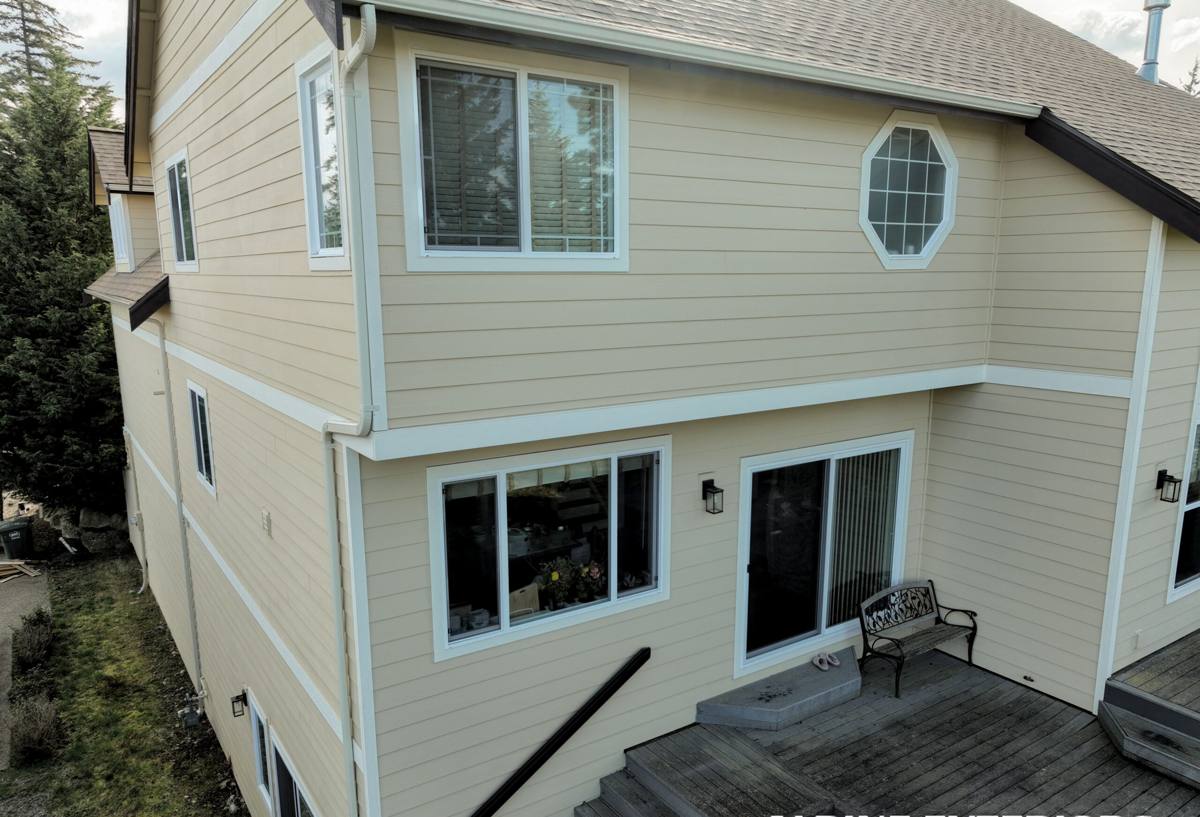
What Years of This Climate Do to an Aldergrove Deck
Wind-Driven Rain at the Ledger and Framing
The most common failure point on an aging deck isn't the decking surface — it's the ledger board, where the deck ties into the house. Older decks, especially ones built before flashing requirements tightened up, often have little or no proper flashing at that connection. Wind-driven rain gets pushed up and behind the ledger over and over across enough winters, and the framing behind it starts to rot from the inside, well before anything looks wrong from the top.
A Long Moss Season on Every Horizontal Surface
A deck's flat, walkable surface holds moisture longer than any wall or roof plane, and this region's mild, damp climate gives moss and algae a long stretch of the year to take hold. Shaded decks and north-facing surfaces usually show it first, but any older wood or uncapped composite decking eventually picks up a slick, greenish film that's more than cosmetic — it holds water against the boards and makes the surface genuinely slippery.
Corrosion in Older Fasteners and Hardware
Decks built years ago, especially before corrosion-resistant fastener standards became routine, often used hardware that wasn't rated for sustained damp exposure. Combined with the marine-influenced dampness that carries through this whole border region, that hardware corrodes from the inside of the connection outward — post bases, joist hangers, and railing brackets all lose strength quietly, long before rust becomes visible on the surface.
Signs Your Deck Needs Full Replacement, Not Just Repair
Not every tired-looking deck needs to come out entirely. But there's a real difference between a deck that needs a cosmetic refresh and one where the structure underneath has been compromised. Signs worth taking seriously include:
- Soft or spongy spots anywhere on the decking surface, especially near the house or around posts
- Visible gaps, rust staining, or lifted flashing at the ledger board where the deck meets the house
- Wobble or movement in railing posts when pushed by hand
- Wood that's gone gray and punky, or that a screwdriver sinks into easily along the grain
- Persistent moss or algae that returns within weeks of cleaning, even after a wash
- Fastener heads that are rusted, popped up, or missing entirely
- Footings or posts that look undersized, cracked, or shifted from level
- A deck that predates current guardrail height and baluster spacing requirements
Any one of these on its own might still be repairable. Several of them together, especially anything involving the ledger connection or main support posts, usually means the honest answer is a full replacement rather than another round of patchwork on a structure that's already compromised.
What a Correct Replacement Actually Involves
A deck replacement done right isn't just new boards on the old frame. It starts with tearing the old structure back to whatever's actually sound, then rebuilding from the ground up to a standard that holds up to this climate long-term. On every replacement, that means:
- Full removal of decking, railings, and any framing that shows rot, corrosion, or undersized construction
- Inspection of footings and posts, replacing anything that doesn't meet current load and frost depth requirements
- Proper ledger flashing at the house connection — the single most common point of failure on older decks, and one of the most important details to get right the second time
- Corrosion-resistant fasteners and structural hardware rated for sustained damp exposure, not standard hardware that starts corroding within a few seasons
- Joist spacing and framing sized to the actual decking product's span rating, not a generic layout carried over from the old deck
- Correct board gapping for drainage and material movement so rain can actually shed and dry between boards
- Guardrail height, baluster spacing, and stair details brought up to current code, since many older decks were built before today's requirements existed
- Grading and airflow underneath the deck so moisture doesn't sit against the new framing between storms
Some of the original footings and posts can sometimes be reused if they're still sound and meet current code, and we'll tell you honestly when that's the case rather than tearing out more than necessary. But the framing, ledger connection, and fastening almost always get rebuilt to current standards on a proper replacement, because that's where the original deck's problems usually started.
Choosing Decking Material for the Replacement
Once the structure underneath is sound, the decking material you choose determines how much upkeep the deck needs going forward. In a climate with this much sustained moisture and moss pressure, the gap between a well-suited material and a poorly-suited one shows up faster than it would somewhere drier.
| Material | Moisture & Moss Behavior | Typical Upkeep | Realistic Lifespan Here |
|---|---|---|---|
| Pressure-treated wood | Absorbs moisture readily; moss and graying show up without regular treatment | Regular sealing or staining | 10-15 years with consistent upkeep |
| Cedar | Natural moisture resistance, but still needs sealing to hold up long-term | Regular oiling or sealing | 15-20 years with consistent upkeep |
| Uncapped composite | Some moisture absorption at exposed fiber; moderate moss resistance | Periodic cleaning | 20-25 years |
| Capped composite | Plastic cap resists moisture, staining, and moss buildup well | Occasional washing | 25-30 years |
| Cellular PVC | No wood fiber to absorb moisture, even at cuts and fastener holes | Occasional washing | 30+ years |
Wood still has its place, particularly for homeowners who want that specific look and are willing to keep up with sealing on a schedule. Capped composite and cellular PVC cost more upfront but ask much less of the homeowner year to year, which matters in a climate where skipped maintenance shows up fast. We'll walk through the real trade-offs for your budget and how the deck will actually be used, rather than steering everyone toward the same product.
How Our Replacement Process Works
We start with an on-site assessment of the existing deck — checking the ledger connection, probing the framing and decking for soft spots, and looking at the footings and posts to see what's actually salvageable versus what needs to come out. That assessment is what determines whether you're looking at a full tear-down or a more limited rebuild, and we'll explain what we find in plain terms.
From there we handle permitting for the project, which on a deck replacement usually involves confirming the new structure meets current guardrail, footing, and ledger flashing requirements even if the original deck predates them. Once permitted, the build follows the sequence above: demolition of what's compromised, footing and framing work first, ledger flashing and structural connections next, then decking, railings, and stairs. We finish with a walkthrough covering what your specific decking material needs going forward, since that's different for a capped composite deck than for a cedar one.
Because Aldergrove and Lynden sit on opposite sides of the border, we're upfront about how that affects a project — which permitting process applies to your property, and any practical logistics around materials or scheduling that come with working across the border. None of that should be a surprise partway through a job, and we lay it out during the initial assessment rather than after work has already started.
Why It Matters That We Already Work This Border Area
A crew that mostly builds decks well inland, away from this specific stretch of border country, can still frame a deck competently. But a replacement project here has variables that come up constantly in this exact area and less often elsewhere: ledger flashing failures on older decks that were never properly detailed to begin with, moss pressure that runs most of the year on horizontal surfaces, and fastener corrosion patterns that show up earlier than homeowners expect given how mild the winters look on paper. Working Aldergrove and Lynden as one regular service area, rather than treating either as an occasional trip, means we're not guessing at those patterns on your project — we've already seen how different decking materials and structural details hold up against this specific combination of driving rain, marine-influenced dampness, and a long moss season.
That familiarity also means straightforward answers about what your particular deck needs, rather than a generic checklist applied the same way everywhere. A shaded deck on a low lot and a sun-exposed deck on higher ground don't need identical solutions, and we won't tell you they do.
Get a Free, No-Pressure Estimate
If your Aldergrove deck is showing soft spots, loose railings, moss that won't stay gone, or you're simply past the point where cleaning and resealing make sense anymore, we're glad to take a look and give you a straightforward read on whether it needs a full replacement or something less. Reach out using the form below to schedule a free estimate — no pressure, no upsell script.