 Lynden
 Decks Built for the Acme Stretch of Whatcom County
Acme sits in the wooded, river-valley country south of Lynden, where tree cover runs heavier and the ground stays damp longer than it does out on the open flats. That's a different climate story than a lot of siding and deck work you'll see written up for the wider Lynden area. Homes here deal with more shade, more standing moisture under the canopy, and a longer stretch of the year where surfaces just don't fully dry out between rains. Add in the marine-influenced air that moves through this part of Whatcom County and you get a slow, steady kind of weathering — driving rain, humidity, and a moss season that can run from fall clear through spring.
A deck built without that in mind will look fine for a year or two and then start showing problems: green film on the boards, soft spots where water sits, fasteners bleeding rust, or a substructure that's staying wet far longer than it should. This page is about what a deck actually needs to hold up in Acme specifically — not a generic "decks in the Pacific Northwest" write-up.
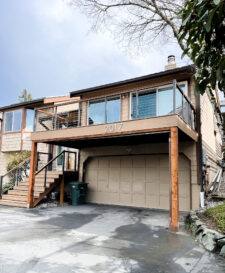
What Acme's Terrain and Tree Cover Mean for a Deck
Most of what makes deck-building in Acme different comes down to shade and drainage, not just rainfall totals.
Shade and Slow Drying
Where a deck out in open sun might dry within a few hours of a rain stopping, a deck tucked under mature trees or on the shaded side of a house near Acme can stay damp for a day or more. That extended wet time is exactly what moss, algae, and mildew need to establish — and it's also what accelerates rot in any wood that isn't properly treated or protected.
Debris and Organic Buildup
Heavier tree cover means more leaf litter, needles, and seed pods landing on the deck and collecting in gaps between boards. Left alone, that organic material holds moisture directly against the decking and framing, which is one of the fastest ways to shorten a deck's life in this kind of setting.
Soil Moisture and Footings
River-valley and foothill soil in this area tends to hold water longer than well-drained ground elsewhere in the county. That affects how footings need to be sized and set — undersized or shallow footings in consistently damp soil are more prone to movement over time.
Choosing Decking Material for This Climate
There's no single "right" decking material for every home, but in a shaded, damp setting like Acme, some materials handle the conditions with a lot less maintenance than others. We'll walk through the honest trade-offs rather than push one option.
| Material | Moisture & Rot Behavior | Moss/Algae Maintenance | Typical Upfront Cost |
|---|---|---|---|
| Pressure-treated wood | Resists rot when properly maintained; end cuts and fastener holes need sealing | Needs regular cleaning and re-staining/sealing to stay ahead of growth | Budget-friendly |
| Cedar | Naturally rot-resistant but still needs periodic sealing in a shaded, wet spot | Moderate — surface graying and moss are common without upkeep | Mid-range |
| Capped composite | Excellent — moisture doesn't penetrate the cap layer | Low — smooth cap sheds moss more easily and cleans up fast | Higher upfront, lower upkeep over time |
| Uncapped composite | Good, but the exposed core can absorb some moisture over many years | Moderate — textured surfaces can hold organic buildup in shaded spots | Mid-range |
For a shaded, tree-covered lot like a lot of what we see around Acme, capped composite tends to be the lowest-maintenance choice specifically because it doesn't give moss and algae the porous surface they need to take hold. That said, plenty of homeowners still prefer real wood for the look and are willing to keep up with sealing — that's a legitimate choice too, as long as it's maintained on schedule.
What a Correctly Built Deck Actually Involves
A deck that holds up in this climate isn't about using one special material — it's about a handful of details that are easy to skip and hard to notice until something fails.
Ledger Board Attachment and Flashing
Where the deck connects to the house is the single most common point of failure on any deck, wet climate or not. Proper flashing — installed so water sheds outward and never behind the ledger board — is non-negotiable. This connection sits against your home's siding and framing, so a mistake here can lead to hidden rot inside the wall, not just deck problems.
Footings Sized for the Ground They're In
Footings need to be dug to proper frost depth and sized for the soil conditions on the specific lot, not just built to a minimum. In consistently damp soil, that margin matters more.
Joist Spacing and Airflow Underneath
Tighter joist spacing adds strength, but the substructure also needs enough airflow underneath to let the frame dry out between rains. A deck built low to the ground with poor ventilation underneath will hold moisture against the framing far longer than one with proper clearance.
Fasteners That Won't Bleed or Fail
Coated or stainless fasteners rated for treated lumber and ground contact are worth the extra cost. Using the wrong fastener in a damp environment leads to rust streaking and, eventually, weakened connections.
Board Gaps for Drainage
Decking boards need consistent, correct spacing so water and debris don't pool between them. Too tight, and the deck holds moisture; too wide, and it becomes a maintenance headache and a tripping/safety issue.
Common Deck Problems We See in Shaded, Wet Settings Like Acme
- Moss and algae film building up on the shaded side of the deck faster than the sunny side
- Soft or spongy boards near the house where the ledger board wasn't properly flashed
- Rust streaking from fasteners that weren't rated for ground contact or coastal-influenced moisture
- Footings that have shifted slightly over the years due to consistently saturated soil
- Debris buildup between boards that's been trapping moisture against the frame for months without anyone noticing
None of these are dramatic failures at first — they're slow, quiet problems that show up as a soft spot underfoot or a green tinge on the boards a year or two after installation. Catching the pattern early is a lot cheaper than replacing framing later.
Our Process for Deck Projects in Acme
1. On-Site Assessment
We walk the actual lot — checking sun exposure, tree cover, drainage patterns, and how the deck will tie into the house — before recommending a material or layout. A deck plan that works on an open, sunny lot elsewhere in the county isn't automatically right for a shaded spot near Acme.
2. Honest Material Recommendation
We'll lay out the real maintenance difference between wood and composite options for your specific site, including what upkeep schedule each one actually needs given the shade and moisture on your lot — not just what looks best in a sample board.
3. Permitting
Deck construction in unincorporated Whatcom County typically requires a permit depending on height and size. We handle that process as part of the job so it's not left for the homeowner to sort out separately.
4. Build, With Attention to the Details That Matter Here
Proper ledger flashing, correctly sized footings, ventilated framing, and rated fasteners — the details covered above aren't upsells, they're the baseline of what we consider a correctly built deck in this climate.
5. Final Walkthrough
Before we call the job done, we walk the finished deck with you, explain what maintenance it'll need and roughly on what schedule, and answer any questions about care going forward.
Keeping a Deck in Good Shape Through Acme's Wet Season
Even a well-built deck needs some seasonal attention in a climate like this. The good news is that most of it is simple and doesn't take long if it's done on a regular schedule instead of skipped for a few years.
- Sweep leaves, needles, and debris out of board gaps regularly during fall
- Rinse or gently scrub moss and algae off shaded areas before it gets established, rather than after
- Check fasteners periodically for rust streaking or looseness
- Inspect the ledger board flashing area for any signs of water staining on the siding above it
- Re-seal or re-stain wood decking on the manufacturer's or installer's recommended schedule — don't stretch it out just because it "still looks okay"
- Trim back overhanging branches where possible to cut down on shade and debris over the deck surface
- Check that footings and posts haven't shifted, especially after a wet winter
Why a Crew That Already Works in Acme Matters
Deck-building advice that's generic to "Western Washington" misses the specific combination of shade, tree debris, and soil moisture that shows up around Acme's river-valley and foothill lots. A crew that's already worked jobs in this specific area knows how much more shade to plan for, which materials actually hold up without constant scrubbing, and how the local permitting process works for Whatcom County's unincorporated areas. That local familiarity shows up in fewer surprises during the build and a deck that's sized, sited, and built for the conditions it'll actually sit in — not a generic spec.
If you're planning a new deck or replacing one that's showing its age in Acme, we're happy to come take a look and talk through what makes sense for your specific lot. Reach out for a free, no-pressure estimate using the form below.