 Lynden
 Why Abbotsford, BC Homes Need Siding Built for This Climate
Abbotsford sits in the Fraser Valley just across the border from Whatcom County, and it takes on a version of the same weather pattern that shapes every siding decision on this side of the line: salt-tinged marine air moving in off the coast, long stretches of driving rain instead of gentle drizzle, and a moss season that can run from fall through spring. Siding here isn't just a cosmetic layer — it's the first and last line of defense against moisture that wants to get behind the cladding and stay there.
Homes that were sided with the wrong product, or sided correctly but with shortcuts in the flashing and water management details, tend to show it in the same places: north-facing walls that never fully dry out, trim joints that have opened up, and a green-black film of algae and moss creeping up from grade level or down from the eaves. None of that is unique to any one street or neighborhood in Abbotsford — it's a function of the regional climate, and it's why the siding choice and the installation quality matter more here than they would in a drier part of the country.
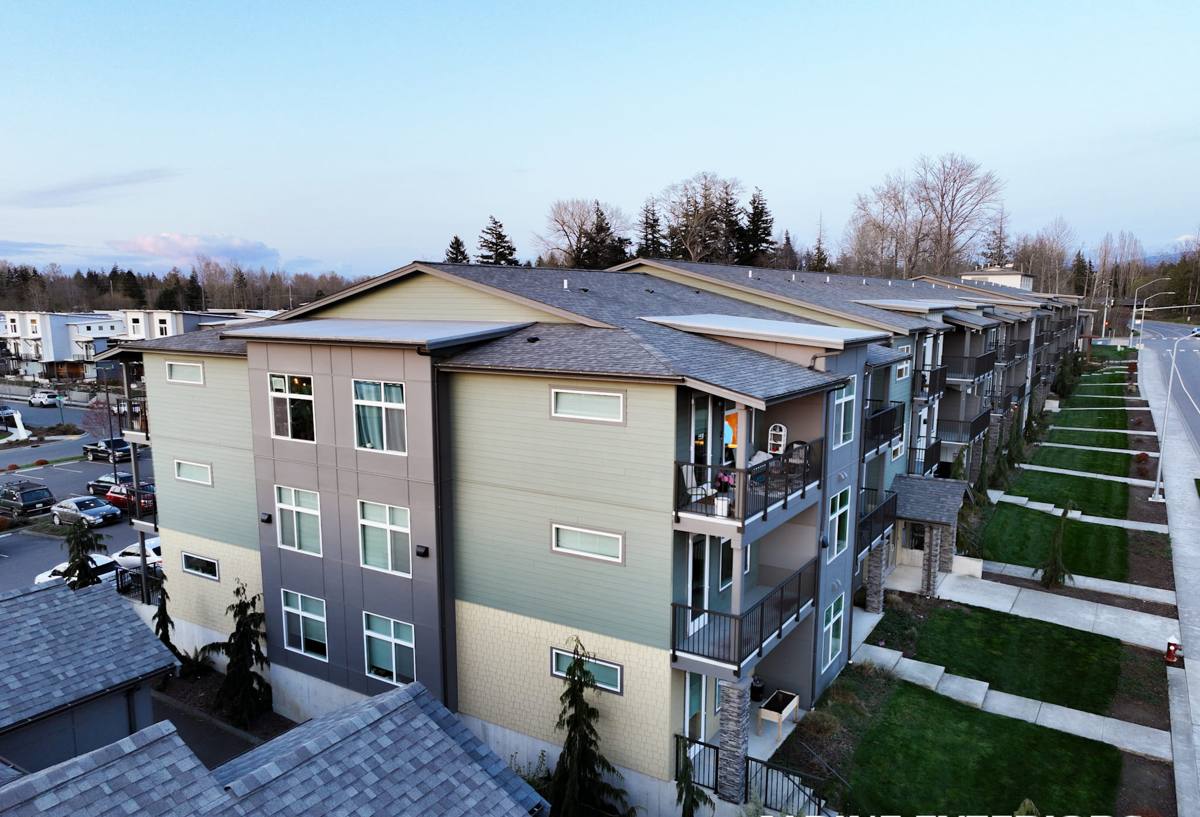
What "Serving Abbotsford" Actually Looks Like
Lynden sits close enough to the border that a well-run siding crew can treat Abbotsford as a normal part of its service area rather than a special trip. That matters for homeowners in a few practical ways:
- Crew and materials cross once for the job, not back and forth for every punch-list item — fewer scheduling gaps between rough-in, inspection, and finish work.
- A contractor who already routes jobs through the Abbotsford area understands typical municipal permitting and inspection expectations on both sides of the border, so there are no surprises mid-project.
- Warranty service and follow-up visits are realistic, not a logistical headache, because the crew is already in the habit of working this corridor.
We're upfront about this: cross-border logistics, customs paperwork for materials, and coordinating around two sets of local requirements take real planning. A contractor who hasn't done it before will learn on your project. One who already has a rhythm for it won't.
Why We Install Only James Hardie Fiber Cement
We don't install vinyl, LP SmartSide, primed wood, or other fiber cement brands. That's a deliberate standard, not a lack of options. James Hardie's fiber cement is non-combustible, dimensionally stable across wet-dry cycles, and finished at the factory with a baked-on ColorPlus coating rather than a field-applied paint job that starts weathering the day it goes up. In a climate that spends a large share of the year damp, those three properties — stability, factory-cured finish, and a material that doesn't feed mold the way wood-based products can — are the difference between siding that looks the same in year twelve and siding that's already showing streaks and soft spots.
Hardie also builds specific product lines engineered for different exposure levels. For homes in the Fraser Valley and Pacific Northwest marine climate, that means specifying HZ10 fiber cement, which is formulated for regions with sustained moisture exposure — as opposed to the HZ5 formulation built for freeze-heavy climates further inland. Getting that specification right at the start of a project is a small decision that has a large effect on how the siding performs over decades, not just years.
James Hardie Product Lines at a Glance
| Product Line | Best Use | Why It Fits This Climate |
|---|---|---|
| HardiePlank Lap Siding | Most homes, traditional and modern profiles | Widest color range, proven track record in wet marine climates |
| HardieShingle | Accent gables, Craftsman-style detailing | Resists the moss and algae growth that plagues cedar shingle |
| HardiePanel | Modern vertical siding, board-and-batten look | Fewer horizontal ledges for moisture and moss to collect on |
| HardieTrim | Corners, fascia, window and door surrounds | Matches the plank's stability so trim joints don't telegraph movement |
What a Correct Installation Involves in a Wet Climate
Fiber cement siding is only as good as the water management system it's installed over. In a region where rain comes in sideways and sits in the air for weeks at a time, the details behind the siding matter as much as the siding itself.
The elements we treat as non-negotiable
- A drainage plane or rainscreen gap behind the siding, so any moisture that gets past the cladding has somewhere to drain and air to dry out instead of sitting against the sheathing.
- Correct flashing at every penetration — windows, doors, hose bibs, light fixtures, and deck ledgers — installed shingle-style so water is always directed outward and down.
- Manufacturer-specified fastening at the right pattern, depth, and location, since over-driven or misplaced nails are one of the most common causes of premature siding failure.
- Proper joint and butt-seam treatment, sealed and gapped according to Hardie's published installation instructions rather than "however it fits."
- Ground and roofline clearances that keep the bottom edge of the siding away from soil, mulch, and splash-back, and keep upper courses clear of gutter overflow.
Skipping any one of these doesn't usually cause an immediate problem — it causes a slow one. Moisture finds the shortcut two or three years later, often in the form of a stain, a soft spot, or moss taking hold in a spot that never fully dries.
Moss, Algae, and the Realities of a Long Wet Season
Moss doesn't damage James Hardie siding the way it can damage wood-based products, but it does tell you something about how a wall is drying. Persistent moss or algae growth on a section of siding usually means that area is staying wet longer than the rest of the house — often because of poor sun exposure, a gutter or downspout dumping water in the wrong place, or a drainage gap that got compressed or skipped during installation.
Part of doing this job right in a climate like Abbotsford's is designing around that reality from the start: keeping vegetation and irrigation heads clear of the siding, making sure gutters actually carry water away from the wall assembly, and using a rainscreen gap so any wall that does stay shaded longer still has a path to dry out. None of this is exotic — it's just attention to the details that a drier climate can get away with skipping.
Our Process, Start to Finish
- On-site assessment — we look at existing siding condition, wall assembly, drainage patterns, and any moisture damage before recommending a scope of work.
- Written estimate — product line, color, trim details, and a clear scope, so there's no ambiguity about what's included.
- Tear-off and prep — removal of failing material, sheathing repair where needed, and installation of the drainage plane.
- Flashing and water management — done before a single piece of siding goes up, since this is the layer that actually keeps water out.
- Hardie installation — plank, panel, or shingle installed to manufacturer specification, with correct fastening and joint treatment.
- Trim, caulking, and final inspection — including a walk-through so you understand what was done and why.
Cost Factors Homeowners Should Understand
Every siding quote should be broken down enough that you can see where the money goes. In broad terms, the variables that move the price are:
| Factor | Why It Matters |
|---|---|
| Tear-off vs. install-over | Removing old siding often reveals sheathing or framing issues that need addressing before new siding goes on |
| Wall complexity | Dormers, gables, and multiple roof pitches add cutting, flashing, and labor time |
| Product line and profile | Shingle and panel styles generally cost more in labor than standard lap plank |
| Trim and color package | ColorPlus finishes and custom trim details add material cost but remove the need for future painting |
| Existing moisture damage | Rotted sheathing or framing found during tear-off is addressed as a separate, itemized repair |
We'd rather walk you through these variables honestly during the estimate than give a number that doesn't hold up once the old siding comes off.
What to Ask Before You Hire
Whether you're comparing us or another crew, a short checklist helps separate a solid contractor from one that's guessing:
- Do they specify HZ10 fiber cement, or a generic "fiber cement" without naming the climate rating?
- Will they put the rainscreen/drainage plane and flashing details in writing, not just verbally?
- Can they explain their fastening pattern and joint treatment without reaching for a manual mid-conversation?
- Do they carry manufacturer certification or documented Hardie installation training?
- Are they realistic about timelines given cross-border logistics, rather than promising a rush job?
If you're weighing a siding project for a home in the Abbotsford area, we're happy to walk the property, look at what's there now, and give you a straightforward, no-pressure estimate for a James Hardie installation built for this climate. Use the form below to get started.