 Lynden
 Windows in Deming Take a Different Kind of Beating
Deming sits back from the water compared to the Lynden and Ferndale flats, tucked into the Nooksack River valley with the Cascade foothills close enough to shade a house for half the day. That changes what your windows deal with. You get less direct sun exposure than an open field lot, more standing moisture in the air under tree cover, and a longer stretch of the year where wood, trim, and window sills simply don't get a chance to dry out. Add in Whatcom County's normal pattern of driving winter rain and you have a recipe for slow, hidden water intrusion around any window that wasn't sealed and flashed correctly the first time.
None of this is unique to Deming, but it's more pronounced here than in drier, more open parts of the county. Homes closer to the river and under heavier tree canopy tend to hold humidity longer after a storm passes, and that lingering dampness is exactly what feeds the moss, mildew, and slow wood rot that shows up around older window frames.
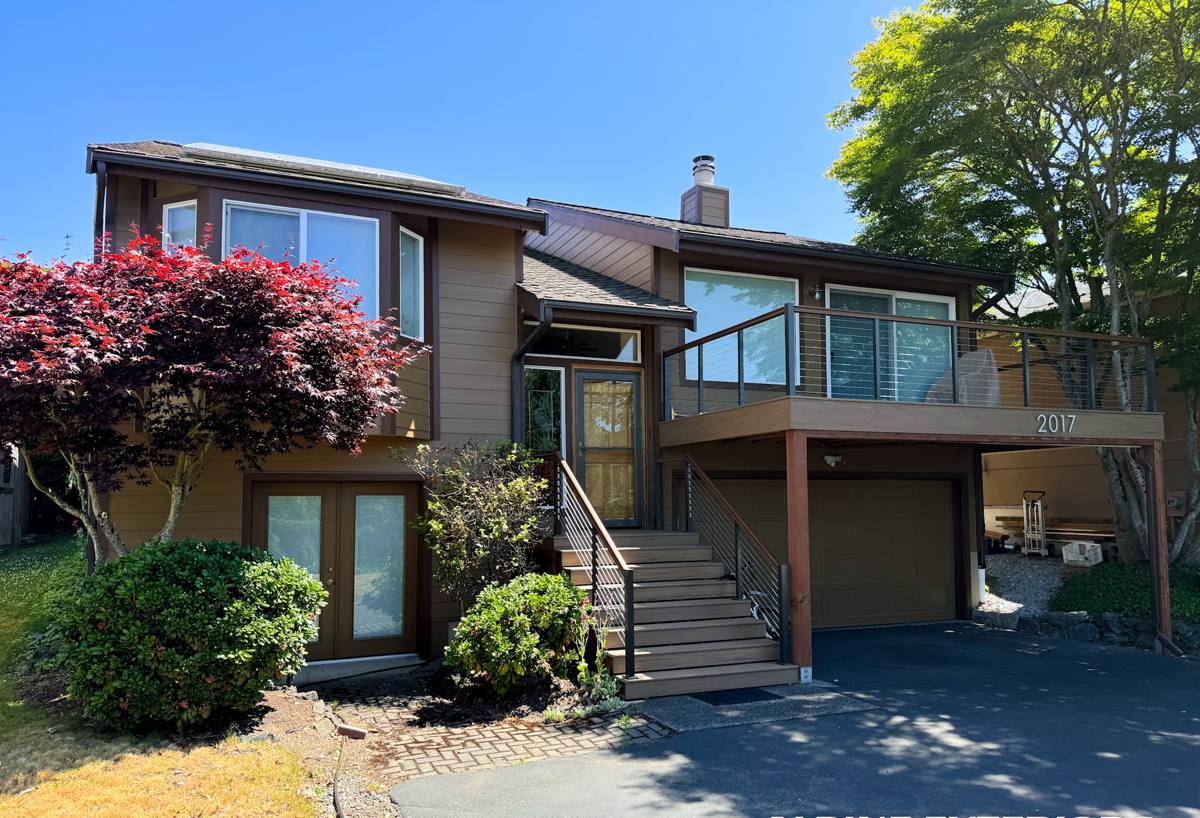
What a Bad Window Job Costs You Later
A window that looks fine from the curb can still be failing where it counts — at the seams. Improper flashing, missing sill pans, or caulk used as a substitute for real weatherproofing are the most common causes of slow leaks we find behind trim and under sills in this area. The damage doesn't show up right away. It shows up two or three winters later as soft framing, stained drywall, or a musty smell in a room that never used to have one.
Signs Your Current Windows Are Losing the Battle
- Fogging or moisture between the panes (a failed seal on the insulated glass unit)
- Paint bubbling or peeling on interior or exterior trim near the frame
- A noticeable draft even when the window is fully latched
- Soft or spongy wood when you press on the sill or lower frame
- Difficulty opening, closing, or locking — frames shifting out of square
- Visible moss or dark staining building up on the exterior casing
Any one of these is worth a look. A couple of them together usually means the window, or the framing around it, has been taking on moisture for a while.
What a Correct Installation Actually Involves
Setting a new window isn't just fitting a box into a hole. The parts nobody sees are the parts that determine whether the window lasts 25 years or starts leaking in five. That includes a sloped sill pan so any water that does get past the exterior finds its way back out instead of pooling, properly lapped flashing tape that sheds water downward at every layer, and correct sealant placement — enough to seal, but not so much that it traps moisture behind the window where it can't escape.
Full-Frame Replacement vs. Insert (Pocket) Replacement
One of the first decisions on a Deming project is whether the existing frame is sound enough to keep. Given how much wood movement and moisture cycling this area sees, that decision matters more here than it would on a drier lot.
| Factor | Insert (Pocket) Replacement | Full-Frame Replacement |
|---|---|---|
| When it makes sense | Existing frame is square, dry, and structurally sound | Frame shows rot, water staining, or is out of square |
| Labor and disruption | Faster, less exterior trim disturbed | More involved — exterior siding/trim removed and reset |
| Ability to fix hidden damage | Limited — problems behind the old frame stay hidden | Full access to inspect and repair sheathing, flashing, framing |
| Long-term risk if frame is compromised | Higher — new window installed over an existing problem | Lowest — issue is addressed before the new window goes in |
| Typical fit for older Deming homes | Case-by-case, only after inspection | Common where wood-frame homes have had years of moisture exposure |
We don't default to the faster option just because it's faster. If we open up a window opening and find soft sheathing or a flashing job that was never done right, we'll tell you before we close anything back up — not after.
Our Process on a Deming Job
1. On-Site Assessment
We look at the actual condition of each opening, not just the window itself — sill condition, evidence of past leaks, siding type, and how exposed the wall is to prevailing rain. This is also when we talk through full-frame vs. insert honestly, based on what we find.
2. Careful Removal
Old windows and any compromised trim come out without tearing up more siding than necessary. If we find rot or damaged sheathing behind the opening, we address it before anything new goes in — installing over a hidden problem just guarantees a repeat visit down the road.
3. Flashing, Sill Pan, and Weatherproofing
This is the step that actually determines how the window performs in Whatcom County weather. Sloped sill pan, correctly lapped flashing tape, and a drainage path for any water that gets behind the cladding — done in that order, every time.
4. Setting, Shimming, and Sealing
The window gets shimmed level and square, fastened per the manufacturer's specs (which matters for keeping the warranty valid), and sealed with the right products at the right locations — not just a bead of caulk around the outside.
5. Interior and Exterior Finish, Walkthrough
Trim goes back on clean, the operation of every window gets tested, and we walk the job with you before we call it done.
Choosing the Right Window for This Setting
Vinyl and fiberglass are the two frame materials we install most, and the right call depends on the specific house. Vinyl is a solid, cost-effective option for most Deming homes and holds up well to moisture when installed correctly. Fiberglass costs more up front but resists expansion and contraction better through wide temperature swings and holds paint longer if you want a custom color — worth considering on a more exposed elevation or a home where you're planning to keep the windows for decades.
Glass Packages Matter More Under Tree Cover
Homes shaded by trees for much of the day get less passive solar warmth in winter, so the glass package carries more of the insulating load. A double-pane, Low-E unit with an argon fill is the baseline we'd recommend for this area — it keeps interior surface temperatures higher, which cuts down on the condensation that shows up on cold glass in a humid house. We'll walk you through U-factor and solar heat gain numbers relevant to your specific windows rather than just quoting spec sheets.
Why It Matters That We Already Work in Deming
A crew that only occasionally works out this way is guessing at things a local crew already knows — how the housing stock out here tends to be built and aged, how long a given wall assembly stays wet after a storm rolls through the valley, and which openings on a house are going to be the exposed ones versus the sheltered ones. We also know to build install timing around actual weather windows instead of the calendar — pushing a job a few days when a heavy rain system is moving through protects the work, not just the schedule.
There's also the practical side: knowing the roads, knowing what permitting looks like through Whatcom County for a window replacement project, and being someone you can actually reach afterward if a question comes up — not a name from an app that won't be back this way for months.
Keeping New Windows Performing for the Long Run
A correctly installed window is largely maintenance-free, but a little attention keeps it that way for the long haul, especially with the moss and moisture load this area sees.
- Rinse pollen, debris, and moss spores off frames and tracks once or twice a year
- Keep gutters clear so overflow isn't running down the wall above your windows
- Trim back branches or foliage that keep a window's exterior shaded and damp longer than necessary
- Check exterior caulking annually and touch up anywhere it's cracked or pulled away
- Operate every window through its full range a few times a year so hardware doesn't seize up
- Watch for any new staining, soft spots, or difficulty latching — early signs are cheap to fix, late ones aren't
What Influences the Cost of a Window Project
Every home is different, but the main cost drivers on a Deming window job are consistent: the number of openings, whether it's insert or full-frame replacement, the frame material and glass package chosen, and how much (if any) hidden repair the crew finds once an opening is opened up. We'll always give you the honest number after a real assessment rather than a phone-quote guess — and we'll flag anything that changes the scope before we do the work, not after.
If your windows are drafty, fogged, or just past their prime, we're happy to take a look and give you a straightforward, no-pressure estimate — use the form below to get started.