 Lynden
 Decking in Sumas Has to Work Harder Than the Brochure Suggests
Sumas sits in a corner of Whatcom County where weather doesn't do things halfway. Homes here go through long stretches of driving rain, damp air off the surrounding lowlands and coastline, and short, low-angle winter light that keeps shaded areas of a yard wet for days after a storm passes. Add a tree line or a fence line that blocks afternoon sun, and you get the fourth ingredient: moss. Not the light green dusting you can hose off in June, but the thick, spongy kind that holds water against a deck surface all winter long.
None of that is a knock on the town — it's just the reality of building outdoor structures this close to the water and this far into the Pacific Northwest's rain shadow-free zone. A deck built without that reality in mind will show it within a few seasons: soft spots, discoloration, slippery boards, and fastener heads that start working loose as wood swells and shrinks. Composite decking, installed correctly, is one of the more reliable answers to that problem — but "installed correctly" is doing a lot of work in that sentence, and it's the part most homeowners never get a straight answer on.
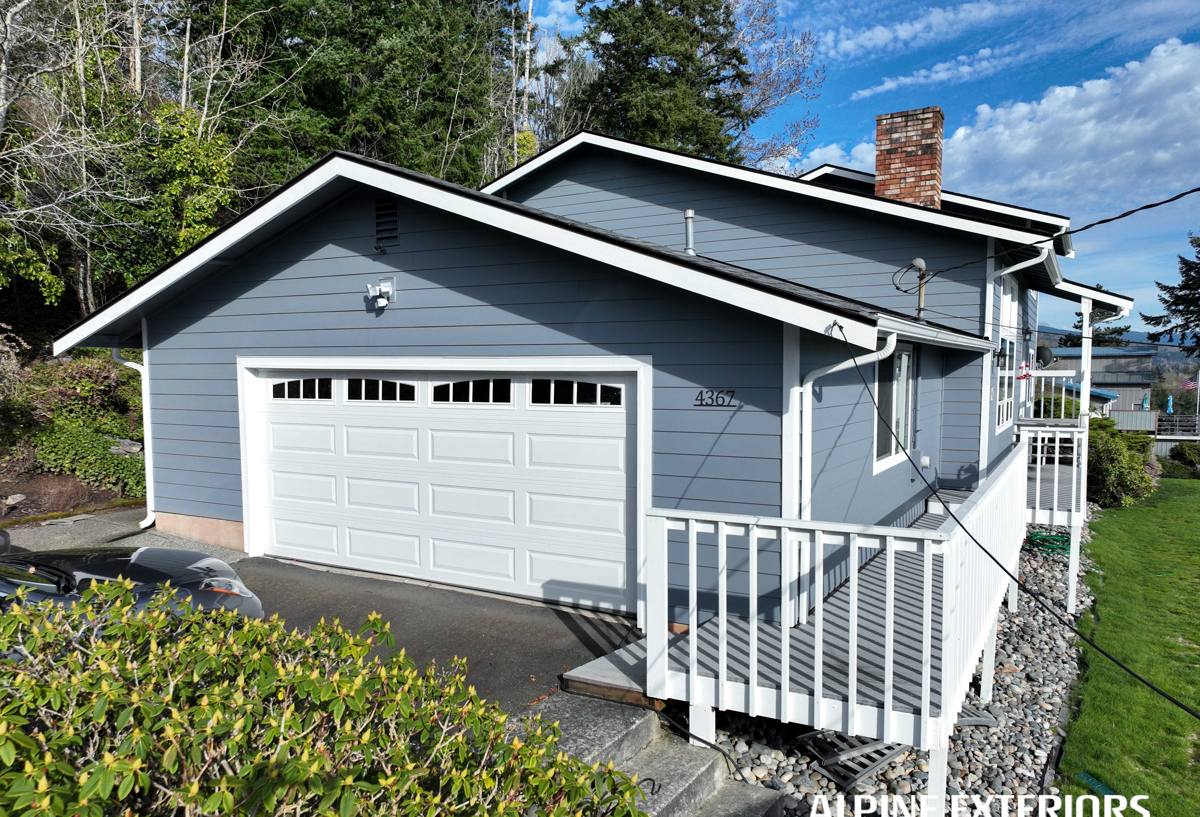
What Composite Decking Actually Solves
Composite boards are a blend of wood fiber and plastic, engineered specifically to resist the swelling, splintering, and rot that plague solid wood in wet climates. For a Sumas property, that matters in a few concrete ways:
- It doesn't absorb standing water the way cedar or pressure-treated fir does, so it's far less prone to cupping or warping after a soaked winter.
- It won't splinter as it ages, which matters on a deck that gets bare feet in summer and wet boots the rest of the year.
- Modern capped composite resists mold and mildew staining far better than wood — moss still needs cleaning, but it doesn't dig into the board the way it can into open wood grain.
- It holds paint-free, consistent color for years, so you're not repainting or re-staining a deck every other season just to keep moisture out.
What it doesn't solve on its own is drainage, ventilation, or moss growth. Composite decking is moisture-resistant, not moisture-proof, and it still needs to be installed with airflow underneath and water shed away from the substructure. A composite deck built on a poorly ventilated frame in a shaded Sumas backyard will still grow moss on the surface — it just won't rot the board underneath the way wood would. That's the honest trade-off, and it's worth understanding before you commit to a product.
Choosing the Right Composite for This Climate
Capped vs. Uncapped Boards
Capped composite has a polymer shell wrapped around the wood-fiber core, sealing it against moisture intrusion on all sides. Uncapped composite is more porous and, in a climate with this much sustained dampness, is more prone to surface staining and slower drying between rain events. For anything at ground level or partially shaded — which describes a lot of Sumas lots — we recommend capped boards as the standard, not the upgrade.
Board Profile and Surface Texture
Deep wood-grain embossing looks good in a showroom but can trap water and grime in a climate this wet, making moss and algae easier to take hold in the grooves. A lower-profile, tighter-grain texture sheds water faster and is noticeably easier to keep clean through a Whatcom County winter. Color matters too — very dark board colors get slick faster when wet and show pollen, moss spores, and organic debris more than mid-tone colors do.
Hidden Fastener Systems
Face-screwed boards leave exposed fastener heads that become a weak point — moisture works into the screw hole over time, and in a climate that never fully dries out, that's a real long-term issue. Hidden clip systems keep the board's top surface uninterrupted, which both looks cleaner and removes that failure point entirely.
What a Correct Installation Actually Involves
Composite decking is often marketed as low-maintenance, and it is — but only after it's installed correctly. Most of the problems we get called out to fix on composite decks in this area trace back to substructure decisions made before a single board was ever laid down.
The Substructure Comes First
Composite boards flex differently than wood, so joist spacing has to match the manufacturer's engineering specs, not a generic "16 inches on center" habit carried over from framing lumber. Ledger boards attached to the house need proper flashing to keep water from tracking behind the siding — a detail that matters even more in a climate where driving rain regularly hits the wall at an angle instead of falling straight down.
Ventilation Underneath
A deck built low to the ground, or over a shaded, damp yard, needs real airflow beneath it. Skimping on joist height or blocking airflow with solid skirting traps moisture underneath the deck, which speeds up moss growth on the surface and can shorten the life of any wood framing components below the composite.
Board Spacing and Drainage
Gapping between boards isn't just cosmetic — it lets water drain through instead of pooling on the surface. In a climate with this much sustained rainfall, we set gapping slightly wider than the manufacturer's minimum in shaded or low-airflow areas, because standing water is what feeds moss, not the composite material itself.
Our Process, Start to Finish
For a Sumas composite decking project, our process stays the same regardless of deck size:
- On-site walkthrough — we look at sun exposure, drainage slope, existing framing (if any), and how water currently moves across the yard.
- Material selection — we walk through capped vs. uncapped, board texture, and color options based on how shaded or exposed the deck location actually is.
- Written estimate — a clear scope covering substructure work, board material, fastening system, and any flashing or ledger repair needed.
- Substructure build or repair — joists, ledger flashing, and footings brought up to spec before any composite goes down.
- Installation — hidden-fastener composite decking installed with drainage-appropriate spacing.
- Final walkthrough — we go over basic care with you before we consider the job done.
Composite vs. Wood vs. PVC — How They Actually Compare Here
There's no single "best" decking material for every yard — the right choice depends on shade, budget, and how much upkeep you want to do. Here's how the three most common options stack up for a wet, moss-prone climate like this one:
| Material | Moisture Behavior | Moss/Mold Resistance | Upkeep | Typical Lifespan |
|---|---|---|---|---|
| Pressure-treated wood | Absorbs water, swells and shrinks seasonally | Low — moss and mildew take hold in open grain | Annual cleaning, periodic re-staining/sealing | 10-15 years before major repairs |
| Capped composite | Resists absorption, sheds water at the surface | Moderate to good — surface cleans easily, doesn't rot | Periodic rinse/wash, no staining or sealing | 25-30 years |
| PVC decking | Fully impervious to moisture | Good — but can look artificial and shows dirt film | Occasional wash | 25-30+ years |
For most Sumas properties, capped composite lands in the middle: real moisture protection without the higher material cost of full PVC, and none of the seasonal maintenance cycle that wood demands. Where a yard is deeply shaded or drainage is genuinely poor, PVC is worth discussing — but for the average lot, composite is the more balanced choice.
Keeping a Composite Deck Ahead of the Moss Season
Composite decking is low-maintenance, not no-maintenance. A short seasonal routine keeps a deck looking and draining the way it should through the wettest months:
- Sweep off leaves, needles, and organic debris regularly in fall — decomposing material is what feeds moss growth, not the deck material itself.
- Rinse the surface a few times a year with plain water and a soft-bristle broom; avoid pressure washers set too aggressively, which can damage the board's cap layer.
- Check that gaps between boards stay clear of packed debris so water keeps draining through instead of sitting on the surface.
- Confirm downspouts and gutters near the deck are directing water away from the structure, not onto it.
- Look underneath once a year to make sure skirting or landscaping hasn't blocked airflow to the substructure.
Why It Matters That We Already Work in Sumas
A lot of decking problems in this area aren't material failures — they're installation decisions made by a crew unfamiliar with how this specific climate behaves. Joist spacing that's fine in a drier region isn't necessarily fine here. Ledger flashing that would pass in a less rain-exposed area can fail here within a couple of wet seasons. Knowing which yards in this part of Whatcom County tend to hold moisture, which lots stay shaded most of the day, and how driving rain actually hits a structure here isn't something you get from a spec sheet — it comes from building decks in this specific area, season after season.
That local knowledge shapes real decisions on your project: how wide we gap the boards, how much ventilation we build into the substructure, and whether capped composite or PVC makes more sense for your particular lot. It's the difference between a deck that looks right on installation day and one that still looks right five wet winters later.
If you're planning a new deck or replacing one that hasn't held up to Sumas weather, we're happy to take a look and give you a straightforward, no-pressure estimate. Use the form below to get started.