 Lynden
 Why Sumas Roofs Take a Different Kind of Beating
A roof in Sumas doesn't fail the same way a roof fails in a dry climate. Out here, the problem is rarely one big storm — it's the accumulation of a hundred small, wet, mossy days a year. Whatcom County sits close enough to the water that salt-laden air works its way inland, corroding fasteners, flashing, and exposed metal faster than most manufacturers' spec sheets assume. Add driving rain that comes in sideways during winter fronts, and a moss season that can stretch from late fall through spring, and you've got a roof system that's under nearly constant low-grade stress even when nothing dramatic ever happens.
This matters because a lot of roof replacements are built to a national average, not to this specific climate. A roof that would be fine in Spokane or Boise can underperform in Sumas within a decade if the underlayment, ventilation, and flashing details aren't matched to what our weather actually does. When we replace a roof here, we're not just swapping old shingles for new ones — we're correcting for the specific ways Whatcom County weather attacks a roof over time.
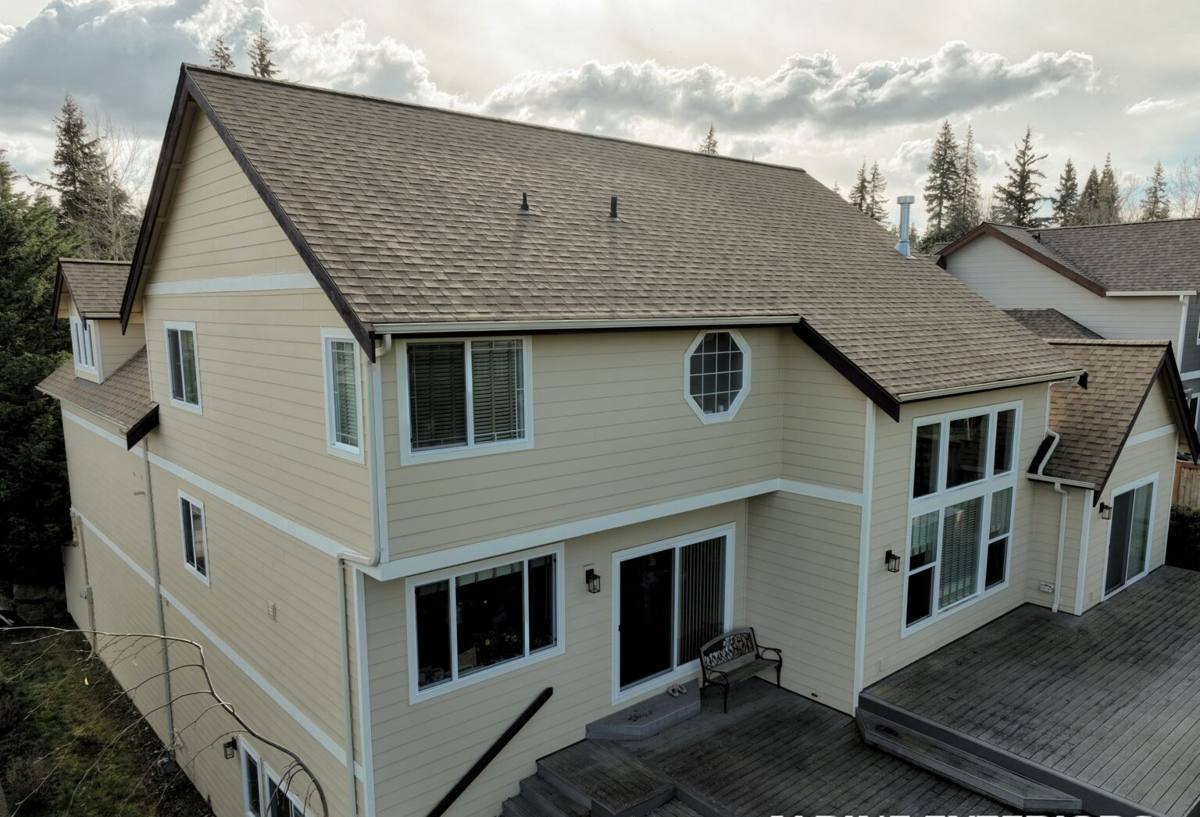
Signs a Sumas Home Is Ready for a New Roof
Roofs rarely announce failure with a single dramatic leak. More often, there's a pattern of smaller warning signs that build up over a couple of moss seasons. Before we ever recommend full replacement over repair, we look for a combination of these:
- Granule loss showing up in gutters or at downspout outlets, especially after heavy rain
- Shingles that are cupping, curling at the edges, or visibly thinning
- Moss or algae streaking that keeps returning within months of cleaning
- Soft spots or slight sagging when walking the roof deck
- Daylight visible through the attic roof boards, or damp insulation below the decking
- Flashing around chimneys, vents, or skylights that's lifted, rusted, or resealed with visible caulk patches
- A roof that's 18-25+ years old (for asphalt composition) regardless of how it looks from the ground
Any one of these on its own might just need a repair. Several together, on an older roof, is usually the point where patching stops being the economical choice.
What an Actual Correct Roof Replacement Involves
"Roof replacement" gets used loosely, but the difference between a roof that lasts 10 years and one that lasts 30 in this climate almost never comes down to the shingle brand — it comes down to what's underneath and around the shingles.
Full Tear-Off, Not an Overlay
We tear the old roofing down to bare decking rather than layering new shingles over old ones. An overlay traps moisture between layers, hides deck damage, and voids most manufacturer warranties. It's also the only way to actually inspect the decking underneath for rot before it becomes a hidden problem.
Deck Inspection and Repair
Once the old roofing is off, we check the sheathing for soft spots, delamination, or water staining. In a wet climate like ours, it's common to find some deck damage around older flashing points even when the roof "looked fine" from above. Any compromised sections get replaced before anything new goes down — laying new roofing over bad decking just guarantees an early failure.
Underlayment Built for Wet Climates
Standard felt underlayment is the minimum, not the standard, for a region with this much sustained rainfall. We use synthetic or ice-and-water shield underlayment at vulnerable points — eaves, valleys, and penetrations — where wind-driven rain is most likely to find a way in. This is one of the details a national-average roof spec often skips, and it's one of the first things that shows up as a leak years later if it's missed.
Ventilation That Matches the Moisture Load
A roof that can't breathe traps moisture in the attic, which accelerates deck rot, feeds moss growth from underneath, and shortens shingle life regardless of how good the shingles themselves are. We balance intake (soffit) and exhaust (ridge or roof vents) so air actually moves through the attic space instead of stalling.
Flashing and Fastener Choices for Salt Air
Corrosion-resistant flashing and fasteners cost a little more upfront and save a lot of grief later. In areas exposed to salt-influenced air, we avoid the bare, unprotected metals that streak and corrode within a few years and use flashing and fastener finishes rated for coastal-adjacent exposure.
Roofing Material Options for Whatcom County Homes
There's no single "best" roofing material for every Sumas home — it depends on the roof's pitch, the home's style, and how much the homeowner wants to spend upfront versus over the life of the roof. Here's how the common options actually compare in this climate:
| Material | Typical Lifespan Here | Moss/Moisture Resistance | Best Fit |
|---|---|---|---|
| Standard 3-tab asphalt | 15-20 years | Fair — moss-prone without algae-resistant granules | Budget-conscious, straightforward roofs |
| Architectural (laminate) asphalt | 25-30 years | Good, especially with algae-resistant granules | Most homes — best balance of cost and durability |
| Metal (standing seam or panel) | 40-50+ years | Excellent — sheds moss and moisture well | Steeper roofs, homeowners planning to stay long-term |
| Synthetic/composite shake or slate | 30-50 years | Good, low organic material for moss to grip | Homes wanting a specific look with less maintenance than natural wood |
We steer most homeowners away from untreated cedar shake in this specific climate — not because it can't look good, but because sustained moisture and moss pressure mean it demands a maintenance schedule (cleaning, treating, spot-replacing shakes) that most homeowners underestimate when they buy. If the look matters more than the upkeep, a synthetic shake product gets you closer to that appearance with far less ongoing work.
Our Roof Replacement Process
- On-site inspection and estimate — we walk the roof (not just look from the ground), check the attic if accessible, and give you an honest assessment of repair-versus-replace.
- Material selection — we walk through the tradeoffs above based on your roof's pitch, your budget, and how long you plan to be in the home.
- Scheduling around the weather — we plan tear-off days with realistic weather windows and have the home protected against sudden rain, which matters more here than in drier regions.
- Tear-off and deck inspection — old roofing removed, decking checked and repaired as needed.
- Underlayment and flashing installation — the wet-climate details described above, done before a single shingle goes down.
- Roofing installation — installed to manufacturer specification, which is also what keeps the material warranty valid.
- Ventilation check and cleanup — intake/exhaust balance confirmed, site cleaned, magnetic sweep for stray nails.
- Final walkthrough — we go over the finished roof with you before calling the job done.
Why Hiring a Crew That Already Works in Sumas Matters
A roofing crew that mostly works drier regions will sometimes make reasonable-sounding decisions that don't hold up here — skipping ice-and-water shield because "it doesn't really freeze," under-ventilating because the spec sheet says it's adequate, or using standard fasteners because they've never seen what a few winters of salt-tinged rain does to them. None of that shows up as a problem on installation day. It shows up three or five years later, as a leak, a moss mat, or corroded flashing.
Working roofs throughout Lynden and the surrounding Whatcom County communities, including Sumas, means we see the failure patterns specific to this area repeatedly — which valleys tend to hold moss, which flashing details tend to fail first, which attics run damp. That's the kind of judgment that doesn't come from a manufacturer's install guide; it comes from doing the work here, on this weather, on these roofs.
Keeping Moss and Moisture From Undoing the Work
A correctly installed roof still needs some basic upkeep to hit its full lifespan in this climate. A few habits make a real difference:
- Keep gutters clear so water isn't backing up under the roof edge during heavy rain
- Have moss growth addressed gently (soft washing, not pressure washing) rather than left to spread
- Trim back overhanging branches that keep sections of the roof shaded and damp longer than the rest
- Have the roof looked at after any major windstorm, even if nothing looks obviously wrong
- Schedule a quick inspection every couple of years rather than waiting for a visible leak
What Roof Replacement Typically Costs
Exact pricing depends on your roof's size, pitch, layer count, and material choice, but the biggest cost drivers are consistent from house to house:
| Cost Factor | Why It Matters |
|---|---|
| Roof size and pitch | Steeper roofs take longer to work safely and use more material |
| Number of existing layers | Tear-off of multiple old layers adds labor and disposal cost |
| Decking condition | Rotted sheathing found during tear-off adds material and time |
| Material choice | Metal and synthetic products cost more upfront than standard asphalt but last considerably longer |
| Roof complexity | Valleys, dormers, chimneys, and skylights each add flashing work |
We'd rather give you a real number from an on-site look than a guess over the phone — too many of these factors only become clear once we're actually on the roof.
If your Sumas home's roof is showing its age, or you just want an honest opinion on whether repair or replacement makes sense, we're glad to come take a look. The estimate is free, there's no pressure, and you'll get a straight answer either way — just fill out the form below to get started.