 Lynden
 Storm Damage in Wiser Lake Isn't Like Storm Damage Everywhere Else
Wiser Lake sits in open, low-lying country just outside Lynden, where the land isn't shielded by the kind of dense tree cover or tight neighborhood blocks you get closer to town. Wind off the water and across the surrounding farmland has a clean run at rooflines out here, and that matters when a front comes through. A roof that would shrug off a storm in a sheltered subdivision can take a real hit at Wiser Lake because there's nothing slowing the wind down before it hits the shingles.
Add in the marine air that rolls inland from Bellingham Bay and the broader Puget Sound, and you've got a slow, steady source of salt-laden moisture that settles on roofing metal, fasteners, and flashing year-round. It's not dramatic like a hailstorm, but it's constant, and it accelerates corrosion on anything not built or installed to handle it. Combine that with Whatcom County's long, wet moss season — often eight or nine months of the year when conditions favor growth — and you have three separate stressors working on the same roof at the same time: wind, salt air, and moisture-fed organic growth.
Storm damage repair out here has to account for all three, not just patch the obvious hole. A repair that only addresses the visible wind damage but ignores what the salt air and moss have already been doing to the roof underneath is a repair that fails again within a year or two.
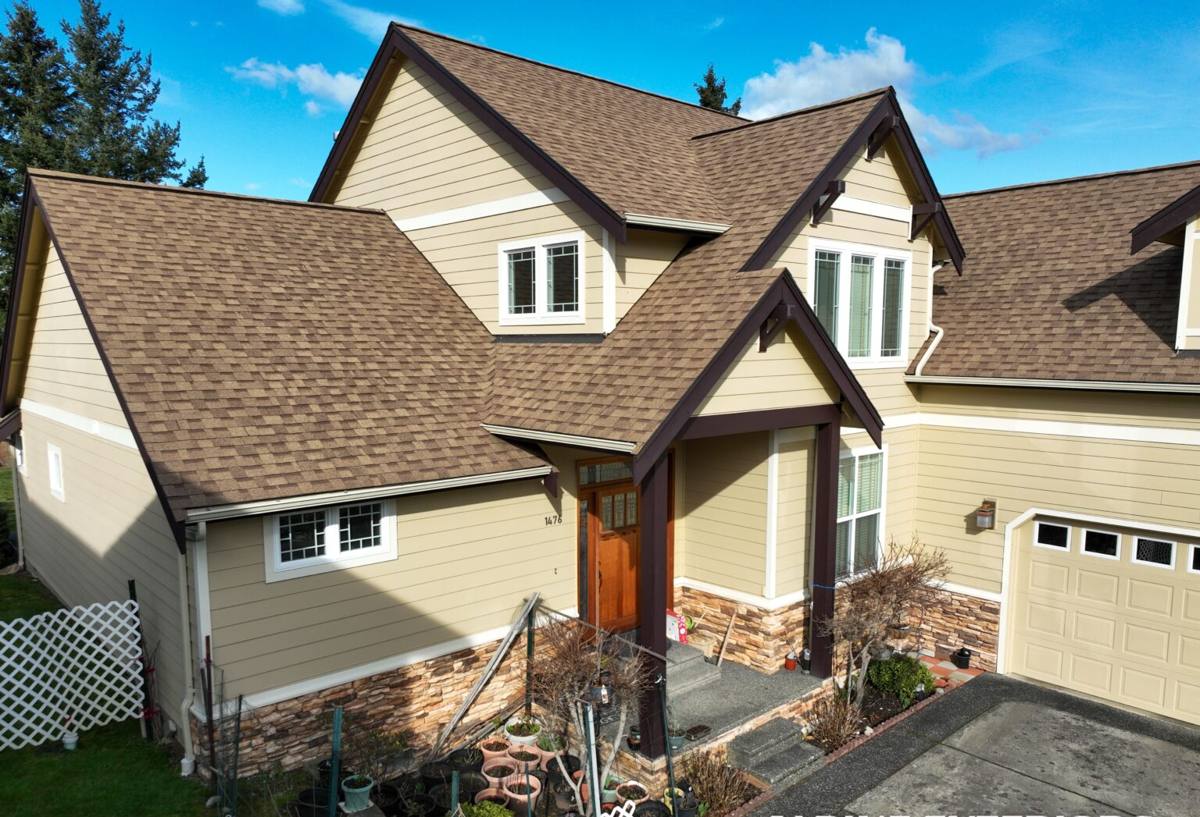
What Actually Counts as Storm Damage
Homeowners often assume storm damage means a dramatic hole or missing section of roof, but most storm damage in this area is quieter than that. It's worth knowing what to look for, because the early signs are easy to write off as normal wear.
Wind Damage
Sustained wind and gusts can lift shingle tabs without tearing them off completely, breaking the seal strip underneath. The shingle looks like it's still there, but it's no longer locked down, which means the next wind event is more likely to finish the job — or water starts working its way underneath long before anything is visibly missing.
Impact Damage
Falling branches, wind-blown debris, or even hard-driven rain can bruise or crack shingles, dent metal roofing or flashing, and knock granules loose. Granule loss is easy to miss from the ground but it's one of the clearest signs a roof surface has taken a beating.
Flashing and Seal Failures
Flashing around chimneys, vents, skylights, and valleys is where storms usually find the weak point. A single lifted or bent piece of flashing can let water into the roof deck long before a homeowner notices a leak inside.
The Damage Most Homeowners Never See From the Ground
A lot of storm damage doesn't show up as a stain on the ceiling right away. Water can travel sideways under shingles and along the roof deck before it finds a path into the living space, which means by the time there's a visible leak, the damage has usually been developing for a while.
- Underlayment saturation beneath shingles that still look intact from a distance
- Soft or delaminating roof decking where moisture has been sitting under a lifted shingle
- Rusted or loosened fasteners, especially on older metal flashing exposed to salt air
- Moss colonies holding moisture against the shingle surface long after the storm has passed
- Clogged or damaged gutters directing runoff back under the roof edge instead of away from it
This is why a proper storm damage inspection isn't a five-minute look from the driveway. It means getting on the roof, checking valleys and penetrations directly, and, where there's any doubt, looking at the underside of the decking from the attic.
What a Correct Storm Repair Actually Involves
A correct repair fixes the cause, not just the symptom. That generally means:
- Identifying every point of entry, not just the one that's leaking or most visible — a storm rarely damages just one spot
- Removing and replacing any shingle, underlayment, or decking that's already wet or compromised, rather than covering over it
- Re-securing or replacing flashing with material and fasteners suited to a salt-air environment
- Matching repair materials to the existing roof as closely as possible so the fix doesn't stand out or create a mismatched wear pattern down the line
- Clearing moss and organic debris from the repair area and nearby roof surfaces so it isn't reintroducing moisture right after the repair is finished
Skipping any of these steps is how homeowners end up paying for the same repair twice — once right after the storm, and again a year later when the underlying moisture problem resurfaces.
How Our Process Works
We keep the process straightforward because storm damage is stressful enough without added confusion.
1. Inspection and Documentation
We walk the roof, document what we find with photos, and explain what's storm-related versus what's pre-existing wear. This documentation is also what you'll want on hand if you're filing an insurance claim.
2. A Straight Answer on Scope
We tell you honestly whether you're looking at a targeted repair or something bigger. We don't pad a small repair into a bigger job, and we don't downplay damage that genuinely needs more extensive work.
3. The Repair Itself
We match materials, replace anything compromised rather than patching over it, and make sure flashing and seals are redone properly — not just re-caulked as a shortcut.
4. Cleanup and Final Check
We clear debris, check gutters and downspouts are clear and directing water properly, and do a final walk-through so you know exactly what was done.
Repair or Replace? What Actually Drives That Decision
Not every storm-damaged roof needs a full replacement, and not every roof that looks fine after a storm is actually fine underneath. The honest answer depends on a few factors:
| Factor | Favors Repair | Favors Replacement |
|---|---|---|
| Age of roof | Under roughly half its expected lifespan | Already near or past expected lifespan |
| Extent of damage | Isolated to one area or a few shingles | Spread across multiple slopes or sections |
| Decking condition | Solid, dry, no soft spots found | Soft, delaminated, or repeatedly wet decking |
| Moss/moisture history | Minimal, well-maintained roof | Long-term moss growth with underlying moisture damage |
| Material availability | Matching shingles/panels still available | Discontinued material forcing mismatched patch |
We'll walk you through where your roof falls on each of these before recommending anything. If a repair is the honest answer, that's what we'll tell you.
Moss, Moisture, and the Long Game
Whatcom County's moss season is long enough that it deserves its own line of attention separate from storm repair. Moss holds water against the roof surface, works its way under shingle edges, and can quietly lift shingles even without a storm involved. After we repair storm damage, we make a point of clearing moss and organic buildup from the surrounding roof area, because leaving it in place undercuts the repair almost immediately.
If your roof already has heavy moss coverage, that's worth mentioning at the time of your storm inspection — it's often a sign that other parts of the roof are further along in wear than the storm damage alone would suggest.
Insurance, Timing, and Why Waiting Costs You
Most homeowners insurance covers storm damage, but claims go smoother with prompt, well-documented inspections rather than repairs made weeks after the fact. Waiting also gives water more time to spread under the roof surface, which can turn a contained repair into a larger one. If you suspect storm damage, getting an inspection scheduled soon after the event — even if nothing looks urgent yet — is the cheapest insurance you can buy.
Signs It's Time to Call for an Inspection
- Missing, curled, or visibly lifted shingles after a wind event
- Granules collecting in gutters or at downspout outlets
- Water stains or discoloration on ceilings or upper walls
- Visible dents or bent flashing around vents, chimneys, or skylights
- Heavy moss coverage combined with any recent storm activity
- Daylight visible through the roof deck from inside the attic
Why It Matters to Hire a Crew That Already Works Wiser Lake
Roofing crews unfamiliar with this specific stretch of Whatcom County sometimes miss how much the combination of open wind exposure, marine air, and moss season compounds on itself here. A crew that already works Lynden and the Wiser Lake area knows to check flashing and fasteners for salt-air corrosion as a matter of course, knows which roof orientations tend to take the worst of the wind, and doesn't treat moss as cosmetic when it's actually a moisture problem in progress. That familiarity shows up in fewer repeat calls and a repair that actually holds through the next storm season.
If you're dealing with storm damage at your Wiser Lake property, or you just want an honest opinion on what a recent storm may have done to your roof, we're glad to come take a look. The estimate is free, there's no pressure to move forward, and you'll get a straight answer about what your roof actually needs.