 Lynden
 Siding Built for Everson's Weather, Not Just Its Curb Appeal
Everson sits close enough to the Nooksack River and the broader Whatcom County lowlands that homes here deal with a specific mix of weather stress: long stretches of driving rain off the Pacific, salt-tinged air moving in from Bellingham Bay and the Sound, and a moss season that can run from October clear through April. None of that is exotic by Pacific Northwest standards, but it adds up fast on a house exterior that wasn't built or installed to handle it. Siding installation in this area isn't just about picking a color and nailing up boards — it's about choosing a material and installation method that can sit wet for days at a time, shrug off salt-laden moisture, and resist the moss and algae that thrive in shaded, damp siding.
We install James Hardie fiber cement siding exclusively, and Everson is squarely in the kind of climate that Hardie's HZ10 product line was engineered for. This page walks through what a correct siding installation looks like for a home in this area, what tends to go wrong with the wrong material or a rushed install, and how our process is built around the realities of this specific stretch of Whatcom County.
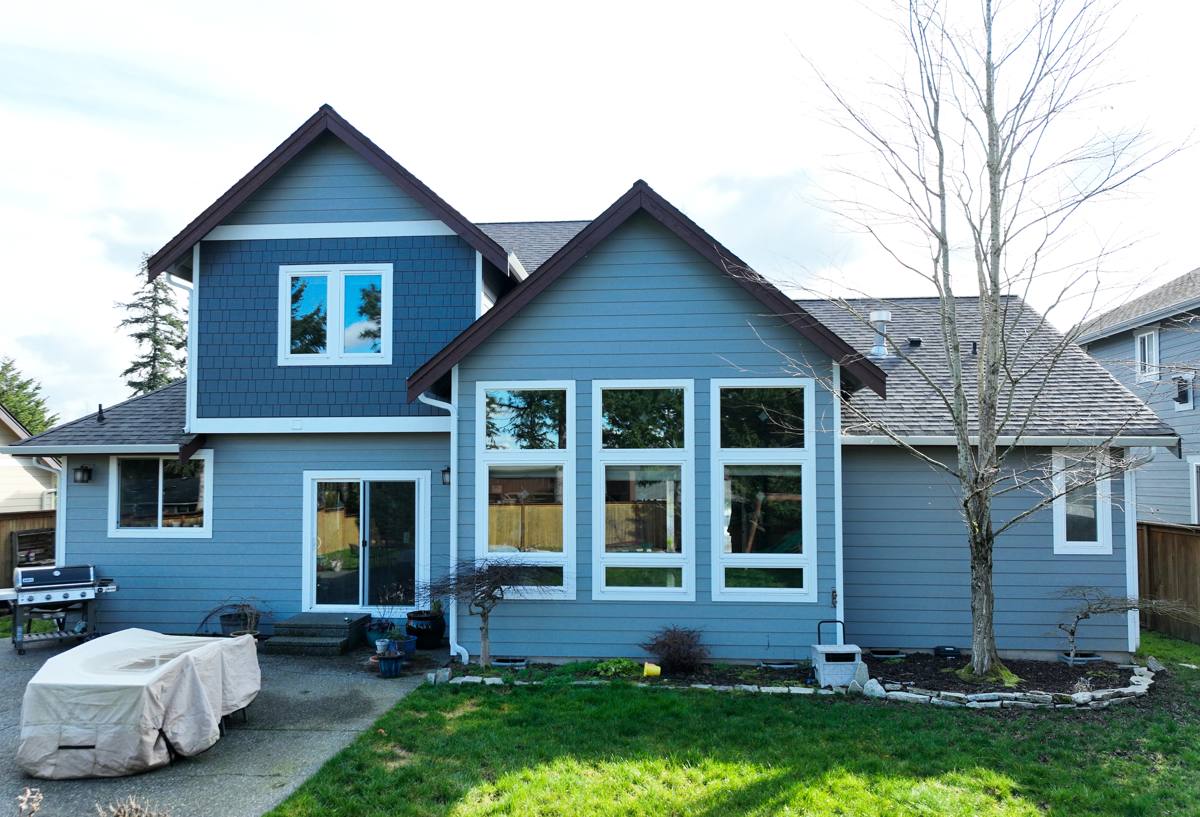
What Everson's Climate Actually Does to Siding
Driving rain and wind-driven moisture
Everson doesn't get hurricane-force wind, but it gets sustained, wind-driven rain that pushes water sideways against exterior walls for hours or days at a stretch. Siding that relies on a tight paint film or a thin factory coating to keep water out will eventually let moisture past the surface, especially at seams, corners, and anywhere caulk has started to crack. Once moisture gets behind the cladding, it doesn't dry out quickly in this climate — humidity stays high enough, long enough, that trapped water becomes a rot and mold problem rather than a one-time nuisance.
Salt air and corrosion
Everson is inland compared to waterfront Whatcom County towns, but salt-laden air still moves through the lowlands on weather systems coming off the Sound. Over years, salt exposure accelerates corrosion on fasteners, flashing, and any metal trim that isn't rated for it, and it can degrade lower-grade coatings faster than manufacturers' lab testing might suggest. This is one of the quieter reasons product choice matters here — a coating system rated for a dry inland climate isn't necessarily rated for salt exposure, even at a modest distance from open water.
Moss, algae, and prolonged dampness
The long moss season in this part of Washington is the most visible climate stress on siding. Shaded north- and west-facing walls, areas under mature trees, and low-airflow corners of a house stay damp for weeks at a time in fall and winter. Wood-based siding products absorb that moisture and become an active food source for moss and algae; fiber cement does not, because it isn't an organic material moss can root into or feed on. Surface growth can still occur on any siding if it's never cleaned, but the difference is whether the material underneath is being damaged by that dampness or simply sitting there inert.
Why Product Choice Matters More Here Than in Drier Climates
In a dry climate, a lower-tier siding product can look fine for a decade even with mediocre installation, because there's rarely enough sustained moisture to expose weak points. Everson is not that climate. The combination of driving rain, salt air, and long damp shoulder seasons means installation and material shortcuts show up faster here — often as bubbling paint, soft trim boards, or moss creeping under lap joints within just a few years rather than a decade or more.
This is the core reason we standardized on James Hardie fiber cement and stopped installing vinyl, LP SmartSide, primed wood, or comparable fiber cement alternatives. Hardie's HZ5 and HZ10 climate zone engineering, factory-applied ColorPlus finish, and non-combustible composition are built around exactly the stress profile Everson sees every winter. We'd rather install one product correctly, backed by a strong manufacturer warranty, than offer homeowners a menu of options we know perform less consistently in this specific climate.
What a Correct Siding Installation Involves
The siding itself is only part of the job. Most siding failures we get called out to inspect in this region trace back to the water management details around and behind the boards, not the boards themselves. A correct installation includes:
- A weather-resistant barrier installed with proper shingle-lap sequencing so water is directed outward and down, never trapped behind the siding
- Rainscreen or furring strip application where conditions call for it, giving the wall assembly a drainage and drying gap behind the siding
- Correctly flashed windows, doors, and any wall penetrations, tied into the weather barrier rather than just caulked over
- Manufacturer-specified fastening — correct nail type, spacing, and depth, since over-driven or under-driven fasteners are one of the most common causes of premature siding failure
- Proper clearance at the bottom of the siding from grade, decks, and roof lines, so board edges aren't sitting in standing water or snow buildup
- Factory-cut and factory-primed edges used wherever possible, with any field cuts properly sealed per manufacturer instructions
Skip any one of these and the siding can still look right for a year or two before problems show up — which is exactly why so many failures get blamed on "bad siding" when the real issue was the installation underneath it.
Our Process for Everson Homes
1. On-site assessment
We walk the exterior with the homeowner, looking at existing siding condition, moisture staining, trim and flashing details, and any shaded or low-airflow areas that are likely moss and algae hot spots. We also check for signs of past water intrusion around windows, doors, and roof-to-wall transitions, since those are the areas most likely to need extra attention during tear-off.
2. Tear-off and sheathing inspection
Once old siding comes off, we inspect the sheathing underneath for rot, soft spots, or evidence of long-term moisture damage. This is the point where problems hidden behind old siding get caught and addressed, rather than covered up with new material over a compromised wall.
3. Water management installation
We install the weather-resistant barrier, flashing, and rainscreen components (where the wall assembly calls for it) before a single piece of Hardie siding goes up. This is the layer that actually keeps Everson's driving rain and damp seasons from becoming a structural problem.
4. Hardie siding installation to manufacturer spec
We install James Hardie panels, lap siding, or trim per the manufacturer's published installation guide for our climate zone — correct fastening, clearances, and joint treatment — so the product's warranty stays intact and the performance the manufacturer engineered for actually holds up.
5. Final walkthrough
We review the completed exterior with the homeowner, point out any maintenance basics specific to their home's exposure (shaded sides, gutter overflow areas, etc.), and make sure they understand what routine upkeep looks like going forward.
Why Hiring a Crew That Already Works This Area Matters
Whatcom County building requirements, local wind and moisture exposure, and the practical realities of working around this area's weather windows are things a crew learns by doing the work here repeatedly, not by reading a spec sheet. A contractor unfamiliar with the region might install a technically correct assembly for a drier or milder climate and still leave an Everson home under-protected against the specific combination of rain, salt air, and moss pressure it actually faces. Local experience also means better scheduling around the wetter months, since siding installation goes faster and holds up better when it isn't rushed between rain systems.
Comparing Siding Approaches for This Climate
| Factor | James Hardie Fiber Cement | Vinyl | Primed Wood / LP-Style Panels |
|---|---|---|---|
| Moisture behavior | Does not absorb water or rot; dimensionally stable when wet | Sheds water on the surface but can trap moisture behind panels if installed loosely | Absorbs moisture at cut edges and fastener points if not fully sealed |
| Moss / algae resistance | Inert surface; growth can be cleaned off without material damage | Surface growth possible; material itself unaffected | Organic substrate can feed moss and algae, accelerating decay |
| Salt air exposure | Factory ColorPlus finish engineered for coastal-influenced climates | Can become brittle over time with UV and temperature swings | Coatings and substrate more vulnerable to accelerated wear |
| Fire performance | Non-combustible core material | Combustible; can melt or deform near heat sources | Combustible wood-based substrate |
| Typical warranty | Long-term transferable manufacturer warranty | Varies widely by product tier | Varies; often shorter on substrate than on paint finish |
Maintenance Realities for Everson Homes
Even the right siding product needs some routine care in this climate. Homeowners in Everson should expect to periodically rinse or gently wash shaded and north-facing walls where moss and surface algae accumulate, check that gutters and downspouts are directing water away from the siding rather than overflowing onto it, and keep an eye on caulking around windows, doors, and trim for cracking over time. None of this is unique to fiber cement, but Hardie's inert, non-organic composition means routine cleaning is a cosmetic task rather than a race against material breakdown.
Cost Factors to Expect
Every Everson home is different, but a few factors consistently move the price of a siding installation up or down: the amount of tear-off and sheathing repair needed, the complexity of the home's roofline and number of penetrations to flash, whether a rainscreen assembly is being added where one didn't exist before, and the specific Hardie product line and color selected. We don't quote broad numbers without seeing the home, because guessing on a job this dependent on existing wall condition does homeowners a disservice — but we're upfront about these cost drivers during the on-site assessment so there are no surprises.
If your Everson or Lynden home is due for new siding, or you're seeing early signs of moisture or moss damage on what you have now, we're happy to walk the exterior with you and give you a straight, no-pressure estimate using the form below.