 Lynden
 Roofing Aldergrove, BC Homes From Just Across the Line
Aldergrove sits close enough to the Washington border that a lot of homeowners here end up choosing a contractor from either side of it. We're based in Lynden, and we've built our roof replacement process around the weather this part of the Pacific Northwest actually produces — not the weather a national roofing brand assumes you have. That distinction matters more than most homeowners realize until they've lived through a roof that was installed for a drier climate.
A roof replacement is a big investment, and it's one you want to get right the first time. This page is about what that looks like specifically for a home in Aldergrove, BC — not a generic rundown of shingles and flashing.
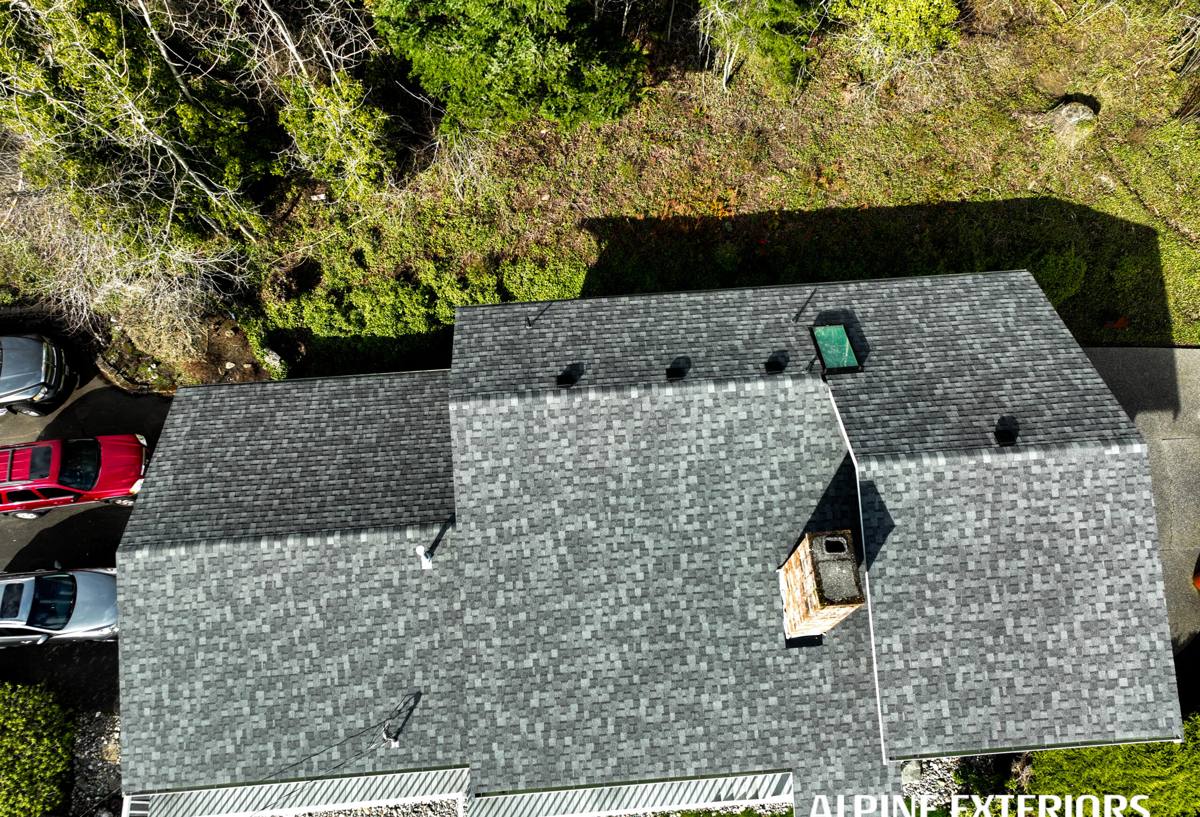
What the Regional Climate Does to a Roof
The weather pattern that moves through Whatcom County and the Fraser Valley doesn't spare Aldergrove. Homes here deal with a few things at once, year after year:
- Marine-influenced air off the Salish Sea and Georgia Strait, which carries moisture and a trace of salt content that slowly works on exposed metal fasteners, flashing, and gutter hardware.
- Driving rain that doesn't just fall straight down — wind-driven storms push water sideways under poorly lapped shingles, around chimneys, and into valleys that weren't detailed correctly the first time.
- A long moss season that runs from fall through spring, when shaded, north-facing, and low-slope roof sections stay damp for weeks at a stretch.
None of that is dramatic on its own. The damage is cumulative. A roof that would last three decades in a dry inland climate can lose real years off its service life here if it wasn't detailed for constant moisture exposure.
Moss Is a Symptom, Not Just a Nuisance
Moss growth gets treated as a cosmetic problem, but it's usually telling you something else is going on. Moss holds moisture directly against the roofing material, and as it spreads under shingle tabs and along butt joints, it lifts them just enough to let wind-driven rain find a way in. By the time moss is visibly thick, the shingles underneath it have often been sitting wet for years.
Signs a Roof Needs Replacement, Not Another Repair
We get called out for a lot of roofs that homeowners assume just need a patch. Sometimes that's true. Other times, the roof has quietly moved past the point where patching makes financial sense. A few signs that point toward full replacement:
- Granule loss heavy enough that shingles look bald or blotchy in patches, especially on south and west-facing slopes
- Shingles that are cupping, curling at the edges, or cracking when walked on
- Soft spots or visible sagging in the roof deck, which usually means water has already reached the sheathing
- Repeated leaks in different locations rather than the same recurring spot
- A roof that's 20+ years old with moss that returns within a season or two of cleaning, no matter how often it's treated
- Daylight visible through the attic or consistently damp insulation
If it's just one or two of these and the roof is otherwise sound, a repair is usually the honest recommendation. When several show up together, replacement is almost always the more cost-effective path — patch work on an aging roof tends to become a recurring expense that adds up to more than the replacement would have cost.
What a Correct Roof Replacement Actually Involves
Replacing a roof is more than swapping old shingles for new ones. In a climate like this, the parts you don't see matter as much as the ones you do.
Tear-Off and Deck Inspection
We remove the existing roofing down to the deck rather than layering over it. That's the only way to find hidden rot, soft sheathing, or moisture damage that's been building underneath. Any compromised decking gets replaced before anything new goes down — skipping this step is the single most common shortcut that leads to early failure.
Underlayment and Ice/Water Protection
Given how much wind-driven rain this area sees, underlayment choice isn't a minor detail. We use synthetic underlayment across the field and self-adhering ice-and-water membrane at the eaves, valleys, and around every penetration — chimneys, vents, skylights — where water intrusion actually happens.
Flashing Done Properly
Flashing failure is behind more leaks than worn-out shingles are. Step flashing at walls, proper valley metal, and correctly sealed penetrations are what keep driving rain from finding its way in sideways, which is exactly how it arrives during a coastal storm.
Ventilation
A roof that can't breathe traps moisture in the attic, which speeds up deck rot and feeds moss growth from underneath. Balanced intake and exhaust ventilation is part of a correct replacement, not an upsell.
Roofing Material Options for This Climate
There's no single "best" roofing material — the right choice depends on your roof's slope, sun exposure, budget, and how much moss and moisture resistance matters for your specific property. Here's how the common options stack up for a home in this region:
| Material | Typical Lifespan | Moss & Moisture Resistance | Relative Cost |
|---|---|---|---|
| 3-tab asphalt shingles | 15–20 years | Fair — needs regular moss treatment | $ |
| Architectural (laminate) asphalt shingles | 25–30 years | Good — thicker mat sheds water better | $$ |
| Metal (standing seam or panel) | 40–50+ years | Excellent — moss struggles to root on smooth metal | $$$ |
| Cedar shake | 20–30 years with upkeep | Poor to fair — porous, needs diligent maintenance | $$$ |
For most Aldergrove homes, architectural asphalt shingles hit the best balance of cost and performance. We don't push cedar shake in this climate as a default recommendation — it's a beautiful material, but its porous surface holds moisture and needs consistent upkeep to avoid rot and moss colonization, and that maintenance burden is worth knowing about upfront rather than discovering later. Metal is worth serious consideration for steep, shaded, or hard-to-access roofs where moss has been a chronic problem, since it removes most of the surface that moss needs to establish itself.
Our Roof Replacement Process
- On-site inspection — we walk the roof, check the attic, and identify problem areas before recommending anything
- Written estimate — clear scope, material options, and pricing, no vague allowances
- Scheduling around weather windows — we plan replacements for stretches of dry weather where possible, since a rushed tear-off in a downpour is how corners get cut
- Full tear-off and deck repair as needed
- Underlayment, flashing, and ventilation installed to spec, not skipped for speed
- Final walkthrough with the homeowner before we consider the job done
Cost Factors Worth Understanding
Every roof is priced based on its own specifics, but a few factors consistently move the number more than homeowners expect:
- Roof pitch and complexity — steep slopes and multiple valleys or dormers take longer and require more safety setup
- Deck condition — hidden rot found during tear-off adds material and labor that can't be quoted sight unseen
- Material choice — asphalt, metal, and cedar carry very different price points, as shown above
- Access — roofs with limited driveway or yard access can add time for material staging and disposal
- Layers to remove — a roof with an existing overlay takes longer to tear off than a single-layer roof
Anyone quoting a firm number without seeing the roof and attic in person is guessing. We inspect first, then price.
Why Hiring a Crew That Already Works Aldergrove, BC Matters
A roofing crew that mostly works dry inland climates will often detail a roof to code minimums and call it done. That's not enough here. We work this stretch of Whatcom County and the border communities regularly, which means we're used to building in the extra margin — the added underlayment coverage, the flashing details, the ventilation — that this weather pattern demands over time, not just on day one.
Working across the border also means understanding that permitting and inspection processes on the Canadian side work differently than they do in Washington. We handle that coordination as part of the job so it isn't left for the homeowner to sort out mid-project.
We're also still local after the roof is done. If something needs a look after the first heavy storm season, we're not driving in from out of the area to get to you.
After Your Roof Is Replaced: What Keeps It Lasting
A correct installation is most of the battle, but a little seasonal attention goes a long way in this climate:
- Clear gutters and downspouts before the fall rains set in, so water isn't backing up under the eaves
- Keep overhanging branches trimmed back to cut down on shade and debris that feed moss growth
- Have moss treated at the first sign of regrowth rather than waiting for it to spread
- Check attic ventilation isn't blocked by insulation or storage
- Have the roof looked at after any major windstorm, especially around flashing and penetrations
If you're weighing a repair against a full replacement, or just want an honest read on what shape your roof is really in, we're happy to take a look. Estimates are free, there's no pressure attached, and you can request one through the form below.