 Lynden
 Roofing in Acme: Built for What This Climate Actually Does to a Roof
Acme sits in a part of Whatcom County where the weather doesn't do a roof any favors. Moisture-laden air moves in off Puget Sound and the Strait of Georgia and settles into the foothills, and homes tucked among trees pick up shade, standing dampness, and a moss season that can run most of the year. Add in driving rain that comes sideways during winter storms, and you've got a combination that finds every weak point in a roof system faster than most homeowners expect.
A roof that would hold up fine in a dry inland climate can fail early here if it wasn't built for this specific mix of rain, humidity, and shade. That's the lens we use on every new roof installation in Acme: not "what's a decent roof," but "what does a roof need to survive this particular property, in this particular pocket of Whatcom County."
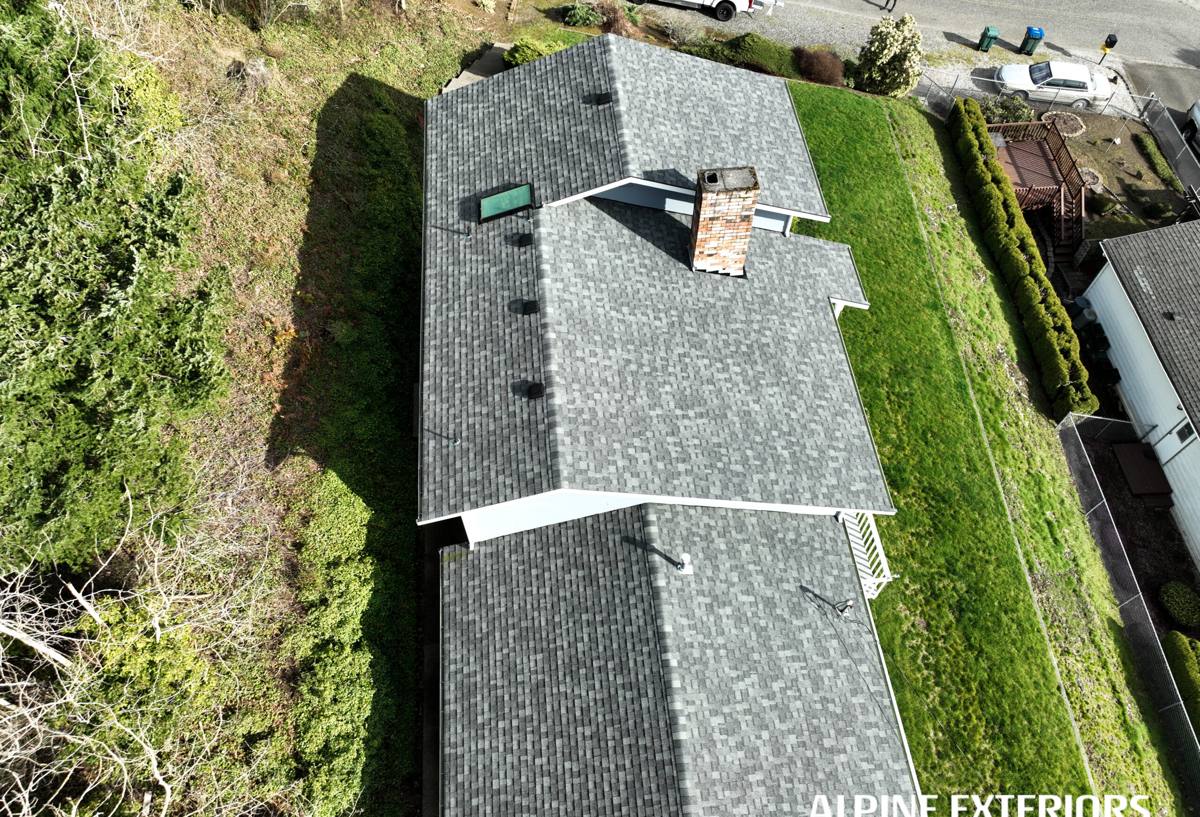
What Acme's Climate Does to a Roof Over Time
A few things show up again and again on roofs we look at in and around Acme:
- Moss and algae growth — shaded, tree-lined lots hold moisture on the roof surface far longer than an open lot in full sun, and moss roots work into shingle granules and shakes over time.
- Driving rain intrusion — wind-driven rain doesn't just fall straight down; it pushes up under shingle tabs, around flashing, and into any gap that a fair-weather installation might have gotten away with.
- Prolonged dampness — a roof that never fully dries out between storms is more prone to rot in the decking underneath, especially where ventilation is poor.
- Debris buildup — needles, leaves, and branches from surrounding tree cover collect in valleys and around penetrations, holding water against roofing material.
None of this means Acme is a bad place to own a home — it means the roof has to be installed with these specific conditions in mind from the first layer up, not just shingled over and hoped for.
Why "Any Roofer" Isn't the Same as "The Right Roofer" Here
A lot of roofing problems we get called out to fix weren't caused by bad materials — they were caused by a correct-looking installation that didn't account for local conditions. Underlayment that's fine in a dry climate, ventilation that's adequate on an open lot but not under heavy tree cover, or flashing details that hold up until the first real wind-driven storm. The materials matter, but the installation decisions matter more.
Signs an Acme Home Needs a New Roof, Not Another Repair
Repairs make sense for isolated damage. A full replacement makes sense when the roof system as a whole is past the point where patching solves anything. Here's what tends to tip a roof from "repair" to "replace" territory:
- Shingles that are curling, cracked, or losing granules across large sections, not just one spot
- Moss that keeps returning within months of cleaning, especially in shaded valleys and north-facing slopes
- Soft or spongy spots when walking the roof, which usually points to decking damage underneath
- Daylight visible through the roof deck from inside the attic
- Water stains on interior ceilings or in the attic that show up during or after storms
- A roof that's already had multiple patch repairs and is approaching or past the end of its expected material lifespan
- Visible sagging along the roofline
If you're only seeing one or two of these, a repair may still be the honest answer. We'll tell you that directly rather than push a full replacement you don't need yet.
What a Correct New Roof Installation Actually Involves
A new roof is more than shingles nailed over the old ones. In a climate like Acme's, the layers underneath the visible surface are what determine whether the roof performs for its full expected lifespan or starts causing problems in year five.
Tear-Off and Deck Inspection
We remove the old roofing down to the deck rather than layering over it. This lets us actually see the condition of the sheathing and replace any sections that have soft spots or rot before they're hidden under a new roof for another 20-plus years.
Underlayment Built for Wet Climates
Given how much wind-driven rain a roof in this area deals with, the underlayment layer is not a place to cut corners. A synthetic or self-adhered underlayment with strong water-resistance, installed with proper overlap and sealed penetrations, is what keeps water out if wind ever drives moisture past the roofing surface itself.
Flashing at Every Transition
Valleys, chimneys, skylights, and wall-to-roof transitions are where most leaks actually originate — not the open field of shingles. Properly formed and sealed flashing at every one of these points is non-negotiable, especially with the driving rain this area sees.
Ventilation Sized to the Home
Balanced intake and exhaust ventilation keeps the attic dry and temperature-regulated, which matters more under tree cover where ambient humidity stays higher longer. Poor ventilation shortens shingle life and invites moisture damage from the inside out.
Ice-and-Water Protection Where It Counts
Eaves, valleys, and low-slope sections get extra membrane protection, since these are the areas where standing water and debris are most likely to collect during long wet stretches.
Roofing Material Options for Acme Homes
There's no single "best" roofing material — the right choice depends on your home's exposure to shade, your budget, and how much long-term maintenance you're willing to keep up with. Here's an honest comparison of the options we most often install or discuss with Acme homeowners:
| Material | Moss/Moisture Resistance | Typical Lifespan | Maintenance Level |
|---|---|---|---|
| Architectural asphalt shingles | Good, especially with algae-resistant granules | 25–30 years | Low to moderate |
| Standing seam metal | Excellent — sheds moisture and resists moss growth | 40–50+ years | Low |
| Cedar shake | Requires consistent upkeep in shaded, damp settings | 20–30 years with maintenance | High |
| Composite/synthetic shingles | Good, resists moisture absorption | 30–50 years | Low |
For heavily shaded lots in and around Acme, we lean toward steeper-pitch designs with materials that shed water quickly and resist algae and moss growth, since a roof that stays wetter longer will always need more upkeep regardless of what it's made of. We'll walk you through what fits your specific roofline and budget rather than pushing one product across every job.
Our New Roof Installation Process
- On-site inspection — we assess your current roof, deck condition, ventilation, and how your property's tree cover and exposure affect long-term performance.
- Honest recommendation — repair, partial replacement, or full replacement, explained in plain terms with the reasoning behind it.
- Material selection — we go over options that fit your home, budget, and how much maintenance you want to take on long-term.
- Written estimate — clear scope of work, materials, and timeline before anything is scheduled.
- Tear-off and deck repair — old roofing removed, deck inspected and repaired as needed.
- Underlayment, flashing, and ventilation installed — the layers that actually determine how the roof performs in wet weather.
- New roofing installed — following manufacturer specifications for wind and moisture resistance.
- Final walkthrough — we review the completed work with you and answer any questions before we consider the job done.
Cost Factors for a New Roof in Acme
Roofing costs vary enough by project that we don't quote real numbers without seeing the property, but the main factors that move the price are consistent:
| Factor | Why It Matters |
|---|---|
| Roof size and pitch | More surface area and steeper pitches take more material and labor time |
| Number of valleys, penetrations, and transitions | Each one needs custom flashing work, which adds labor |
| Deck condition | Rot or soft sheathing found during tear-off needs repair before new roofing goes on |
| Material choice | Asphalt, metal, cedar, and composite all carry different material and labor costs |
| Tree cover and access | Heavily wooded lots can add time for debris management and site protection |
We'd rather give you a real, itemized estimate after seeing your roof than a ballpark number that doesn't hold up once we're actually up there.
Why Hire a Crew That Already Works in Acme
A roofer who mostly works drier, more open areas can still do competent work — but decisions around underlayment strength, ventilation sizing, and moss-resistant material choices are easy to underestimate if you're not used to installing roofs under consistent tree cover and driving coastal-influenced rain. We work throughout Whatcom County, including communities like Acme with heavier tree cover and shadier lots, and we build every new roof installation around what actually holds up here — not a generic spec sheet.
That local familiarity also means we can flag things a homeowner might not think to ask about: whether a particular slope needs extra ice-and-water protection, whether existing ventilation is adequate for a shaded roofline, or whether nearby trees are going to keep dumping debris into valleys no matter what roofing material you choose.
Maintaining a New Roof Through Whatcom County Winters
Even a well-installed roof benefits from basic upkeep, especially under tree cover:
- Keep gutters and valleys clear of needles and leaves so water has a clear path off the roof
- Trim back overhanging branches to reduce shade, debris, and physical contact with the roof surface
- Have moss growth treated early rather than letting it establish and spread
- Schedule a roof check after major windstorms to catch lifted shingles or damaged flashing before they lead to leaks
- Have your roof professionally inspected every couple of years, even if nothing looks obviously wrong
A correctly installed roof with reasonable upkeep should give you decades of reliable protection, even in a climate that doesn't make it easy.
If your roof is showing its age or you're planning ahead for a replacement, we're happy to take a look and give you a straight answer about what your home actually needs. Request a free, no-pressure estimate using the form below.