 Lynden
 New Roof Installation Built for Abbotsford's Climate
Abbotsford sits in the Fraser Valley just north of the Whatcom County line, and the roofs here take a different kind of beating than roofs a few hours inland. Moist Pacific air moves through the valley for months at a time, driving rain comes in sideways during fall and winter storms, and shaded north-facing slopes can stay damp long enough to grow moss well into summer. A roof that isn't installed with that pattern in mind will show it early — curling shingles, dark streaking, soft spots at the edges — long before it should.
We install new roofs for homes on both sides of the border, and Abbotsford properties get the same attention to detail we'd give a job in Lynden: correct ventilation, correct underlayment, and flashing details that actually shed water instead of just slowing it down.
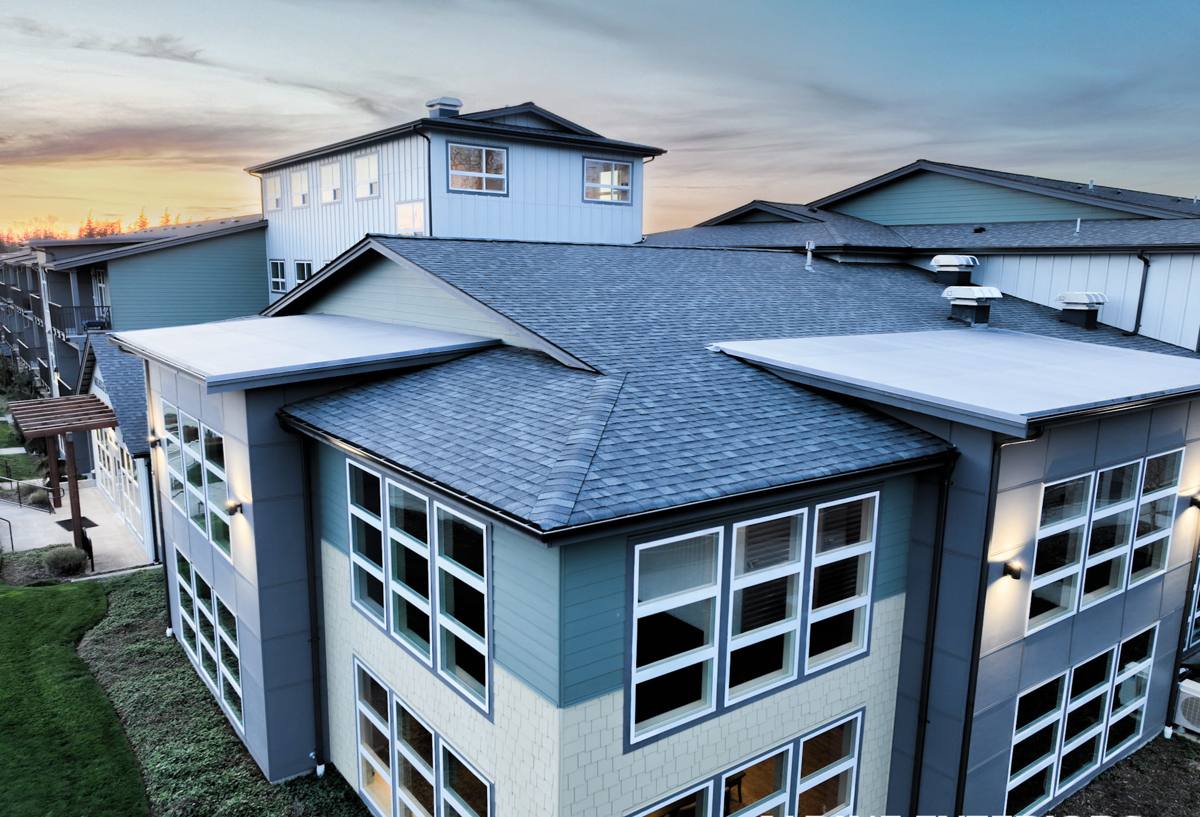
What Abbotsford Roofs Deal With Every Year
Before we talk about materials or process, it's worth being specific about what a roof in this area is actually up against, because it changes how the job should be done.
Sustained Damp and Moss Pressure
Overcast, drizzly stretches are the norm rather than the exception for much of the year. Roofs with limited sun exposure, tree cover, or a shallow pitch stay wet longer, and that moisture is exactly what moss and algae need to take hold. Once moss establishes itself under shingle tabs, it lifts them slightly and holds water against the roof deck, which is how small problems turn into deck rot.
Driving, Wind-Driven Rain
Storms moving through the valley don't always fall straight down — wind pushes rain sideways and up under laps, ridge caps, and anywhere flashing isn't sealed properly. A roof that would perform fine in calm rain can leak in a wind-driven event if the underlayment and flashing weren't installed with that in mind.
Salt-Influenced Coastal Air
Proximity to the Salish Sea means metal components — flashing, fasteners, vents, ridge accessories — are exposed to airborne salt that accelerates corrosion over time compared to a fully inland climate. Choosing corrosion-resistant metal and fasteners isn't optional here; it's part of doing the job right.
Temperature Swings and Freeze-Thaw
Winters aren't brutally cold, but the region does see enough freeze-thaw cycling that trapped moisture under shingles or in a poorly ventilated attic can expand, contract, and work materials loose over a few seasons.
Signs an Abbotsford Roof Needs Replacing, Not Patching
Homeowners often call us for a repair and find out the roof is past the point where patching makes sense. Some signs are obvious; others aren't.
- Shingles that are curling, cupping, or losing granules in patches (check gutters for grit buildup)
- Dark streaking or thick moss growth across large sections, especially on north-facing slopes
- Soft or spongy spots when walking the roof, which usually means deck damage underneath
- Daylight visible through the attic roof boards, or damp insulation after a storm
- Flashing that's rusted, lifted, or separated around chimneys, skylights, and valleys
- A roof approaching or past 20-25 years old (asphalt) with multiple repair visits already behind it
- Granule loss heavy enough that the underlying mat is visible in spots
One or two of these on their own might mean a repair is enough. Several together, or damage concentrated at the deck level, usually means it's time to talk about full replacement.
What a Correct New Roof Installation Actually Involves
A roof is a system, not just a layer of shingles. Skipping or shortcutting any one layer is what causes early failure in this climate specifically.
Tear-Off and Deck Inspection
We remove the existing roofing down to the deck rather than laying over old material. That's the only way to find soft, delaminating, or rotted sheathing — which is common under areas that held moisture for years — and replace it before it's covered up again.
Ice-and-Water Protection at Vulnerable Points
Valleys, eaves, and areas around penetrations get self-adhering waterproof membrane, not just standard felt. Given how much wind-driven rain and standing moisture this area sees, this layer is what keeps water out even if wind pushes rain past the shingle surface.
Synthetic Underlayment Across the Field
A quality synthetic underlayment across the rest of the roof gives a second line of defense and holds up better than old-style felt when exposed during a multi-day install in unpredictable weather.
Flashing Done Properly, Not Reused
Chimney flashing, step flashing along walls, and valley flashing get replaced with new, corrosion-resistant metal — properly lapped and integrated with the underlayment, not just caulked. This is one of the most common places we find failure on older roofs, and it's also one of the most common places corners get cut on a fast, cheap install.
Balanced Attic Ventilation
Intake at the eaves and exhaust at the ridge need to work together. Without balanced ventilation, moisture from inside the home gets trapped in the attic, which shortens the life of the new roof from underneath — regardless of how good the shingles are.
Material Installed to Manufacturer Spec
Correct nail placement, correct exposure, correct starter course at the eaves — these details determine wind resistance and warranty validity as much as the material choice itself.
Choosing Roofing Material for This Climate
There isn't one "best" roofing material — there's a best fit for the home, the budget, and how much long-term maintenance the homeowner wants to take on. Here's how the common options compare for a wet, moss-prone climate like Abbotsford's.
| Material | Moss/Moisture Resistance | Typical Lifespan | Maintenance |
|---|---|---|---|
| Asphalt shingles (standard) | Moderate — algae-resistant granules help but don't eliminate moss risk | 20-25 years | Periodic moss/debris removal recommended |
| Asphalt shingles (algae-resistant, copper-infused) | Better — copper granules actively discourage algae/moss growth | 25-30 years | Lower, but not maintenance-free |
| Metal roofing | Strong — smooth surface sheds water and resists moss better than textured materials | 40-60 years | Low, but coastal-grade fasteners matter |
| Cedar shake | Weaker — organic material holds moisture and needs active upkeep to resist rot/moss | 20-30 years with upkeep | High |
We'll walk through what's realistic for your roof's pitch, sun exposure, and budget rather than pushing one product — the right call depends on the specific house.
Our Process for an Abbotsford Roof Replacement
Crossing the border for a job means we plan the logistics up front so the install itself runs the same as any local project.
- On-site assessment — we inspect the current roof, deck condition where accessible, ventilation setup, and flashing points, and give you a straight answer on repair vs. replacement.
- Written estimate — material options, scope, and timeline laid out clearly, with no pressure to decide on the spot.
- Scheduling around weather — we build in realistic windows given how often the forecast changes here, and we don't leave a deck exposed to a storm.
- Tear-off and deck repair — full removal, with any damaged sheathing replaced and documented for you.
- Underlayment, flashing, and ventilation installed correctly — the layers that actually determine how the roof performs in five and ten years, not just how it looks on day one.
- Final walkthrough — we go over the completed roof with you, including how ventilation and drainage were handled.
Why Local Experience with Abbotsford Homes Matters
A crew that mostly works drier, inland climates can still build a technically fine roof — but they're less likely to instinctively over-build the details that matter here: extra ice-and-water membrane at valleys, corrosion-resistant fasteners, ventilation sized for sustained damp conditions rather than occasional rain. Those aren't upgrades so much as baseline expectations for this region.
Working across the Whatcom County–Fraser Valley area regularly also means we're familiar with how homes in this corridor are typically built, what roofing profiles are common, and what tends to fail first on older Abbotsford roofs specifically — which speeds up both the assessment and the install.
Cost Factors for a New Roof in Abbotsford
We don't publish flat prices because roof cost depends on real variables, but here's what actually moves the number.
| Factor | Why It Affects Cost |
|---|---|
| Roof size and number of stories | More surface area and steeper access both add labor time |
| Pitch and complexity | Steep or multi-valley roofs take longer and use more flashing detail |
| Deck condition | Rotted or soft sheathing found during tear-off adds material and labor |
| Material choice | Asphalt, algae-resistant asphalt, and metal all carry different material costs |
| Ventilation upgrades | Adding or correcting intake/exhaust venting adds scope but protects the investment |
| Tear-off layers | Removing multiple existing layers of roofing takes more time than a single layer |
The only way to get a real number is a look at the actual roof — anyone quoting a firm price sight-unseen is guessing.
Get a No-Pressure Estimate
If your Abbotsford roof is showing moss buildup, curling shingles, or you just want an honest read on how much life it has left, we're glad to come take a look. The estimate is free, there's no obligation, and you'll get a straight answer about whether you need a full replacement or just a targeted repair — use the form below to get started.