 Lynden
 Why Siding Fails Faster Out Here
Maple Falls sits in a part of Whatcom County that takes weather seriously. Between the marine air moving in off the Salish Sea, long stretches of driving rain, and a moss season that can run most of the year in the shade of the tree line, exterior siding here works harder than it does in drier parts of the state. Add wind-driven rain that hits siding at an angle instead of straight down, and you get moisture finding its way into seams, corners, and fastener holes that would stay dry somewhere else.
None of that means siding is doomed to fail. It means siding has to be installed and repaired correctly the first time, with materials and methods that assume the wet season is coming back every single year. A repair that looks fine on a dry August afternoon can fail its first real test in November.
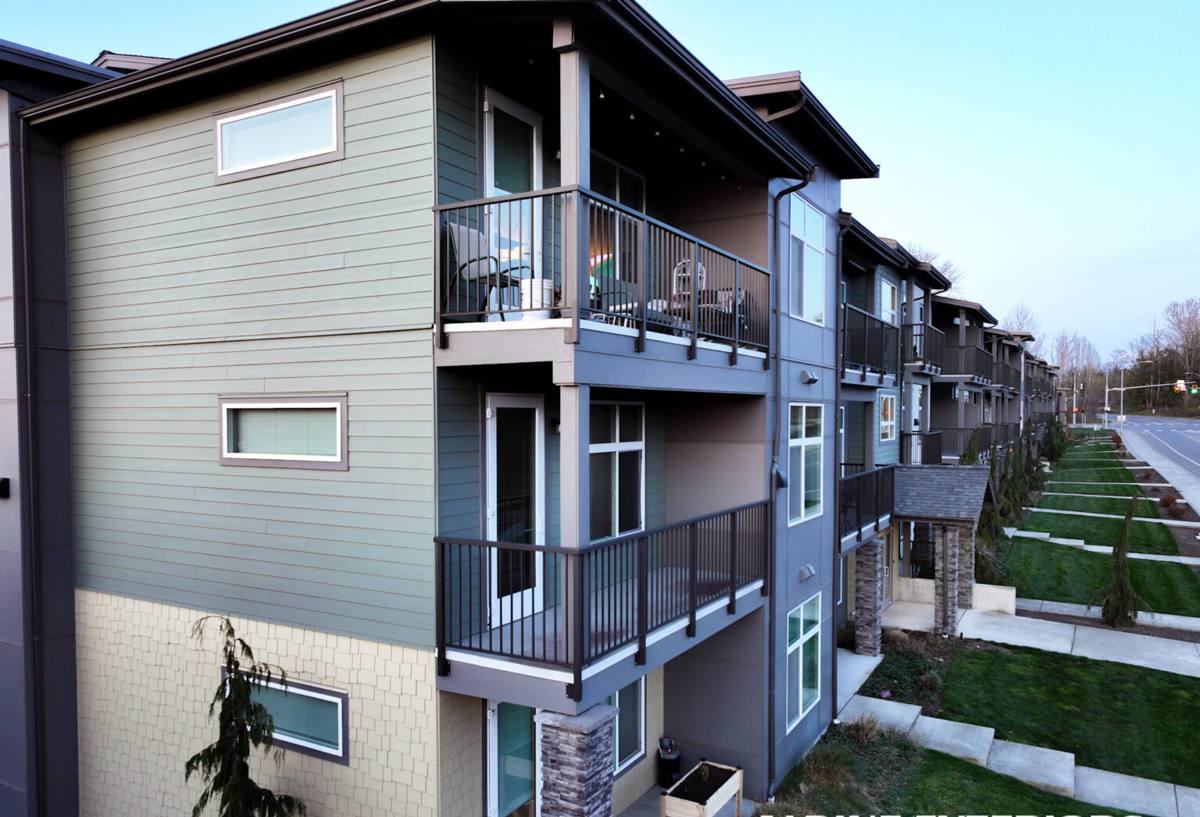
How to Tell If You Need a Repair or a Replacement
Most calls we get start with a homeowner noticing one bad spot and wondering whether that's a quick fix or the first sign of something bigger. The honest answer depends on how far the damage has spread and what's happening behind the surface, not just what you can see from the yard.
Signs You Can Spot From the Ground
- Dark green or black staining that keeps coming back within weeks of cleaning
- Boards that look swollen, soft, or slightly bowed compared to the wall around them
- Cracked or split panels, especially near corners and window trim
- Paint or caulk that's peeling, chalking, or pulling away from seams
- Gaps where siding has pulled loose from fasteners or trim
Signs That Usually Mean More Than a Patch
If a section of siding is soft enough to press in with a thumb, or if staining is showing up in a repeating pattern along a whole wall rather than one spot, that's usually moisture that's been getting behind the siding for a while, not just sitting on top of it. At that point the sheathing underneath needs to be checked before anything gets covered back up. Patching over hidden rot doesn't fix it — it just hides it until the next inspection or the next remodel.
What a Correct Siding Repair Actually Involves
A repair that's done right isn't just "cut out the bad board and nail in a new one." It's a short sequence of decisions, and skipping any of them is how a five-year-old repair fails again in year two.
Matching What's Already There
Board profile, exposure, and color all need to line up with the surrounding siding, or the repair sticks out for as long as the house stands. This is easier when the home was originally installed with a consistent, well-documented product line — one more reason a factory-finished system with a known lineup of profiles and colors makes future repairs simpler than a discontinued or custom-matched product would.
Getting the Water Management Right
Every repair is also a chance to check and correct the water-shedding details around it: house wrap or weather-resistive barrier, flashing at trim and window heads, and proper clearance where siding meets trim, decks, or grade. If those details were wrong the first time, replacing the board without fixing the flashing just resets the clock on the same failure.
Fastening and Sealing
Fasteners need to be the right type and driven correctly — not overdriven, not into a stud miss, and placed where the manufacturer's install specs call for them. Sealant belongs only where it's supposed to go; caulking every seam on a lap-siding wall as a catch-all fix actually traps moisture instead of releasing it, which is a common mistake we see from past patch jobs.
Common Repair Issues We See in the Maple Falls Area
| Issue | What's Usually Happening | Typical Fix |
|---|---|---|
| Persistent moss and algae staining | Shaded walls stay damp longer between rains, giving growth time to take hold in seams and butt joints | Clean, inspect for softened material underneath, repair or replace affected boards |
| Soft or swollen boards near trim | Failed caulk or flashing letting water track behind the siding at window and door trim | Remove affected siding, correct flashing detail, install matching replacement boards |
| Cracked corners and butt joints | Wood-based or improperly fastened siding moving with temperature and moisture swings | Replace with correctly fastened fiber cement, re-flash the joint |
| Paint failure and chalking | Field-applied paint breaking down faster than a factory finish under UV and rain exposure | Assess whether spot repaint or board replacement with factory-finished material makes more sense long-term |
Repair or Replace: The Honest Cost Factors
Every wall is different, so we're not going to give you a number that doesn't mean anything without seeing the house. What we can tell you is what actually drives that decision, so you know what to ask when you're getting quotes.
- How much of the wall is affected — a few boards is a repair; damage spread across most of an elevation starts to make full replacement more cost-effective
- What's happening behind the siding — if sheathing or framing has taken on water damage, that has to be addressed regardless of what happens to the siding itself
- Whether the existing product can still be matched — older or discontinued siding lines sometimes force a choice between a visible mismatch and replacing more of the wall than the damage alone would require
- Age and condition of the rest of the siding — if the house is nearing the end of its siding's realistic service life, a repair is still worth doing correctly, but it's fair to plan for replacement timing at the same time
Why We Repair and Replace With James Hardie Fiber Cement Only
We don't install or patch with vinyl, LP SmartSide, Cemplank, Allura, primed spruce, or cedar. That's a deliberate standard, not a lack of familiarity with those products. Each of them has real advantages — vinyl is inexpensive and low-maintenance in mild conditions, engineered wood products install quickly, and cedar has a look a lot of people love. But in a climate that stays wet for months at a time, those products carry trade-offs we're not willing to put our name behind: engineered wood and untreated wood siding are more sensitive to sustained moisture exposure at cut edges and seams, vinyl can warp and doesn't hold up the same way to impact or extreme temperature swings, and both come with maintenance schedules and warranty structures that don't match what we want to stand behind for years after the job is done.
What This Means for a Repair
James Hardie fiber cement is non-combustible, holds its factory ColorPlus finish for years without repainting, and is built in HZ5 formulations engineered for climates like ours — meaning the moisture and freeze-thaw resistance is built into the product, not dependent on a perfect paint job holding up. When we repair a Hardie wall, we're matching into a product line that's still in production and well documented, which keeps the repair looking like part of the wall instead of a patch. If your home currently has a different siding product and needs enough repair work that full replacement is on the table, we'll walk you through why Hardie is what we'd put up instead — including the parts of that conversation that aren't just marketing, like install sensitivity and what a proper warranty actually covers.
Our Repair Process
- Inspection — we look at the affected area and the surrounding wall, checking for signs the damage extends further than what's visible from outside
- Diagnosis — we identify the actual cause (flashing failure, fastener issue, material breakdown) so the repair fixes the source, not just the symptom
- Honest scope and quote — you get a clear explanation of what needs to happen and why, including if we think replacement makes more sense than repair for your situation
- Repair work — matching materials, corrected water management details, proper fastening, and finish work to blend with the existing siding
- Final check — we confirm the repair sheds water correctly and sits flush with the surrounding wall before we call the job done
Why Local Experience in This Area Matters
A siding repair crew that already works Maple Falls and the wider Lynden area knows what a wall in this microclimate looks like after five wet seasons versus fifteen. That matters when you're trying to tell the difference between cosmetic staining and a moisture problem that's been building behind the siding for years. It also matters for scheduling and access — repair work outdoors in Whatcom County has a real weather window, and a crew that plans around our rain patterns gets the job done without leaving a wall exposed longer than it needs to be.
If you've got a section of siding that's staining, cracking, or feeling soft to the touch, we're happy to take a look and give you a straight answer about what it needs — whether that's a targeted repair, a larger fix, or just a heads-up to keep an eye on it. Reach out for a free, no-pressure estimate using the form below.