 Lynden
 Why Maple Falls Roofs Age Differently Than Roofs in Town
Maple Falls sits up against the foothills along the Mount Baker Highway, and that setting changes how a roof behaves. Homes here tend to sit under more tree cover than roofs closer to downtown Lynden, which means more shade, more standing moisture after a storm, and more organic debris — needles, cones, leaf litter — collecting in valleys and along eaves. A roof that would dry out in an afternoon in an open, sun-exposed yard can stay damp for days under a stand of fir or cedar. Over years, that difference shows up as premature moss growth, soft spots in the decking, and shortened shingle life, even on a roof that was installed correctly.
The broader region plays a role too. Whatcom County's marine-influenced climate brings driving rain off the Strait and long stretches of gray, wet weather much of the year, and homes closer to the water deal with salt-laden air that speeds up corrosion on exposed metal fasteners and flashing. Maple Falls is far enough inland and up in elevation that salt exposure is a smaller factor than it is for waterfront properties, but the rain and the moss are not smaller factors here — if anything, the tree cover makes them worse. A roof replacement in this area has to be specified for shade, moisture, and organic growth first, and for everything else second.
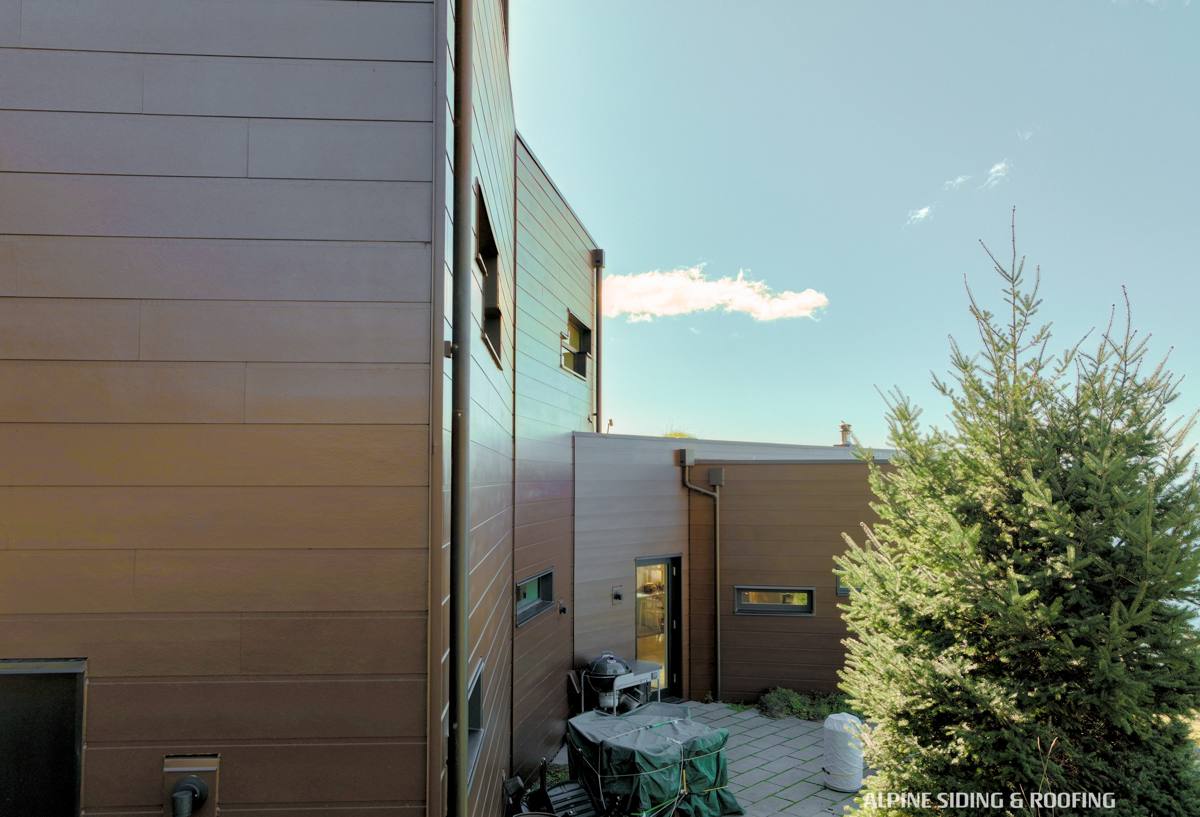
Signs Your Roof Needs Replacing, Not Just Another Repair
Not every roof problem in Maple Falls calls for a full tear-off. But there's a point where patching stops being cost-effective and starts being a way to spend money without actually solving anything. Here's how to tell which side of that line you're on.
Warning Signs Worth a Second Look
- Granules collecting in gutters or at the base of downspouts, especially after a heavy rain
- Shingles that look cupped, curled at the edges, or brittle when you look at them from the ground
- Dark streaking or thick moss mats, particularly on the shaded, north-facing slopes
- Soft or spongy spots when walked on, or visible sagging along the roofline
- Daylight visible through the attic roof deck, or damp insulation below it
- Repeated leaks around the same penetration — chimney, vent pipe, skylight — even after repair
One or two of these on their own might mean a targeted repair is enough. Several at once, especially on a roof already past 18-20 years old for asphalt shingles, usually means the underlying materials are failing across the board and a repair will just be chasing the next leak six months later.
Choosing the Right Roofing System for This Area
There's no single "best" roofing material — there's a best material for this specific roof, this amount of shade, and this budget. For Maple Falls, moss resistance and rain performance matter more than they would for a roof in a drier, sunnier part of the state, so we weigh those factors heavily when we walk a homeowner through options.
| Material | Moss/Shade Performance | Rain Performance | Typical Lifespan | Relative Cost |
|---|---|---|---|---|
| Architectural asphalt shingle | Good with zinc/copper strips or algae-resistant granules; needs periodic cleaning under heavy shade | Very good when properly lapped and sealed | 20-30 years | $ |
| Standing seam metal | Excellent — smooth surface sheds moss and debris | Excellent; fast runoff, minimal standing water | 40-60 years | $$$ |
| Synthetic composite (slate/shake look) | Good; less absorbent than wood shake, still benefits from occasional cleaning | Very good | 30-50 years | $$ |
| Cedar shake | Poor in heavy shade without diligent maintenance | Fair; absorbs and holds moisture longer than other options | 20-30 years with upkeep | $$-$$$ |
We don't push homeowners away from cedar shake because it's a bad-looking product — it's a beautiful, traditional choice. Our concern is honest and practical: in a shaded, damp setting like much of Maple Falls, wood shake holds moisture longer than shingle, metal, or composite alternatives, and that moisture retention is exactly what accelerates moss growth and rot in this particular climate. If a homeowner wants that look, we'll talk through what the maintenance schedule actually needs to look like to keep it performing.
A Note on Ventilation Compatibility
Whatever material you choose, it has to work with a ventilation system that can actually move air through the attic. A premium roofing material installed over a poorly ventilated deck will still trap moisture and fail early — the material isn't the whole story.
What a Correct Roof Replacement Actually Involves
Tear-Off and Deck Inspection
We remove the old roofing down to the deck rather than layering new material over old — layering hides problems and voids most manufacturer warranties. Once the deck is exposed, we check every sheet of sheathing for soft spots, delamination, or water staining, particularly around valleys and any point where trees overhang the roofline, since that's where debris and standing moisture do the most damage over time. Any bad sheathing gets replaced before anything new goes down; it's not an upsell, it's the difference between a roof that lasts and one that fails from underneath.
Underlayment and Flashing
Given how much driving rain this area sees, we use a synthetic underlayment rather than old-style felt paper, and we install ice-and-water shield membrane at eaves, valleys, and around penetrations — the spots most likely to see wind-driven rain forced up under the shingle line. New flashing goes in around every chimney, skylight, and sidewall rather than reusing old flashing, since flashing failures are one of the most common sources of "mystery leaks" on an otherwise sound roof.
Ventilation and Attic Airflow
A balanced intake-and-exhaust system — soffit vents pulling air in, ridge vents letting it out — keeps the attic closer to outdoor temperature and humidity. That matters in Maple Falls because a poorly ventilated attic traps moisture from daily living (showers, cooking, laundry) with nowhere to go, which condenses on the underside of the deck and rots it from the inside, regardless of how good the shingles on top are.
Our Process, From Estimate to Cleanup
- On-site inspection and measurement, including a look in the attic where accessible
- A written estimate that spells out material options, scope, and price — no vague allowances
- Scheduling built around weather windows, since a wet tear-off day is a problem we plan around, not one we improvise through
- Tear-off, deck repair as needed, and full dry-in the same day whenever the roof size allows
- Installation of underlayment, flashing, and the chosen roofing material
- Final walkthrough with the homeowner and full site cleanup, including a magnetic nail sweep
We keep the homeowner in the loop if we find deck damage once tear-off starts — that's the one part of a roof job that genuinely can't be known for certain until the old roofing comes off, and we'd rather show you the problem than guess at it from the ground.
Moss: Prevention and Long-Term Roof Care
A new roof in Maple Falls will still be exposed to the same shade and rain that aged the old one, so the goal isn't to eliminate moss risk entirely — it's to install a roof designed to resist it and give homeowners a simple maintenance routine that keeps it that way.
- Have gutters and valleys cleared of needles and debris at least twice a year, more often under heavy tree cover
- Trim back overhanging branches where practical to reduce shade and debris load on the roof
- Ask about zinc or copper control strips at installation — they release trace metals with rainfall that inhibit moss regrowth over time
- Avoid pressure washing shingles directly; it strips granules and shortens shingle life. A soft wash or gentle brushing is safer
- Address small moss patches early, before they mat and start holding water against the shingle surface
What Affects the Cost of a Roof Replacement Here
Every estimate is specific to the house, but a few factors consistently move the price up or down for Maple Falls properties in particular:
- Roof pitch and access — steep roofs or homes with limited driveway/staging space due to trees take longer and require more safety setup
- Number of existing layers to tear off and dispose of
- Condition of the decking once exposed — hidden rot from years of shade and moisture is more common here than in drier, sun-exposed neighborhoods
- Material choice, from standard architectural shingle up through metal or composite systems
- Complexity — chimneys, skylights, multiple valleys, and dormers all add flashing work
- Permitting and any code-required upgrades, which we handle as part of the project
We'd rather walk a property and give a specific number than quote a range that doesn't hold up once the roof is actually opened up.
Why Hiring a Crew That Already Works Maple Falls Matters
A crew that regularly works this part of Whatcom County already understands what a shaded, tree-heavy, rain-heavy roof needs before they climb the ladder — how much deck rot to expect on a north-facing slope, which valley details actually hold up to driving rain, and how to plan a tear-off around a weather window that can close faster out here than it does in town. That local familiarity shows up in fewer surprises mid-project and a roof that's specified for the conditions it will actually face, not a generic install pulled from a spec sheet written for a drier climate.
It also matters for the practical side of the job — navigating rural driveway access, coordinating around septic or well locations, and knowing which permitting requirements apply in unincorporated Whatcom County versus inside Lynden's city limits. None of that is complicated, but it's the kind of local groundwork that keeps a project moving instead of stalling on avoidable logistics.
If your roof is showing its age, or you just want an honest opinion on whether repair or replacement makes more sense for your home, we're happy to take a look. The estimate is free, there's no pressure attached to it, and you'll get a straight answer either way — just fill out the form below to get started.