 Lynden
 Window Installation in Nooksack: Built for This Stretch of the Nooksack Valley
Nooksack sits inland from the coast, in the agricultural flatland of the Nooksack River valley a short drive from Lynden. It doesn't get the direct salt spray of a waterfront property on Birch Bay or Semiahmoo, but it's still well within the marine weather system that shapes exterior work across Whatcom County. Moist air moves up the valley off the Sound, rain through fall and winter tends to arrive sideways rather than straight down, and the open farmland and river-bottom humidity around Nooksack give moss and mildew a long season to work on anything that stays shaded or damp. Windows sit right at the seam between the inside of a house and all of that weather, and window work is where a lot of the exterior moisture problems we see in this part of the county actually start.
We're a Lynden-based crew that installs siding, roofing, windows, and decks across this end of Whatcom County, and Nooksack is regular territory for us, not a stretch assignment. On windows specifically, that means we treat the installation and flashing detail as being at least as important as the window unit itself. A quality window installed with rushed flashing will leak in this climate eventually. A modest window installed correctly, with flashing properly tied into the surrounding wall and siding, tends to hold up for decades.
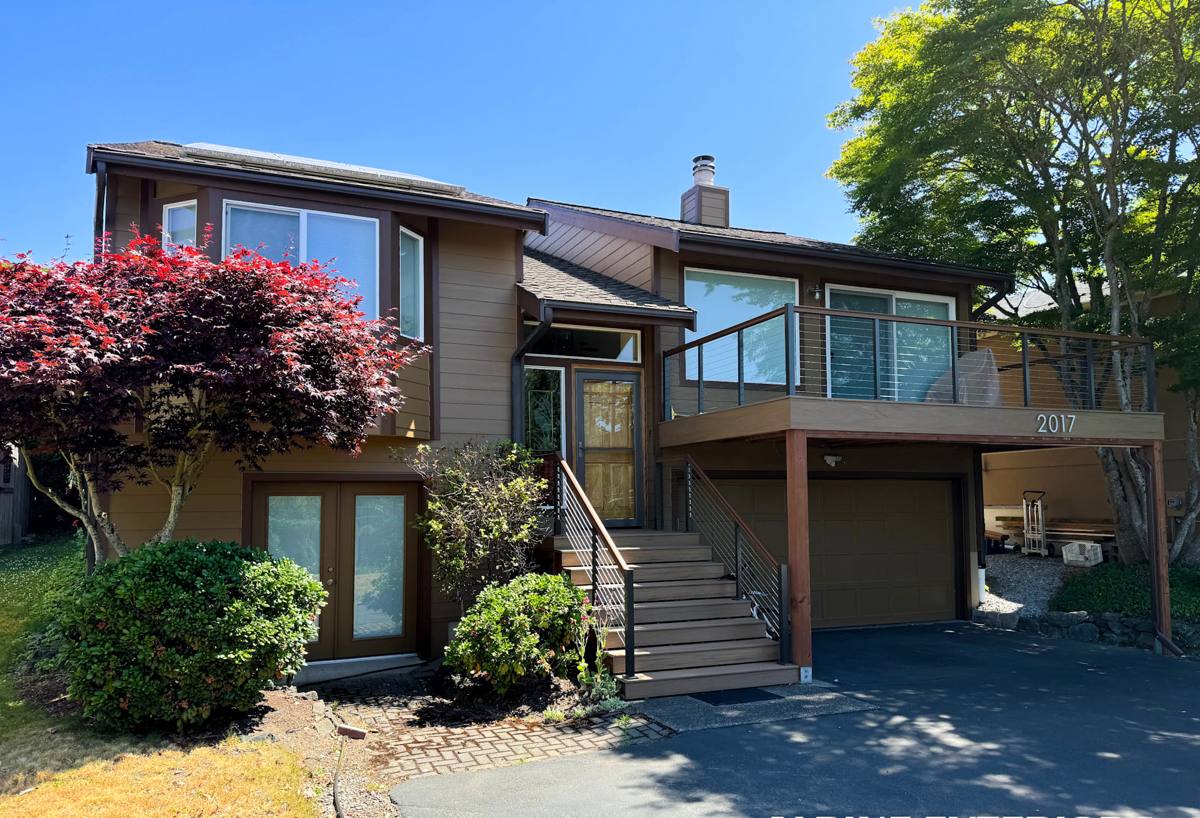
What Nooksack's Climate Puts a Window Through
Salt Air, Even This Far Inland
Nooksack is far enough from open water that people sometimes assume salt exposure isn't really a factor here. It still is. Marine air moves inland across this whole part of the county, carried by the same weather systems that bring the region's rain, and over years it accelerates corrosion on window hardware, screen frames, and lower-grade fasteners. It happens slower than at a true waterfront lot, but real enough that hardware and finish choices shouldn't assume a dry, land-locked climate.
Wind-Driven Rain in an Open River Valley
The flat, open farmland around Nooksack doesn't offer much of a wind break, and storms moving through the valley push rain sideways into wall assemblies and window openings rather than letting gravity do the work. That matters specifically for windows, because wind-driven rain finds gaps and seams that would never see water in a calmer, more sheltered setting. Flashing that laps correctly and ties into the surrounding wall is what actually keeps that water out — the window unit alone doesn't do that job.
A Long Moss and Mildew Season
Mild temperatures, tree lines along the river, and near-constant moisture through fall, winter, and spring add up to a moss and mildew season that runs most of the year on shaded or north-facing walls. Window sills, trim, and the framing around older windows are common places it takes hold, especially anywhere water sits instead of draining away. Homes tucked against tree cover tend to show it first and worst; homes sitting more open to the field dry out faster between storms.
Signs a Nooksack Home Needs Window Attention
- Fogging or visible moisture trapped between the panes of a double-pane window
- Drafts or cold spots near a window frame even when the window is fully latched
- Wood trim or sills that feel soft, look discolored, or show visible rot
- A window that's become difficult to open, close, or lock compared to how it used to operate
- Visible daylight, gaps, or cracked caulk where the frame meets the siding
- Paint or finish peeling, bubbling, or chalking faster than the rest of the exterior
- Water staining on interior walls, trim, or ceilings near a window
Any one of these is worth a look before another wet season passes. Caught early, most point to a repair or reseal. Left alone, several of them mean the surrounding wall framing is already taking on water.
New Construction, Replacement, or Retrofit: Getting the Installation Type Right
"Window installation" covers more ground than most homeowners expect, and the right approach depends on what's actually happening at the opening.
Full-Frame Replacement vs. Insert Replacement
Insert replacement fits a new window into the existing frame and is faster and less invasive to the surrounding siding and trim. It works well when the existing frame is structurally sound and was properly flashed to begin with. Full-frame replacement removes the old window down to the rough opening and rebuilds the flashing from scratch. It costs more and takes longer, but it's the honest answer once there's already moisture damage at the sill or jambs, or when the original flashing was never done correctly. We'll tell you which situation you're actually in rather than defaulting to the cheaper option and sealing a moisture problem up behind a new window.
| Situation | Insert Replacement | Full-Frame Replacement |
|---|---|---|
| Existing frame condition | Sound, no rot or water damage | Rotted, soft, or previously leaking |
| Flashing history | Correctly installed originally | Unknown, missing, or previously failed |
| Scope of disturbance | Minimal to surrounding siding and trim | Siding and trim removed around the opening |
| Relative cost and time | Lower cost, faster | Higher cost, more time, more thorough fix |
New Construction and Additions
New openings on additions or new construction are a different job entirely. There's no existing frame to work around, but there's also no room to inherit someone else's flashing shortcuts. We build the flashing sequence into the wall assembly from scratch, tied into the housewrap and siding as the wall goes up, rather than patched in after the fact. Getting it right at this stage is easier and cheaper than fixing it once the siding is finished and painted.
Installation Fundamentals We Treat as Non-Negotiable
Most window failures in this climate trace back to shortcuts in flashing and sealing, not a defect in the window itself. On every installation, regardless of window brand or price point, that means:
- A sill pan pitched to shed water outward instead of letting it pool under the frame
- Head flashing lapped correctly into the housewrap or building paper above the opening
- Jamb flashing tied into the surrounding wall assembly rather than relying on caulk alone
- Weep holes and drainage paths left clear and functional, not sealed shut during installation
- Corrosion-resistant fasteners and hardware suited to a consistently damp, salt-influenced climate
- Air sealing and insulation around the frame that doesn't trap moisture against the framing
None of this adds meaningfully to the cost of a job relative to the window itself. Skipping it is what turns a window that should last decades into one that's leaking into the wall cavity within a few wet seasons.
Choosing Window Materials for This Climate
There's no universal right answer. Budget, sun exposure, and how long you plan to stay in the house all factor in. What matters is understanding the real trade-offs for a climate with this much sustained moisture before deciding.
| Frame Material | Moisture & Corrosion Behavior | Typical Maintenance | Realistic Lifespan Here |
|---|---|---|---|
| Vinyl | Won't rot; seams and welds depend on installation quality | Low; occasional track and weep-hole cleaning | 20-30 years |
| Fiberglass | Dimensionally stable, resists moisture and corrosion well | Low | 30-40+ years |
| Wood, painted or clad | Attractive but vulnerable at joints and sills without diligent upkeep | Higher; regular paint or finish maintenance | 15-30 years depending on upkeep |
| Aluminum | Conducts cold and can corrode over time unless well-finished | Moderate | 20-30 years |
We'll walk through which material fits your home's exposure, budget, and the look you're after, rather than defaulting to whichever product is easiest to sell. A shaded wall backed by trees and an open, field-facing wall on the same Nooksack property don't always call for the same answer.
What Affects the Cost of a Window Installation in Nooksack
Every estimate is specific to the house, but a handful of factors consistently move the number:
- Number of openings, and whether it's a full-house project or a handful of windows
- Insert replacement versus full-frame replacement versus a new opening
- Frame material and glazing package chosen
- Condition of the existing framing and whether rot repair is needed once the old window comes out
- Standard sizes versus special-order or custom shapes and dimensions
- Trim and finish work needed to match the surrounding siding
We walk through which of these apply to your project during the estimate, rather than handing over a flat per-window number with no explanation behind it.
Why a Local Crew That Already Works Nooksack Matters
A crew that works this part of Whatcom County through every season already knows how wind-driven rain and marine-influenced air behave in an open river valley compared to a drier, more sheltered climate. That shows up in decisions that don't come up in a sales conversation: how much lap a flashing detail gets on a field-facing wall, whether caulk alone gets treated as adequate sealing, which hardware grade gets specified for a property with heavy tree shade versus one sitting open to the wind. Those decisions are what actually determine whether a window installation holds up for one wet winter or several decades, and they're easy to shortcut for a crew that isn't around long enough to see the callback.
Being based in Lynden also means that if a warranty question or a maintenance issue comes up years down the road, it's a call to a crew still working in the same area, not a company that bid the job and moved on to the next region.
Our Process
We start with an on-site look at the windows in question: frame condition, seal integrity, hardware function, and how the existing flashing ties into the siding around each opening. From there we give a straightforward read on whether insert replacement, full-frame replacement, or new construction framing is the right call, along with a written scope before any work begins. Flashing and drainage detailing are standard practice on every job we do, not an upgrade homeowners have to ask for. Because we also handle siding, roofing, and decks, we can flag it if a window issue turns out to be fed by a roof or siding problem nearby, instead of treating the window as an isolated fix.
If you're dealing with drafty, foggy, or hard-to-operate windows on a Nooksack property, planning an addition, or just not sure whether repair or replacement is the right call, we're glad to take a look and give you a straightforward, no-pressure estimate. Reach out using the form below to get started.