 Lynden
 Deck Repair for Laurel Homes
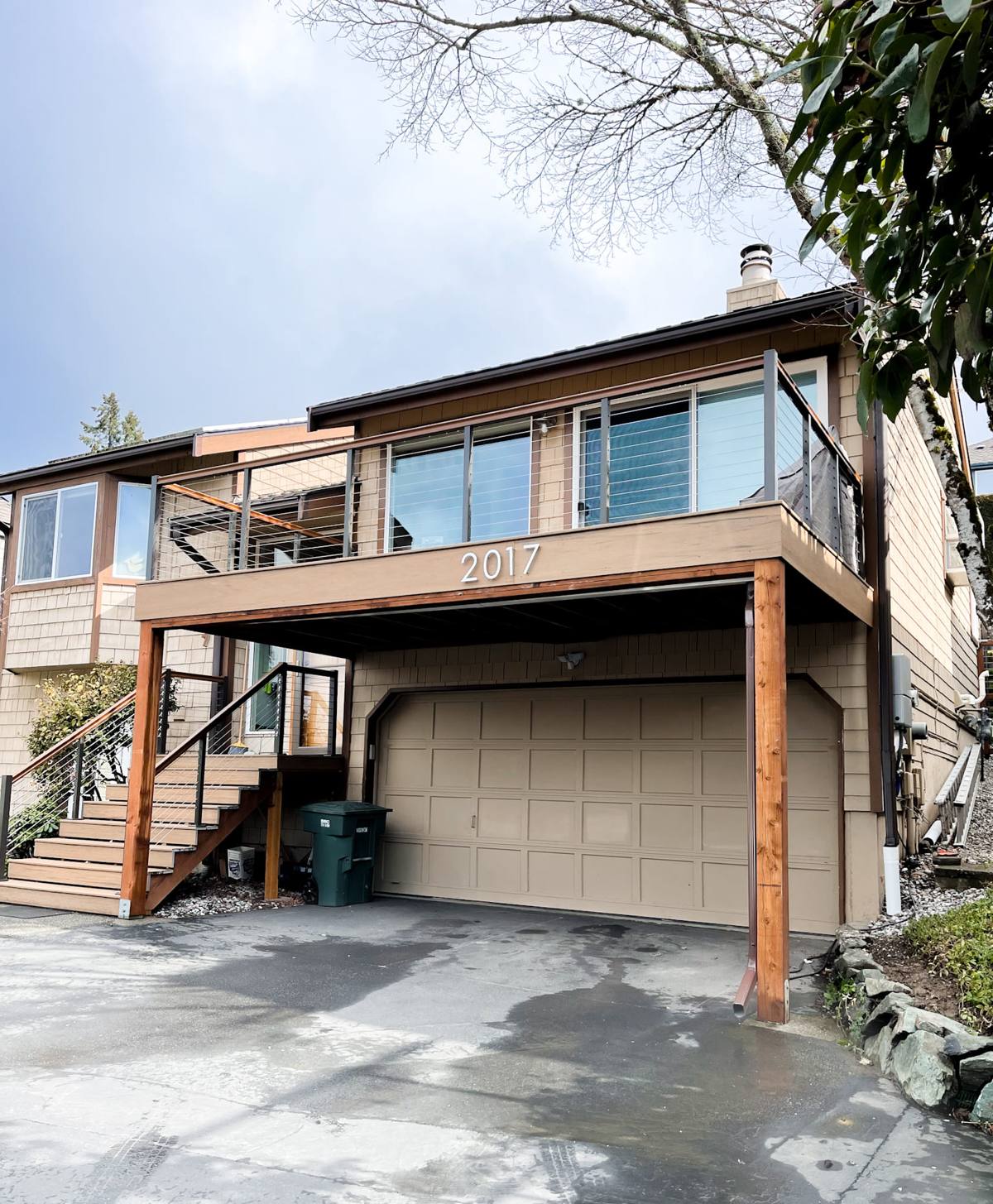
Laurel sits in the Lynden area of Whatcom County, and decks out here take a beating that decks in drier parts of the country never have to deal with. Salt-tinged air moving in off the Sound, driving rain that gets pushed sideways by wind instead of falling straight down, and a moss season that can stretch for most of the year all land directly on a deck's horizontal surfaces. That's a tougher environment than a wall or a roof plane, because water on a deck board doesn't run off the way it does on a vertical surface — it sits, soaks in, and works on the wood long after the rain has stopped. If you own a deck in Laurel, repair isn't really optional maintenance. It's how you keep a structure that's carrying real weight from becoming a hazard.
We repair decks throughout the Lynden area, including Laurel, and we treat deck repair as structural work first and cosmetic work second. A deck that looks fine from a few feet away can still have soft framing underneath, and a deck that looks rough on the surface sometimes just needs boards and fasteners. The only way to know which one you've got is to actually get under it and check.
What Whatcom County's Climate Does to a Deck
Standing Moisture on Horizontal Surfaces
Deck boards, ledger connections, and joists all sit horizontally or close to it, which means rain and condensation linger instead of draining away quickly. In a climate that sees driving rain for months at a stretch, that lingering moisture is what starts rot in board ends, around fastener holes, and at any spot where two pieces of wood meet tightly enough to trap water between them.
Salt Air and Fastener Corrosion
Even away from the immediate shoreline, Whatcom County homes get a steady dose of salt-laden marine air. Salt speeds up corrosion in screws, nails, and structural hardware. Once a fastener starts rusting, it loses holding strength and can stain the wood around it, and a deck built with the wrong grade of hardware will show fastener failure years before the boards themselves are actually worn out.
Moss, Algae, and a Long Growing Season
Mild temperatures and consistent moisture add up to a moss and algae season that runs long in this part of the state. On a deck, that growth doesn't just look bad — it holds moisture against the wood surface and turns boards slick and genuinely dangerous underfoot, especially on stairs and any section that stays shaded through the day.
Freeze-Thaw Stress
Whatcom County gets enough cold snaps each winter that water trapped in wood grain or in hairline cracks can freeze, expand, and widen the damage. A deck that's already holding moisture from a wet fall goes into winter primed for that kind of stress, which is one reason problems that start small in October can turn into real structural issues by spring.
Common Deck Problems We See in Laurel
Most of the deck repair calls we get in this area fall into a handful of categories. None of them are unusual for the region, but each one needs a different fix, and lumping them together under a quick surface patch is how small problems turn into full rebuilds.
- Soft or spongy decking boards — usually rot working from the underside up, often worse near board ends and around fastener holes
- Rust-streaked or failing fasteners — corroded screws and nails that have lost holding strength, sometimes with visible staining around the head
- Loose or wobbly railings — a safety issue as much as a structural one, and one of the more common reasons homeowners call us first
- Ledger board separation — the connection where the deck attaches to the house, which is the single most safety-critical joint on the entire structure
- Sagging or bouncy sections — usually a sign of joist damage or undersized framing that's been carrying more load than it should
- Persistent moss and slick spots — surface growth that keeps coming back because moisture isn't draining or drying out between rain events
- Stair stringer damage — stairs see concentrated foot traffic and often sit lower to grade, which means more splash-back moisture
What a Correct Deck Repair Actually Involves
Getting Underneath Before Quoting Anything
A repair estimate that's based only on what's visible from the top of the deck is incomplete. We check the framing, the ledger connection, and the posts and footings before we tell a homeowner what the job actually needs, because surface symptoms and root causes don't always line up. A board that feels soft might be the only bad board on the deck, or it might be the first visible sign of a joist that's been wet for a season or two.
Matching the Repair to the Damage
Not every deck problem needs a full rebuild, and not every deck problem can be fixed with a few new boards. Part of doing this correctly is being honest about which situation you're actually in. We replace individual boards and fasteners when that's genuinely sufficient, and we recommend more extensive framing or ledger repair when the damage goes deeper than the surface.
Fastener and Hardware Selection
Given the salt exposure in this region, we use fasteners and structural hardware rated for corrosion resistance appropriate to coastal and marine-influenced air, not whatever's cheapest at a big-box store. This matters more on a deck than almost anywhere else on a house, because deck hardware is structural, exposed, and hard to inspect once it's covered by decking or trim.
Drainage and Airflow
A big part of a repair that actually lasts is making sure water has somewhere to go and air can get underneath the structure to help it dry between storms. That can mean adjusting board spacing, clearing vegetation or debris that's trapping moisture against the framing, or correcting grading issues near the base of posts and footings.
The Ledger Connection
The ledger board — where the deck ties into the house — is the joint that matters most if something goes structurally wrong. We check flashing at this connection specifically, because a ledger that's letting water track behind it can rot quietly for a long time before it becomes visible, and it's also the connection point most responsible for catastrophic deck failures when it's neglected.
Repair vs. Replacement: How We Make the Call
| Factor | Favors Repair | Favors Replacement |
|---|---|---|
| Framing condition | Joists and beams are sound, damage is isolated | Widespread rot or soft spots across multiple joists |
| Ledger connection | Properly flashed, no significant water intrusion | Long-term moisture damage at the house connection |
| Age of structure | Newer deck with isolated wear | Older deck already near the end of its practical service life |
| Fastener condition | Hardware is sound, boards are the main issue | Widespread corrosion affecting structural connections |
| Post and footing condition | Stable, no movement or settling | Shifting, rot, or inadequate footing depth for the load |
Exact scope and cost depend on what we actually find once we're under the deck, which is why we walk the structure in person before giving a real number rather than quoting off a general price range.
Our Process
- Inspection — we check decking, framing, the ledger connection, posts, footings, and railings, not just the surface
- Assessment and honest recommendation — we tell you what's actually needed, whether that's a targeted repair or something more extensive
- Written estimate — clear scope of work so you know what you're paying for and why
- Repair work — board replacement, framing repair, fastener and hardware upgrades, and railing work as needed, using materials and hardware suited to this climate
- Final check — we confirm the repair is solid, safe, and draining properly before we consider the job done
Signs It's Time to Call
- Boards that feel soft, spongy, or flex noticeably underfoot
- Visible rust streaking around fasteners or hardware
- Railings that wobble or feel loose when you lean on them
- A deck that bounces or sways more than it used to
- Moss or algae that keeps returning shortly after cleaning
- Gaps, cracking, or staining at the ledger where the deck meets the house
- Stairs that feel less solid than the rest of the deck
Why Hire a Crew That Already Works in Laurel
A crew that repairs decks across the Lynden area regularly, Laurel included, has already seen how salt air, driving rain, and moss actually behave on real decks through a full year of weather, not just how materials look on a spec sheet. That familiarity shapes practical decisions on repair day — which fasteners are worth the extra cost, where drainage tends to fail first, and which connections deserve the closest look even when nothing looks obviously wrong yet. It also means a faster, more accurate assessment, since we're not guessing at how this specific climate treats deck lumber and hardware over time.
If you've got a deck in Laurel that's showing soft boards, loose railings, persistent moss, or just doesn't feel as solid as it used to, we're glad to take a look. Reach out using the form below to schedule a free, no-pressure estimate — we'll tell you honestly what the deck needs, nothing more and nothing less.