 Lynden
 Custom Windows Built for Laurel's Climate
Laurel homes sit in a stretch of Whatcom County that gets the full range of what Pacific Northwest weather can throw at a house: long stretches of driving rain off the Sound, salt-tinged air that moves inland with the marine layer, and a moss season that can run eight months out of the year on anything shaded or north-facing. Windows are one of the first places that weather finds a way in. A frame that's slightly out of square, a sill without the right slope, or a sealant joint that was rushed will show up as a soft spot, a fogged pane, or a musty smell near the trim within a few wet seasons.
Custom windows aren't just about matching an unusual opening size, though that's part of it in older Laurel-area homes with settled framing or additions built off the original structure. It's also about specifying the right glass package, frame material, and installation detail for a house that spends most of the year damp. Getting that combination right the first time is the difference between a window that's still tight in fifteen years and one that's letting in drafts by year six.
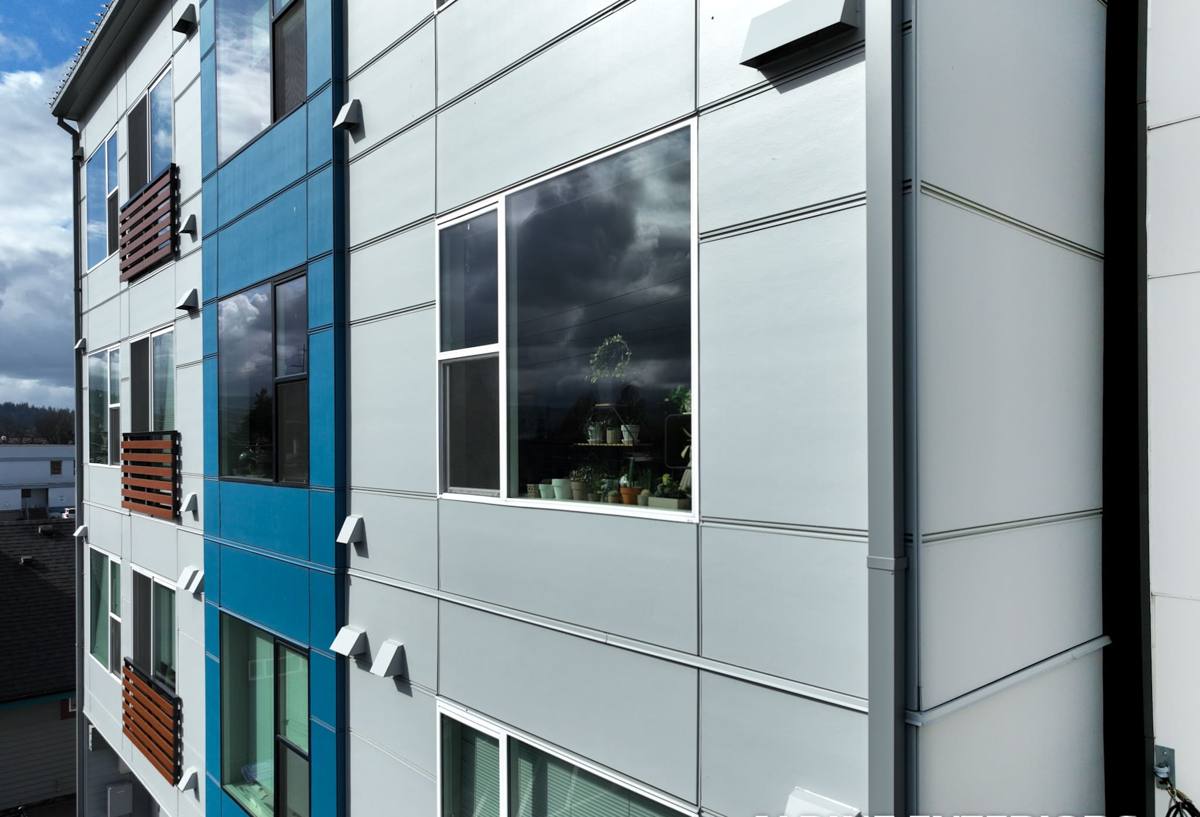
What Whatcom County Weather Does to Ordinary Windows
Every window failure we get called out for in this area traces back to moisture, one way or another. It's worth understanding the specific mechanisms so you know what you're actually paying to prevent.
Driving Rain and Wind-Driven Water
Rain here rarely falls straight down. Wind off the Strait and the Sound pushes it sideways, which means it hits window faces and gets forced up and under trim that would stay dry in a calmer climate. Flashing and the water-resistive barrier detail around the rough opening matter more here than in drier parts of the state.
Salt Air and Metal Fatigue
Whatcom County's proximity to saltwater means airborne salt reaches further inland than most homeowners expect. It accelerates corrosion on hardware, screws, and unprotected aluminum components. Cheaper hardware finishes chalk and pit years before they should.
Moss, Algae, and Trapped Moisture
Shaded sills and north-facing frames stay damp long after a storm passes, which is exactly the environment moss and mildew need. On wood windows without a properly maintained finish, that sustained dampness is what starts rot at end grain and joinery.
Signs a Laurel Home Needs Window Attention
- Visible fogging or moisture between panes — a sign the seal on a dual- or triple-pane unit has failed
- Soft or spongy wood at the sill or lower corners of the frame
- Persistent condensation on the inside of the glass even with normal ventilation
- Drafts you can feel near the frame edge on a windy day
- Paint or finish that's peeling specifically at the bottom rail or sill, not the whole window
- Visible moss or dark staining building up on horizontal surfaces of the frame
- Difficulty opening or closing that wasn't there a year or two ago, often from swelling
Any one of these on its own isn't necessarily an emergency, but they tend to compound. A failed seal lets moisture concentrate in the frame cavity, which speeds up rot, which changes how the sash sits, which stresses the seal further. Catching it early keeps the fix to a window or two instead of a wall section.
What a Correct Custom Window Installation Involves
"Custom" in our line of work usually means one of three things: a non-standard opening size, a period-appropriate profile on an older home, or a specific performance package (impact resistance, extra sound dampening, a particular glass tint) that a standard stock unit doesn't offer. Whatever the reason, the installation fundamentals don't change, and they're the part that actually determines how the window performs in this climate.
Before the Window Goes In
- Rough opening is checked for level, square, and plumb — not assumed from the old window's fit
- Existing sheathing and framing are inspected for hidden rot or moisture damage from the previous window
- Water-resistive barrier is cut, lapped, and taped correctly so water sheds outward and down, never behind the barrier
- Sill pan flashing is installed to catch and direct any water that does get past the window itself
Setting and Sealing
- Window is shimmed and fastened per manufacturer spec, not just wedged tight
- Insulation around the frame is a low-expansion type suited for windows, not general construction foam that can bow the frame
- Exterior sealant joints are backed and tooled properly so they hold up to UV and repeated wet-dry cycling
- Interior air seal is completed so conditioned air doesn't reach the cold cavity and cause hidden condensation
Skipping or rushing any one of these steps is usually invisible on installation day and only shows up two or three winters later. That's why the sequence matters more than the brand name on the window itself.
Frame and Glass Options for This Climate
There's no single right answer for every Laurel home — the right choice depends on the home's age, exposure, and how much upkeep you want to take on.
| Frame Material | How It Handles This Climate | Upkeep |
|---|---|---|
| Vinyl | Won't rot or corrode from salt air; handles moisture well | Low — occasional cleaning |
| Fiberglass | Very stable in temperature and moisture swings; strong against wind-driven rain | Low |
| Wood (clad exterior) | Good insulator, classic look for older homes; exterior clad shields the wood from weather | Moderate — interior finish maintenance |
| Solid wood | Best fit for historic or period-accurate homes; needs a disciplined finish schedule | High — repainting/refinishing on a cycle |
| Bare aluminum | Prone to corrosion and pitting from salt air over time | High — we generally steer clients away from this in Whatcom County |
On glass, we typically recommend a dual-pane unit with a low-E coating as the baseline for this area — it cuts heat loss and helps manage condensation risk on cold, damp mornings. For homes with more exposure to wind and driving rain, a heavier-duty weatherstripping and multi-point locking hardware package is worth the upgrade, since it improves both the seal and the long-term resistance to warping under repeated pressure.
Our Process
We keep this straightforward because window replacement doesn't need to be complicated when it's done right the first time.
- On-site assessment. We look at the existing windows, the framing behind them where accessible, and any moisture or rot signs before recommending anything.
- Honest scoping. If a window can be repaired instead of replaced, we'll say so. If hidden damage means the opening needs more than a window swap, we'll show you what we found.
- Measurement and ordering. Custom sizes and profiles are measured precisely, since a bad measurement means a bad fit no matter how good the window itself is.
- Installation with proper flashing and sealing. Every step above — sill pan, WRB integration, correct insulation, sealed joints — happens on every job, not just the ones where it's convenient.
- Walkthrough. We go over operation, any care instructions specific to the material you chose, and what to watch for.
Cost Factors to Expect
| Factor | Why It Moves the Price |
|---|---|
| Standard vs. custom size | Non-standard openings require custom-built units instead of stock sizes |
| Frame material | Vinyl is typically the most budget-friendly; fiberglass and wood cost more upfront |
| Glass package | Upgraded low-E coatings, impact-resistant glass, or sound dampening add cost |
| Hidden repairs | Rot or framing damage found during removal adds labor and material beyond the window itself |
| Number of windows | Whole-house replacement usually brings a better per-window rate than one-off jobs |
We won't quote a number here because every home is different, but we'll always give you a clear, itemized estimate before any work starts, and we'll flag anything we find during removal before proceeding rather than surprising you on the invoice.
Why a Crew That Already Works Laurel Matters
A crew that works this part of Whatcom County regularly has already seen how these homes age — which orientations take the worst weather, which older construction styles tend to have hidden moisture issues behind the trim, and which details actually hold up against a real Lynden-area winter versus what looks fine on a spec sheet. That local pattern recognition is what keeps a straightforward window job from turning into a surprise, and it's why we spend the extra time on flashing and sealing details that a crew unfamiliar with this climate might not prioritize.
We also stand behind the work after the trucks leave. If something isn't sealing right or a window isn't operating smoothly, we want to hear about it, not have you discover it during the next storm.
Simple Upkeep That Extends Window Life Here
- Rinse sills and frames periodically to keep salt residue and grit from accumulating
- Clear moss or debris from horizontal frame surfaces before it holds moisture against the finish
- Check exterior caulk joints once a year for cracking or separation
- On wood-clad or solid wood windows, follow the manufacturer's repainting or refinishing schedule rather than waiting for visible wear
- Test locks and hardware seasonally — stiff hardware is often an early sign of frame movement worth checking
If you're noticing drafts, fogged glass, or a window that's harder to operate than it used to be, we're happy to take a look and give you a straightforward, no-pressure estimate. Use the form below to get in touch and we'll schedule a time to come out.