 Lynden
 A Style That Fits Kendall — If It's Installed Right
Board and batten has always suited this part of Whatcom County. The vertical lines read as farmhouse, barn, and Pacific Northwest craftsman all at once, and it sits naturally on the mix of rural homes, hobby farms, and newer builds out toward the Kendall area. It's a look people ask for specifically — but it's also a siding style that punishes a sloppy install faster than plain lap siding does. Every vertical batten creates a seam, and every seam is a place water can find its way behind the wall if the job wasn't done right.
We install board and batten in Kendall and throughout the Lynden service area using James Hardie's fiber cement system exclusively. This page covers what the local climate actually does to this style of siding, what a correct installation looks like, and why the details matter more here than they would on a drier lap-siding job in another part of the state.
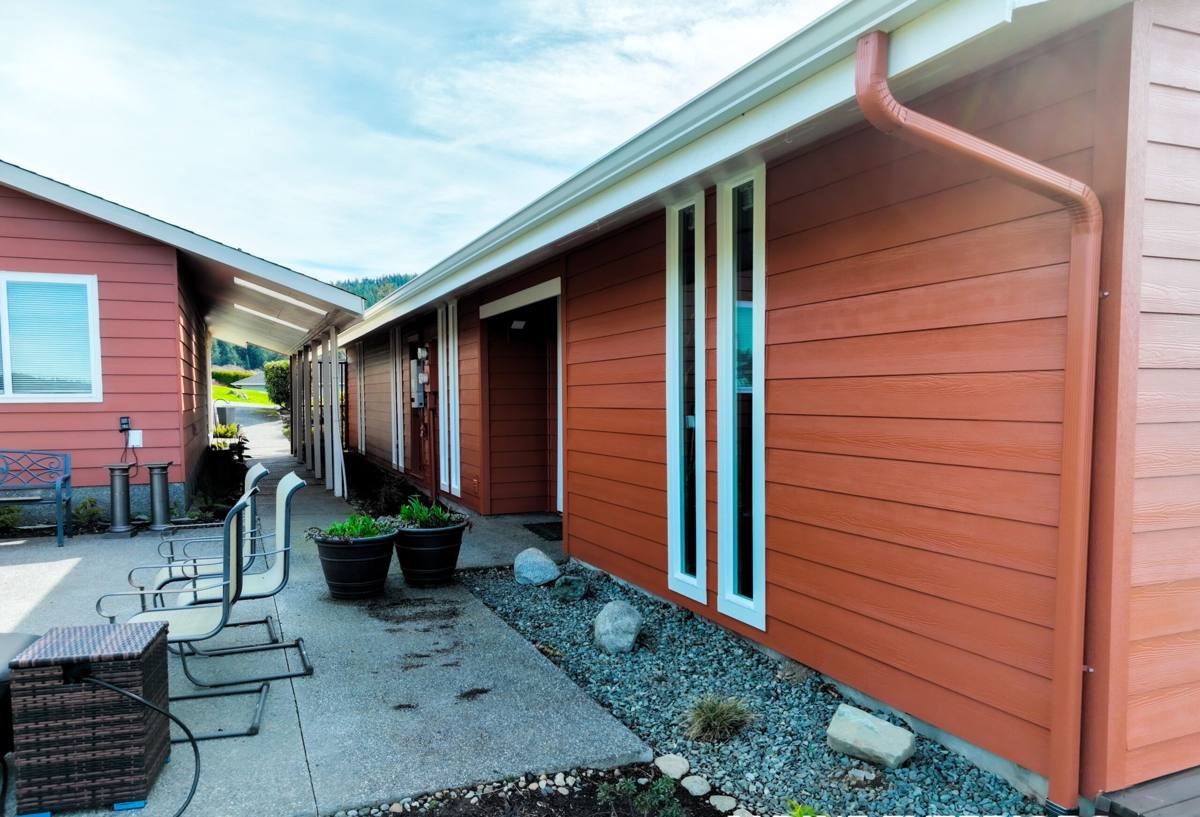
What Whatcom County's Climate Does to Vertical Siding
Salt-tinged marine air
Whatcom County sits close enough to the Salish Sea that westerly weather systems carry a faint load of salt-laden moisture well inland, especially during the wetter months. That marine air doesn't stain siding overnight, but over years it accelerates corrosion on exposed fasteners and hardware, and it works against any coating that wasn't formulated to handle sustained moisture exposure. It's one more reason fastener choice and factory-applied finishes matter more here than they would in a dry inland climate.
Driving rain
Storms moving through this part of Washington frequently arrive with wind behind them, which pushes rain sideways into walls rather than letting it run straight down. Vertical board and batten actually handles wind-driven rain reasonably well when it's flashed and fastened correctly, because the battens shed water off the face of the panel. But that same wind-driven rain is exactly what finds the one seam that wasn't caulked, the one fastener that missed a stud, or the one corner where flashing was skipped to save time.
A long moss season
Kendall sits nearer the forested, shaded stretch between Lynden's open valley floor and the Mt. Baker foothills, which generally means more tree cover, more shade on north- and east-facing walls, and more weeks of the year where siding simply doesn't dry out between rain events. That's the exact environment moss and algae need to get established. Once organic growth takes hold on a wall, it holds moisture against the surface and accelerates whatever weakness is already there.
Why Board & Batten Behaves Differently Than Lap Siding
Lap siding sheds water by overlap — each course covers the one below it, so water runs down and off. Board and batten works on a different principle: wide vertical panels are joined at the seams by narrower strips (the "battens"), and the whole system depends on those seams being sealed, flashed, or fastened to a documented spec rather than relying on gravity and overlap alone.
That means a board and batten wall has far more linear feet of vertical seam than a comparable lap-sided wall, and every one of those seams is a potential entry point if it isn't detailed correctly. It also means the fastening pattern is different — panels have to be nailed into framing at specific intervals, with the batten covering and protecting that fastener line. Get the layout wrong and you've either got exposed fasteners taking direct rain, or a seam gap that's too tight to move seasonally without cracking.
The James Hardie Board & Batten System
We build Kendall board and batten jobs out of James Hardie's engineered components, not a single all-purpose board:
- HardiePanel vertical siding — the wide fiber cement panel that forms the field of the wall.
- HardieTrim boards — used as the battens, milled and factory-finished to match, covering the panel seams and fastener lines.
- ColorPlus Technology finish — a factory-baked, multi-coat finish on both the panel and trim, so the color comes from the same batch rather than site-mixed paint that can weather unevenly between panel and batten.
James Hardie also formulates its siding differently depending on regional climate. This part of Western Washington falls in the company's HZ5 zone — engineered for climates with freeze-thaw cycles and prolonged moisture exposure, which describes a Whatcom County winter about as well as any label can. It's a meaningful difference from a one-size-fits-all board, whether that board is cedar, primed spruce, or an engineered wood product — none of which are formulated by climate zone at all.
Why we don't install board and batten in other materials
Cedar board and batten looks right the day it goes up, but it's a wood product that needs ongoing refinishing, and any seam or batten that starts trapping moisture in this climate is a head start on rot. Engineered wood siding (like LP SmartSide) resists that better than raw cedar but is still a wood-based substrate, meaning cut edges and seams need diligent field sealing to keep moisture out over the long term. Vinyl board and batten avoids rot entirely but is a thin, flexible material that shows waviness in direct sun and can crack in a hard freeze — and it can't be refinished if it fades or gets damaged. Fiber cement doesn't rot, doesn't feed moss the way wood fiber can, and holds a factory finish through decades of this region's wet-dry cycling. That's the whole reason we standardized on it.
What a Correct Board & Batten Installation Involves
A board and batten job is judged on details you mostly can't see once it's finished. On every project we're checking:
- Weather-resistive barrier installed and lapped correctly behind the panels, with no gaps at penetrations
- Panel seams and joints flashed per manufacturer spec, not just caulked over and hoped for
- Correct fastener type, length, and spacing driven into solid framing — not just into the sheathing
- Battens set with the manufacturer-specified reveal and gap, accounting for seasonal expansion
- Proper clearance at the bottom of the wall (grade, decks, and roof lines) so siding never sits in standing water or gets buried by landscaping
- Flashing and kick-out details at every roof-to-wall intersection, window, and door
- Caulking used only where Hardie specifies it — not as a substitute for missing flashing
Skip any one of these and the wall can still look right for a year or two before a problem shows up as a stain, a soft spot, or a moss patch that keeps coming back no matter how often it's cleaned.
Board & Batten Material Options for Kendall Homes
| Material | Moisture behavior in this climate | Refinishing needed | Typical lifespan installed to spec |
|---|---|---|---|
| James Hardie fiber cement | Non-combustible, doesn't rot or feed moss growth; factory finish resists the marine air and rain cycle | Repaint only if desired, decades out | Multiple decades |
| Cedar | Absorbs moisture at seams and end grain; prone to rot and moss in shaded, rain-heavy areas | Every few years | Shorter without diligent upkeep |
| Engineered wood (LP SmartSide) | Wood-fiber substrate; seams and cuts need consistent field sealing to resist swelling | Periodic, site-dependent | Depends heavily on field sealing and upkeep |
| Vinyl | Won't rot, but can warp or crack in temperature swings; seams rely on overlap, not flashing detail | None, but not repaintable | Variable, shorter in direct sun exposure |
What Affects the Cost of a Board & Batten Project
| Factor | Why it matters |
|---|---|
| Condition of the existing wall | Rot, moisture damage, or moss-affected sheathing behind old siding has to be repaired before new siding goes on |
| Wall height and complexity | Gables, dormers, and multiple roof-to-wall intersections all add flashing detail and labor time |
| Reveal and batten spacing chosen | Wider or narrower batten spacing changes material quantities and layout time |
| Trim and color package | ColorPlus finish options and corner/trim detailing affect material cost |
| Access and site conditions | Rural lots, outbuildings, fencing, and landscaping can affect scaffolding and staging |
Our Process
- On-site walkthrough — we look at the existing wall assembly, check for moisture or rot at seams and penetrations, and talk through reveal, batten spacing, and color.
- Tear-off and inspection — old siding comes off and we inspect the sheathing and framing underneath before anything new goes up.
- Repair and prep — any damaged sheathing or framing gets addressed, and the weather-resistive barrier and flashing are installed correctly at every penetration.
- Installation to manufacturer spec — HardiePanel and HardieTrim installed with the correct fastener pattern, reveal, and sealing, not shortcuts to save a day of labor.
- Final walkthrough — we go over the finished wall with you before calling the job done.
Why Hiring a Crew That Already Works Kendall Matters
Board and batten installed to spec in a dry inland climate can tolerate a few missed details for years before anything shows up. In Whatcom County, with driving rain, a long moss season, and marine air working on a wall every week of the year, those same shortcuts show up faster. A crew that already works Kendall and the surrounding Lynden area has already seen which walls get the least sun, which corners take the worst wind-driven rain, and which details actually matter here versus in a builder's generic spec sheet written for a different climate.
That local pattern recognition doesn't replace following the manufacturer's installation requirements — it just means we know where to pay the closest attention on a given house before problems start.
If you're considering board and batten siding for a home in Kendall or anywhere in the Lynden area, we're happy to walk the property, look at what's there now, and talk through what a correct installation would involve — no pressure, no obligation. Use the form below to request a free estimate.