 Lynden
 Roof Repair for Ferndale Homes Near Lynden
Ferndale sits close enough to the water that homes here take on a different kind of weather load than roofs twenty miles inland. Salt-laden air off the coast, long stretches of driving rain, and a moss season that runs longer than most homeowners expect all work on a roof at the same time, year after year. A repair that holds up in a drier part of Whatcom County won't necessarily hold up here, which is why roof repair in this area has to account for the actual conditions the roof lives in, not just the type of shingle or the size of the leak.
This page covers roof repair specifically for Ferndale-area homes: what the local climate does to roofing materials, what a correct repair actually involves, how we approach the job, and why it matters that the crew doing the work already knows this stretch of Whatcom County.
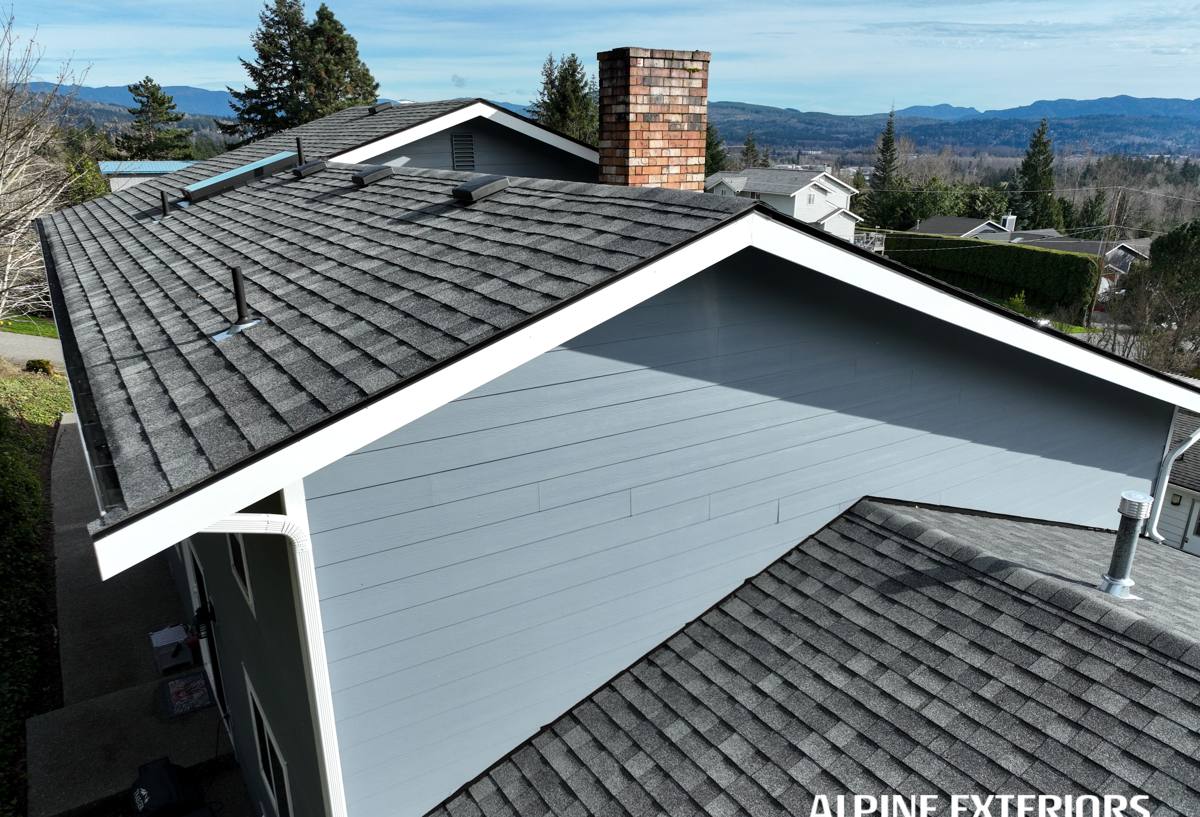
What Salt Air and Driving Rain Actually Do to a Roof
Salt air doesn't just affect metal flashing and fasteners — though it does accelerate corrosion there faster than inland areas see. It also settles into shingle granules, roofing cement, and exposed nail heads over time, which speeds up the breakdown of materials that would otherwise last longer. Combined with wind-driven rain that gets pushed sideways into laps, seams, and flashing details instead of falling straight down, you get a roof that's fighting water intrusion from angles a standard repair sometimes doesn't address.
Where This Shows Up First
The earliest damage from salt air and driving rain rarely shows up in the middle of a roof field. It shows up at the edges and transitions: flashing around chimneys and vents, valleys where two roof planes meet, and the drip edge along eaves. These are the places where a repair needs to be done correctly the first time, because a patch that looks fine from the ground can still be letting water track behind it.
Moss: The Slow Damage Nobody Notices Right Away
Whatcom County's moss season is long, and Ferndale's mix of shade, moisture, and moderate temperatures gives moss exactly the conditions it needs to establish itself on a roof. Moss itself doesn't punch holes in shingles, but it does something arguably worse over time: it holds moisture against the roofing surface long after the rain has stopped, keeps that surface from drying out between storms, and works its root structure under shingle tabs and granules, lifting edges just enough for wind-driven rain to get underneath.
By the time moss is visible from the street, it's usually been established for a season or more. A roof repair in a moss-prone area isn't complete unless the underlying cause — shade, poor airflow, debris buildup, or a north-facing slope that never fully dries — is addressed alongside the physical damage.
What Moss Removal Should (and Shouldn't) Involve
- Physical removal by hand or soft brushing — never pressure washing, which drives water under shingles and strips protective granules
- Treatment appropriate to the roofing material, applied without harsh scrubbing
- Inspection underneath cleared areas for granule loss, soft spots, or lifted tabs
- A look at what's feeding the moss — overhanging branches, gutter debris, or shaded valleys — so it doesn't just grow back
Signs Your Ferndale Roof Needs Repair Now
Some roof problems in this climate move slowly and are easy to put off. Others need attention before the next storm system moves through. These are the signs worth acting on:
- Granules collecting in gutters or at the base of downspouts
- Moss or dark streaking concentrated on north-facing or shaded slopes
- Soft, spongy decking felt underfoot in the attic or noticeable sagging from the ground
- Rust staining or lifted edges around flashing at chimneys, vents, or skylights
- Water stains on interior ceilings, especially after a wind-driven rain event rather than a calm one
- Shingles that are curling, cracking, or missing after a windstorm
- Daylight visible through the roof deck from inside the attic
Any one of these on its own might be minor. Several together usually mean water has already found a way in, even if there's no visible stain yet.
What a Correct Repair Actually Involves
A roof repair done right starts with finding the actual source of the problem, not just the spot where water showed up inside the house. Water travels along decking and framing before it drips somewhere visible, so the stain on a ceiling is often several feet from the actual failure point. That means every repair on our end starts with a real inspection — on the roof, in the attic if accessible, and around every penetration point — before any material gets replaced.
What We Check Before Touching Anything
Flashing condition and fastening, underlayment integrity where shingles have been lifted or removed, decking condition (soft or delaminated wood needs to be replaced, not covered over), and whether the damage is isolated or a sign that a larger section of the roof is nearing the end of its service life.
Matching Materials and Technique to the Existing Roof
A repair patch that doesn't match the surrounding roofing in material, weight, and installation method tends to fail faster and looks obviously mismatched. We repair with materials and techniques suited to what's already on the roof, and we flag it honestly if the surrounding shingles are too far gone for a patch to be a reasonable long-term fix.
Roof Repair vs. Replacement: How We Help You Decide
Not every roof problem calls for a full replacement, and not every leak should be patched and left alone. The right call depends on the roof's age, how widespread the damage is, and what's driving the failure.
| Factor | Repair Usually Makes Sense | Replacement Is Worth Considering |
|---|---|---|
| Roof age | Well within expected service life | At or past the end of its material's typical lifespan |
| Damage extent | Isolated to one area or penetration | Spread across multiple slopes or recurring in different spots |
| Decking condition | Solid, no soft spots found | Soft, delaminated, or water-damaged in more than one area |
| Moss/algae history | Recent and surface-level | Long-established, with granule loss or lifted shingles underneath |
| Cost over time | Repair cost is a fraction of replacement | Repeated repairs are approaching replacement cost |
We'll tell you plainly which side of that line your roof falls on. There's no benefit to us talking a homeowner into a full replacement when a proper repair will hold, and no benefit to patching something that's going to need the same fix again in a year.
Our Process, From Call to Finished Repair
- Inspection — a full look at the roof, flashing, and accessible attic space, not just the spot you called about
- Honest diagnosis — what's actually causing the problem, explained in plain terms, with photos of what we find
- A written scope — what needs to be repaired, what materials will be used, and a straightforward price before any work starts
- The repair itself — done to match the existing roof's material and installation method, with attention to the flashing and transition points that tend to fail first in this climate
- A final check — confirming the fix addresses the actual water path, not just the visible symptom
Why a Crew That Already Works Ferndale Matters
Roofing crews that work all over Western Washington aren't wrong about roofing in general, but there's real value in a crew that regularly works in Ferndale and the surrounding Lynden area specifically. We know how far salt air travels inland here, which roof orientations tend to hold moss longest given the local tree cover and shade patterns, and how driving rain off the water behaves differently against a roof than a straight-down summer shower does. That's not something you can fully substitute with general roofing knowledge — it comes from repeatedly seeing how roofs in this specific area age and fail.
It also means we're not guessing at material choices. We know which flashing details and underlayment approaches hold up under this area's conditions and which ones tend to need revisiting sooner than they should.
Get an Honest Look at Your Roof
If you're dealing with a leak, moss buildup, or storm damage on a Ferndale-area home, we're glad to take a look and tell you plainly what's going on and what it will take to fix it — no pressure, no upsell. Use the form below to request a free estimate, and we'll get back to you to schedule a time to inspect the roof in person.