 Lynden
 Building New in Deming Means Building for Water, Not Just Weathertightness
Deming sits in the Nooksack River valley east of Lynden, closer to the foothills and further into the wet side of Whatcom County's weather pattern. New construction out here deals with more annual rainfall, more standing humidity under tree cover, and a longer moss and mildew season than homes closer to town. When you're framing a new house or outbuilding, the windows you choose and how they're installed set the tone for how that structure handles moisture for the next thirty years. Get it right during framing and you rarely think about it again. Get it wrong and you're chasing rot, stains, and callbacks long after the builder has moved on to the next job.
We install new-construction windows for homeowners, builders, and general contractors working in and around Deming. This page covers what that work actually involves, what correct installation looks like in this climate, and how we fit into a new-build timeline.
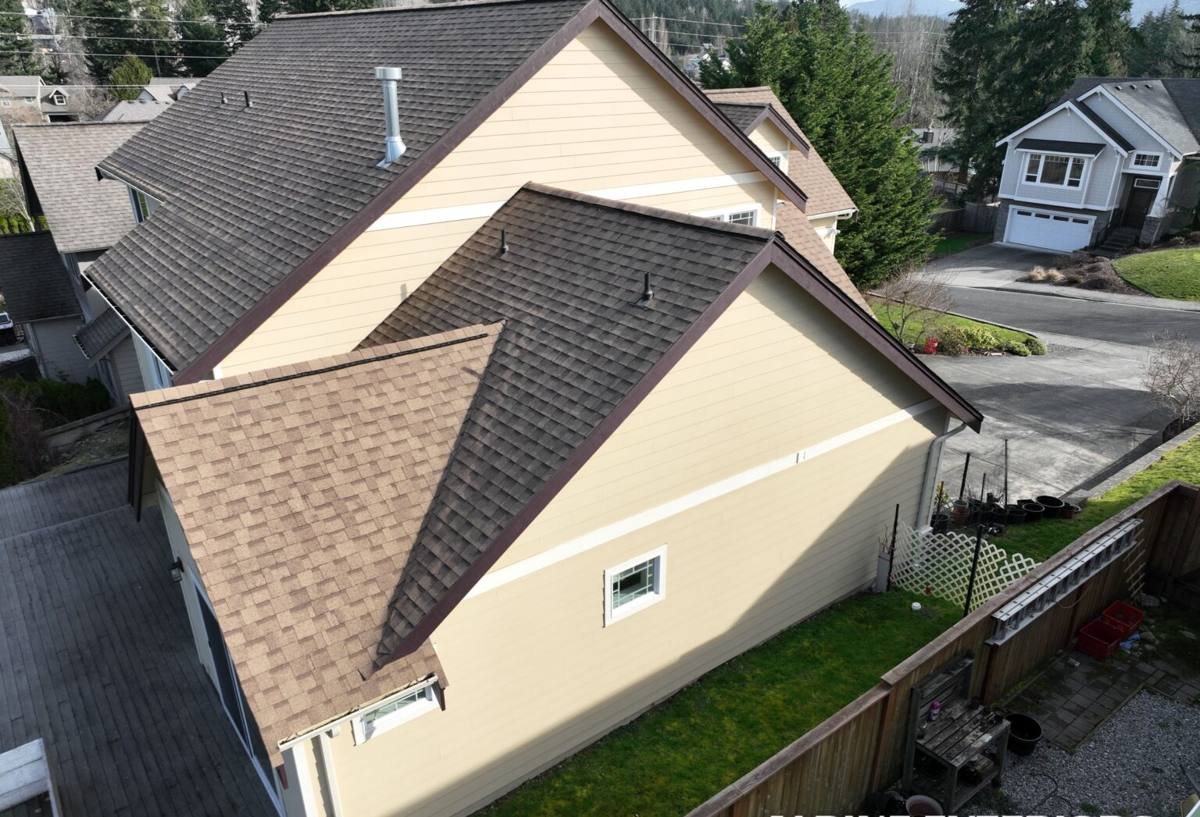
New-Construction vs. Retrofit: Why the Distinction Matters
New-construction windows and retrofit (or "replacement") windows are not interchangeable products, and installing the wrong one for the situation causes problems that show up years later.
- New-construction windows have a nailing fin around the perimeter of the frame. They're installed into an open rough opening before siding goes on, which lets us flash the opening in the correct shingle-lap order — building paper or house wrap first, then sill pan, then window, then jamb and head flashing integrated with the wall's water-resistive barrier.
- Retrofit windows are built to insert into an existing, finished opening without disturbing the exterior siding. They rely on their own frame and a perimeter of sealant rather than a fully integrated flashing system.
On a new build, there's no reason to use a retrofit-style window — you have full access to the rough opening and the wall assembly, so you should take advantage of it. Using the correct product for a true new-construction opening is the first decision point, and it's one we confirm before a single window ships to the site.
Getting the Water Management Right
Driving rain off the Nooksack valley and the wetter microclimate around Deming push water sideways into wall assemblies more than a still, dry day ever would. Most window leaks we're called to diagnose on older homes don't come from a bad window — they come from a sill pan that was skipped, flashing that was lapped backward, or house wrap that wasn't integrated with the window flange in the right order.
What correct new-construction flashing includes
- A sloped or pre-formed sill pan under every window, so any water that gets past the frame drains back out rather than sitting on the rough sill
- Self-adhered flashing tape at the jambs, lapped over the sill pan
- Head flashing installed last, lapped over the house wrap above the window so water sheds down and over the opening, never behind it
- Backer rod and sealant at the interior and exterior of the nailing fin where the manufacturer specifies it — not everywhere, since over-sealing a window can trap moisture instead of shedding it
This sequence matters more in Deming than it would in a drier part of the state, simply because the wall assembly gets tested by weather more often and for longer stretches each year. A shortcut that might go unnoticed for a decade in a dry climate can show up as staining or soft trim within a couple of wet seasons here.
Window Types and Frame Materials We Work With
For new construction, the frame material decision affects long-term maintenance more than almost any other choice on the exterior of the house. Here's how the common options compare for a Deming build:
| Frame Material | Moisture Behavior | Maintenance | Where It Fits Best |
|---|---|---|---|
| Vinyl | Won't rot; can flex slightly with big temperature swings | Low — occasional cleaning | Most residential new builds; best value |
| Fiberglass | Dimensionally stable, handles wet-dry cycling well | Low | Larger openings, homes wanting a tighter tolerance fit |
| Wood-clad | Exterior clad protects the wood, but any breach in the cladding invites rot | Higher — interior wood finish upkeep, exterior seams to monitor | Homeowners prioritizing interior wood aesthetics who accept the upkeep |
| Aluminum | Prone to condensation without thermal breaks | Moderate | Specific architectural applications, less common in residential new builds here |
We don't push one material as universally "best" — we walk through the trade-offs against your budget and how much upkeep you actually want to take on. What we won't do is install a product in a way that ignores its manufacturer's flashing and clearance requirements just to save a step, because that's where warranty coverage and actual water performance both fall apart.
Our New-Construction Window Process
1. Plan review and product selection
We look at the architectural plans or work directly with your builder to confirm rough opening sizes, window schedule, and product selection before ordering. Catching a sizing or swing-direction error on paper is a lot cheaper than catching it after the wall is closed in.
2. Rough opening prep
We verify each opening is square, level, and properly sized, and confirm the house wrap or building paper is in place and lapped correctly before any window goes in.
3. Sill pan and flashing installation
Every opening gets a sill pan and a full flashing sequence as described above — this is the step that determines how the window performs in weather, not just how it looks.
4. Window setting and fastening
Windows are set plumb, level, and square, shimmed correctly so the frame isn't racked, and fastened per manufacturer spec — over-driving or under-driving fasteners is a common cause of operational problems down the road.
5. Interior and exterior seal-out
Insulation or low-expansion foam at the interior gap, sealant and trim at the exterior, and a final check of every reveal and lap before we move to the next opening.
6. Final walkthrough
We check operation, latch alignment, and weatherstripping contact on every window before we consider the job done — not just the ones that are easy to reach.
Working With Your Builder or General Contractor
Most of our new-construction window work happens as a coordinated trade on someone else's build schedule, not as a standalone homeowner project. We're used to working around framing crews, siding crews, and inspection timelines, and we communicate directly with your GC about sequencing so windows go in at the right point — after the wall is properly wrapped, before siding closes in the flashing. If you're the homeowner acting as your own GC on a Deming build, we can also walk you through what to look for from any trade touching your window openings, so you know what a correct install looks like even when we're not the ones swinging the hammer.
Common Mistakes We See in New Builds
These aren't hypothetical — they're the issues that generate the most callbacks and repairs on new construction generally, and they're avoidable with the right sequence and attention:
- Skipping the sill pan because "the sealant will handle it"
- House wrap lapped over the top of the nailing fin instead of under it at the head, which directs water into the wall instead of away from it
- Windows fastened before the opening is confirmed square, leading to operational binding later
- Foam insulation over-expanded at the jambs, bowing the frame and causing seal failure
- Head flashing omitted or installed flush instead of with a slight kick-out to shed water clear of the wall
- Trim installed tight to the frame with no room for the window to expand and contract seasonally
Energy Performance for Whatcom County Winters
Deming's winters bring damp cold rather than extreme cold, which means the bigger energy concern is usually condensation and drafts rather than deep-freeze performance. Look for windows with a U-factor suited to the Pacific Northwest climate zone and confirm the glazing package matches your orientation — south and west-facing openings benefit from different solar heat gain coefficients than north-facing ones. We'll walk through the National Fenestration Rating Council (NFRC) label on any window we quote so you know exactly what you're getting, not just a marketing claim.
Ready to Talk Through Your Build
Whether you're framing a new home in Deming, adding a shop or ADU, or working through a window schedule with your builder, we're glad to look at your plans and talk through product and installation details before anything goes in the wall. Reach out for a free, no-pressure estimate — there's no cost or obligation to have us walk your site or review your rough openings.