 Lynden
 Why Everson Decks Wear Out Faster Than You'd Expect
Everson sits in a part of Whatcom County where the weather doesn't do a deck any favors. You get long stretches of driving rain in the fall and winter, damp air rolling in off the Nooksack River valley, and short, gray stretches of sun that never quite dry things out before the next system moves through. Add in the salt-tinged air that reaches inland from the Puget Sound corridor, and you've got a combination that goes after wood, fasteners, and finishes from multiple directions at once.
Most decks in this area don't fail because the homeowner neglected them. They fail because the deck was built for a drier climate than the one it's actually sitting in. Standard framing lumber, undersized ledger flashing, and butt-joint decking that wasn't gapped correctly will all hold up fine for a few years — then the moss shows up, the boards start cupping, and the fasteners start weeping rust stains. By the time you can see the damage on top, the framing underneath has usually been dealing with it for a while.
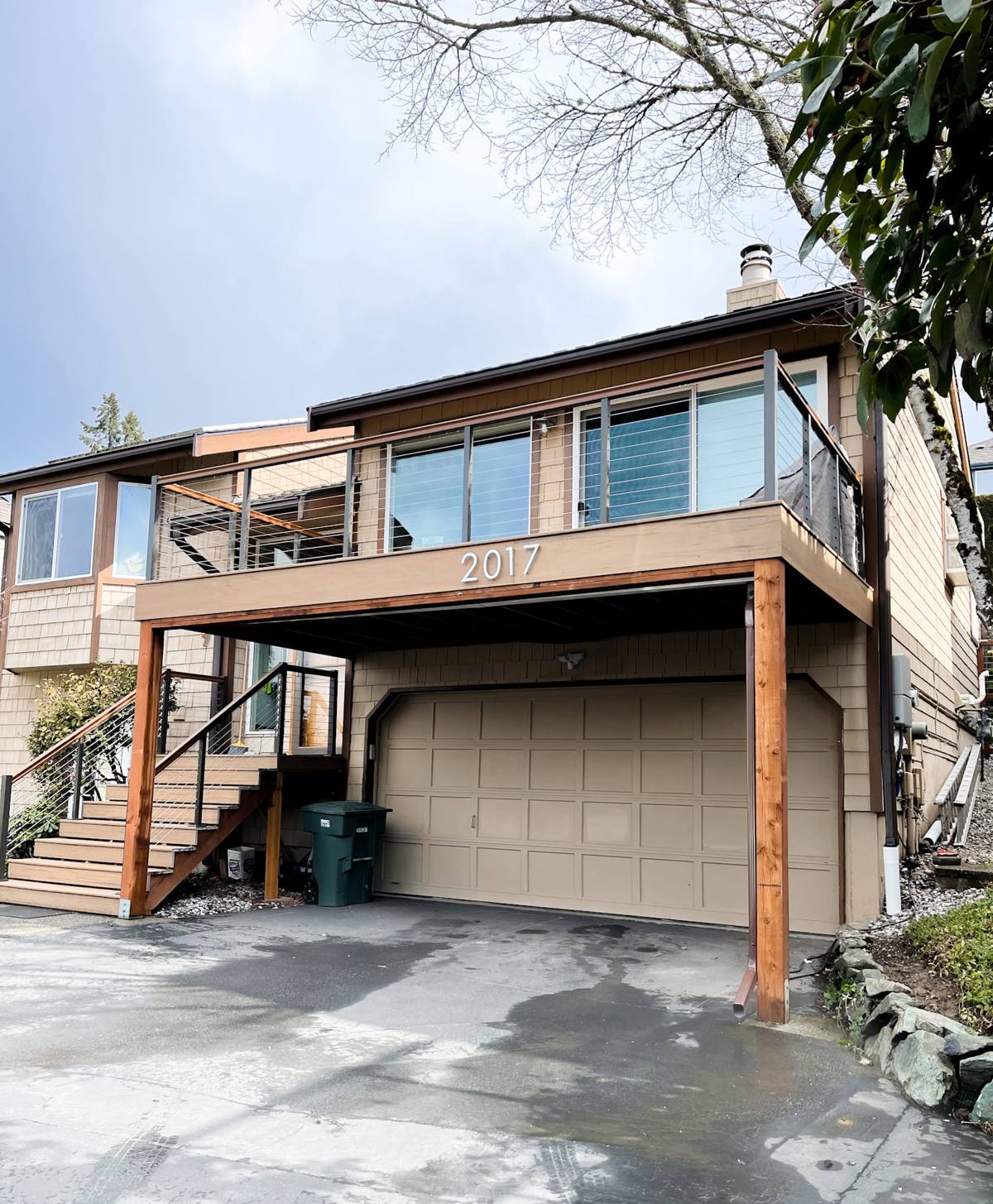
What "Correct" Deck Replacement Looks Like Here
A deck replacement isn't just pulling up old boards and screwing down new ones. In a climate like Everson's, the parts you can't see matter more than the parts you can. We treat every replacement as a chance to fix the moisture path, not just the surface.
Ledger and Structural Attachment
Where the deck ties into the house is the single most common source of hidden rot we find. Proper flashing at the ledger board — installed so water sheds outward and never sits against the house sheathing — is non-negotiable. If the original ledger flashing was missing, undersized, or improperly lapped with the house wrap, we address it during replacement rather than reinstalling around the same problem.
Framing and Fasteners
Joists, beams, and posts need to be rated for ground contact or exposed exterior use, and every fastener and structural connector should be corrosion-resistant hardware rated for the coastal-influenced air this area gets. Standard zinc-coated screws and brackets corrode faster here than in drier inland climates, which is why we spec stainless or heavy hot-dip galvanized hardware on replacement work.
Decking Surface and Drainage
Board spacing, direction, and material all affect how fast a deck sheds water and how much moss gets a foothold. Gaps that are too tight trap debris and moisture between boards; gaps that are too wide invite more than they should. We also check that the deck has a slight pitch away from the house and that nothing — planters, rugs, furniture pads — is going to trap standing water against the surface once it's back in use.
Material Choices for a Wet, Mossy Climate
There's no single "right" decking material for every homeowner — it comes down to budget, maintenance tolerance, and how the deck will be used. What matters is picking a material honestly, understanding its trade-offs in this climate, and installing it the way the manufacturer actually specifies.
| Material | How It Handles Moss & Moisture | Maintenance | Typical Lifespan |
|---|---|---|---|
| Pressure-treated wood | Resists rot but surface stays porous — moss and mildew take hold without regular cleaning and sealing | Annual cleaning, re-sealing every 1-2 years | 15-20 years with upkeep |
| Cedar | Naturally rot-resistant, but the softer surface still needs sealing to shed water and resist moss in shaded spots | Sealing every 1-2 years, periodic cleaning | 15-20 years with upkeep |
| Composite decking | Sheds moisture well and resists rot, though textured surfaces can still collect moss in shaded, low-airflow areas without occasional cleaning | Occasional washing, no sealing or staining | 25-30+ years, manufacturer-dependent |
| PVC decking | Fully moisture-resistant surface; least hospitable material for moss growth | Occasional washing | 25-30+ years, manufacturer-dependent |
We install composite and PVC decking to manufacturer spacing and fastening specs, which matters more in this climate than most homeowners realize — improper gapping is one of the fastest ways to void a warranty and end up with moisture trapped where it shouldn't be. If you're leaning toward real wood for the look and feel, we'll talk through what a realistic maintenance schedule looks like for an Everson property specifically, not a generic one.
Signs Your Everson Deck Needs Replacing, Not Repairing
Not every tired-looking deck needs a full rebuild. But there are signs that point toward replacement rather than patching:
- Soft or spongy spots in the decking or framing when you walk across them
- Persistent moss or dark staining that comes back within weeks of cleaning
- Fasteners that are rusted, pulling loose, or leaving streaks down the boards
- Visible gaps, cupping, or splitting across multiple boards rather than one or two
- A ledger board area that stays damp longer than the rest of the deck after rain
- Railings or posts that feel loose or flex more than they should
- A deck older than 15-20 years that was built with standard lumber and hasn't been resealed regularly
If you're only seeing one or two of these on a deck that's otherwise structurally sound, a repair might genuinely be the right call — we'll tell you that if it's true. Replacement makes sense when the framing itself is compromised or when patchwork repairs would just be chasing the same underlying moisture problem around the deck.
Our Deck Replacement Process
We keep the process straightforward and give you real information at each step instead of surprises.
- On-site assessment — We inspect the existing deck, ledger attachment, and framing to see what's actually going on underneath, not just what's visible from the top.
- Honest scope and options — We walk you through material options, realistic costs, and what each choice means for long-term maintenance given Everson's climate.
- Removal and structural correction — Old decking, framing, and flashing come out. Any ledger flashing, joist hardware, or drainage issues get corrected as part of the rebuild, not left in place.
- Rebuild to spec — New framing and decking go in with corrosion-resistant hardware and manufacturer-correct spacing and fastening.
- Final walkthrough — We go over the finished deck with you, including what maintenance (if any) your chosen material needs going forward.
Cost Factors for Deck Replacement
Every deck is different, but the price of a replacement generally comes down to a handful of factors:
| Factor | Why It Affects Cost |
|---|---|
| Deck size and shape | Larger decks and multi-level layouts require more material and labor |
| Decking material | Composite and PVC cost more upfront than treated wood but reduce long-term maintenance spend |
| Framing condition | Rotted joists, posts, or beams add rebuild scope beyond just the surface decking |
| Ledger and flashing repair | Correcting improper flashing at the house connection adds labor but prevents repeat damage |
| Railings and stairs | Code-compliant railing and stair rebuilds add material and labor beyond flat decking |
| Site access | Decks with tight access or elevation changes take longer to demo and rebuild |
We don't quote a number until we've actually seen the deck. A rough phone estimate on a project this dependent on hidden framing condition isn't useful to you or to us — it just sets up a mismatch between what was promised and what the job actually needs.
Why Hire a Crew That Already Works in Everson
There's a real difference between a contractor who occasionally drives out to Everson for a job and one who already understands how houses in Whatcom County hold up over time. We've seen how the combination of driving rain, damp air, and moss pressure plays out on decks in this specific area — which framing details get skipped in older builds, which flashing mistakes show up again and again, and which materials actually perform the way they're supposed to once they've been through a few wet seasons here.
That local pattern recognition changes how we approach a replacement. We're not guessing at what might be going wrong under your deck — we've found the same issues on enough Whatcom County homes to know what to check first, and we build the replacement to hold up against the specific conditions your property deals with year-round.
Get a No-Pressure Estimate
If your deck in Everson is showing signs of rot, moss buildup, or general wear, we're happy to take a look and give you a straight assessment of what it needs — repair or full replacement. Use the form below to request a free estimate, and we'll walk the deck with you and talk through your options honestly.