 Lynden
 Why Deming's Climate Is Hard on Roofs
Deming sits in the Nooksack River valley, tucked under heavy tree cover on the way toward Mount Baker, and that setting is exactly what makes roofing here different from a roof job in a dry, open subdivision. Homes get long stretches of shade, high humidity off the river and surrounding timber, and near-constant moisture for much of the year. Add in the marine air that moves through Whatcom County off Bellingham Bay and the Salish Sea, and you've got a climate that keeps roofing materials wet, cool, and slow to dry for weeks at a time.
That combination is brutal on organic and granule-surfaced roofing. Moss doesn't just grow on a shaded, damp roof in this part of Washington — it thrives, and once it takes hold it holds water against the roof surface, works into seams, and shortens the life of whatever is underneath it. Driving rain off winter storms finds every weak lap, every under-driven fastener, and every place where flashing was rushed. A roof in Deming has to shed water fast, dry out between storms, and resist the moss and moisture problems that a roof in a drier climate simply doesn't face.
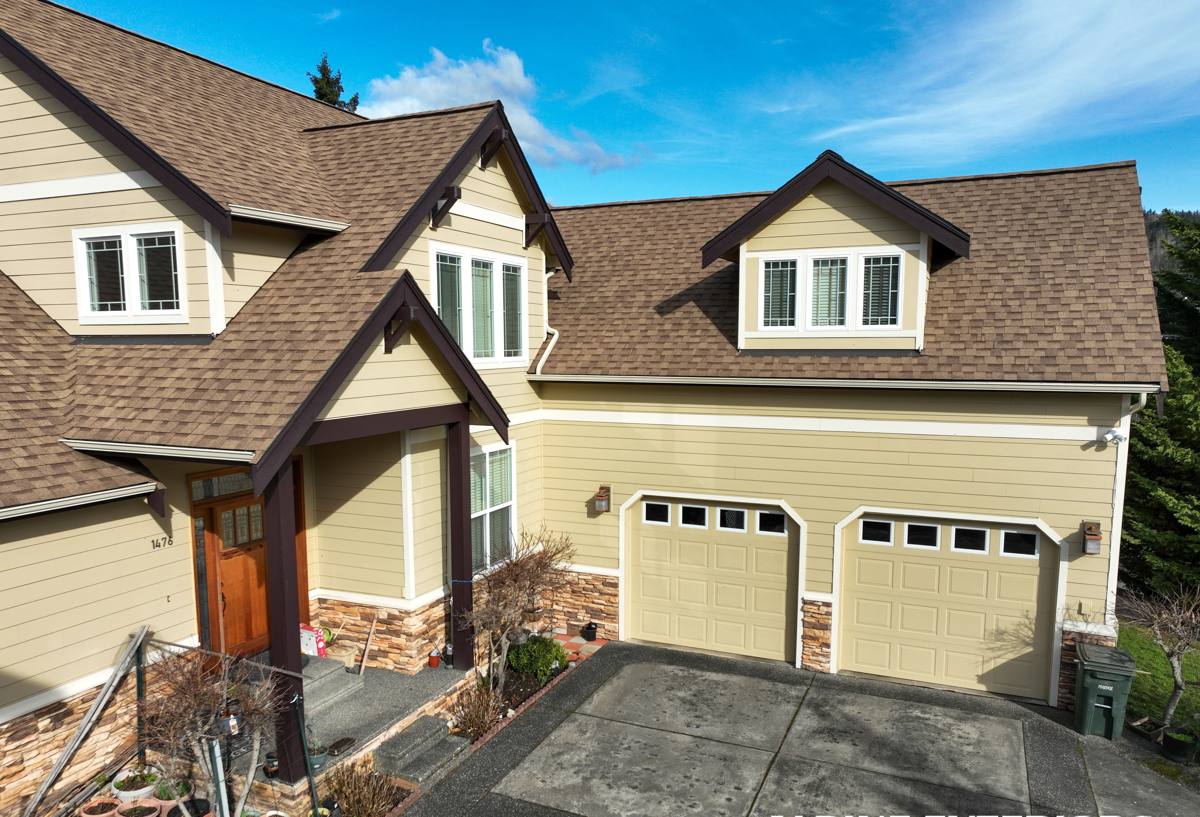
Why Metal Roofing Makes Sense for Deming Homes
Metal roofing earns its keep in exactly these conditions. A properly installed metal roof has fewer laps and seams for water and moss to exploit, sheds rain and snowmelt quickly off a slick, low-friction surface, and doesn't absorb moisture the way asphalt or wood products can. Moss still lands on a metal roof — spores don't care what the surface is made of — but with fewer places to grip and hold moisture, it's slower to establish and easier to keep off with routine maintenance instead of a full re-roof.
Metal also holds up better under the freeze-thaw cycles and heavier, wetter snow loads that show up in the foothill areas around Deming compared to Lynden proper. It doesn't crack, curl, or lose granules the way asphalt shingles do after a decade or two of constant damp shade. For a homeowner tired of scrubbing moss off a shingle roof every couple of years, or tired of patching leaks around the same valley every winter, metal is a legitimate long-term fix rather than another short-term patch.
What a Correct Metal Roof Installation Involves
Metal roofing is unforgiving of shortcuts in a way that shingles sometimes aren't. A roof that looks fine on install day can fail in three years if the details underneath were skipped. Here's what actually has to happen for a metal roof to perform in this climate.
Underlayment and Moisture Barrier
Under every metal panel needs to be a synthetic or high-temp underlayment rated to handle the condensation that forms on the underside of metal in a cold, damp valley climate. In areas prone to ice damming or heavy snow buildup, self-adhering membrane at eaves, valleys, and penetrations isn't optional — it's the difference between a dry attic and a slow, hidden leak that shows up as staining months later.
Fasteners and Flashing
Fastener choice matters more with metal roofing than almost any other trade decision. Mismatched metals cause galvanic corrosion — steel screws in aluminum panels, or the wrong washer material, will rust and fail well before the panel itself does. Every fastener needs the correct type, spacing, and torque, and every flashing detail at valleys, chimneys, skylights, and wall transitions has to be formed and sealed correctly the first time, since these are the spots where a rushed job shows up as a leak.
Ventilation
A metal roof over a poorly ventilated attic traps moisture instead of shedding it, which defeats the purpose of switching to metal in the first place. Ridge and soffit ventilation sized correctly for the home keeps condensation from forming on the underside of the panels and keeps the attic framing dry through Whatcom County's long wet season.
Panel Options for Deming Homes
Not every metal roofing system is the same, and the right choice depends on the home's roof pitch, budget, and how much visible seam exposure the homeowner is comfortable with.
| Panel Type | Best For | Trade-Offs |
|---|---|---|
| Standing seam (concealed fastener) | Steep or complex rooflines, long-term low-maintenance goals | Higher upfront cost, but no exposed fasteners to fail over time |
| Exposed-fastener panels | Simpler roof shapes, tighter budgets, outbuildings and shops | Lower cost, but fasteners and washers need inspection and eventual replacement |
| Steel (galvalume or painted) | Most residential applications in this climate | Strong and cost-effective; coating quality determines how well it resists our wet cycle |
| Aluminum | Homes closer to marine air or with corrosion concerns | Naturally corrosion-resistant, but softer and typically higher cost per square |
We walk homeowners through these trade-offs based on the specific roof, not a one-size answer. A steep-pitched, heavily shaded roof in Deming has different priorities than a simple shop roof on the same property.
Our Process
Assessment
We start by getting on the roof, not just looking at it from the ground. That means checking the decking for soft spots or rot, evaluating existing ventilation, and identifying trouble areas — valleys, dormers, chimney flashing — that have likely been fighting moss and moisture for years. We'll tell you honestly whether a tear-off is needed or whether your roof deck is a candidate for a direct metal retrofit.
Installation
Once we're on the roof, the sequence matters: ice-and-water membrane at vulnerable areas first, underlayment run correctly with proper laps, then panels installed to spec with the correct fastener pattern, flashing formed and sealed at every transition, and ridge venting tied in at the end. We don't skip steps to save a day on the schedule — in this climate, the steps we'd be tempted to skip are exactly the ones that cause callbacks two winters later.
Cleanup and Walkthrough
We clean the site, magnet-sweep for stray fasteners, and walk the finished roof with you so you know what maintenance, if any, it needs going forward.
Signs Your Current Roof Is Already Struggling
Homeowners in Deming often call us after noticing one or more of these signs, and catching them early usually means more options and lower cost:
- Moss buildup that returns within a season of being cleaned or treated
- Dark streaking or staining along shaded slopes and valleys
- Granule loss showing up in gutters (a shingle-roof sign that a change is coming)
- Soft spots or sagging when walked, indicating decking damage underneath
- Rust streaks around old exposed fasteners or flashing
- Interior ceiling stains that appear or worsen after heavy rain
Maintenance a Metal Roof Actually Needs
One of the real advantages of metal in this climate is how little upkeep it demands compared to shingles, but "little" isn't "none." A simple annual routine keeps a metal roof performing for decades:
- Clear needles, leaves, and debris from valleys and gutters, especially after fall storms
- Check for moss or algae starting at shaded edges and treat it before it spreads
- Inspect exposed fasteners (if that system was used) for loosening or early rust
- Confirm flashing around chimneys, skylights, and vents is still sealed after freeze-thaw seasons
- Walk the attic after major storms to check for any condensation or staining
What Affects the Cost
Every roof is different, and we'll always give you a firm number after seeing your roof in person, not a phone estimate. In general, these are the factors that move the price:
| Factor | Why It Matters |
|---|---|
| Roof pitch and complexity | Steep or cut-up rooflines with multiple valleys take more labor and material |
| Tear-off vs. overlay | Removing old roofing and repairing decking adds cost but is often necessary in a moss-damaged roof |
| Panel type | Standing seam costs more than exposed-fastener panels but needs less long-term upkeep |
| Material (steel vs. aluminum) | Aluminum's corrosion resistance comes at a higher material cost |
| Access and site conditions | Tree cover, driveway access, and roof height affect labor and staging |
Why a Crew That Already Works Deming Matters
Metal roofing done wrong in a wet, shaded climate doesn't fail gracefully — it fails at the exact seams and fasteners that were rushed, usually a couple of winters after the crew is gone. A contractor who's already worked roofs in Deming and the surrounding Whatcom County valleys knows how much ventilation a home under heavy tree cover actually needs, which fastener and flashing combinations hold up against the region's driving rain, and how aggressive moss growth here can be even on a well-built roof. That's not something a crew coming from a drier part of the state gets right on the first try.
We're also familiar with local permitting and the practical realities of working on properties with limited access, mature trees, or septic systems that affect where equipment can go — details that matter on install day but rarely show up in an online quote.
If your roof is showing moss, staining, or age, or you're simply tired of the upkeep asphalt demands in this climate, we're glad to take a look and give you a straightforward, no-pressure estimate. Use the form below to get started.