 Lynden
 Deck Replacement Built for Sumas Homes
A deck in Sumas earns its keep and takes its lumps in about equal measure. It's where people actually spend their outdoor time in this corner of Whatcom County, and it's also sitting outside all year absorbing everything our weather throws at it. If your deck has gone soft underfoot, grown a permanent green film, or started separating from the house, you're not looking at a cosmetic problem anymore — you're looking at a structural one. Deck replacement isn't glamorous work, but done right, it's one of the more consequential exterior projects a homeowner can take on, because a failing deck is a safety issue, not just an eyesore.
This page covers what deck replacement actually involves for homes in and around Sumas, why our local climate accelerates deck failure, and what to expect when you hire a crew that's done this work up and down these same streets before.
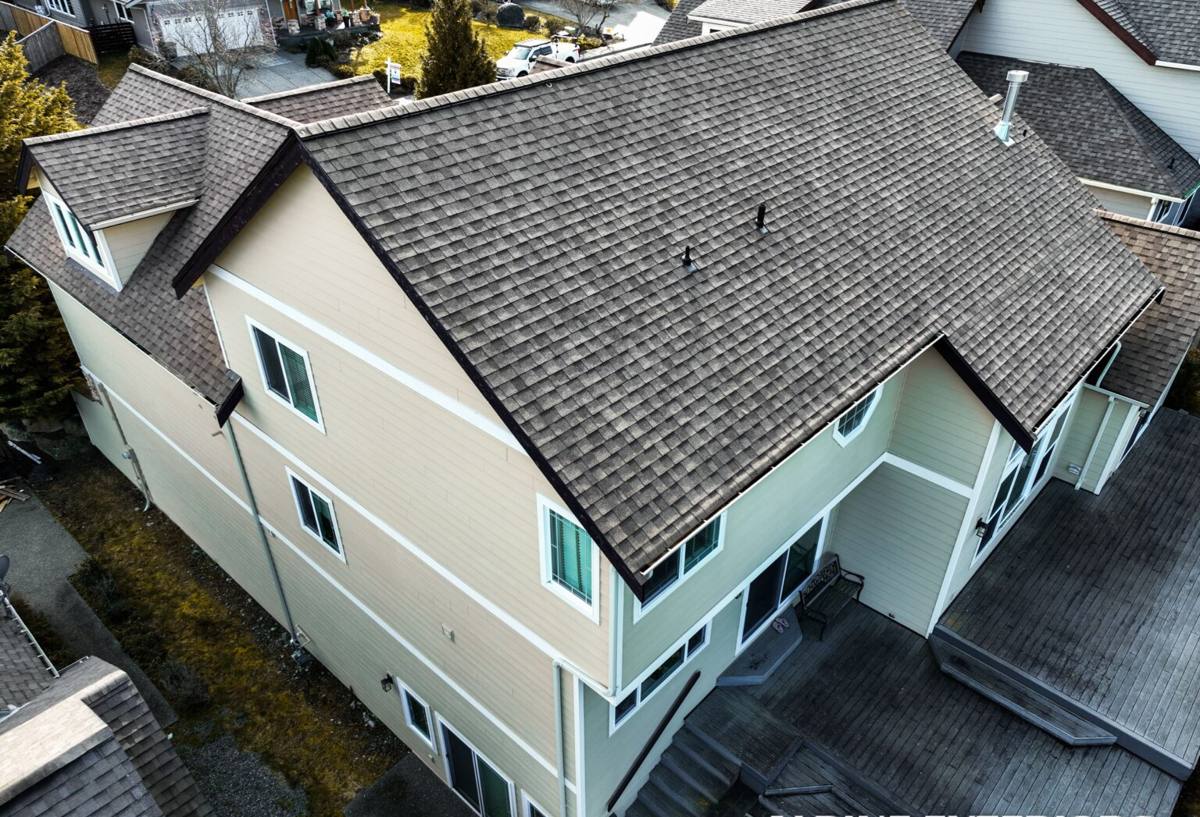
Why Whatcom County Weather Wears Decks Down
Sumas sits in a part of the Pacific Northwest where the marine-influenced air off the Salish Sea and the Nooksack valley combine to keep everything damp for a large chunk of the year. That means driving rain that finds its way into every joint and fastener hole, long stretches of gray, low-sun days that never quite dry a deck out between storms, and a moss season that can run from fall through spring depending on how much shade your yard gets.
None of that is unique to any one street in Sumas — it's the reality for every deck in this region — but it adds up differently depending on your yard's exposure. A deck under mature trees or on the north side of a house holds moisture longer and grows moss faster. A deck that catches wind-driven rain from the west takes on water at the ledger board and rail posts even when it's "covered." Salt-tinged marine air moving inland across the county also plays a quiet, long-term role in corrosion — fasteners, joist hangers, and hardware that aren't rated for exterior exposure start to weaken years before the wood itself gives out.
The result is a predictable failure pattern: surface wear shows up first, then hidden rot at the structural connections shows up later, usually after it's already compromised the frame.
What This Means for Your Deck's Lifespan
A well-built deck in this climate, maintained reasonably, should give you 15–25 years depending on material. A deck that was under-built, under-flashed, or built with the wrong fasteners for our moisture levels can start failing structurally in half that time — even if it still looks okay from a distance.
Signs Your Deck Needs Replacing, Not Just Repair
Not every tired deck needs a full teardown. But there's a line where patching boards stops being a real fix and starts being a way to delay an inevitable, more expensive problem. Watch for these:
- Soft, spongy, or bouncy spots in the decking or framing when you walk across it
- Visible rot, splitting, or crumbling wood at the ledger board (where the deck meets the house)
- Rust streaks or corroded fasteners and joist hangers
- Railings or posts that wiggle or feel loose at the base
- Persistent moss or black staining that comes back within weeks of cleaning
- Gaps opening up between the deck and the house wall, or a deck that seems to be pulling away
- A deck older than 20 years that's never had the structure inspected
If you're seeing more than one or two of these, especially anything at the ledger connection, it's worth having someone look at the framing before you spend more money on surface repairs.
What a Correct Deck Replacement Actually Involves
A deck replacement done right isn't just swapping old boards for new ones. The parts nobody sees are the parts that determine whether the deck lasts.
Structure First
Footings need to be sized and set below frost depth, and on many older Sumas properties the original footings were undersized or set on grade — we check this rather than assume the old ones are fine to reuse. Ledger board attachment to the house is one of the most common failure points in this region: it has to be properly flashed and lag-bolted (never just nailed) to keep water from tracking behind it into the house rim joist.
Framing and Fasteners
Joists, beams, and posts need to be rated for ground contact where applicable, and every hanger, bolt, and screw needs to be exterior/coastal-rated hardware — not standard interior-grade fasteners that corrode within a few damp seasons. This is one of the most common corners cut on older or budget decks, and it's invisible until the hardware fails.
Drainage and Flashing
Water management is the whole game in a climate like ours. That means proper ledger flashing, gaps between deck boards for drainage, and grading or drainage systems underneath the deck where it sits low or over living space, so water isn't pooling against the house foundation or framing.
Surface Material
The decking itself — wood or composite — is the last decision, not the first, and it's covered in more detail below.
Choosing Decking Material for This Climate
There's no single "best" decking material — there's a best fit for your budget, how much upkeep you want to do, and how the deck sits relative to sun and shade. Here's how the common options actually perform in Whatcom County conditions:
| Material | How it handles our rain/moss climate | Maintenance | Typical lifespan here |
|---|---|---|---|
| Pressure-treated lumber | Good if properly sealed; can hold moisture and support moss/algae in shaded, damp spots without upkeep | Needs cleaning and re-sealing every 1–2 years | 15–20 years |
| Cedar | Naturally rot-resistant but still needs sealing to fend off graying, splitting, and moss in wet shade | Annual cleaning, re-sealing every 2–3 years | 15–20 years |
| Capped composite | Best moisture and moss resistance of the common options; doesn't absorb water or feed algae growth the way wood does | Occasional washing, no sealing or staining | 25–30+ years |
| Uncapped composite (older-style) | Can still absorb some moisture at cut edges and stain in constant damp shade | Low, but not zero | 20–25 years |
We'll walk you through this honestly based on your yard's actual sun and shade pattern — a deck that gets afternoon sun most of the year has very different needs than one tucked under trees or on the north side of the house.
Our Deck Replacement Process
- On-site assessment — we inspect the existing structure, ledger, footings, and hardware to see what's actually failing and why
- Honest scope and estimate — full replacement vs. structural repair with new decking, laid out plainly with real cost ranges, not guesswork
- Permit handling — we take care of the local permit process so you're not chasing paperwork
- Demo and structural rebuild — old decking, framing, and any compromised footings removed and rebuilt to code with corrosion-rated hardware
- Flashing and drainage — ledger flashing and water management addressed before a single deck board goes down
- Decking, railing, and finish work — installed to manufacturer spec if composite, or properly fastened and sealed if wood
- Final walkthrough — we go over the finished deck with you, including what maintenance (if any) it needs going forward
Permits and Local Considerations
Deck work above a certain height or attached to the house typically requires a building permit in Whatcom County jurisdictions, including within Sumas city limits. Requirements can vary by exact height, footprint, and whether the deck is attached or freestanding, so we check the current requirements for your specific property rather than assume. Skipping a required permit can create real problems later — at resale, at insurance claim time, or if the work doesn't hold up to inspection standards. We handle this as part of the job so it's one less thing you have to track down yourself.
What Deck Replacement Costs — and What Drives the Price
Every deck is different, so exact numbers depend on your specific project, but the main cost drivers are consistent:
| Cost factor | Why it matters |
|---|---|
| Deck size and shape | More square footage and complex angles or multiple levels increase material and labor |
| Structural condition | Rotted footings or ledger damage add rebuild scope beyond just the surface |
| Decking material | Pressure-treated is the lowest upfront cost; capped composite costs more upfront but less over time |
| Height and access | Elevated decks and difficult access sites take more labor and safety setup |
| Railing style and stairs | Custom railing, glass panels, or added stairs add cost beyond a basic rail system |
| Permit and inspection requirements | Larger or higher decks may require engineering review, which adds time and fees |
We'll give you a real number for your project after seeing it in person — broad guesses without an on-site look aren't useful to you and we won't pretend otherwise.
Why Hiring a Crew That Already Works in Sumas Matters
Deck-building fundamentals don't change from town to town, but the details that actually matter — how deep footings need to go for our frost conditions, which hardware holds up against our moisture levels, how much drainage a shaded, moss-prone yard actually needs, what the local permitting process looks like — are things you learn by doing this work repeatedly in this specific area. A crew that's replaced decks throughout Sumas and the surrounding Lynden area has already seen how the local weather ages a deck over 10 or 15 years, and builds accordingly from day one instead of learning the hard way on your project.
It also means we're not driving in from out of the area for a warranty callback — if something needs a second look after the job's done, we're already working nearby.
Before You Hire: A Quick Checklist
- Ask whether they'll inspect and address footings and the ledger connection, not just replace decking boards
- Confirm they're pulling the required local permit, not skipping it
- Ask what fastener and hardware grade they use for this climate
- Get a written estimate that separates structural work from surface material costs
- Ask how they handle drainage under and around the deck
- Check that they carry proper licensing and insurance for the work
If a deck replacement quote skips straight to board colors without ever mentioning footings, flashing, or hardware, that's worth asking more questions about before you sign anything.
If your deck in Sumas is showing its age — or you just want an honest read on whether it needs replacing or can be repaired — we're happy to come take a look. Estimates are free, there's no pressure, and you'll get a straight answer either way.