 Lynden
 Why Decks Near Blaine Wear Out Faster Than the Rest of the House
If you live in or near Blaine, you already know your deck takes a different kind of beating than the siding or the roof. Salt air off the water gets into every metal fastener and connector. Driving rain doesn't just fall straight down here — it comes in sideways against ledger boards and rail posts, finding gaps that a calmer climate would never expose. And then there's the long moss season: months at a stretch where a shaded or north-facing deck barely gets a chance to dry out between rains. Put those three together and you get a specific, predictable failure pattern in local decks — one that's different from what we see on decks twenty miles inland.
A deck replacement done right for this part of Whatcom County isn't just "build the same deck again." It's building for the conditions that are actually going to hit it.
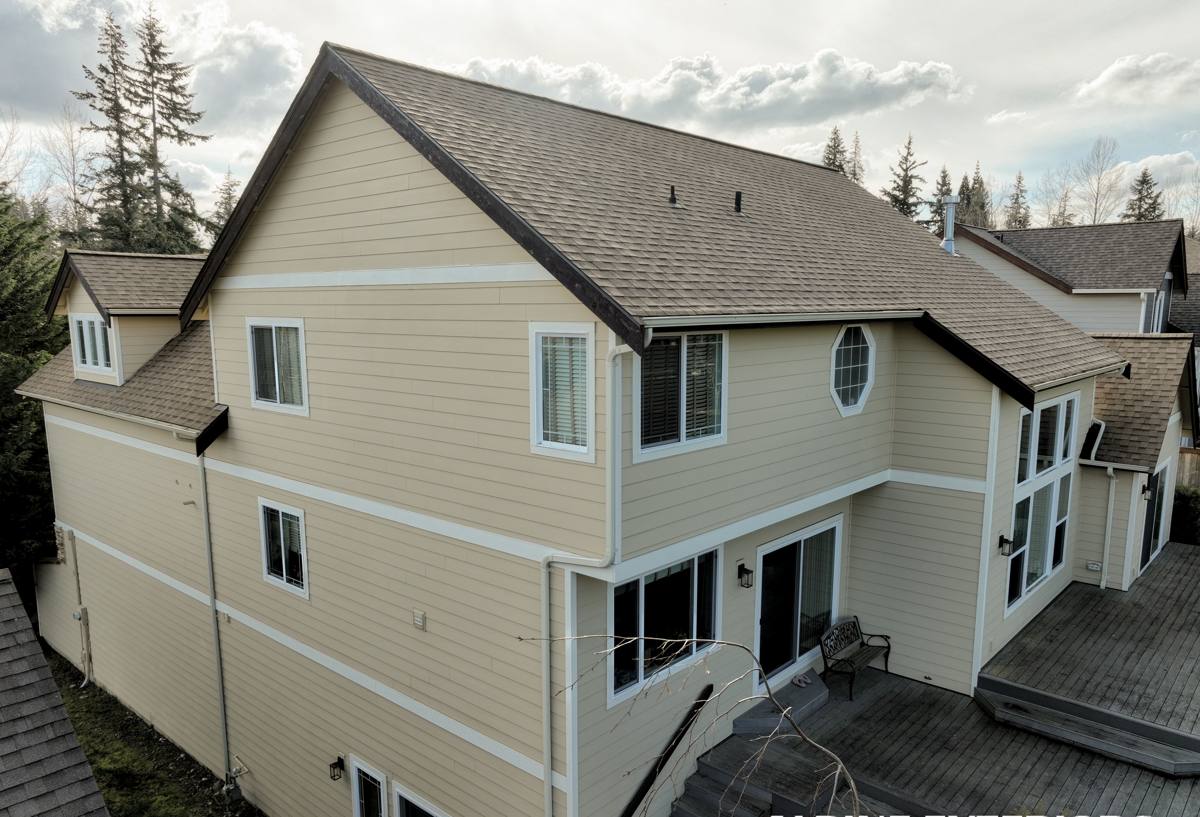
How to Tell It's Replacement Time, Not Repair Time
Cosmetic wear vs. structural failure
Faded boards, a little surface graying, or a squeaky board or two are cosmetic — those can often be addressed with cleaning, board swaps, or refinishing. Replacement becomes the honest recommendation when the problems are in the structure itself:
- Soft or spongy spots underfoot, especially near the house or stair landings
- Rust streaking or corrosion around joist hangers, ledger bolts, or post bases
- Visible gaps or separation where the deck meets the house (a common entry point for the driving rain this area gets)
- Persistent moss or algae growth on the frame or underside, not just the walking surface
- Railings or stairs that flex or feel loose when you put weight on them
Any one of those can usually be scoped and fixed. Several at once, or a deck older than 15–20 years built with basic dimensional lumber and standard hardware, usually means the cost of chasing repairs starts to exceed the cost of doing it right once.
Why "it still looks fine" isn't the same as "it's fine"
Salt air corrosion and moisture damage both tend to attack from the inside out — the ledger board, the joists, and the fasteners you can't see from the top. A deck can look presentable and still have compromised framing underneath it. That's why a real inspection means getting underneath the deck and checking the connections, not just walking the surface.
What a Correct Deck Replacement Actually Involves
The substructure comes first
Everything about deck longevity here starts below the decking boards. Posts should sit on footings sized and set to code, not just resting on old pavers or undersized concrete pucks. Joists need consistent spacing and proper blocking, and in a climate with this much moisture cycling, joist protection (tape or coating on the top edge) makes a real difference in how long the frame lasts.
Ledger attachment and flashing
The ledger board — where the deck bolts into the house — is the single most common failure point we see on older decks in this area, because it's the spot where driving rain and wood-to-house contact combine. A correct replacement means proper flashing that sheds water away from the house framing, not caulk alone, and structural fasteners rated for exterior, coastal-adjacent use.
Hardware that matches the environment
Salt air isn't just a coastal-town cliché — it corrodes standard fasteners and hangers faster than most homeowners expect, even a few miles inland. Stainless steel or coated, corrosion-resistant hardware costs more up front, but on a Blaine-area deck it's not an upgrade, it's the standard we build to.
Drainage and airflow underneath
Moss doesn't grow because a deck is old — it grows because moisture sits. Grading the ground underneath to shed water, keeping skirting or lattice from trapping still, damp air, and leaving clearance for airflow all reduce the moss and mildew buildup that's such a persistent issue through the wet months here.
Choosing Decking Material for This Climate
There's no single "best" decking material — there's the right trade-off for your budget, your maintenance appetite, and how exposed your deck is to rain and shade. Here's how the common options actually perform in a driving-rain, long-moss-season environment:
| Material | Moisture & Moss Behavior | Maintenance | Typical Lifespan Here |
|---|---|---|---|
| Pressure-treated wood | Absorbs water; needs sealing to resist moss and swelling | Annual cleaning, re-sealing every 1–2 years | 10–15 years with upkeep |
| Cedar | Naturally rot-resistant but still needs finish to fight algae/moss staining | Regular cleaning and refinishing | 15–20 years with upkeep |
| Composite decking | Doesn't absorb water like wood; still needs periodic cleaning where moss can grow on the surface film | Low — occasional wash, no sealing | 20–30 years |
| PVC / capped polymer | Fully moisture-resistant surface, best resistance to staining and moss | Lowest — soap and water rinse | 25+ years |
We don't push one product line as "the" answer. What we do push is matching the material to how much sun the deck gets, how close it sits to the ground or landscaping, and how much upkeep you actually want to do every fall before moss season sets in.
Our Process, Start to Finish
1. On-site assessment
We get underneath the existing deck, check the ledger connection, footings, and hardware condition, and give you a straight answer on whether you're looking at repair or full replacement — and why.
2. Design and permitting
Deck size, railing height, and stair requirements are governed by local building code, and permitting requirements apply whether you're inside Lynden city limits or in unincorporated Whatcom County near Blaine. We handle that process as part of the job, not as an afterthought.
3. Demolition and disposal
Old decking, framing, and hardware are removed and hauled off. We check what's underneath — soil grading, existing footings, any hidden rot against the house — before anything new goes in.
4. Build
Framing, flashing, decking, and railing installed to the standards above, with corrosion-resistant fasteners throughout and attention to drainage and airflow underneath.
5. Final walkthrough
We walk the finished deck with you, cover basic care for whatever material you chose, and make sure you know what to check each fall before the wet season really sets in.
Why a Crew That Already Works Blaine and Lynden Matters
Deck construction that works fine in a drier, more sheltered part of Washington can fail early right here. A crew that already builds and replaces decks around Blaine and Lynden knows, from repeat experience, which framing and fastener choices hold up against this specific combination of salt air, wind-driven rain, and shaded moss growth — and which shortcuts show up as callbacks two winters later. That's not a marketing point, it's just what happens when a crew works the same coastline and county repeatedly instead of building decks in a dozen different climates. It also means we're familiar with the permitting process for both the City of Lynden and Whatcom County, so that part of the job doesn't stall your project.
Protecting Your New Deck Through Moss Season
A correctly built deck still needs some seasonal attention, especially through this region's long wet stretch. A short, honest maintenance routine goes a long way:
- Sweep leaves and debris off the deck surface regularly in fall — trapped organic material is what feeds moss growth
- Rinse or wash the surface a couple of times a year to keep algae and moss film from taking hold
- Check railing posts and stair connections once a year for any looseness
- Keep gutters and downspouts near the deck clear so runoff isn't dumping directly onto or under it
- If you chose wood, re-seal on the schedule recommended for that species — don't wait until it's visibly gray
- Clear any skirting vents or lattice gaps so air can keep moving underneath the deck
None of this is complicated, but skipping it is exactly how a well-built deck ends up looking like a poorly-built one after a few wet winters.
What This Costs, and What Actually Drives the Price
Deck replacement costs vary a lot based on size, framing complexity, material choice, and site access — anyone quoting a firm number without seeing the site is guessing. What we can tell you is what actually moves the price:
| Factor | Why It Matters |
|---|---|
| Deck size and shape | Multi-level decks, angles, and built-in features add framing and labor time |
| Decking material | Composite and PVC cost more up front than wood, less over time in upkeep |
| Substructure condition | Failed footings or a rotted ledger connection add scope beyond the surface |
| Height and stairs | Elevated decks need more robust railing, stair, and footing work |
| Site access | Tight side yards or sloped lots can add labor and equipment time |
We'll walk you through actual numbers for your specific deck at the estimate — not a generic range that doesn't apply to your property.
If your deck is showing any of the wear signs above, or you're just planning ahead before another wet season sets in, we're glad to come take a look. The estimate is free, there's no pressure, and you'll get a straight answer about whether you're looking at a repair or a full replacement. Use the form below to get started.