 Lynden
 Deck Repair Built for the Nooksack Area's Weather
Homes in the Nooksack area sit in one of the wettest corners of Whatcom County, tucked along the river valley where fog settles in low and rain lingers longer than it does just a few miles away in town. Add in the marine-influenced air that moves inland off the Strait of Georgia and the Salish Sea, and you get a climate that's genuinely hard on outdoor wood structures. Decks here don't fail because the work was rushed once — they fail slowly, board by board, joist by joist, from years of moisture doing what moisture does when it isn't given a way out.
We've repaired decks throughout the Lynden and Nooksack area long enough to know the difference between a deck that looks tired and one that's actually unsafe. This page is about what that repair work actually involves, what it should cost to do right, and why a deck that's been neglected through even two or three wet seasons is worth a real inspection before you use it again.
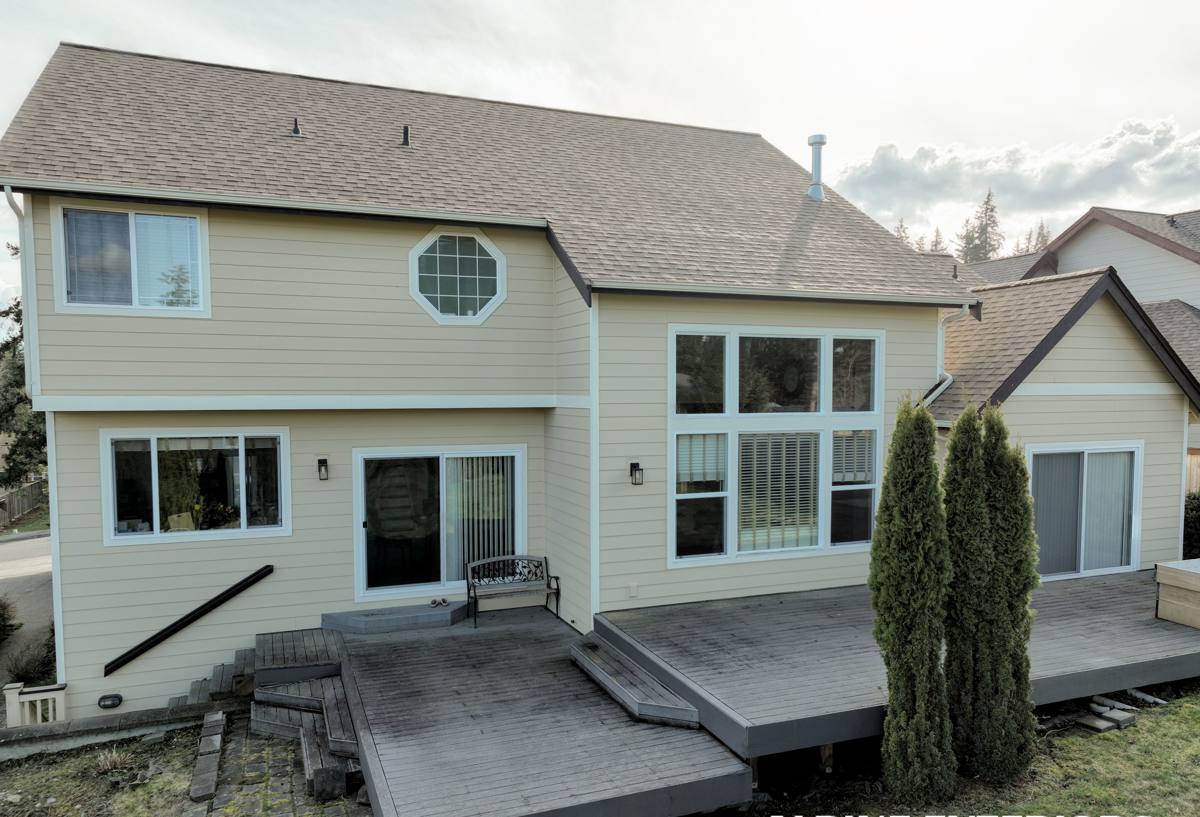
Why Nooksack Decks Wear Out Faster Than the Manufacturer's Numbers Suggest
Every deck material has a rated lifespan, and almost none of those numbers were calculated with a Whatcom County winter in mind. A few things stack up against decks out here specifically:
- Long moss season. Shaded decks, especially those under trees or on the north side of a house, can stay damp for months at a time. Moss holds water against the wood surface and finds its way into any seam, screw hole, or hairline crack.
- Driving rain. Wind-driven rain doesn't just fall on a deck — it pushes sideways under railings, behind ledger boards, and into joints that were never meant to see standing water.
- Slow drying cycles. Between the river valley's humidity and our short, low-sun winter days, wet decking doesn't get much chance to fully dry out before the next storm rolls through. Wood that stays damp for weeks at a stretch is exactly the environment rot fungus needs.
- Freeze-thaw stress. We don't get brutal winters, but we do get repeated freeze-thaw cycles that expand trapped moisture inside wood fibers and around fasteners, working joints loose over time.
None of this means a deck in the Nooksack area is doomed — it means maintenance and repair timing matter more here than they would somewhere drier. Catching a problem in year five instead of year twelve is the difference between replacing a few boards and replacing a structure.
The Damage We See Most Often
Ledger Board and Rim Joist Rot
The ledger board — where the deck attaches to the house — is the single most common failure point we find, and it's also the most dangerous to ignore. Water tracks down the siding, gets behind improperly flashed ledgers, and rots the wood from the inside out while the surface still looks fine. A deck can look structurally sound and still have a compromised connection to the house.
Soft or Spongy Decking Boards
If a board flexes underfoot or feels soft when you press on it, moisture has already broken down the wood fibers. This usually starts at butt joints, around fasteners, and near planters or anywhere debris collects and holds water against the surface.
Post and Footing Movement
Undersized or improperly set footings can shift as the ground around them saturates and drains repeatedly through the wet season. A deck that feels like it sways or bounces more than it used to is often telling you something is happening below the surface, not just at the boards.
Railing and Guard Post Failure
Railings take a lot of lateral stress and see a lot of standing water at post bases. A railing that wiggles is rarely a cosmetic issue — it's usually a sign the post connection has rotted or the fasteners have corroded.
Fastener and Hardware Corrosion
Older decks are often held together with fasteners that were never rated for the amount of moisture exposure they've actually seen. Corroded nails and screws lose holding strength long before they visibly rust through.
What a Correct Repair Actually Involves
A lot of deck "repair" in this region amounts to swapping a few obviously rotten boards and calling it done. That approach treats the symptom, not the cause, and it's why the same spots keep failing every couple of years. Our process starts with figuring out why the damage happened in the first place, because a repair that ignores the cause is just a delay.
- Full structural inspection. We check the ledger connection, flashing, joists, beams, posts, and footings — not just the decking surface — since surface damage is often the last symptom to show up, not the first.
- Moisture path assessment. We trace where water is actually getting in and staying in, whether that's a flashing gap, a missing drip edge, poor drainage under the deck, or grade sloping the wrong direction.
- Targeted removal. We remove only what's actually compromised, probing surrounding wood to confirm where sound material starts, rather than guessing at a boundary.
- Correct hardware and fasteners. Anything replaced goes back with fasteners and connectors rated for the exposure they'll actually see, not whatever happens to be in the truck.
- Fixing the root cause. If the failure was caused by bad flashing, poor drainage, or a design flaw, we address that as part of the repair — otherwise the new material fails the same way the old material did.
- Finish and seal. Exposed end grain and connection points get properly sealed, since end grain is where wood absorbs water fastest.
Repair Versus Replacement: How We Make the Call
Not every deck with a problem needs to come down. But a deck with widespread structural rot, especially at posts or the ledger connection, usually costs more to patch piecemeal than to rebuild correctly. Here's how we generally think about it:
| Situation | Repair Usually Makes Sense | Replacement Usually Makes Sense |
|---|---|---|
| Damage location | Isolated to a few boards or one railing section | Spread across ledger, joists, and multiple posts |
| Structural frame | Solid, with sound joists and footings | Undersized, shifted, or rotted framing |
| Deck age | Under 15-20 years, built to a reasonable standard | Original construction was already substandard or code-noncompliant |
| Ledger/flashing | Properly flashed, connection is sound | Missing or failed flashing causing repeat damage |
| Cost trajectory | One repair addresses the root cause | You've already repaired this deck more than once for related issues |
We'll always tell you honestly which category your deck falls into. A repair that's likely to fail again within a couple of years isn't a service we'll recommend just to make a sale — it isn't good for you or for our reputation in this area.
Materials: What We Use and Why
For structural framing — joists, beams, posts — we use pressure-treated lumber rated for ground contact where appropriate, since anything less doesn't hold up to the moisture cycle this region puts it through. For decking surfaces, the right choice depends on your budget, your maintenance appetite, and how the deck is used:
- Pressure-treated decking is the most economical option and performs well when properly maintained, but it requires periodic sealing to keep moisture from re-entering over time.
- Cedar has natural rot resistance and a warmer appearance, but it's a softer wood that still needs regular sealing and is more sensitive to moss and mildew in shaded, damp spots.
- Composite decking costs more upfront but doesn't absorb moisture the way solid wood does, which matters a lot in a climate with this long a wet season. It still needs proper ventilation underneath and correct fastening — composite installed without attention to airflow can trap moisture just like wood.
We don't push one material over another as a blanket recommendation. What matters more than brand is whether the installation accounts for drainage, ventilation, and the specific exposure your deck actually gets — a south-facing deck in full sun ages very differently than a shaded deck tucked against tree cover.
Our Process, Start to Finish
We keep the repair process straightforward because homeowners in the Nooksack area deserve a clear answer, not a runaround:
- Free on-site inspection where we walk the deck, check the framing where accessible, and identify the actual cause of the damage.
- A written scope that separates what's cosmetic from what's structural, so you know exactly what you're paying for and why.
- An honest repair-versus-replace recommendation, explained in plain terms.
- Work scheduled around the weather — deck repair done in the wrong conditions doesn't hold up, and we won't rush a job into a rainstorm just to keep a schedule.
- A final walkthrough so you can see exactly what was done and why.
Why Hire a Crew That Already Works This Area
Deck repair done right depends on understanding the specific conditions a structure has been living in, not just generic best practices. A crew that regularly works the Lynden and Nooksack area already knows which failure patterns show up in river-valley humidity versus what they'd see on a drier site elsewhere in the county. That familiarity shows up in the details — how flashing is detailed against local rain patterns, how much ventilation clearance a deck actually needs given how slowly things dry out here, and which repairs tend to need revisiting versus which ones hold.
It also means we're not guessing at permitting or setback requirements specific to Whatcom County, and we're not learning the local climate on your project. A deck repaired for a dry climate's assumptions, by a crew unfamiliar with how long moisture sits here, is a deck that will likely need the same repair again sooner than it should.
Signs You Shouldn't Wait On
A deck problem rarely gets better on its own, and in this climate, delay usually means more of the structure is affected by the time repairs happen. Watch for:
- Soft, spongy, or spring-feeling boards anywhere on the deck
- Visible gaps, staining, or soft wood where the deck meets the house
- Railings or guard posts that wiggle or flex when pushed
- Persistent moss or dark staining that keeps returning after cleaning
- Rust streaks around fasteners or visibly corroded hardware
- Any noticeable sag, bounce, or movement underfoot
If you're seeing any of these, it's worth having someone look underneath and not just at the surface. A deck that seems fine from the top can still have a serious problem at the framing level.
If your deck near Nooksack is showing wear, feels less solid than it used to, or you just want an honest opinion on its condition before another wet season sets in, we're glad to take a look. Fill out the form below for a free, no-pressure estimate — we'll tell you plainly what we find and what your real options are.