 Lynden
 Building Decks for Nooksack's Climate
Nooksack sits in the flood plain and farmland stretching east of Lynden, where the Nooksack River, dense tree cover, and Whatcom County's marine-influenced weather combine to create some of the wettest, dampest conditions a deck will face anywhere in Washington. Homes out here deal with driving rain that comes sideways off the valley, salt-tinged air carried inland from the Salish Sea, and a moss season that can run from October clear through May. A deck built to a generic spec sheet does not hold up under that combination. A deck built for Nooksack does.
We've framed and finished decks throughout the Lynden and Nooksack area long enough to know which details matter here and which ones are cosmetic. This page covers what a deck actually needs to survive this climate, what our process looks like from first visit to final walkthrough, and why the small decisions — fastener grade, joist spacing, drainage under the boards — make the difference between a deck that looks good for two years and one that holds up for twenty.
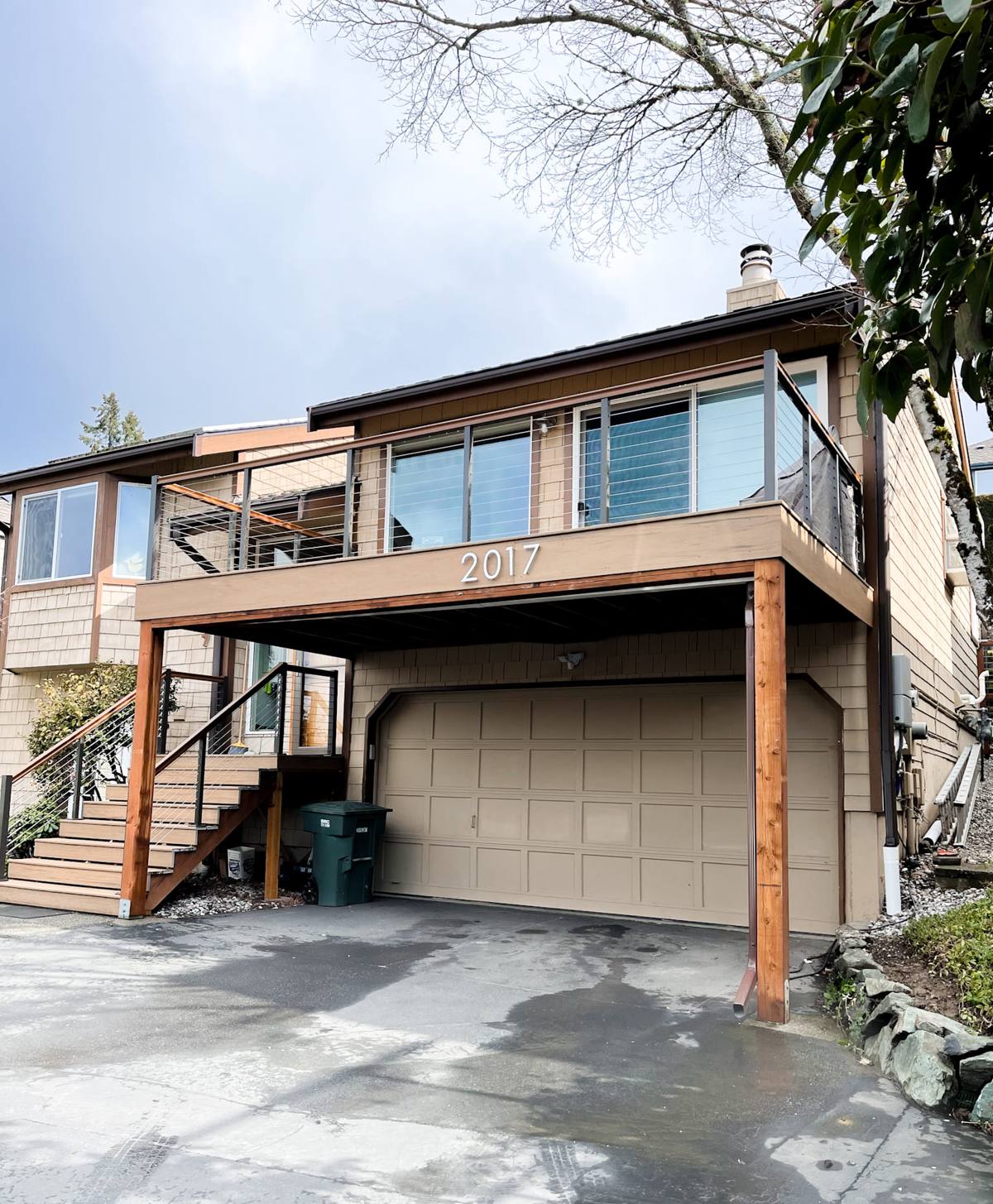
What Nooksack Homes Need From a Deck
Moisture Is the Real Enemy
It isn't any single storm that damages a deck out here — it's the cumulative effect of moisture that never fully dries out between rain events. Framing lumber that stays damp for weeks at a time is where rot starts, almost always at the ledger board, the post bases, and anywhere two pieces of wood sit flush against each other and trap water. A correctly built deck manages moisture actively: it sheds water away from the house, keeps framing lumber off the ground and away from standing water, and uses fasteners and hardware that won't corrode and fail before the wood does.
Moss and Algae Buildup
Whatcom County's long wet season means moss and algae aren't a maybe — they're a certainty on any horizontal wood surface that doesn't get regular sun or airflow. Moss holds moisture against the decking surface, which accelerates rot in wood decking and can stain composite boards if it isn't cleaned off periodically. Deck orientation, gaps between boards, and the surrounding tree canopy all affect how bad this gets, and it's worth talking through during the design phase rather than discovering it after the deck is built.
Salt-Influenced Air and Metal Fatigue
Lynden and Nooksack aren't right on the water, but this part of Whatcom County still gets enough marine air influence that standard, uncoated fasteners and connectors corrode faster than they would in a drier inland climate. Rusted screws and corroded joist hangers are one of the most common failure points we see on older decks in this area — often years before the actual decking or framing lumber would have needed replacing.
What a Correctly Built Deck Involves
Footings and Framing
Everything starts below the decking boards. Footings need to be sized and set below frost depth and set on undisturbed, well-draining soil — a real concern given how saturated ground gets around Nooksack in winter. Posts should sit on top of footings with a proper base connector, never buried directly in concrete where they can wick moisture. Joists need consistent spacing rated for the decking material and expected load, and every ledger board attachment to the house needs proper flashing to keep water from working its way into the house framing — this is one of the most common defects we find when we're asked to inspect or repair an older deck.
Fasteners and Hardware
Given the corrosion risk in this climate, we use fasteners and structural connectors rated for exterior, ground-contact, or coastal exposure — hot-dip galvanized or stainless steel, depending on the application — rather than standard hardware that's rated for drier conditions. It costs more up front. It's also the difference between hardware that outlasts the deck and hardware that needs replacing halfway through the structure's life.
Drainage Beneath the Deck
A deck that traps water underneath it is a deck that rots from the framing up, invisibly, until a board finally gives. We grade and, where needed, add drainage beneath decks to keep water moving away from posts and footings rather than pooling. This matters more in Nooksack than in a lot of places because of how flat and saturated the ground can get during the wet months.
Decking Material Options for This Climate
There's no single right answer for every home — it depends on budget, how much upkeep you want to take on, and how the deck will be used. Here's how the common options actually perform under Nooksack's wet, mossy conditions:
| Material | Moisture & Moss Behavior | Maintenance | Typical Lifespan Here |
|---|---|---|---|
| Pressure-treated lumber | Resists rot when properly maintained; still needs sealing to shed water and slow moss growth | Annual cleaning, re-sealing every 2-3 years | 15-20+ years with upkeep |
| Cedar | Naturally moisture- and insect-resistant, but greys and can hold moss without regular care | Cleaning and oiling every 1-2 years to maintain appearance and shed water | 15-25 years with consistent upkeep |
| Composite decking | Doesn't rot, but can stain from moss/algae and needs periodic washing to stay slip-resistant | Occasional washing; no sealing or staining required | 25-30+ years, manufacturer-dependent |
| PVC decking | Fully moisture-resistant, least prone to moss staining of the common options | Lowest upkeep of the group; periodic washing | 25-30+ years, manufacturer-dependent |
Composite and PVC decking cost more up front but ask the least of you long-term in a climate like this one. Wood decking costs less initially and has a natural look a lot of homeowners prefer, but it only performs well if someone actually keeps up with the sealing and cleaning schedule. We'll walk through the honest trade-offs for your situation rather than push whichever product happens to be easiest for us to install.
Railings, Stairs, and Fastener Choices
Railings and stair stringers take a beating from the same moisture and moss exposure as the decking itself, often worse, since end grain on posts and stringers absorbs water faster than a flat board. We detail post bases to drain rather than trap water, use corrosion-resistant hardware throughout, and pay attention to how stair stringers are attached and flashed at the ledger. A railing system that looks solid the day it's installed but was assembled with standard interior-rated fasteners is a problem waiting a couple of wet winters to show up.
Our Process, Start to Finish
- Site visit and assessment — we look at drainage, sun exposure, tree cover, and how the deck will connect to your home before we talk materials.
- Design and material selection — honest recommendations based on your budget, how much maintenance you want to take on, and how the space will actually get used.
- Permitting — we handle the permit process with Whatcom County or the applicable jurisdiction so the structure is built and inspected to code.
- Footings and framing — proper footing depth, corrosion-resistant hardware, and flashing at every point where the deck meets the house.
- Decking, railings, and stairs — installed to the manufacturer's specifications, with attention to drainage and moss-prone areas.
- Final walkthrough — we go over the finished deck with you, including what maintenance it will actually need in this climate.
What to Check on an Existing Deck
If you're not building new but wondering whether your current deck is holding up, these are the spots worth checking first — and the same spots we check when we're asked to inspect one:
- Soft or spongy spots in the decking, especially near the house or in shaded, moss-prone areas
- Rust staining around fasteners or visibly corroded joist hangers and connectors
- Gaps or separation at the ledger board where the deck meets the house
- Wobble or movement at railing posts
- Standing water or poor drainage underneath the deck after rain
- Heavy moss buildup on the decking surface itself, not just the surrounding ground
Any one of these on its own might just need attention. Several together usually means it's time for a real evaluation rather than a patch.
Why Local Experience Matters for This Job
Deck building isn't complicated in theory, but building one that actually holds up in Nooksack's specific combination of rain, moss, and marine-influenced air takes more than a generic approach. A crew that's worked this area knows which fastener grade to spec without being asked, where moss tends to build up on a given lot's orientation, and how Whatcom County's permitting process actually works. That's the difference between a deck that needs real attention after five wet seasons and one that's still solid after fifteen.
We're not going to tell you every deck needs the most expensive materials available — plenty of homeowners are well served by pressure-treated lumber and a realistic maintenance routine. What we will do is tell you honestly what a given choice will actually cost you in upkeep over time, given where you live, so you can decide with real information instead of a sales pitch.
Cost Factors to Expect
| Factor | Why It Affects Price |
|---|---|
| Decking material | Pressure-treated lumber costs less upfront; composite and PVC cost more but reduce long-term maintenance |
| Deck size and height | Larger decks and those requiring taller footings or additional stairs need more material and labor |
| Site conditions | Poor drainage, sloped lots, or difficult access can add grading or footing work |
| Railings and features | Custom railings, built-in seating, or multi-level designs add complexity |
| Permitting requirements | Deck height, attachment to the house, and local code can affect engineering and permit scope |
We provide a clear, itemized estimate before any work starts so you know what you're paying for and why — no vague allowances that turn into surprises later.
If you're planning a new deck in Nooksack or want an honest look at one you already have, we're glad to come take a look. The estimate is free, there's no pressure, and you'll get a straight answer about what your deck actually needs — just fill out the form below to get started.