 Lynden
 Building Decks That Actually Hold Up in Ferndale
Ferndale sits close enough to Bellingham Bay that salt-laden air is a real factor in how a deck ages, not just a talking point. Add Whatcom County's long stretch of driving rain and the moss season that follows it, and you've got a climate that's genuinely hard on outdoor structures. A deck built the same way you'd build one in a dry inland climate will show problems here years before it should — loose ledger connections, corroding fasteners, slick green boards, and soft spots where water has been sitting instead of draining. None of that is inevitable. It's a function of what materials went in, how the structure was flashed, and whether the crew that built it understood what this specific climate does to wood, metal, and composite over time.
This page is about deck building specifically for Ferndale homes — what the salt air, rain, and moss actually do to a deck, what a correctly built one looks like in response, and what our process covers from first site visit to final walkthrough.
What Salt Air Does to an Improperly Built Deck
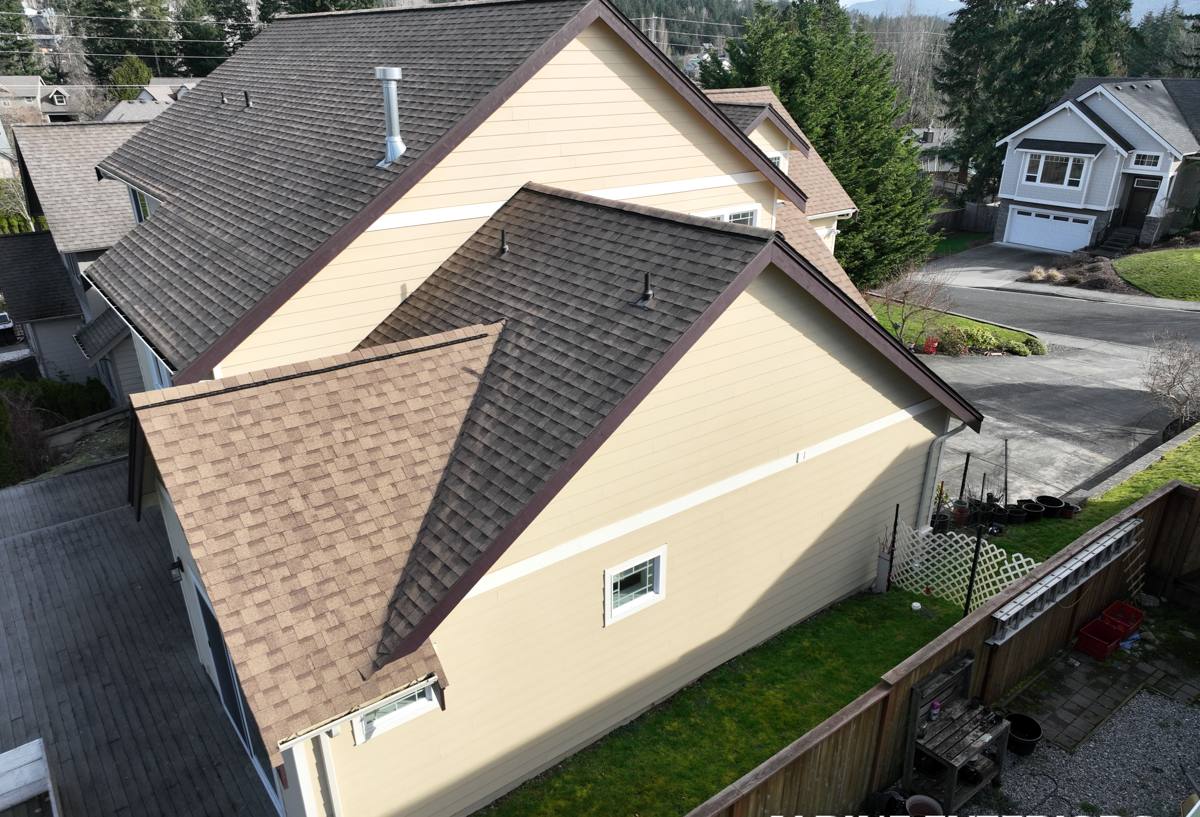
Salt air accelerates corrosion. It's not dramatic — you won't watch it happen — but over a few seasons it works on anything metal that wasn't rated for the exposure. The parts of a deck most at risk are the ones you can't see once the project is finished: joist hangers, structural screws, post bases, and ledger bolts. If a builder uses standard electro-galvanized hardware to save a few dollars, that hardware can start losing its protective coating well before the wood around it has worn out. Once corrosion sets into a joist hanger or a ledger bolt, you have a structural problem hiding behind decking that still looks fine on top.
The fix isn't complicated, it's just non-negotiable: hardware rated for coastal or corrosive exposure — hot-dip galvanized at minimum, stainless steel for critical connections like ledger bolts and post-to-beam hardware. It costs more upfront and it's the difference between a deck that's structurally sound at year fifteen and one that needs a hidden-connection inspection at year eight.
Fastener and Hardware Grades We Use
| Component | Standard Grade (not recommended here) | Coastal-Rated Grade (what we use) |
|---|---|---|
| Ledger bolts / lag screws | Zinc-plated | Hot-dip galvanized or stainless |
| Joist hangers | Standard galvanized (G90) | Triple-zinc or ZMAX-rated galvanized |
| Deck screws | Coated carbon steel | Stainless steel or heavy-duty ceramic-coated |
| Post bases & caps | Standard galvanized | Heavy hot-dip galvanized |
Driving Rain: Where Decks Actually Fail First
Most deck failures don't start at the decking boards — they start where the deck meets the house. The ledger board, the horizontal member bolted to your home's rim joist, is the single most important flashing detail on the entire structure. If it's not properly flashed with a continuous membrane and metal drip cap directing water away from the house framing, driving rain will find its way behind the ledger and into your home's structure over time. This is one of the most common sources of hidden rot damage in older decks throughout Whatcom County, and it's almost always invisible until the deck starts to feel spongy or a homeowner notices staining on the siding below.
Beyond the ledger, every horizontal surface on a deck needs a plan for where water goes. That means:
- Ledger flashing with a self-adhered membrane and metal drip edge, not caulk alone
- A slight slope built into the framing so water sheds away from the house rather than pooling
- Joist tape over the top of every joist to stop water from soaking into end grain and fastener holes
- Gapping between deck boards sized correctly for the material, so water drains through instead of sitting
- Post bases set above grade with a standoff, not buried in soil or sitting in a low spot that holds water
Skip any one of these and you're not building a deck for this climate — you're building a deck for somewhere drier and hoping it holds up here anyway.
Moss, Algae, and the Long Wet Season
Whatcom County's moss season isn't a minor cosmetic issue — sustained moisture and low winter light turn any shaded or poorly draining deck surface into a moss and algae habitat within a season or two. Beyond looking bad, a mossy deck surface is a genuine slip hazard, especially on stairs, and moss holds moisture against the board surface longer than bare wood or composite would on its own, which shortens the material's life.
The building side of this is mostly about drainage and airflow: adequate ventilation underneath the deck, correct board spacing, and avoiding designs that trap standing water or block air movement in shaded corners. The material side matters too — some decking surfaces resist moss and mildew growth better than others, and how a board is finished (or left unfinished) changes how much maintenance it needs to stay clear. We'll walk through what fits your site's actual sun and shade pattern rather than defaulting to whatever's easiest to install.
Choosing the Right Decking Material for a Ferndale Property
There's no single "best" decking material — there's a best fit for your budget, your maintenance appetite, and how much sun your deck actually gets. Here's how the common options hold up specifically against salt air, rain, and moss exposure:
| Material | Salt Air / Corrosion | Moss & Moisture Resistance | Maintenance | Relative Cost |
|---|---|---|---|---|
| Pressure-treated wood | Good with coastal-rated fasteners | Moderate — needs regular cleaning/sealing | Annual cleaning, periodic staining/sealing | $ |
| Cedar | Good with coastal-rated fasteners | Naturally moisture-resistant, still needs care in shade | Regular sealing to hold color and resist graying | $$ |
| Composite decking | Excellent — no corrosion in the board itself | Good; some lines resist algae better than others | Occasional washing, no staining/sealing | $$$ |
| PVC / capped composite | Excellent | Very good — dense, low-absorption surface | Lowest — mostly rinsing | $$$$ |
Whatever surface material you choose, remember that the material only solves half the problem. A composite deck built on corroding hardware or a poorly flashed ledger will still fail from underneath — the substructure is where the climate does its real damage, regardless of what's on top.
What a Correctly Built Deck Involves, Start to Finish
A deck that's going to earn its keep in this climate for decades needs to be right at every layer, not just on the surface. Here's what we consider non-negotiable on every Ferndale deck build:
- Footings sized and set to the correct frost depth for the site, not guessed at
- Ledger board properly bolted, flashed, and separated from the house with a code-compliant connection
- Framing lumber and hardware rated for coastal/corrosive exposure throughout, including hidden connections
- Joist tape on every joist top before decking goes down
- Correct board spacing and a drainage slope planned into the frame, not fixed after the fact
- Guardrails, stair stringers, and baluster spacing built to current code, with connections that won't loosen over time
- Ventilation and clearance underneath the deck to reduce moisture buildup and moss growth
Skipping any of these doesn't necessarily show up on inspection day. It shows up in year six or year ten, usually as a repair bill that costs more than doing it right the first time would have.
Our Deck Building Process
We start with a site visit, not a sales pitch. That means walking your property, looking at drainage, sun and shade exposure, soil conditions, and how the deck will tie into your home before we talk materials or design. From there:
- Assessment and design — we look at layout, size, and how the deck will actually be used, then match materials to your site's specific exposure
- Permitting — we handle the permit application and coordinate any required inspections so the project meets current building code from the start
- Footings and framing — footings set to proper frost depth, framing built with coastal-rated hardware and correct drainage slope from day one
- Ledger flashing and structural connections — the part of the job that determines whether your deck stays sound behind the scenes
- Decking, railing, and stairs — installed to the spacing and fastening specs the material actually requires
- Final walkthrough — we go over the finished deck with you, including what maintenance (if any) the material needs going forward
Permitting and Local Requirements
Deck permitting in Whatcom County depends on the deck's height, size, and whether it's attached to the house, and requirements can differ slightly depending on jurisdiction. We handle the permit process as part of the job rather than leaving it to the homeowner to sort out, and we build to the code requirements that actually apply to your property — correct guardrail heights, baluster spacing, stair geometry, and structural connections that will pass inspection the first time.
Why Hiring a Crew That Already Works Ferndale Matters
A contractor who mostly builds decks in drier, inland climates isn't necessarily going to over-spec your hardware or think twice about ledger flashing — because in their usual working conditions, they can often get away without it. A crew that works Ferndale and the surrounding Whatcom County coastline regularly has already seen what happens when corners get cut here: the corroded joist hanger nobody could see until the deck started to sag, the ledger that was never flashed and let water into the rim joist, the deck that turned into a moss rink by its second winter. That experience shapes what we spec by default, not as an upsell.
It also means we're familiar with the local permitting process, typical soil and drainage conditions in the area, and how exposed a given site is likely to be based on its position relative to the water and prevailing weather. None of that replaces walking your specific property, but it means we're not starting from zero on what this climate requires.
Get a Straight Answer on Your Deck Project
If you're planning a new deck or replacing one that's showing its age, we're happy to come take a look and give you an honest read on what your site needs — no pressure, no upsell on materials you don't need. Use the form below to request a free estimate and we'll get back to you to schedule a site visit.