 Lynden
 Windows Built for the Way Deming Weather Actually Behaves
Deming sits in the Nooksack River valley, tucked into the foothills below Mt. Baker, and that location gives it a weather pattern all its own. You get the marine-influenced rain that rolls in off the Sound and up the valley, cooler damp air pooling along the river bottom, and long stretches of the year where the sun barely dries anything out before the next system moves through. Add in moss season — which in this part of Whatcom County can run most of fall through spring — and you have an environment that is hard on any exterior building material, windows included.
Windows are one of the biggest gaps in a home's weather barrier. A wall assembly is mostly forgiving; a window is a hole in that wall with moving parts, seals, and a frame that has to shed water perfectly, every time, for decades. When that detail is done wrong, or when an aging window's seals finally give out, water doesn't announce itself right away. It shows up as a soft spot in the sill, a musty smell in a bedroom closet, or a stain creeping down the interior wall months after the actual leak started.
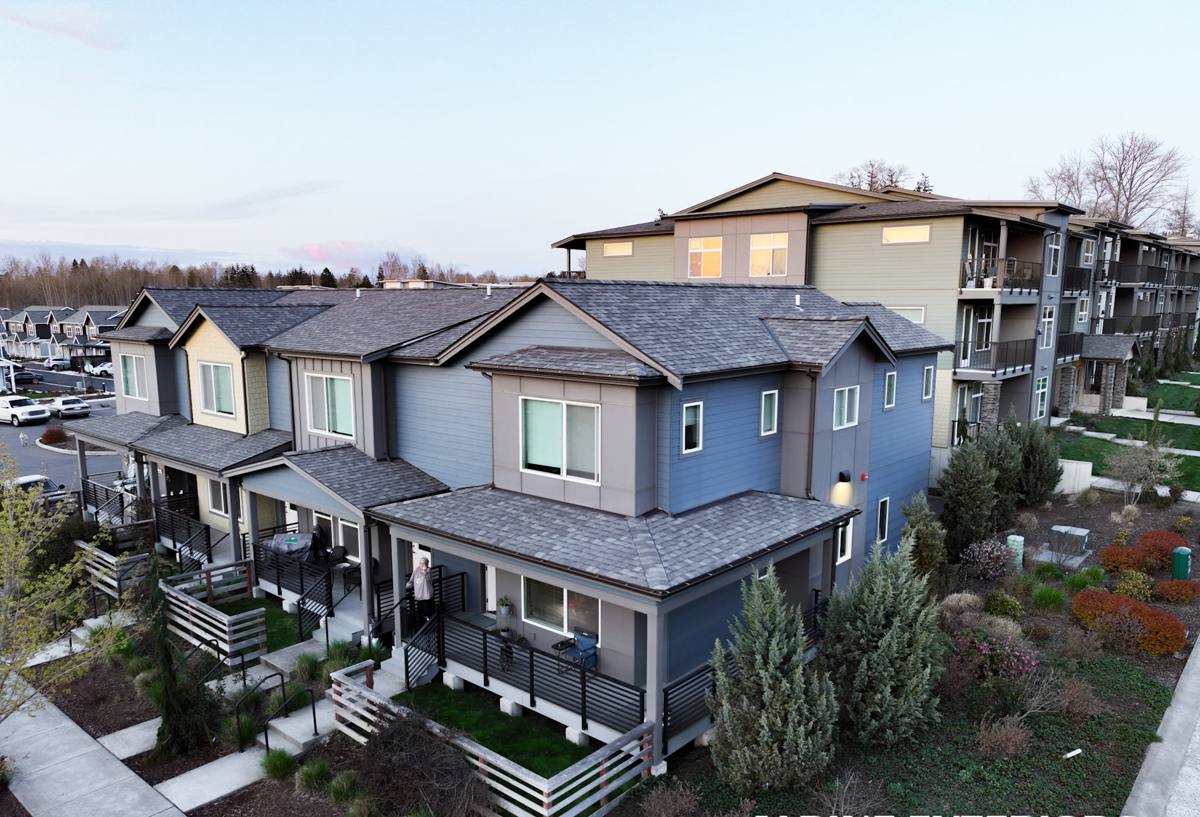
What Driving Rain and Moss Season Do to Windows Over Time
Two things drive most of the window problems we see on homes in and around Deming:
Driving rain and wind-driven moisture
Wind-driven rain doesn't just fall on a window — it gets pushed sideways and upward into every gap in the flashing and trim. Over years, a window that was installed without proper head flashing or a sloped sill pan will slowly let water behind the frame, even if it looks fine from the outside. That moisture has nowhere to go but into the wall cavity, the framing, and eventually the interior finish.
Moss, algae, and constant dampness
The same shaded, moist conditions that grow moss on a roof also encourage algae and mildew growth on window sills, tracks, and trim. Wood trim that stays damp for weeks at a time softens and rots from the inside out, often well before the paint film shows obvious failure. Vinyl and fiberglass don't rot, but dirty, algae-coated tracks hold water against seals and hardware, shortening their service life and making windows harder to operate.
None of this means Deming is a bad place for windows — it just means the details that get glossed over in drier climates (proper flashing sequence, sill pan drainage, correctly lapped weather-resistive barrier) are not optional here. They're the difference between a window that performs for 25+ years and one that starts causing problems in five.
What a Correct Window Installation Actually Involves
A lot of window "installs" are really just a swap: pull the old sash, drop in a replacement, caulk the outside, done. That approach can look fine for a year or two and still fail the wall behind it. A correct install, especially in a wet climate like ours, follows a sequence:
- Remove the old window and inspect the rough opening for hidden rot, soft framing, or prior water damage before anything new goes in
- Install or repair the sill pan flashing so any water that gets past the window drains back out, not into the wall
- Lap the weather-resistive barrier correctly around the opening — top layer over bottom, so water always sheds downward and outward
- Set the window plumb, level, and square, shimmed correctly so it isn't stressed and won't bind or leak at the corners
- Flash the head, jambs, and sill in the correct order, sealing with compatible materials (not every caulk or tape works with every substrate)
- Insulate the gap between the frame and rough opening without overpacking it, which can bow the frame
- Finish the interior and exterior trim so the whole assembly is weathertight and looks right
Skip or shortcut any one of these steps and the window itself can be a premium product and still fail. This is why we treat window replacement as a wall-detail job first and a product-install job second.
Choosing the Right Window for a Deming Home
There's no single "best" window material — the right choice depends on your home's exposure, your budget, and how much upkeep you want to take on. Here's how the common options actually compare in our climate:
| Material | Moisture Performance | Maintenance | Typical Lifespan |
|---|---|---|---|
| Vinyl | Won't rot; seals and hardware are the main wear point | Low — occasional track cleaning | 20–30 years |
| Fiberglass | Very stable in wet/dry cycling; strong seal retention | Low | 30–40+ years |
| Aluminum-clad wood | Good exterior protection, but any breach exposes wood beneath | Moderate — watch clad seams and interior wood | 25–35 years |
| Solid wood | Attractive but vulnerable to constant damp exposure without diligent upkeep | High — repainting/resealing on a regular cycle | Varies widely with maintenance |
For homes with heavy rain exposure — west- and south-facing walls, or spots shaded and slow to dry — we generally steer homeowners toward vinyl or fiberglass for the sash and frame material itself, simply because they don't give moisture a food source or a place to rot. That's a maintenance and durability call, not a knock on wood or clad windows properly maintained; it comes down to how much upkeep you want to commit to over the next couple decades.
Glass Package Matters Too
In this climate, condensation control matters as much as insulation value. A double-pane unit with a quality low-E coating and warm-edge spacer will resist interior fogging and edge condensation far better than a bargain unit, which matters a lot when humidity sits high for months at a time.
Our Process for Deming Window Projects
- On-site assessment — we look at each opening individually, not just the house as a whole, since exposure varies wall to wall
- Honest scope — if we find rot or damage behind an existing window during the walkthrough or once work starts, we tell you before we proceed, not after
- Product selection — we walk through material and glass options based on that specific wall's exposure and your budget
- Correct installation — full flashing and sealing sequence on every opening, not a shortcut swap
- Final walkthrough — we check operation, seal, and trim finish with you before calling it done
What Window Cost Actually Depends On
Ballpark pricing without context isn't very useful, so here's what actually moves the number on a Deming job:
| Factor | Why It Matters |
|---|---|
| Number and size of openings | More glass and larger units mean more material and labor |
| Hidden damage behind old windows | Rot repair to the rough opening adds time before the new window can go in |
| Material and glass package | Vinyl, fiberglass, and clad-wood carry different price points; upgraded low-E glass adds cost but pays back in comfort |
| Access and site conditions | Second-story or hard-to-reach openings take longer and need more setup |
| Trim and finish work | Matching existing trim profiles or upgrading finish adds scope |
Most homeowners are better served by a specific on-site quote than a broad range, since the hidden-damage factor alone can shift a project significantly once we're actually into the wall.
Signs Your Current Windows Are Already Failing
Because water damage from a bad window install or worn-out seals develops slowly, a lot of homeowners don't catch it until it's a bigger repair than it needed to be. Watch for:
- Fogging or moisture between the panes of a double-pane unit — the seal has failed
- Soft or discolored wood trim or sill, inside or outside
- Windows that stick, won't latch fully, or have gotten harder to operate
- Visible gaps, cracked caulk, or daylight around the frame
- Persistent condensation on the interior glass during cold, damp stretches
- A musty smell near a window that wasn't there before
Any one of these is worth a look before it turns into framing repair.
Why It Matters That We Already Work in Deming
A crew that only occasionally works this far up the valley is guessing at how a given wall behaves in our conditions. A crew that regularly works Deming and the surrounding Whatcom County foothills knows which exposures take the worst of the driving rain, where moss and algae buildup tends to be worst, and how the local damp, shaded conditions affect material choice and detailing. That local pattern recognition is part of what keeps a window install from becoming a callback.
We're also close enough to actually show up for a warranty check or a quick adjustment without it being a special trip — which matters more here than in a drier climate, since seal and drainage issues in wet regions tend to surface gradually rather than all at once.
Ready to Talk About Your Windows?
If you're dealing with drafty, foggy, or hard-to-operate windows — or just planning ahead for a home that's held up to a lot of Whatcom County weather — we're happy to take a look. Reach out for a free, no-pressure estimate using the form below, and we'll walk your home's specific exposures with you before recommending anything.