 Lynden
 Building a Deck That Actually Holds Up in Everson's Weather
Everson sits close enough to the Nooksack River and the open farmland east of Lynden that homes here deal with a specific mix of conditions: long stretches of driving rain in fall and winter, heavy morning dew and fog off the valley floor, and a moss season that can run from October well into April. Add in the salt-tinged air that moves inland from Bellingham Bay and the Strait of Georgia on a west wind, and you've got a climate that is genuinely hard on outdoor structures. A deck built to a generic spec — the kind you'd see in a catalog plan from a drier region — will show its age here faster than most homeowners expect.
A deck built correctly for this area isn't a different-looking deck. It's the same deck, but with attention paid to drainage, fastener choice, ventilation underneath the boards, and a surface that doesn't turn into a skating rink every time the fog rolls in. That's the difference between a deck that needs real work at year eight and one that's still tight and safe at year twenty.
What Everson Properties Are Actually Working With
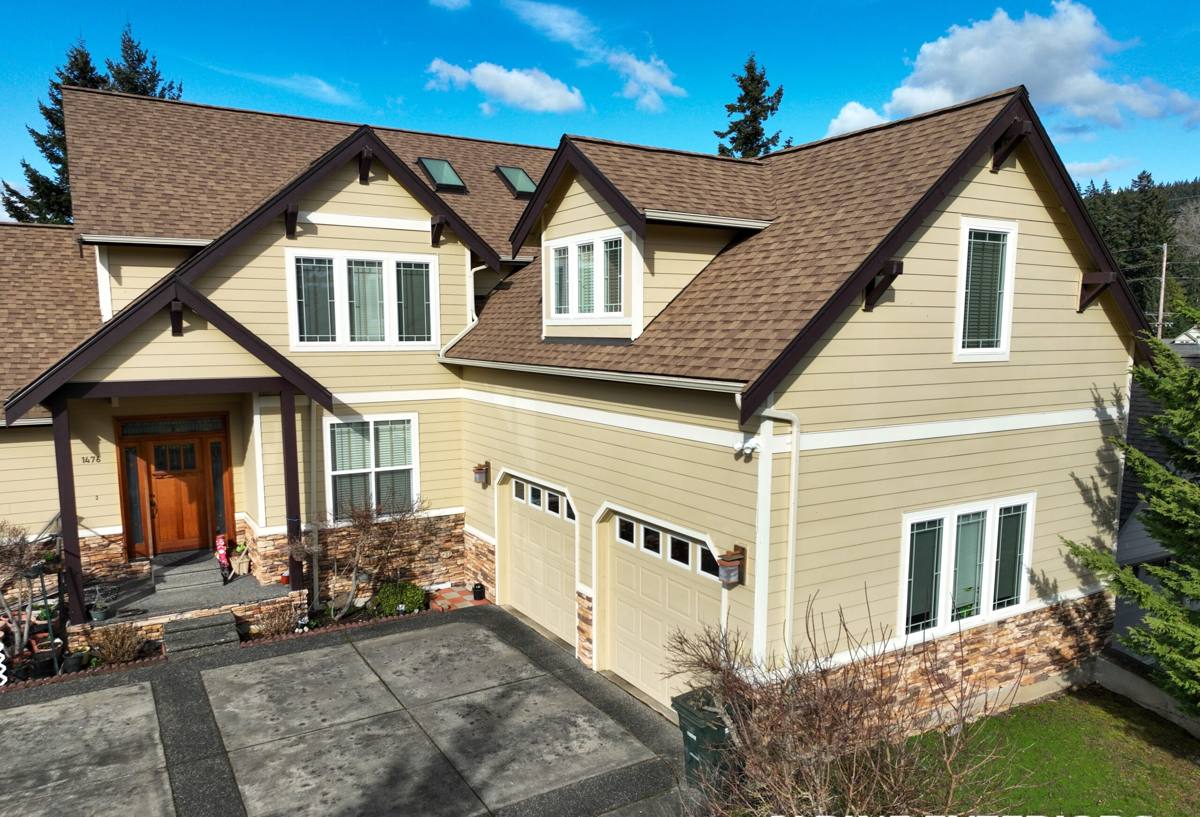
Most of the lots around Everson are a mix of open, sun-exposed yards and more wooded parcels with mature conifers close to the house. Both come with their own deck challenges:
- Shaded lots hold moisture longer, grow moss and algae faster on horizontal surfaces, and need decking and hardware chosen with that in mind.
- Open, exposed lots take more direct wind-driven rain and UV, which stresses finishes and fasteners differently — expansion and contraction cycles are more extreme.
- Low-lying or flatter yards near the valley floor can have slower-draining soil, which matters for footing depth and how water sheds away from the house foundation once the deck is in place.
None of this means one type of deck works and another doesn't — it means the framing, drainage plan, and material choice should match the specific lot, not a one-size-fits-all template.
Choosing Decking Material for This Climate
Wood, Composite, and PVC — the Honest Trade-offs
Every decking material has a real trade-off in a wet, moss-prone climate like this one. We won't tell you one is "bad" — we'll tell you what each one demands from an install and from you as the owner.
| Material | How it handles our climate | What it needs from you |
|---|---|---|
| Pressure-treated fir/hem-fir | Affordable, strong, but absorbs moisture readily and is the fastest to grow moss on shaded sections | Annual cleaning, periodic sealing/staining, inspection for cupping and checking |
| Cedar | Naturally more rot-resistant and handles moisture well, but softer surface and finish fades faster under UV and rain cycling | Refinishing every 2-3 years to keep rot resistance and appearance |
| Capped composite | Best moisture and moss resistance of the group; color-stable; low maintenance | Higher upfront cost; still needs occasional washing to keep the cap surface from getting slick with algae film |
| PVC decking | Fully synthetic, essentially immune to rot and moss staining, handles standing moisture the best | Highest material cost; installation is less forgiving of framing errors since there's no wood to compensate for minor irregularities |
Our default recommendation for most Everson homes leans toward capped composite or PVC on shaded, north-facing, or low-airflow decks where moss and algae are the main long-term enemy — the maintenance savings add up over years of soggy falls. On open, sunnier lots, a well-finished cedar or treated deck with a solid maintenance routine is a perfectly reasonable, lower-cost choice.
Fasteners and Hardware Matter More Than Most People Think
In a climate with this much sustained moisture, the hardware holding a deck together often fails before the boards do. We use fasteners and structural connectors rated for exterior, high-moisture exposure, and we match screw or clip coatings to whatever decking material is being installed — mixing incompatible metals is a common cause of premature corrosion and staining that shows up two or three winters in.
Framing and Substructure: The Part Nobody Sees
The visible decking gets all the attention, but the framing underneath is what determines whether a deck lasts. In a wet climate like Whatcom County's, three things matter most:
- Ledger flashing: where the deck attaches to the house needs proper flashing so rainwater is directed away from the wall assembly, not trapped behind the ledger board where it can rot the rim joist unseen for years.
- Joist spacing and blocking: tighter joist spacing than the material's minimum spec reduces bounce and cupping over time, especially under composite and PVC boards that expand and contract with temperature swings.
- Ventilation underneath: low decks built tight to the ground trap moisture and accelerate rot in framing and the undersides of boards. Adequate clearance and, where grade doesn't allow enough height, moisture-management steps at the framing stage make a real difference.
Footings are set to the depth required for our frost and soil conditions and inspected before backfilling — this isn't optional, and it's not a place to cut corners to save a day of labor.
Railings, Stairs, and Code Requirements
Any deck built above a certain height needs a code-compliant guardrail system, and stairs need proper rise/run ratios and handrails per Washington building code as adopted locally. Beyond meeting code, in this climate rail post connections and stair stringers need the same moisture-conscious detailing as the rest of the structure — these are high-touch, high-stress areas that take a beating from both weather and daily use. We pull permits where required and build to pass inspection the first time, not just to look finished.
Our Process, Start to Finish
- On-site walkthrough: we look at your specific lot — sun exposure, drainage, tree cover, and how the deck will connect to the house — before recommending a material or layout.
- Design and material selection: we go over the trade-offs honestly, based on your budget, how much maintenance you want to do, and how the space will be used.
- Permitting: we handle the paperwork and coordinate inspections where the project requires them.
- Framing and structural work: footings, ledger flashing, joists, and blocking are all done to hold up under our rainfall and moisture load, not just to pass a quick glance.
- Decking, railing, and finish work: boards, rails, stairs, and any lighting or accessories are installed and checked for level, drainage slope, and secure fastening.
- Final walkthrough: we go over the finished deck with you, including what maintenance schedule makes sense for the material and location you chose.
Living With Your Deck: Maintenance Through Moss Season
Whatever material you choose, a few habits keep an Everson-area deck safe and good-looking through the wet months:
- Sweep leaves and debris off the surface regularly in fall — trapped organic matter is what feeds moss and algae growth fastest.
- Wash the deck surface at least once a year with a deck-safe cleaner, more often on shaded sections, to break up early moss and algae before it stains or gets slick.
- Check railings, stair connections, and any visible fasteners each fall for looseness or corrosion.
- Keep gutters and downspouts near the deck clear so runoff isn't dumping extra water onto or under the structure.
- For wood decks, reapply sealant or stain on the schedule recommended for the product — don't wait until it's visibly failing.
- Trim back overhanging branches where practical to improve airflow and sun exposure on shaded boards.
What Drives the Cost of a Custom Deck
Every project is different, but the same handful of factors move the price up or down on most Everson jobs:
| Factor | Why it matters |
|---|---|
| Decking material | Treated wood costs the least upfront; composite and PVC cost more but reduce long-term maintenance |
| Height and grade | Taller decks need more substantial framing, footings, and stair/rail work |
| Site access and drainage | Sloped or poor-draining lots may need extra grading or drainage work before framing starts |
| Size and shape | Multi-level decks, angled layouts, and built-in features add labor beyond simple rectangular footprints |
| Railing and stair complexity | Custom rail systems and multiple stair runs add both material and installation time |
We give straightforward, itemized estimates so you can see where the money is going and make informed trade-offs rather than guessing.
Why a Crew That Already Works in Everson Matters
A deck contractor who only occasionally works this area is guessing at soil conditions, drainage patterns, and how a given material actually performs a few winters in. A crew that regularly builds in and around Lynden and Everson has already seen what holds up here and what doesn't — which framing details actually stop moss from creeping in underneath, which fastener types hold up to this air quality without staining, and how local permitting and inspection actually works in practice. That local track record shows up in fewer surprises during the build and a deck that's still solid well past the point a poorly-matched build would need major repair.
If you're planning a new deck or replacing one that's showing its age, we're happy to walk your property, talk through material options honestly, and put together a clear estimate. There's no pressure and no obligation — just use the form below to get started.