 Lynden
 Building a Deck That Actually Holds Up in Bellingham
Bellingham and Lynden sit close enough to the water and the foothills that a deck here takes a different kind of beating than one in a drier inland climate. It's not one big storm that wrecks a deck — it's ten months a year of damp air, driving rain that comes in sideways off Bellingham Bay, and a moss season that seems to start earlier and last longer every year. A deck that isn't built with that in mind will look fine for two or three summers, then start showing soft spots, green film, and fastener rust right when you'd expect a deck to be settling in nicely.
We build and repair decks throughout Bellingham and the surrounding Lynden area, and the calls we get about failing decks almost always trace back to the same handful of shortcuts: framing that wasn't rated for standing moisture, decking installed tight with no room to shed water, or a ledger board that was never properly flashed against the house. None of that is expensive to do right the first time. It's expensive to fix after the fact.
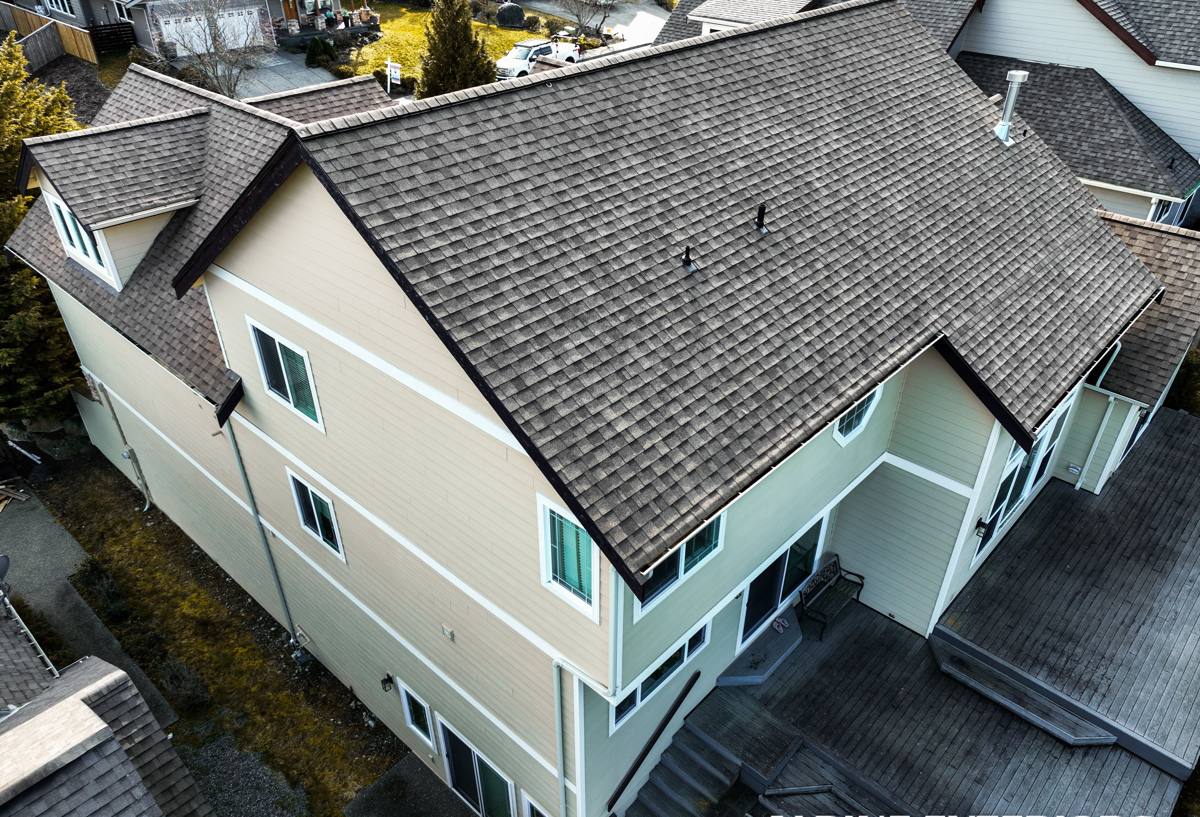
What the Local Climate Actually Does to a Deck
Salt Air and Metal Fatigue
Homes closer to the water deal with a slow, steady corrosion problem that inland decks don't. Salt-laden air accelerates rust on fasteners, joist hangers, and any hardware that isn't rated for it. A deck built with standard interior-grade screws or hangers can start showing rust streaks down the face boards within a couple of seasons — long before the wood or composite itself is in trouble.
Driving Rain and Water Intrusion
Whatcom County rain doesn't just fall straight down — wind off the bay pushes it sideways into ledger boards, stair stringers, and any gap where water can collect instead of running off. The most common failure point on older decks we inspect is the ledger connection to the house, where water has been getting behind the flashing (or working around missing flashing) for years without anyone noticing until the rim joist starts to soften.
Moss, Algae, and a Long Wet Season
Northwest Washington's moss season runs long, and a deck surface that stays shaded or doesn't drain well will grow moss and algae faster than most homeowners expect. Beyond looking bad, a mossy deck surface is a real slip hazard on stairs and landings, and moss holds moisture against the decking material, which shortens its life whether it's wood or composite.
Quick Reference: Climate Stress and What It Affects
| Climate Factor | What It Attacks | What Prevents It |
|---|---|---|
| Salt air | Fasteners, joist hangers, metal railing hardware | Coated or stainless fasteners, corrosion-rated hangers |
| Driving rain | Ledger board, stair stringers, end grain | Proper flashing, sealed end cuts, drainage gap |
| Long moss season | Decking surface, stair treads | Grooved or textured boards, airflow underneath, periodic cleaning |
| Standing moisture | Joists, beams, footings | Ground clearance, proper grading, treated or composite framing |
What a Correctly Built Deck Involves
Framing That's Rated for the Conditions
The framing underneath is the part nobody sees and the part that determines whether a deck lasts fifteen years or thirty. In this climate, that means pressure-treated lumber rated for ground contact where it's close to grade, joist hangers and structural screws rated for corrosion resistance rather than standard interior hardware, and enough clearance under the deck for air to actually move. A deck built low to wet ground with no airflow is going to stay damp long after the rain stops, and that's exactly what accelerates rot in the framing.
Ledger Attachment and Flashing
If your deck attaches to the house, the ledger board connection is the single most important detail on the whole project. It needs proper metal flashing that directs water away from the house band board, not just caulk and hope. This is also the point where a lot of older Bellingham-area decks fail — the flashing was skipped, undersized, or degraded over time, and water has been quietly working into the rim joist for years.
Drainage and Slope
Decking boards should be installed with a slight slope away from the house and consistent gapping between boards so water has somewhere to go. Boards installed tight together to look "clean" will trap water, and that trapped water is what feeds both rot and moss growth.
Choosing Materials That Make Sense for This Climate
There's no single right answer here — it depends on your budget, how much upkeep you want to do, and how the deck will be used. What matters is picking a material with eyes open about how it behaves in a wet, mossy, salt-air environment.
| Material | Upfront Cost | Maintenance | Climate Trade-Offs |
|---|---|---|---|
| Pressure-treated wood | Lowest | Annual cleaning, periodic sealing/staining | Affordable and repairable, but needs consistent upkeep to resist moss and moisture here |
| Cedar | Moderate | Regular sealing to hold color and resist moisture | Naturally more rot-resistant than treated pine, but still needs care in this rainfall |
| Composite decking | Higher | Occasional washing, no sealing/staining | Resists moisture and moss buildup well; framing underneath still needs to be done right |
| PVC decking | Highest | Lowest of any option | Fully moisture-resistant surface, best fit for shaded or low-airflow spots prone to algae |
We install all of these, and we'll tell you honestly which one fits your situation instead of steering you toward whatever's easiest for us to install. A shaded, low-airflow deck under mature trees is a different conversation than a sun-exposed deck on an open lot, even if they're a mile apart.
Design Choices That Matter Locally
Working With Older Bellingham and Lynden Homes
A lot of the homes we work on in this area are older, which means the band board or rim joist a new deck attaches to may not be in the condition you'd assume. Part of doing this job right is checking that structure before we ever attach a ledger to it, and being upfront if repair work needs to happen first.
Elevation and Grading
Whatcom County lots vary a lot — some are flat, some slope toward the house, some sit low relative to the yard. Grading and elevation change how water moves around and under a deck, and it changes whether a simple ledger-attached deck makes sense or whether a freestanding design with better drainage underneath is the smarter call.
Stairs, Railings, and Slip Safety
Stairs collect the most moss and hold water the longest because they're often shaded and see less foot traffic than the main deck surface. We pay particular attention to stair tread material and railing hardware on every project here, since that's where a slippery, mossy surface turns into an actual fall risk rather than just a maintenance annoyance.
How Our Process Works
- On-site assessment. We look at your existing structure (if there is one), the ledger or attachment point, grading, sun/shade exposure, and how the space will actually be used.
- Honest material recommendation. We walk through the real trade-offs between wood, cedar, composite, and PVC for your specific spot — not a one-size-fits-all pitch.
- Design and layout. We plan framing, footings, drainage slope, and railing/stair layout before any material gets ordered.
- Permitting. Deck projects in Whatcom County and the City of Bellingham often require permits depending on size and height — we handle that so it's not on you to figure out.
- Build. Proper footings, corrosion-rated fasteners and hangers, correct ledger flashing, and consistent board gapping for drainage.
- Final walkthrough. We go over the finished deck with you, including what maintenance it actually needs going forward.
Signs an Existing Deck Needs Attention
- Soft or spongy spots anywhere on the decking surface
- Rust streaking down from screws, nails, or hardware
- Persistent green film or moss that comes back within weeks of cleaning
- Gaps or cracking where the ledger board meets the house
- Railings or stair posts that feel loose or flex under weight
- Water pooling on the deck surface instead of draining off
Maintenance That Fits This Climate
Even a well-built deck needs some seasonal attention here — the goal is keeping moisture and moss from getting a foothold rather than reacting once they have.
- Spring: Clear winter debris out of board gaps and off stair treads where moss tends to collect first.
- Summer: Wash the surface and check railing hardware for any early rust, especially on decks closer to the water.
- Fall: Clear leaves before the wet season sets in — trapped leaves hold moisture against the decking longer than open air will.
- Winter: Keep an eye on drainage during heavy rain and clear standing water or debris away from the ledger area.
Wood and cedar decks need this on top of periodic sealing or staining; composite and PVC decks mostly just need the washing and hardware checks.
Why Hiring a Crew That Already Works Bellingham Matters
Deck-building basics are the same everywhere, but the details that make a deck last in this specific climate — ledger flashing that actually stops driving rain, hardware that won't rust out from salt air, drainage that accounts for how wet this region stays for most of the year — are things you learn by working on decks here, not by reading a general framing guide. A crew that builds decks in dry, low-humidity regions and then does one in Bellingham is more likely to skip a detail that doesn't matter where they're used to working but matters a lot here.
We also know what Whatcom County and City of Bellingham permitting actually requires for deck height, guardrails, and footing depth, which keeps your project from stalling out waiting on paperwork or getting flagged during inspection.
Get a Straight Answer About Your Project
If you're planning a new deck or trying to figure out whether an existing one needs repair or a full rebuild, we're happy to take a look and give you an honest read on what it needs. Use the form below to request a free, no-pressure estimate.