 Lynden
 Why Custer Roofs Wear Out Differently
Custer sits close enough to the water that homes here deal with a different combination of stresses than roofs further inland. Salt-laden air drifting off the strait accelerates corrosion on exposed metal fasteners, flashing, and vents. Driving rain — the kind that comes in sideways during a fall or winter storm — tests every seam, lap, and penetration on a roof, not just the field of the shingles. And because so much of Whatcom County stays shaded, cool, and damp for months at a time, moss and moisture-loving growth get a long runway to take hold on north-facing slopes and anywhere debris collects.
None of these factors are dramatic on their own. The problem is that they layer on top of each other, year after year, and a roof that was installed without accounting for them tends to show its age faster than one built with this climate in mind. A correct installation in Custer isn't just about nailing down shingles — it's about the underlayment, the ventilation, and the flashing details that determine how the roof handles water and moisture over its full lifespan.
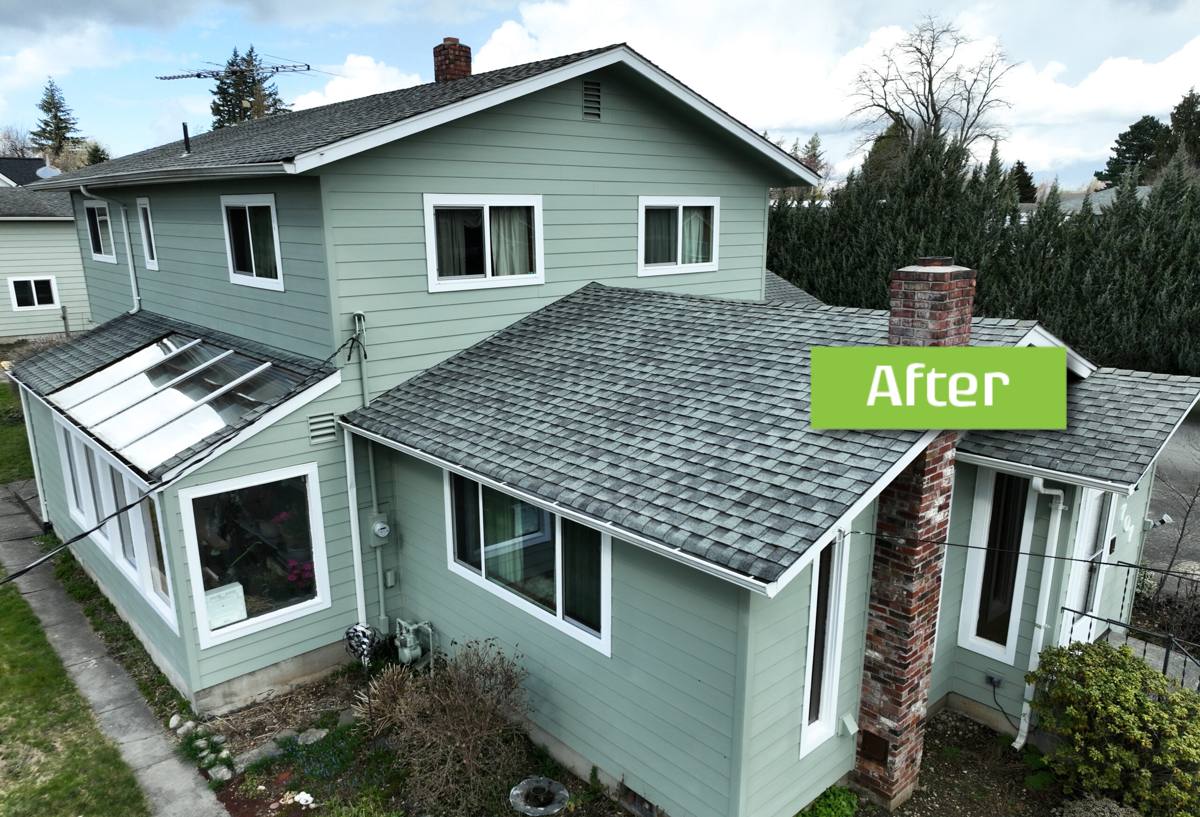
Signs a Custer Roof Needs Replacement, Not Another Repair
Not every roof problem calls for a full tear-off. But there's a point where patching stops making financial sense and a new roof becomes the more honest recommendation. Some of the clearer signals include:
- Granule loss heavy enough that you're finding grit in gutters and downspouts regularly
- Shingles that are cupping, curling, or cracking across multiple sections of the roof, not just one spot
- Moss or algae growth that keeps coming back within a season or two of cleaning
- Soft spots, sagging, or visible deflection when walking the roof or viewing it from the attic
- Daylight, water staining, or musty odor visible from inside the attic
- Flashing around chimneys, skylights, or valleys that's rusted, lifted, or was never sealed correctly
- A roof that's already had two or more rounds of repair in the last several years
If a roof is showing two or three of these at once, that's usually a sign the underlying materials are past the point where repair buys much time. A straightforward inspection can tell you which category your roof falls into before you spend money guessing.
What a Correct New Roof Installation Actually Involves
Tear-Off and Deck Inspection
A proper installation starts with removing the old roofing down to the deck — not layering over it. That's the only way to actually see the plywood or OSB underneath and catch soft, rotted, or delaminated sections before they get covered up and forgotten for another 20 years. Any damaged decking gets replaced before anything new goes down.
Underlayment and Water Protection
Given how much driving rain this area sees, the underlayment layer matters as much as the shingles themselves. Self-adhering ice-and-water membrane belongs at eaves, valleys, and around every roof penetration — the places where wind-driven rain is most likely to find a way in. The rest of the deck gets a synthetic underlayment that sheds water and holds up during the stretch of time between tear-off and final roofing when the deck is exposed.
Flashing Details
Flashing failures cause more leaks than worn-out shingles do. Chimneys, skylights, sidewalls, and valleys all need flashing that's properly stepped, lapped, and sealed — not just caulked over. In a salt-air environment, the metal used for flashing and fasteners also needs to be corrosion-resistant, or it becomes the weak point in an otherwise solid roof within a few years.
Ventilation
Intake and exhaust venting need to be balanced so air actually moves through the attic space rather than sitting stagnant. This matters year-round here, not just in summer — trapped moisture in a cool, damp climate is exactly what feeds rot and encourages moss to creep from the roof surface into places you can't see.
Choosing a Roofing Material for Custer's Climate
There's no single "best" roofing material — the right choice depends on budget, roof pitch, how much shade the property gets, and how long you plan to stay in the home. Here's how the common options stack up against the conditions Custer homes actually deal with:
| Material | Moss & Moisture Resistance | Wind/Rain Performance | Maintenance |
|---|---|---|---|
| Asphalt composition shingle | Moderate — needs periodic cleaning on shaded slopes | Good when properly fastened and flashed | Low to moderate |
| Architectural/laminate shingle | Better than three-tab; heavier profile sheds debris more easily | Strong wind ratings, good rain performance | Low to moderate |
| Standing seam metal | Excellent — moss struggles to grip smooth metal panels | Excellent; sheds driving rain quickly | Low, but fasteners need corrosion-resistant coatings near salt air |
| Synthetic/composite shingle | Good; resists moisture absorption better than organic mats | Strong impact and wind resistance | Low |
For most Custer homes, a quality architectural asphalt shingle strikes the right balance of cost and performance. Homes with heavy tree shade or owners planning to stay long-term sometimes find that metal's higher upfront cost pays off in lower moss maintenance over the years. We'll walk through the honest trade-offs for your specific roof rather than pushing one material across the board.
Our New Roof Installation Process, Step by Step
- On-site inspection of the current roof, attic ventilation, and deck condition, with photos to show you what we find
- A written scope and material recommendation based on your roof's pitch, shade exposure, and budget
- Permitting and scheduling, including planning around Whatcom County's weather patterns to avoid leaving a deck exposed during a stretch of rain
- Tear-off, deck inspection, and any necessary repairs before anything new is installed
- Installation of ice-and-water membrane, synthetic underlayment, flashing, and the new roofing material in that order
- Ventilation check and correction if intake or exhaust airflow is out of balance
- Final walkthrough and cleanup, including a magnetic sweep for stray nails around the property
Ventilation and Moisture Control: The Part You Don't See
It's easy to focus entirely on what's visible from the ground — shingle color, roofline, curb appeal — and overlook the part of the system that does the most work behind the scenes. Balanced attic ventilation pulls cooler, drier air in at the eaves and pushes warmer, moist air out at the ridge. When that balance is off, moisture gets trapped against the underside of the deck. In a climate that's already damp for a large part of the year, that trapped moisture is what leads to soft decking, mold, and premature failure from the inside out — often well before the shingles themselves would have needed replacing. We check and correct ventilation on every new roof installation, not just when a homeowner asks about it.
What Affects the Cost of a New Roof in Custer
Every roof is priced individually, but the factors that move the number up or down are consistent:
| Factor | Why It Matters |
|---|---|
| Roof size and pitch | More surface area and steeper pitches mean more material and labor time |
| Material choice | Economy asphalt, architectural shingle, synthetic, and metal all sit at different price points |
| Number of layers to tear off | Removing multiple old layers takes longer and adds disposal cost |
| Deck condition | Rotted or soft plywood/OSB sections need to be replaced before re-roofing |
| Roof complexity | Valleys, dormers, chimneys, and skylights all add flashing work |
| Access and site conditions | Tree cover, tight lot access, or steep grading can affect setup and disposal logistics |
Rather than quote a number without seeing the roof, we'd rather walk it, measure it, and give you an accurate written estimate based on what your home actually needs — not a generic per-square rate that ends up changing once the tear-off starts.
Why Hire a Crew That Already Works in Custer
Roofing crews that work outside their usual territory tend to treat every job the same way, regardless of local conditions. A crew that already works in Custer and the surrounding Whatcom County area knows which slopes tend to hold moss longest, how much clearance a property typically has for staging material and dumpsters, and how to plan a tear-off around the region's rain patterns so a deck isn't left exposed longer than necessary. That local familiarity also extends to permitting and inspection expectations for the county, which keeps the project moving instead of stalling on paperwork. It's a smaller thing than the roofing materials themselves, but it's part of what separates a smooth installation from a stressful one.
Questions to Ask Before You Hire a Roofer
- Are you licensed and insured to work in Washington State, and can you provide proof?
- Will you tear off the existing roof down to the deck, or install over the old layer?
- How will you handle ventilation as part of the installation, not as an afterthought?
- What underlayment and ice-and-water protection do you use at eaves, valleys, and penetrations?
- What's included in your written estimate, and what could change the final price?
- What warranty covers the materials versus the labor, and who do I call if something needs attention later?
If a roof in Custer is nearing the end of its service life or already showing signs of trouble, it's worth getting an honest, no-pressure look at where things actually stand before deciding what to do next. Use the form below to request a free estimate, and we'll walk the roof, answer your questions, and give you a straight assessment of what your home needs.