 Lynden
 Building a Deck That Actually Holds Up in Custer
Custer sits close enough to the water that salt air is a daily fact of life for anything built outdoors, and that's before you factor in the rain and the moss that follows it most of the year. A deck built here has to survive a different set of conditions than one going up on the dry side of the state. Fasteners corrode faster near the coast, wood stays damp longer under the tree cover common in this part of Whatcom County, and any surface that traps moisture will grow moss whether you want it to or not. We build decks in Custer with all of that baked into the plan from the first stake in the ground, not as an afterthought once the boards are already down.
A lot of deck problems we get called out to fix didn't start as bad workmanship — they started as a design or material choice that was fine somewhere drier and just wasn't right for this climate. Getting it right the first time costs a little more up front in planning, but it's the difference between a deck that needs real attention every ten years and one that's fighting rot by year five.
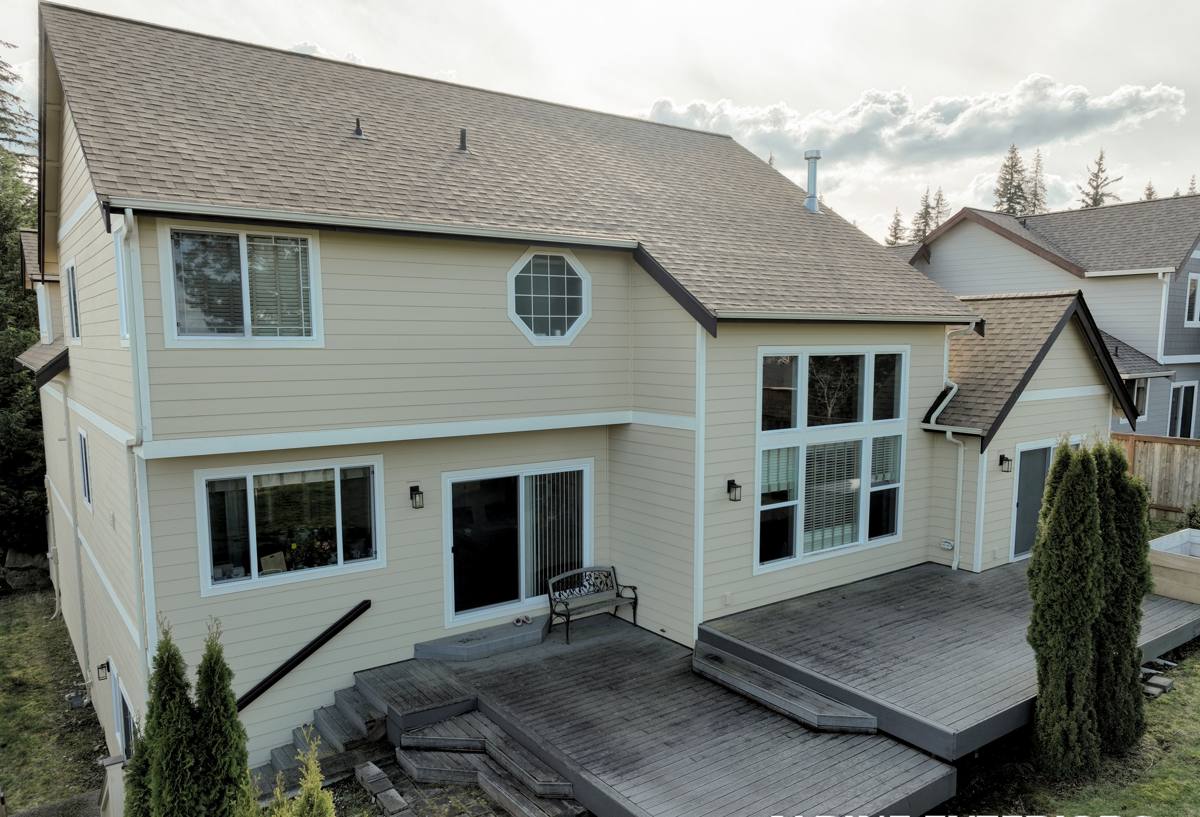
What Salt Air and Constant Moisture Do to a Deck
Salt-laden air speeds up corrosion on anything metal — nails, screws, joist hangers, railing brackets. Standard galvanized hardware that would last decades inland can start showing rust streaks in a fraction of that time this close to Puget Sound. Combine that with the amount of rain Custer sees over a typical year and you get wood that rarely dries out completely between storms, especially on the north side of a house or under mature trees, which is common on lots out here.
That constant dampness is also what drives Custer's long moss season. Moss doesn't just grow on roofs — it takes hold on deck boards, especially horizontal surfaces with poor drainage, shaded stair treads, and anywhere water sits instead of running off. Once moss establishes itself, it holds moisture against the wood surface, which accelerates rot and turns a simple cleaning job into a structural one if it's ignored long enough.
The Three Things We Design Around
- Corrosion resistance in every fastener, hanger, and bracket, not just the visible hardware
- Drainage and airflow underneath and around the deck so wood actually gets a chance to dry
- Surface materials and finishes that resist moss and mildew instead of feeding them
Framing and Foundation: Getting the Bones Right
The framing is the part of a deck nobody sees once it's finished, which is exactly why it's where corners get cut most often. In a climate like Custer's, the substructure needs to be built assuming it will stay damp for long stretches of the year. That means using fasteners and structural connectors rated for ground contact and coastal exposure, not the cheapest galvanized option on the shelf.
Post footings need to be set below frost depth and sized correctly for the soil conditions on the lot, which vary quite a bit across this part of Whatcom County. Ledger board attachment — where the deck ties into the house — is one of the most common failure points we see on older decks, usually because flashing was skipped or installed wrong, letting water get behind the siding and rot both the ledger and the wall framing behind it. We flash every ledger connection properly and make sure there's a gap for drainage, not a seal that traps water against the house.
Framing Details That Matter Here
- Stainless steel or heavy hot-dip galvanized fasteners and hangers rated for coastal/ground-contact use
- Proper ledger flashing with a drainage gap, not caulk alone sealing the deck to the house
- Joist spacing and beam sizing engineered for the actual decking material and span, not a generic default
- Post bases set on concrete footings below frost line, not just resting on grade
Choosing the Right Decking Material for This Climate
There's no single "best" decking material — every option is a tradeoff between upfront cost, maintenance, and how it handles moisture and moss over time. What matters is picking the one that matches how much upkeep you actually want to do and how the deck will be shaded and exposed on your specific lot.
| Material | Moisture/Moss Resistance | Maintenance | Typical Lifespan |
|---|---|---|---|
| Pressure-treated wood | Good if sealed regularly | Annual cleaning and re-sealing recommended | 15-20 years |
| Cedar | Naturally decay-resistant, still needs sealing | Sealing every 1-3 years, regular moss cleaning | 20-25 years |
| Composite decking | Excellent — won't rot, resists moss buildup | Occasional washing, no sealing or staining | 25-30+ years |
In a spot like Custer, composite decking is often worth the higher upfront cost simply because it removes the sealing cycle entirely — that's one less thing that has to get done every year or two in a climate that doesn't give you a lot of dry weeks to do it in. That said, plenty of homeowners prefer the look and feel of real wood, and a well-built, properly sealed cedar deck will hold up fine here if the maintenance actually happens on schedule. We'll walk through the honest tradeoffs for your specific site — sun exposure, tree cover, and how the deck will actually get used — rather than push one product across the board.
Railings, Fasteners, and Hardware That Won't Let You Down
Railings take a beating in this climate because they're vertical, exposed on all sides, and often the first thing to show corrosion or wood movement. Metal railing systems and cable railings need coastal-rated hardware and finishes, or they'll show rust streaking down the balusters within a few years. Wood railings need the same sealing discipline as the decking itself, arguably more, since end grain on posts and rail caps soaks up water faster than a flat board.
Every fastener that's visible or structural on a deck we build in this area gets specified for coastal exposure — that includes screws, joist hangers, post bases, and railing brackets. It's a small line-item cost difference and a significant difference in how the deck looks and performs a decade out.
How We Build a Deck in Custer, Start to Finish
1. Site Walk and Design
We look at sun exposure, tree cover, drainage patterns on the lot, and how the deck ties into the house before drawing anything up. A deck tucked under Douglas fir cover needs a different drainage and material plan than one sitting in open sun.
2. Permitting
Most deck projects in Whatcom County require a building permit, and elevated decks almost always do. We handle the permit process and make sure the design meets current code for guardrail height, stair geometry, and structural loads.
3. Framing and Structural Work
Footings, posts, beams, and joists go in with coastal-rated hardware and proper ledger flashing, built to the loads and spans the design calls for — not a one-size-fits-all layout.
4. Decking, Railings, and Finish Work
Decking is installed with attention to drainage gaps between boards and proper fastening for the material chosen. Railings, stairs, and any built-in features go in last, along with any sealing or finishing the material requires.
5. Walkthrough
We go over the finished deck with you, including what maintenance it actually needs going forward so there are no surprises about upkeep once the project's done.
Living With Moss: Realistic Long-Term Maintenance
No deck in Custer is going to be entirely moss-proof — the goal is a deck that's easy to keep clean and doesn't hold moisture in ways that invite moss to take root in the first place. Good board spacing, proper slope for drainage, and a material that doesn't stay saturated all go a long way before you ever pick up a brush.
What actually helps:
- Keeping nearby branches trimmed back so the deck gets more sun and airflow
- Sweeping off debris regularly, especially fall leaves and needles that trap moisture against the boards
- Cleaning moss off before it establishes, using a deck-safe cleaner rather than a pressure washer set too aggressively, which can damage wood fibers or composite surfaces
- Keeping gutters and downspouts clear so runoff isn't draining directly onto or under the deck
- Re-sealing wood decking on the schedule the product calls for, not just when it looks dry
What a Correctly Built Custer Deck Should Have
- Coastal-rated, corrosion-resistant fasteners and structural hardware throughout
- Properly flashed ledger connection with a drainage gap against the house
- Footings set to the correct depth and size for local soil conditions
- Decking material matched to your actual sun/shade exposure and maintenance preference
- Board spacing and slope that let water drain instead of pool
- Code-compliant railing height and stair geometry, permitted and inspected
Why It Matters That We Already Work in Custer
Building codes, permitting requirements, and the practical realities of soil and drainage vary from one part of Whatcom County to another, and a crew that already works this area isn't guessing at any of it. We know what the salt air and moss season do to decks here because we've replaced enough poorly-built ones to see the failure patterns firsthand — rusted hardware, rotted ledger boards, moss-slicked stairs that were a hazard well before they looked bad. Building it right the first time, with materials and hardware suited to this specific climate, is a lot cheaper than doing it twice.
If you're planning a new deck or replacing one that's past its prime, we're happy to take a look at your property and talk through what actually makes sense for your site and budget — no pressure, just a straight answer. Reach out for a free estimate using the form below.