 Lynden
 Composite Decking Built for Everson's Wet, Mossy Climate
Everson sits in the Nooksack River valley, close enough to Lynden that the weather is the same story: long wet winters, heavy dew and fog through the shoulder seasons, and enough shade from mature trees and river-bottom moisture that moss and algae get a real foothold on any horizontal surface that stays damp too long. Add in the driving rain that comes sideways off Pacific storm systems moving through Whatcom County, and you've got a deck environment that's harder on wood than most homeowners realize until they've already replaced a few boards.
Composite decking was built to handle exactly this kind of climate — it doesn't rot, it doesn't need annual staining, and it resists the moss and mildew staining that plagues wood decks in this part of the county. But composite isn't maintenance-free or install-proof. Get the substructure, drainage, and fastening wrong, and you can still end up with a deck that traps moisture, buckles boards, or grows algae in the grooves. This page covers what a composite deck actually needs to hold up in Everson's conditions, and what our process looks like when we build one.
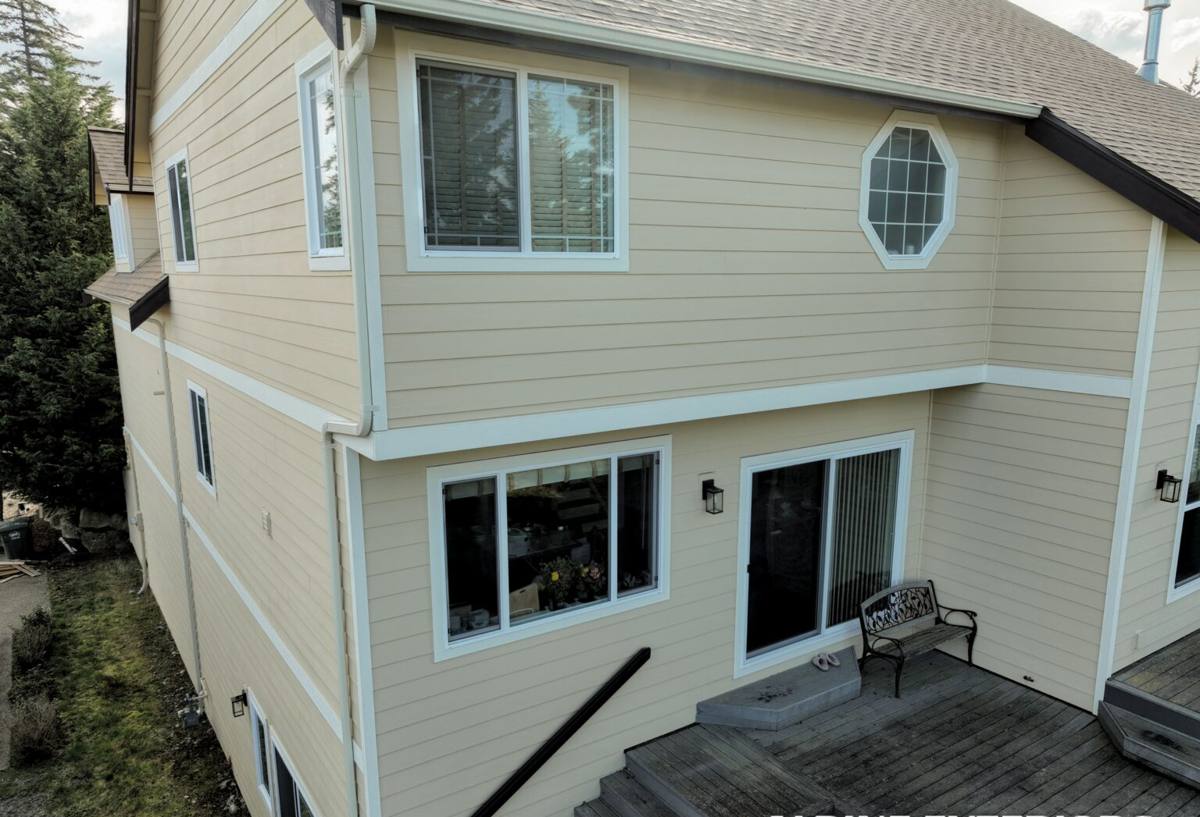
Why Composite Makes Sense for This Area
Every decking material has trade-offs. We install composite most often in Everson and the surrounding Lynden area because it holds up well against the specific combination of moisture and shade this region produces — but it's not automatically the right choice for every yard or budget, and we'll tell you honestly when a different approach fits better.
| Material | How it handles our climate | Ongoing upkeep |
|---|---|---|
| Pressure-treated wood | Prone to graying, splintering, and moss growth in shaded, damp spots; needs regular sealing | Annual cleaning and re-staining or sealing |
| Cedar | Naturally rot-resistant but still absorbs moisture and grays without upkeep; moss takes hold in shaded areas | Periodic sealing, more sanding/refinishing over time |
| Uncapped composite | Resists rot but the exposed composite surface can absorb moisture and stain or mildew over time | Occasional cleaning; some fading possible |
| Capped composite (PVC shell) | Sheds water at the surface, resists staining and moss growth, holds color | Routine rinsing/sweeping; no sealing or staining |
For most Everson homeowners, capped composite is the better long-term value because the outer shell is what actually keeps moss, algae, and mildew from getting a grip. We'll walk you through the real differences on-site rather than push one product line.
What a Correct Composite Deck Installation Actually Involves
Ledger Flashing and Attachment
Where the deck meets the house, water intrusion is the single biggest risk to the structure behind the siding — not the decking itself. A proper ledger board install uses flashing that directs water away from the wall assembly, not just a board bolted flush against siding. In a climate that gets as much driving rain as ours, skipping or shortcutting this step is where deck failures usually start, even on decks with great composite boards.
Joist Protection
Composite boards resist moisture, but the wood or engineered joists underneath them don't unless they're protected. We use joist tape or an equivalent moisture barrier over the top of the framing so rain that gets between boards doesn't sit directly on exposed wood and start rot from below — a problem you won't see until the frame is already compromised.
Hidden Fasteners and Board Spacing
Most composite boards today use hidden fastener clip systems instead of face screws, which gives a cleaner look and avoids the screw-hole water traps that older deck-building methods left behind. Board spacing has to account for composite's thermal expansion — too tight and boards can buckle in summer heat; too loose and debris and moisture collect in the gaps and feed moss growth.
Drainage and Airflow Underneath
A deck built low to the ground with poor airflow underneath stays damp longer after every rain, which is exactly the condition moss and mold need. Proper ground clearance, and in some cases a drainage system or venting strategy underneath, keeps the underside of the deck from becoming a permanent damp zone.
How Our Process Works
- On-site assessment — we look at your existing deck or build site, drainage patterns, shade exposure, and how the ledger will tie into your home's siding and framing.
- Material walkthrough — we go over board options, railing systems, and color/finish choices in person, with honest pros and cons for your specific spot.
- Permitting — most new decks and many rebuilds in Whatcom County require a permit; we handle that process so you're not chasing paperwork.
- Demo and framing — old decking and, if needed, old framing comes out; new framing is set with proper joist spacing and ledger flashing.
- Decking, railing, and finish work — boards go down with hidden fasteners, railing and any stairs are installed, and edges/fascia are finished cleanly.
- Final walkthrough — we check the whole deck with you before we call the job done, including how it drains under a hose test if there's any doubt.
The Substructure Matters as Much as the Boards
Homeowners shopping for composite decking often focus entirely on the board brand and color, but the framing underneath determines how long the whole system lasts. In Everson's climate, we pay particular attention to:
- Footing depth and placement suited to local soil and frost conditions
- Joist spacing rated for the specific composite board being installed — this varies by brand and board profile
- Flashing at every point the deck contacts the house, not just the main ledger
- Ground clearance sufficient for airflow, especially in shaded yards near mature trees
- Stair and railing attachment points checked for the same moisture protection as the main structure
A deck with premium boards on a poorly built frame will still develop problems — soft spots, uneven boards, or moisture damage at the house connection — well before the decking itself wears out.
Living With Composite Decking Through a Whatcom County Moss Season
Composite decking cuts down dramatically on the upkeep a wood deck demands, but "low-maintenance" doesn't mean "no maintenance" in a climate that stays damp for months at a stretch. Shaded corners, areas under overhangs, and spots that don't get direct sun still need attention.
- Sweep or blow off leaves and debris regularly, especially in fall — trapped organic matter is what feeds moss and algae
- Rinse the deck surface periodically with a hose; a soft-bristle brush handles most grime without damaging the board's cap
- Avoid pressure washing at high pressure or close range, which can strip or scar the composite's protective shell
- Keep gutters and downspouts near the deck clear so runoff isn't dumping extra water onto one section
- Check railing posts and stair connections once a year for any movement or loosening
Boards with a textured, capped finish handle Everson's damp shoulder seasons noticeably better than smooth or uncapped boards, which is one of the practical reasons we lean toward capped composite in this area.
What Affects the Cost
| Factor | Why it matters |
|---|---|
| Deck size and shape | More linear footage of framing, boards, and fascia; complex shapes add cutting and labor time |
| Board tier and brand | Capped composite boards cost more upfront than uncapped or basic wood-plastic composite, but need less long-term upkeep |
| Height and access | Elevated decks need more substantial framing, footings, and railing, and are more labor-intensive to build safely |
| Existing structure condition | Rebuilding on a sound frame costs less than demo of a rotted or undersized substructure |
| Railing and stair features | Composite or metal railing systems, built-in lighting, and multi-level stairs each add to the total |
We give firm, itemized quotes after seeing the site in person — general size and material guesses online are usually off enough to be more misleading than helpful.
Why Hire a Crew That Already Works in Everson
A deck built by someone unfamiliar with Whatcom County's rain patterns, permitting process, and moss-prone shaded lots is more likely to miss the details that matter here — the flashing detail at the ledger, the joist spacing for a specific board line, the drainage plan for a yard that stays damp into June. We build and repair decks across the Lynden area, including Everson, and that means we're not guessing at how the local climate treats a deck over its first few winters — we've already seen it.
If you're weighing a new composite deck or replacing tired boards on an existing frame, we're happy to take a look and give you a straight answer about what your specific site needs. Request a free, no-pressure estimate using the form below.