 Lynden
 Composite Decking Built for Custer's Weather, Not Against It
Custer sits close enough to the water and open farmland that homes here take a specific kind of beating: salt-laden air drifting in off the Strait, driving rain that comes in sideways more often than straight down, and a moss season that can stretch from October clear through April. A deck that works fine in a drier inland town can start showing problems fast out here — soft spots, algae film, fastener corrosion, boards that cup or gap unevenly. Composite decking done right is one of the better answers to that combination, but "composite" isn't a single product with one behavior. How it's engineered, how it's installed, and how the substructure underneath handles moisture all decide whether a deck holds up for twenty-five years or turns into a maintenance headache by year eight.
This page is about composite decking specifically for Custer properties — what the climate demands, what a correct installation actually involves, and why the details matter more here than they would somewhere drier.
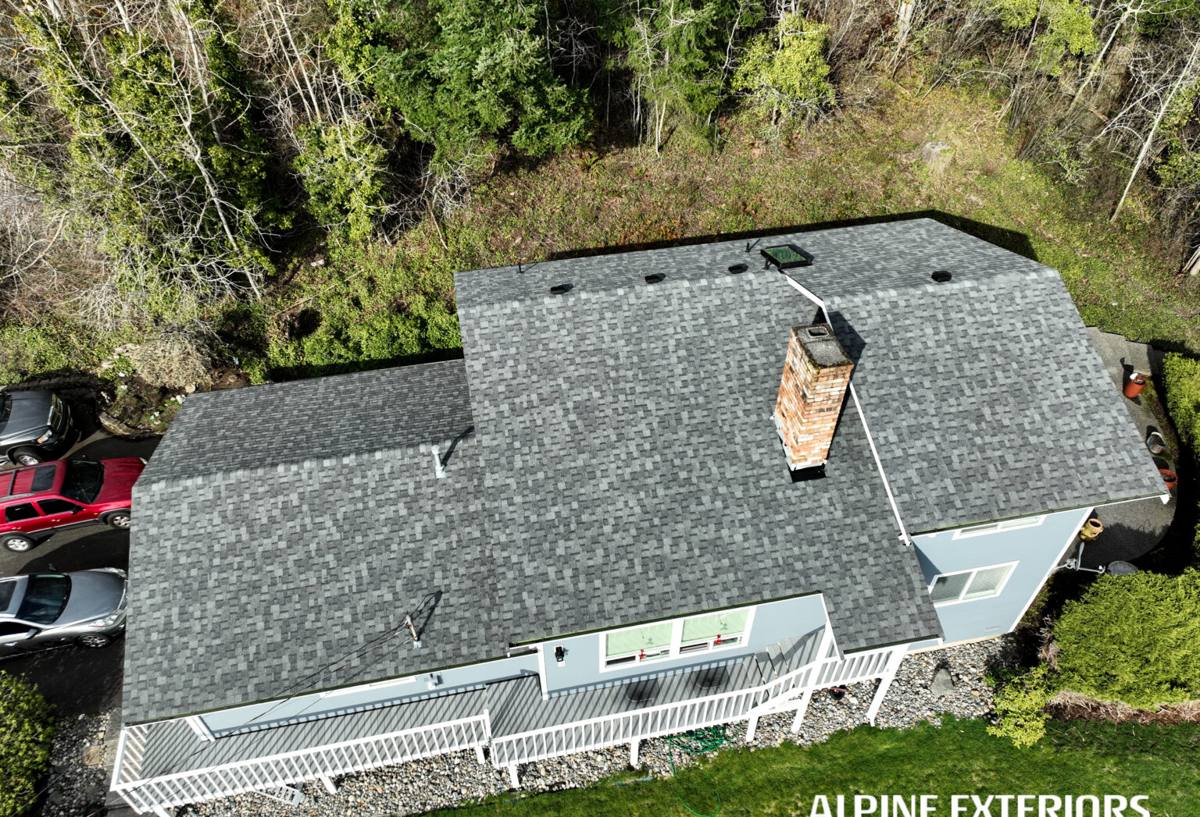
What Custer's Climate Does to a Deck
Whatcom County weather isn't dramatic, but it's relentless, and that's actually harder on a structure than the occasional big storm. A few things stand out for decks in and around Custer:
Salt Air
Proximity to the water means airborne salt settles on everything, including metal hardware, railings, and fastener heads. Over years, that accelerates corrosion on anything that isn't rated for coastal exposure — which is a big reason fastener and bracket selection matters as much as the decking material itself.
Driving Rain
Wind-driven rain doesn't just fall on a deck surface, it gets pushed into seams, gaps, and end cuts. Any decking product with exposed cut ends or unsealed fastener holes gives that water a way in, and once moisture gets trapped under a board or inside a joist bay, it doesn't dry out quickly in our climate — it sits.
Moss and Algae Season
Long stretches of damp, shaded, low-sun conditions are exactly what moss and algae need to establish. A deck surface with poor drainage, tight board spacing, or a north-facing shaded footprint will grow a green film faster than most homeowners expect, and that film gets slick and slowly degrades whatever finish or cap layer is on the board.
Freeze-Thaw Cycling
Whatcom County doesn't get brutal winters, but it does get repeated freeze-thaw swings. Any water that's already trapped in a joint or fastener hole expands and contracts through those cycles, which is how small gaps turn into real damage over a few seasons.
Why Composite Makes Sense Here — With Caveats
Composite decking, when it's a quality capped product, resists moisture absorption far better than uncapped wood-plastic composite or untreated lumber. It won't rot, it doesn't need annual staining, and a fully capped board sheds surface water instead of soaking it in. That's a real advantage in a climate that stays damp for half the year.
But composite isn't maintenance-free, and it isn't immune to installation mistakes. The board itself can be excellent and the deck can still fail if the substructure underneath is undersized, if drainage isn't planned, or if fasteners aren't rated for the exposure. We've been called out to look at decks where the decking material was fine but the frame underneath had been quietly rotting for years because nobody accounted for how water moves through and under a deck in this climate.
What a Correct Composite Deck Build Involves
1. Substructure First
Everything starts with the frame. In Custer's damp conditions, we look hard at joist spacing, ledger board flashing, and whether the framing lumber is properly treated and protected from standing moisture. A composite deck on an undersized or poorly protected frame is a deck that looks fine on top while quietly failing underneath.
2. Drainage and Airflow Underneath
A deck built low to the ground or over poorly graded soil traps humidity underneath the boards, which feeds both wood rot in the frame and moss growth on the surface. Proper joist height, ventilation gaps, and grading away from the house all matter more here than in a dry climate.
3. Fastener and Hardware Selection
Given the salt air, we use fasteners and structural hardware rated for coastal or high-corrosion exposure rather than standard-grade galvanized. It costs a little more upfront and it's the difference between hardware that lasts the life of the deck and hardware that starts staining and weakening within a few years.
4. Board Layout and Spacing
Board gapping needs to account for both composite's thermal expansion and water shedding. Too tight, and water sits on the surface and feeds moss; too wide, and debris collects in the gaps and holds moisture against the board edges. We set spacing based on the specific product's manufacturer guidance and adjust for sun exposure and shading on the specific lot.
5. Cut Ends and Edge Sealing
Any cut end on a capped composite board exposes the uncapped core underneath, and that's a direct entry point for water. Cut ends that will be visible or exposed to weather get properly finished per manufacturer spec, not just left raw.
6. Railings and Fascia
Railing posts and fascia boards see the same salt and rain exposure as the deck surface, so the same hardware and moisture standards apply — this is a common corner-cutting spot on lower-quality installs.
Composite vs. Other Decking Options for Custer Properties
| Material | Moisture Resistance in Our Climate | Maintenance | Typical Lifespan Here |
|---|---|---|---|
| Capped Composite | Strong — sheds water, low absorption | Occasional cleaning, no staining | 25+ years with correct install |
| Uncapped Composite (older generation) | Moderate — can absorb moisture at edges over time | Periodic cleaning, more prone to mold in shaded areas | 15-20 years |
| Pressure-Treated Wood | Weak without upkeep — absorbs rain, prone to splitting | Annual staining/sealing recommended | 10-15 years without diligent upkeep |
| Cedar | Moderate — natural rot resistance but still needs sealing | Regular sealing to hold up in wet climate | 15-20 years with upkeep |
This is a general guide, not a guarantee — actual lifespan depends heavily on sun exposure, shading, drainage, and how the deck was built, not just the material choice.
What We Actually Do on a Custer Job
Every deck project starts with a look at the site itself — not a generic quote based on square footage. For a Custer property, that means walking the existing structure or footprint and checking:
- How close the deck is to prevailing wind and rain exposure off the water
- Sun and shade patterns that affect moss risk on the finished surface
- Condition of any existing substructure, ledger connection, and grading underneath
- Drainage path for water shed off the deck surface and away from the foundation
- Board and railing product selection matched to the home's exposure, not just its style
From there we build out a scope that covers the frame, decking, railings, and any fascia or skirting work, with hardware and fastening specified for coastal-adjacent exposure rather than a generic inland spec.
Signs an Existing Deck Needs Attention
If you're weighing a repair versus a full composite replacement, a few warning signs are worth checking before deciding:
- Soft or spongy spots underfoot, especially near the house connection
- Persistent green or black film that comes back within weeks of cleaning
- Rust staining running down from screws or brackets
- Boards that have visibly cupped, bowed, or separated at the seams
- Railing posts that feel loose or flex under moderate pressure
Any of these can point to a frame problem underneath rather than just a surface issue, which is worth having looked at before it becomes a safety concern.
Why a Crew That Works Custer Regularly Matters
A lot of composite deck problems we see aren't caused by bad material — they're caused by installation choices that would be fine in a drier part of the state but don't hold up here. Fastener grade, drainage planning, and board spacing all need to be dialed in for this specific stretch of Whatcom County, not a generic regional average. A crew that installs decks in Custer and the surrounding Lynden area regularly has already seen how these boards, this hardware, and this framing perform through a real salt-air, high-rain winter and a real moss season — not just on paper.
That local track record is also why we're straightforward about trade-offs. If a product or approach isn't going to hold up well given a specific lot's exposure, we'll say so and explain why, rather than selling whatever's easiest to install.
Ready to Talk Through Your Deck Project
If you're planning a new composite deck or replacing an aging one in Custer, we're happy to take a look and walk you through what your specific site needs — no pressure, no generic quote pulled from a square-footage chart. Fill out the form below for a free estimate and we'll go from there.