 Lynden
 Why Board & Batten Fits Homes Near Maple Falls
Board and batten has a long history in this part of Whatcom County, and it's not just about looks. The vertical profile — wide boards with narrower battens covering the seams — was originally a practical answer to wet-climate building, and it still is. Homes in and around Maple Falls tend to sit on wooded, foothill lots with more tree cover and a longer wet season than the valley floor around Lynden, which makes the way a siding profile handles water just as important as how it looks on a cabin, farmhouse, or mountain-style home.
Done right, board and batten gives these homes a clean, vertical look that suits rural and forested settings without sacrificing weather performance. Done wrong — thin material, poor spacing, no drainage plane behind it — it becomes one of the higher-maintenance siding choices a homeowner can make. The gap between those two outcomes is almost entirely in the installation, not the product itself.
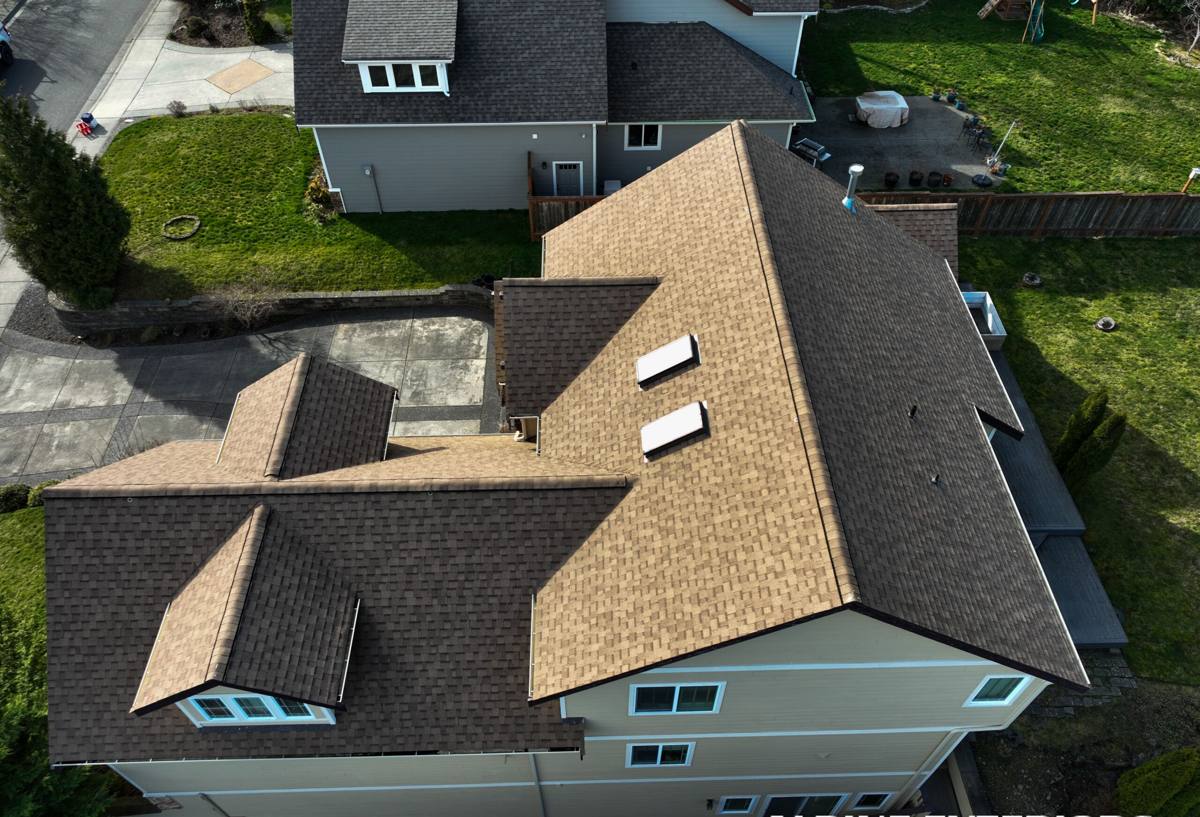
What This Climate Actually Demands From Your Siding
Whatcom County's marine-influenced weather reaches well inland, and homes toward Maple Falls deal with a combination that's tougher on siding than people expect: sustained damp air, driving rain that comes in sideways during winter storms, and long stretches where surfaces simply don't dry out. Add heavier tree cover and higher elevation than in town, and you get more shade, more standing moisture on north-facing walls, and a moss season that can run most of the year.
Moisture Behind the Siding, Not Just On It
The visible face of your siding is the easy part. The bigger risk is moisture that gets behind the cladding through wind-driven rain, condensation, or small gaps at trim and penetrations, then has nowhere to dry because it's trapped against the sheathing. Over years, that's what causes rot, sheathing damage, and paint failure — problems that show up long after the siding itself still looks fine from the driveway.
Moss, Algae, and Organic Growth
Constant shade and damp air are ideal conditions for moss and algae to take hold, especially on north- and west-facing walls and anywhere debris collects, like on top of battens or in corner trim. Moss holds moisture against the surface it's growing on, which accelerates whatever underlying problem already exists. A siding system that sheds water cleanly and doesn't give organic growth an easy foothold matters more here than it does in a drier part of the state.
Board & Batten vs. Other Profiles for This Setting
Board and batten isn't automatically the right call for every home — it's a style and performance trade-off worth understanding before committing to it.
| Factor | Board & Batten (Vertical) | Traditional Lap Siding (Horizontal) |
|---|---|---|
| Style fit | Strong match for cabin, farmhouse, and mountain-modern homes common in wooded, rural settings | Works on any home; reads more traditional or suburban |
| Water shedding | Sheds driving rain well when battens, gaps, and flashing are detailed correctly | Overlapping courses shed rain by design; long-proven and more forgiving of minor errors |
| Moss and debris risk | Raised battens can collect debris and hold moisture if spacing or fastening is off | Flatter, more uniform surface generally washes off more easily |
| Matched James Hardie product | HardiePanel vertical siding with battens, or Artisan Vertical Siding | HardiePlank lap siding |
| Ongoing maintenance | Periodic check of batten fasteners, caulk lines, and gaps | Simpler wash-down maintenance, fewer seams to monitor |
Neither option is "wrong" for this climate — the deciding factor is usually the look the homeowner wants, balanced against the fact that board and batten has more seams and details that need to be built correctly the first time.
What a Correct Board & Batten Installation Involves
Most of the failures we see on older board and batten homes trace back to a handful of installation shortcuts, not the siding material itself.
A Real Drainage Plane
Behind every board and batten installation we do, there's a water-resistive barrier and a rainscreen gap that lets any moisture that does get past the siding drain and dry out instead of sitting against the sheathing. This one detail does more to prevent long-term rot than anything else in the assembly.
Batten Spacing and Fastening
Battens need consistent spacing over the vertical boards, fastened into framing — not just into the board below — so the whole system stays flat and tight over time. Inconsistent spacing or fasteners that miss framing are a common source of the buckling and gapping people associate with "cheap-looking" board and batten.
Trim, Corners, and Flashing
Every horizontal transition — window heads, corner boards, the base of the wall — needs proper flashing and integrated house wrap detailing. Caulk is a backup, not a substitute for flashing that actually directs water outward and down. This is where a lot of the water intrusion problems on older homes in wetter parts of the county actually start.
Fastener and Material Quality
Stainless or coated fasteners rated for the environment, correctly countersunk and sealed, keep rust streaking and fastener failure from becoming a 10-years-later problem.
Why We Install James Hardie, Not Other Board & Batten Materials
Board and batten can be built from several materials — engineered wood, vinyl, primed spruce, or fiber cement — and we've made a deliberate call to install James Hardie fiber cement exclusively. In a climate like this one, the material underneath the batten matters as much as the installation detail on top of it.
Wood-based and engineered-wood board and batten products can perform well for years, but they depend heavily on paint film integrity and moisture management to avoid swelling, delamination, or rot at cut edges — exactly the failure points that show up faster in a long, damp, low-drying-potential climate. Vinyl board and batten sheds water fine but can warp with temperature swings and doesn't hold paint if a homeowner ever wants to change the color.
James Hardie fiber cement doesn't have those weaknesses. It's non-combustible, dimensionally stable in wet-dry cycling, and available in HZ product lines engineered for wet climate zones. The factory-applied ColorPlus finish resists the fading and moisture-related coating failure that plagues field-painted wood siding in this kind of weather, and it's backed by a long, transferable manufacturer warranty. That combination is why it's the only board and batten material we put on homes — not because other products can't work, but because we don't think they hold up as well, for as long, in this specific climate, as a product engineered for it.
Our Process for Maple Falls Projects
- On-site assessment — we look at sun exposure, tree cover, existing moisture damage, and how water currently moves around the house before recommending anything.
- Moisture and drainage plan — we identify where a rainscreen gap and improved flashing details are needed, especially on shaded or heavily treed walls.
- Product and profile selection — we walk through HardiePanel and Artisan Vertical options, batten reveal choices, and ColorPlus color selection.
- Removal and prep — old siding comes off, sheathing is inspected and repaired as needed, and the water-resistive barrier and rainscreen are installed before a single board goes up.
- Installation — boards, battens, trim, and flashing are installed to manufacturer spec, with fastening patterns and gaps checked as we go, not just at the end.
- Final walkthrough — we go over the finished work with the homeowner and explain what little maintenance the system will actually need going forward.
Maintenance in a Damp, Mossy Climate
James Hardie board and batten is low-maintenance compared to wood, but "low" isn't "none," especially on shaded, wooded lots. A short annual routine keeps it performing the way it's designed to:
- Rinse siding and battens once a year to clear pollen, debris, and early moss growth before it spreads.
- Keep gutters and downspouts clear so overflow doesn't run down and pool against the siding.
- Trim back branches and brush that keep walls in constant shade and slow drying time.
- Check caulking at trim, corners, and penetrations every year or two and replace it if it's cracked or pulling away.
- Watch shaded, north-facing walls for moss or algae buildup and address it early rather than letting it establish.
- Because ColorPlus is a factory finish, there's no repainting cycle to keep up with — just occasional touch-up if the siding is damaged.
Why Local Experience in Maple Falls Matters
A crew that already works in and around Maple Falls understands things that don't show up in a spec sheet: how tree-covered, sloped lots affect access and staging, how much longer surfaces stay wet up here than they do down in Lynden, and how Whatcom County's permitting and inspection process actually works for a project outside the town limits. That familiarity shows up in fewer surprises mid-project and a crew that's already accounted for the site conditions before the first board is cut.
It also matters for scheduling. Siding installation has a real weather window in a climate this wet, and a crew that's worked the area knows how to plan around it instead of finding out the hard way partway through a job.
Cost Factors to Expect
Board and batten pricing depends on more than square footage. The factors that move the number most for a Maple Falls project are the condition of the existing sheathing once old siding comes off, how much of the wall area is complex — dormers, multiple gables, tall walls that need staging or lift access — and how much additional flashing and drainage detail a shaded, wet-prone home needs compared to a simpler, sun-exposed one. We give homeowners a real number after seeing the house in person, not a generic square-footage estimate that ignores the site.
If you're weighing board and batten for a home near Maple Falls, we're happy to take a look and talk through what your specific house needs — no pressure, no obligation. Request a free estimate using the form below.