 Lynden
 Why Blaine Decks Wear Out Faster Than You'd Expect
Blaine sits right on the water in Whatcom County, and that location cuts both ways. The view is part of why people love living here, but the same salt-laden air that blows off the bay is steadily working against every exposed fastener, ledger board, and joist hanger on a deck. Add in the long stretch of driving rain we get for much of the year, plus a moss season that can run from fall through spring on shaded or north-facing structures, and you've got a climate that's genuinely tougher on decks than most inland parts of the county.
None of that means a deck in Blaine is doomed — it means the deck has to be built and repaired with that exposure in mind. A repair that would hold up fine forty miles inland can fail early here if it doesn't account for salt air corrosion and near-constant moisture cycling.
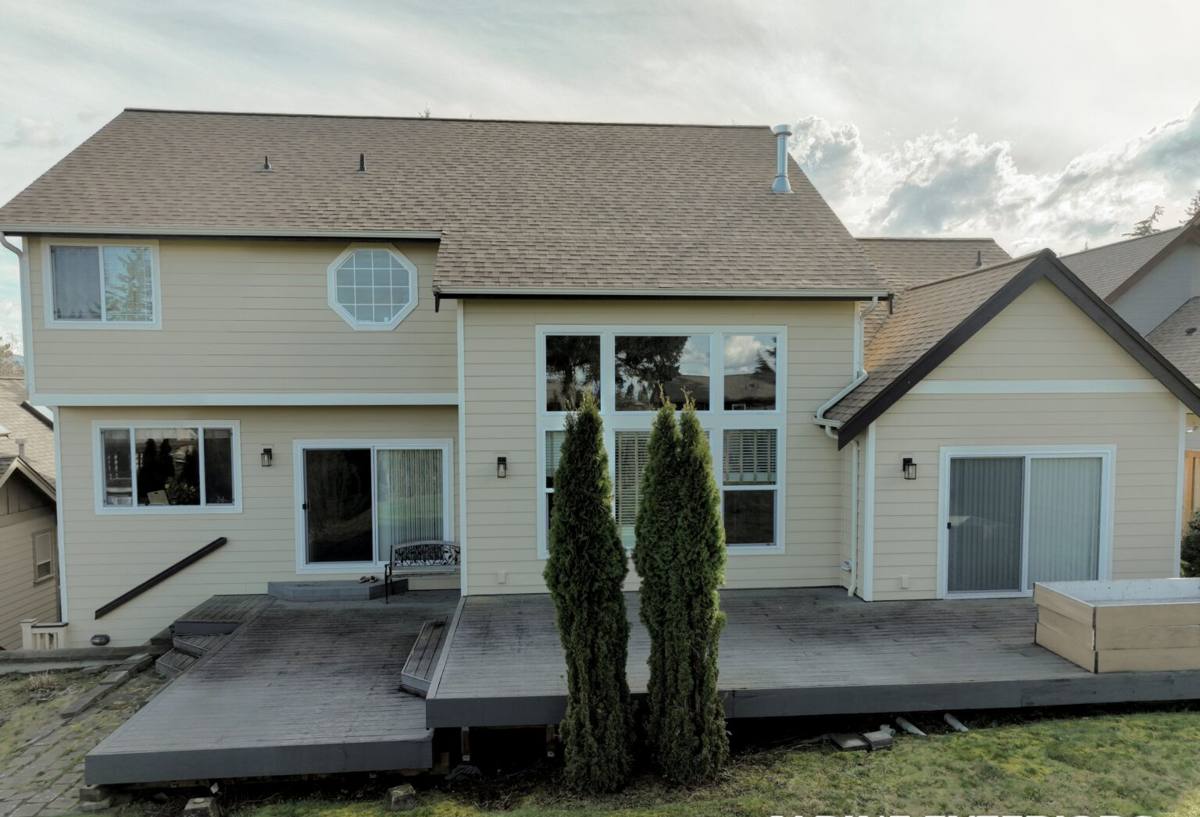
What Salt Air, Rain, and Moss Actually Do to a Deck
Salt air and metal fasteners
Coastal salt air accelerates corrosion on anything metal — nails, screws, joist hangers, bolts, and flashing. Once a fastener starts rusting, it loses holding strength long before it looks obviously bad from the surface. On a lot of older Blaine decks, the boards themselves are still serviceable but the hardware underneath has quietly failed.
Driving rain and water intrusion
Rain that comes in sideways finds its way into gaps that vertical rain never would — around ledger boards, under flashing laps, along stair stringers, and into end-grain cuts that weren't sealed. Once water gets behind a board or into a ledger connection, it doesn't dry out quickly in our climate, and that's where rot starts.
Moss, algae, and trapped moisture
Shaded decks, or ones tucked against a house on the north or west side, stay damp for extended stretches. Moss and algae aren't just a slip hazard — they hold moisture against the wood surface and accelerate decay underneath. A deck that looks "just dirty" is often holding onto moisture it shouldn't be.
Signs a Deck Needs Repair — and Signs It's Past Repair
Homeowners often can't tell the difference between a deck that needs a targeted fix and one where repair is throwing money at a structure that's fundamentally compromised. A few honest markers:
- Soft or spongy decking boards, especially near the house or at board ends — usually repairable if it's isolated
- Rust staining streaking down from fasteners or hardware — a sign to inspect, not necessarily replace
- A ledger board that's separating from the house, or visible gaps in the flashing above it — needs prompt attention regardless of how the rest of the deck looks
- Wobble or movement in the railing posts — often a sign the post base or blocking has rotted
- Persistent moss or dark staining on the same boards year after year — points to a drainage or airflow problem, not just a cleaning problem
- Stair stringers that flex or feel uneven underfoot — a structural issue that shouldn't wait
Widespread rot across the joist structure, a ledger connection that's failed in multiple places, or a substructure built without proper flashing to begin with usually points toward replacement rather than repair. We'll tell you plainly which situation you're in — there's no upside for us in patching something that needs to come out.
What a Correct Deck Repair Actually Involves
A repair that's done right goes past the visible board that prompted the call. The parts that matter most are usually the ones you can't see from standing on the deck:
Substructure first
Joists, beams, posts, and the ledger connection get inspected before anything else. Surface decking can look fine while the framing underneath is compromised — replacing boards over a weak substructure just delays the real problem.
Fasteners and hardware
Given how hard salt air is on metal, corroded fasteners and hangers get replaced with hardware rated for coastal or treated-lumber exposure, not just whatever matches what's already there.
Flashing and water management
Ledger flashing, especially, needs to actually shed water away from the house rather than trap it. A lot of the rot we find traces back to flashing that was missing, installed backward, or never sealed at the laps.
Board replacement and fastening pattern
Individual boards are swapped where needed, with attention to gapping for drainage and airflow underneath — tight, poorly spaced boards are part of why moss and standing moisture become a repeat problem.
Railings and stairs
Since these are the components most tied to safety, post connections, guardrail height, and stair stringer condition get checked and corrected as part of the same visit, not treated as a separate project.
Repair or Replace: How We Help You Decide
| Factor | Leans Toward Repair | Leans Toward Replacement |
|---|---|---|
| Ledger board condition | Solid, flashing intact or easily corrected | Rotted or separating from the house |
| Extent of damage | Isolated boards or a single section | Rot or corrosion spread across the frame |
| Age of structure | Under 15-20 years, built to a reasonable standard | Older structure with no flashing or undersized framing |
| Fastener condition | Localized rust, structure still sound | Widespread corrosion in hangers and structural bolts |
| Budget goal | Extend usable life a number of years | Want a long-term, lower-maintenance solution |
This table is a starting point, not a substitute for a hands-on look — the same deck can land in different rows depending on what we find once we get under the boards.
Material Choices That Actually Hold Up in Blaine's Climate
What we use to repair a deck matters as much as the workmanship. In a coastal, high-moisture climate, a few standards guide our material choices:
- Fasteners and hardware rated for treated lumber and coastal exposure, not standard-grade hardware that corrodes faster near salt air
- Properly sealed end cuts on any treated lumber, since factory treatment doesn't penetrate a fresh cut
- Flashing that's installed to actually direct water away from the house, with attention to how it laps at seams
- Board spacing that allows for drainage and airflow, reducing the conditions moss needs to take hold
Composite decking is worth discussing for repairs and partial rebuilds, since it doesn't feed moss and algae the way bare wood can and holds up well against constant moisture. It's not automatically the right call for every repair — it's a tradeoff in upfront cost versus long-term maintenance, and we'll walk through that honestly rather than push one material by default.
Our Process for a Blaine Deck Repair
We keep this straightforward:
- Inspection — we look at the substructure, not just the surface, including ledger connection, framing, and fastener condition
- Honest assessment — you get a clear picture of what's repairable, what should be replaced, and why
- Written scope and estimate — no vague line items, so you know what you're paying for
- Repair work — structural fixes first, then decking, railings, and stairs as needed
- Final check — railings tested for solidness, drainage and gapping confirmed, site cleaned up
Maintenance Steps That Extend the Life of a Repair
A well-done repair still needs some ongoing attention in this climate to get its full lifespan out of it:
- Clear moss and debris from board gaps at least once a year, more often on shaded sections
- Check railing posts periodically for looseness, especially after winter storms
- Re-seal or re-stain exposed wood on the schedule the product calls for — coastal exposure shortens the useful window between coats
- Keep gutters and downspouts near the deck clear so runoff isn't adding extra water load right where the ledger connects
- Address small soft spots or fastener rust as soon as you notice them rather than waiting for a full season
Why Local Experience in Blaine Matters
A crew that regularly works decks in Blaine has already seen how this specific stretch of Whatcom County coastline treats a deck differently than a deck built the same way twenty miles inland. That means knowing which fastener grades hold up, where flashing tends to fail first on ledger connections exposed to driving rain, and which sections of a deck are realistically going to fight moss year after year regardless of cleaning. It also means giving you a repair recommendation grounded in what actually happens to decks here, not a generic checklist.
If you've got a deck in Blaine that's showing soft boards, rust streaks, a shaky railing, or persistent moss you can't get ahead of, we're happy to take a look and give you a straight answer on what it needs. The estimate is free, there's no pressure, and you'll get a clear scope before any work starts — just use the form below to get started.