 Lynden
 Why Birch Bay Roofs Age Differently Than Roofs Inland
Birch Bay sits right on the shoreline of the Strait of Georgia, and that location shapes almost every decision that goes into a new roof there. A roof twenty minutes inland in Whatcom County deals with rain and the occasional windstorm. A roof in Birch Bay deals with all of that plus a steady dose of salt-laden air coming off the water, wind that has nothing to slow it down before it hits the house, and shaded, damp conditions that keep moss and moisture active for most of the year. None of that means a roof in Birch Bay is doomed to fail early — it means the materials, fasteners, and installation details need to be chosen with that exposure in mind from the start.
We install new roofs across Whatcom County, and Birch Bay is one of the areas where we see the clearest gap between a roof that was built for the site and one that was built off a generic spec sheet. The difference shows up in five to ten years, usually as rust bleeding through paint at fastener heads, soft decking under a shaded north slope, or shingles that granulated out faster than the warranty implied they should.
What Salt Air, Driving Rain, and Moss Actually Do to a Roof
Salt Air and Corrosion
Airborne salt is corrosive to exposed metal. On a coastal roof that means flashing, fasteners, vent stacks, and gutter hardware are working against a slower but steady form of attack that a roof five or ten miles inland doesn't face. Standard electro-galvanized nails and low-grade flashing can start showing rust streaks well before the shingles themselves are due for replacement. The fix isn't complicated — it's using corrosion-resistant fasteners and flashing rated for coastal exposure — but it has to be specified up front, because you can't easily swap out fasteners once they're under three courses of shingles.
Wind-Driven Rain
Birch Bay's open exposure to the water means storms don't just drop rain straight down — wind pushes it sideways, up under shingle edges, and into any gap in the flashing or underlayment. A roof built for a sheltered inland lot can get away with lighter underlayment and looser sealing at penetrations. A roof exposed to wind-driven rain off the strait can't. This is the single biggest reason a "good roof" and a "good roof for this address" aren't always the same thing.
Moss and Shade
Whatcom County's long wet season already favors moss growth, and shaded or north-facing slopes near mature trees hold moisture even longer. Moss doesn't just look bad — its root structure lifts shingle edges and holds water against the roof deck, which is exactly the condition that leads to rot underneath a roof that still looks fine from the ground. A new roof installed with moss-resistant materials and proper airflow starts that fight from a much better position than a roof that just gets moss treatment sprayed on every couple of years.
Choosing the Right Roofing System for a Birch Bay Home
There's no single "best" roofing material for every house — it depends on the roof's exposure, the budget, and how long you want to go between major maintenance. Here's how the common options stack up specifically against Birch Bay's conditions.
| Material | Salt Air / Corrosion Resistance | Moss Resistance | Wind Performance | Typical Lifespan Here |
|---|---|---|---|---|
| Architectural (dimensional) asphalt shingle | Good, with corrosion-rated fasteners and flashing | Good with algae/moss-resistant granules | Strong with proper nailing and higher wind-rated products | 25-30 years |
| Standard 3-tab asphalt shingle | Fair — thinner profile is more exposed at edges | Fair without added treatment | Lower wind rating than architectural | 15-20 years |
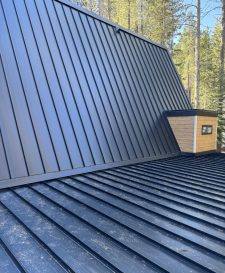
| Metal (standing seam or panel) | Excellent when specified with coastal-grade coatings | Excellent — sheds moss more easily | Excellent | 40-50+ years |
| Synthetic/composite shingle | Good, resists corrosion since it isn't metal-dependent | Good to excellent depending on product | Strong | 30-40 years |
For most Birch Bay homes we recommend either a higher-grade architectural asphalt shingle rated for high wind, or metal roofing where the budget and roof style fit. Standard 3-tab shingles can still be the right call on a budget-driven project, but we'll tell you honestly where that trade-off shows up over time rather than let you find out the hard way.
What a Correct New Roof Installation Actually Involves
A new roof is more than shingles nailed over the old ones — and in most cases, a proper installation starts with a full tear-off so we can actually see the deck. Skipping that step hides problems and shortens the life of everything installed on top. A correct job includes:
- Full removal of old roofing material down to the deck, not an overlay
- Deck inspection and repair or replacement of any soft, rotted, or delaminated sheathing
- Ice and water shield membrane at eaves, valleys, and around penetrations — the areas most exposed to wind-driven rain and ice damming
- Synthetic underlayment across the full roof for a consistent moisture barrier under the shingles
- New flashing at every wall intersection, chimney, skylight, and vent — not reused flashing from the old roof
- Corrosion-resistant fasteners appropriate for a coastal environment
- Balanced attic ventilation (intake at the soffits, exhaust at the ridge) so the roof can dry out between storms
- Proper nailing pattern and shingle exposure matched to the manufacturer's high-wind installation instructions
Each of those steps matters on its own, but in Birch Bay they matter more because there's less margin for error. A roof with a small ventilation gap or a shortcut on flashing might hold up fine in a low-exposure inland location for years before showing a problem. On an open, salt-exposed, wind-driven site, the same shortcut tends to show up much sooner.
Ventilation and Moisture Control
Roof ventilation gets overlooked because you can't see it from the street, but it's one of the biggest factors in how long a roof actually lasts in this climate. A roof deck that can't breathe traps moisture from both directions — condensation from the warm, humid interior air below, and whatever gets driven in from storms above. That trapped moisture is what feeds moss on the surface and rot underneath the surface.
The fix is balanced intake and exhaust: soffit vents pulling in fresh air low on the roof, and ridge or other exhaust vents letting warm, moist air out at the top. When intake and exhaust are mismatched — which is common on older homes that have had insulation or siding work done without anyone revisiting the roof — the system doesn't work the way it's supposed to, no matter how good the shingles are. When we install a new roof, we check and correct ventilation as part of the job, not as an upsell afterward.
Our Process for a Birch Bay Roof Replacement
We keep the process straightforward and try to remove the guesswork for homeowners who haven't been through a roof replacement before.
- On-site assessment. We walk the roof and the attic where accessible, check the deck condition, look at existing ventilation, and note anything specific to the site — tree cover, shade patterns, prevailing wind exposure.
- Material recommendation and honest estimate. We'll walk you through material options that fit both your budget and Birch Bay's conditions, with straight talk about trade-offs rather than a one-size-fits-all pitch.
- Tear-off and deck prep. Full removal of the old roofing, deck inspection, and repair of any compromised sheathing before anything new goes down.
- Installation. Ice and water shield, underlayment, flashing, ventilation components, and the roofing material itself, installed to manufacturer specifications for wind and moisture exposure.
- Cleanup and walkthrough. Site cleanup including magnetic sweep for stray nails, and a final walkthrough so you know what was done and what to expect going forward.
Checklist: Questions Worth Asking Before You Sign
Whoever you hire, these are worth confirming before work starts — not after.
- Is this a full tear-off, or is anything being installed over existing material?
- What underlayment and ice-and-water-shield products are being used, and where?
- Are the fasteners and flashing rated for coastal/salt-air exposure?
- Is attic ventilation being evaluated and corrected as part of the job, not just the roofing surface?
- What's the wind rating of the shingle or panel being installed, and does it match this site's exposure?
- What does the workmanship warranty cover, separate from the manufacturer's material warranty?
- Is the contractor licensed and insured to work in Washington, and can they provide proof?
Why Local Experience in Birch Bay Matters
A roof built for a sheltered subdivision inland and a roof built for an open shoreline lot in Birch Bay shouldn't be specced the same way, even if they're the same square footage. Crews that don't regularly work this stretch of coastline sometimes default to standard specs because that's what works everywhere else — and it's usually fine, right up until a winter storm off the water finds the weak point. Working in Whatcom County and along the bay regularly means we've seen which details matter here: the fastener grade, the underlayment coverage, the flashing at wall intersections that take direct wind-driven rain, and the ventilation balance that keeps moss from taking hold on shaded slopes. That's knowledge that comes from doing the work here repeatedly, not from a manufacturer's install guide alone.
Get a Straight Answer on Your Roof
If your roof is aging, showing moss, or you've just never had it properly evaluated for what Birch Bay's climate does to it, we're happy to take a look. We'll give you a clear, no-pressure estimate and an honest read on what your roof actually needs — use the form below to get started.