 Lynden
 Why Bellingham Roofs Wear Differently Than Roofs Inland
Bellingham sits close enough to the water and low enough in cloud cover that a roof here does a different job than a roof thirty miles east. Salt-laden air moves in off the bay, rain comes in sideways more often than it falls straight down, and the tree cover that makes the area beautiful also means shade, damp organic debris, and moss season that can run nine or ten months out of the year. A roofing material that performs fine in a drier, more sheltered part of Whatcom County can still struggle here if it isn't installed with these specific conditions in mind.
Metal roofing, done correctly, handles this environment better than most alternatives — but "done correctly" is doing a lot of work in that sentence. The material itself is only part of the equation. Fastener choice, flashing detail, ventilation, and panel selection all matter more in a coastal, high-moisture climate than they would somewhere drier.
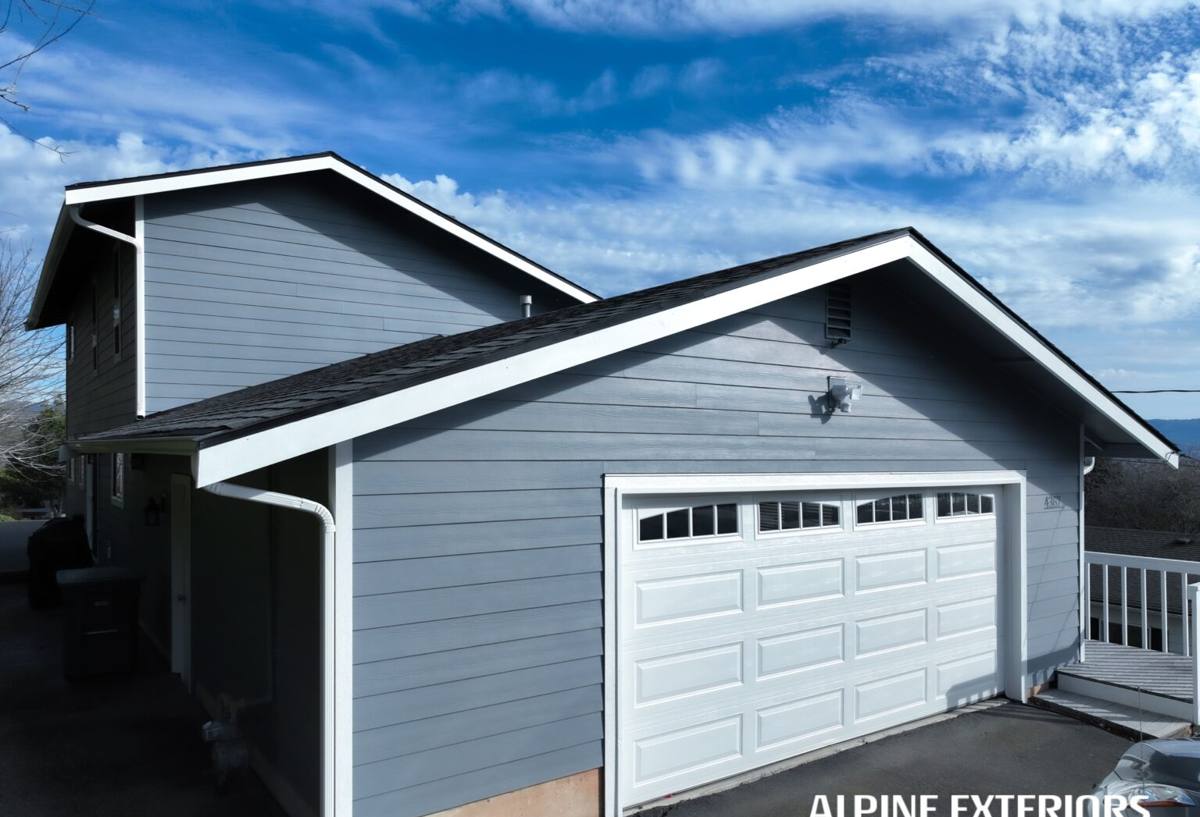
What Bellingham's Climate Actually Does to a Roof Over Time
Salt Air and Corrosion
Proximity to salt water accelerates corrosion on any exposed metal — fasteners, flashing, and panel edges included. This doesn't mean metal roofing is a poor choice near the coast; it means the specific metal, coating, and fastener hardware need to be matched to a marine-influenced environment rather than a generic inland spec. Uncoated or mismatched fasteners are usually the first thing to fail, well before the panels themselves show any wear.
Driving Rain and Wind-Driven Water
Storms off the water tend to push rain at an angle instead of straight down, which means water finds its way into laps, seams, and penetrations that would stay dry in a calmer climate. Flashing details around chimneys, vents, and valleys have to assume water will be driven uphill and sideways at some point during the year, not just downhill with gravity.
A Moss Season That Never Really Ends
Shade, moisture, and mild temperatures are exactly what moss and algae need to establish themselves, and much of Bellingham offers all three for most of the year. On roofing materials with any texture or organic surface, moss gets a foothold and holds moisture against the roof deck long-term. That trapped moisture, not the moss itself, is what eventually causes real damage — rot, delamination, or granule loss depending on the original roofing material.
Why Metal Holds Up Better in This Environment
A properly installed metal roof has a smooth, hard, non-porous surface. Moss spores that land on it have a much harder time establishing a root system compared to a rougher or more porous material, and what does grow tends to rinse off with normal rain rather than binding into the surface. Combined with the right slope and edge detailing, this means less standing moisture, less granule or surface breakdown, and a roof that sheds rather than absorbs the kind of near-constant damp Bellingham sees for much of the year.
None of that is automatic, though. A metal roof installed with the wrong fastener type, insufficient ventilation, or panel seams that weren't detailed for wind-driven rain will show problems just as fast as any other material — sometimes faster, because a mistake in metal roofing tends to show up as a leak rather than a slow, forgiving failure.
Panel Types: What Actually Makes Sense Here
Not all metal roofing is the same, and the right choice depends on budget, roof complexity, and how long you want to go between maintenance checks.
| Panel Type | Fastening | Best Fit | Maintenance Consideration |
|---|---|---|---|
| Standing seam | Concealed clips, no exposed fasteners | Homes wanting the longest service life and cleanest weather-tightness | Lowest long-term maintenance; fasteners can't back out or corrode from exposure |
| Exposed-fastener panel | Screws through the panel face into the deck or purlins | Budget-conscious projects, outbuildings, simpler rooflines | Fastener washers age and need periodic inspection/replacement over the roof's life |
| Stone-coated steel | Concealed, similar to standing seam | Homeowners wanting a more traditional shingle or shake profile in metal | Textured surface holds slightly more debris; needs occasional rinsing in shaded areas |
For most Bellingham homes with typical roof pitches and normal shade exposure, we lean toward standing seam or a quality concealed-fastener system specifically because there's nothing exposed for salt air to attack over time. Exposed-fastener panels aren't a bad product — they're a reasonable, lower-cost option for the right application — but they do ask for more attention to the fastener washers as the years go by.
Where Moss Prevention Fits In
On heavily shaded sections of roof, we'll sometimes recommend zinc or copper strip installation near the ridge as a supplemental measure — rain washing over these strips carries trace metal ions down the roof surface, which discourages moss regrowth in the areas most prone to it. This is a targeted add-on for problem areas, not a substitute for correct slope, ventilation, and material choice.
What a Correct Installation Actually Involves
The panels are the visible part of the job. The parts that determine whether the roof performs for decades happen underneath and around them.
- Deck inspection and repair — any soft, rotted, or moisture-damaged sheathing gets replaced before anything goes down, not patched over.
- Synthetic underlayment rated for the exposure, run and lapped to shed wind-driven rain rather than just gravity-fed runoff.
- Ice-and-water or self-adhered membrane at eaves, valleys, and penetrations — the areas most exposed to driven rain and ice damming during cold snaps.
- Corrosion-appropriate fasteners matched to the panel metal and rated for coastal exposure, not generic hardware.
- Flashing details at every chimney, vent, skylight, and wall intersection, built to handle rain coming from an angle, not just straight down.
- Ridge and soffit ventilation sized correctly so moisture from inside the home escapes instead of condensing against the underside of the panels.
Skip any one of these and the panels themselves become almost irrelevant — the roof will leak or trap moisture regardless of how good the metal is.
Our Process on a Bellingham Metal Roofing Project
- On-site inspection — we look at the existing roof, deck condition, ventilation, shade exposure, and any moss or moisture patterns before quoting anything.
- Tear-off vs. overlay decision — in some cases an existing roof can be overlaid, but on moss-prone or moisture-damaged decks we'll usually recommend a full tear-off so we can inspect and repair the sheathing directly.
- Panel and accessory selection — matched to your roof's pitch, shade exposure, and budget, using the fastener and coating specs appropriate for this climate.
- Underlayment and flashing installation — done before a single panel goes down, since this is what actually keeps water out.
- Panel installation — set to manufacturer spec for expansion and fastening, with attention to every valley, edge, and penetration.
- Site cleanup and walkthrough — old material and debris hauled off, magnetic sweep for stray fasteners, and a walkthrough so you know what maintenance, if any, the new roof needs going forward.
What It Costs — and What Actually Drives the Price
Metal roofing costs more upfront than asphalt shingles, and in this region, installed pricing commonly falls in a broad range depending on the factors below rather than a single flat rate.
| Cost Factor | Why It Matters |
|---|---|
| Panel type | Standing seam typically costs more than exposed-fastener systems due to labor and concealed-clip hardware |
| Roof pitch and complexity | Steep pitches, multiple valleys, and dormers add labor time and material waste |
| Tear-off vs. overlay | Removing and disposing of an existing roof adds cost but is often the right call on a moss- or moisture-affected deck |
| Deck repair | Rotted or soft sheathing found during tear-off needs replacement before installation continues |
| Ventilation upgrades | Adding or correcting ridge/soffit venting on an older home adds a modest line item but pays off in roof longevity |
We'd rather walk your roof and give you real numbers than guess at a price over the phone — every one of these factors can move the total meaningfully.
Why Hiring a Crew That Already Works Bellingham Matters
A roofing crew that mostly works drier, inland areas doesn't always plan for wind-driven rain, doesn't always spec fasteners for salt exposure, and doesn't always think about moss and shade patterns when laying out ventilation. None of that shows up on day one — it shows up two or three winters later as a leak, a corroded fastener, or a moss mat holding moisture against the deck.
Working in and around Whatcom County means seeing how roofs in this specific climate actually age — which details hold up and which ones fail early. That's the difference between a roof that's installed correctly on paper and one that's actually built for what Bellingham weather does to it year after year.
Questions Worth Asking Before You Hire Anyone for This Job
- Are you licensed and insured for roofing work in Washington State, and can you provide proof?
- What fastener and underlayment spec do you use for coastal/high-moisture exposure specifically?
- Will you inspect and repair the deck as part of the job, or only the visible roofing layer?
- How do you handle ventilation — will you assess and correct it, or install over whatever exists?
- What's your plan for moss-prone, shaded sections of the roof?
- Can you walk me through the manufacturer's warranty and what voids it?
If you're weighing metal roofing for a home in Bellingham, we're glad to take a look and give you an honest read on what your roof actually needs — no pressure, no obligation. Use the form below to request a free estimate.