 Lynden
 Why Bellingham's Climate Is Hard on Siding
Homes in and around Bellingham sit close enough to saltwater and open exposure that siding takes a different kind of beating than it would further inland. It's not one dramatic event that wears siding out here — it's the slow, repeated combination of salt-laden air, wind-driven rain, and long stretches of damp shade that never fully dry out. A siding product that looks fine on a spec sheet can still fail early if it wasn't built with this specific combination in mind.
Salt Air and Coastal Exposure
Proximity to Bellingham Bay and the Salish Sea means airborne salt is a real factor, especially on homes with western or open exposure. Salt air accelerates corrosion on fasteners, flashing, and trim, and it can degrade cheaper coatings and finishes faster than manufacturers' generic warranty language accounts for. Materials and hardware need to be chosen with that exposure in mind, not just swapped in from a standard inland spec.
Driving Rain and Wind-Driven Moisture
Whatcom County storms don't just drop rain straight down — wind off the water pushes it sideways, into laps, seams, and any gap in the water-resistive barrier. Siding that relies on a tight, well-sealed surface rather than proper water management behind the cladding will eventually let moisture in, regardless of how good it looks from the curb.
Moss Season and Prolonged Dampness
Shaded elevations, mature tree cover, and our long stretch of overcast, wet months mean moss and mildew have plenty of time to establish themselves on any surface that stays damp. Wood-based products are especially vulnerable here because moss and algae growth trap moisture against the surface, which speeds up rot from the outside in.
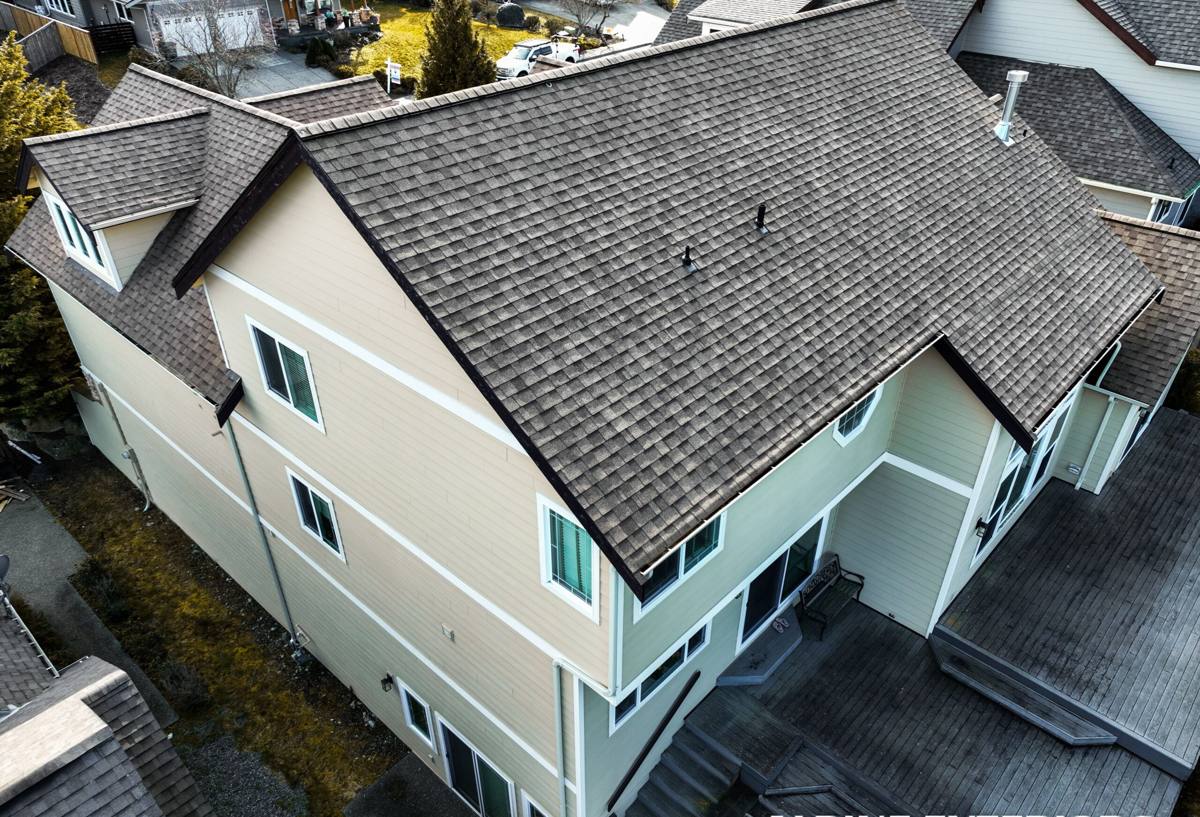
Why We Only Install James Hardie Here
We made a decision as a company to install James Hardie fiber cement siding exclusively — not vinyl, not LP SmartSide, not Cemplank, Allura, primed spruce, or cedar. That's not a marketing position, it's a practical one based on what actually holds up in this climate over the long run.
Fiber Cement vs Wood and Vinyl in a Wet Climate
Wood siding products, even engineered ones, are organic materials at their core. In a climate with this much sustained moisture and shade, wood-based siding is more exposed to swelling, edge deterioration, and moss-driven rot, even with good maintenance. Vinyl siding doesn't rot, but it can warp or become brittle over time, and its seams and panel joints give wind-driven coastal rain more opportunities to work behind the cladding. James Hardie fiber cement is non-combustible, doesn't feed moss and mildew growth the way wood fibers can, and holds its shape and color under sustained wet-cold-wet cycling far better than either alternative.
Climate-Engineered HZ5 Formulation
James Hardie manufactures its siding in different formulations for different climate zones. Western Washington falls into the HZ5 zone, engineered for regions that see freeze-thaw cycling combined with prolonged moisture exposure — which describes Whatcom County's weather almost exactly. Installing the zone-correct product matters as much as the installation itself; a product engineered for a drier or milder climate simply isn't built for what this coastline throws at it.
What Correct Installation Looks Like
James Hardie siding performs the way it's rated to perform only when it's installed to the manufacturer's specifications. In a high-moisture, salt-exposed area like Bellingham, the margin for error on flashing and water management is smaller than it would be in a drier climate — small mistakes show up as problems sooner.
Water Management Details
Correct installation starts behind the siding, not at the surface. That means a properly lapped and sealed weather-resistive barrier, correctly flashed windows and doors, and drainage planes that let any moisture that does get in find its way back out instead of sitting against the sheathing.
Fastening and Clearances
Fastener type, spacing, and depth all affect how well the siding holds up to wind-driven rain and salt exposure over time. Ground clearance, deck and roof-line clearances, and proper caulking at penetrations are all places where a rushed install creates a moisture entry point that won't show up as a visible problem for a year or two — by which time it's already causing damage behind the wall.
- Weather-resistive barrier installed and lapped correctly before any siding goes up
- Flashing at every window, door, and roof-to-wall transition
- Corrosion-resistant fasteners suited to coastal exposure
- Manufacturer-specified clearances from grade, decks, and roofing
- Properly sealed and caulked joints, corners, and penetrations
- Factory-primed and ColorPlus-finished cut edges sealed per Hardie spec
ColorPlus Finish and Long-Term Appearance
James Hardie's ColorPlus finish is baked on in a controlled factory process rather than sprayed or brushed on site, which gives it more consistent coverage and better resistance to fading and moisture intrusion than field-applied paint. In a climate where surfaces stay damp for long stretches, a durable factory finish matters more than it would somewhere drier — it's one less seam where moss, mildew, and salt residue can find a foothold. It also means homeowners aren't looking at a repaint cycle every several years just to keep the siding looking presentable.
Choosing the Right Hardie Product Line for This Area
James Hardie makes several siding profiles, and the right one for a given home depends on its style, exposure, and how much of the wall is shaded versus open to wind and rain. We walk through these options with homeowners rather than defaulting to one product for every job.
| Product Line | Best Suited For | Notes for This Climate |
|---|---|---|
| HardiePlank Lap Siding | Traditional and craftsman-style homes | Most common choice; wide range of textures and exposures |
| HardiePanel Vertical Siding | Modern styles, accent walls, gable ends | Fewer horizontal laps means fewer potential water entry points on exposed walls |
| HardieShingle Siding | Cottage and shingle-style homes | Gives a cedar-shake look without the moisture vulnerability of real wood shingles |
| HardieTrim Boards | Corners, fascia, window and door trim | Matched fiber cement trim avoids the wood-trim rot that undermines otherwise sound siding |
Our Process for Bellingham-Area Jobs
Every project starts with an on-site walk-through, not a phone estimate. We look at wall exposure, existing sheathing and moisture barrier condition, roofline and deck intersections, and any trouble spots the homeowner has already noticed. From there:
- Inspect the existing siding and sheathing, and flag any hidden moisture or rot found during tear-off
- Remove old siding and repair or replace any compromised sheathing before moving forward
- Install a correctly lapped weather-resistive barrier and flash all penetrations
- Install James Hardie siding, trim, and accessories to manufacturer specification
- Final walk-through with the homeowner and site cleanup
We don't cover up sheathing problems just to get siding up faster. If we find rot or moisture damage during tear-off, we address it before the new siding goes on — patching over a hidden problem just moves the failure date, it doesn't prevent it.
Why a Local Crew Matters
A crew that regularly works Bellingham and the surrounding Whatcom County area already knows which exposures take the worst weather, how local permitting works, and what kind of moisture and salt exposure a given part of town typically sees. That's the difference between a generic installation and one that accounts for the conditions a specific home actually faces. It also means someone is close by and familiar with the job if a warranty question or follow-up comes up down the road.
Maintenance in a Wet, Mossy Climate
James Hardie siding is low-maintenance compared to wood, but "low-maintenance" isn't "no-maintenance," especially here.
- Rinse siding periodically with a garden hose to clear salt residue, pollen, and organic buildup
- Avoid high-pressure power washing, which can force water behind laps and joints
- Keep gutters clear so overflow doesn't run down the siding face and feed moss growth
- Trim back vegetation and tree limbs that keep siding shaded and damp
- Inspect caulking at trim, windows, and penetrations every year or two and re-seal as needed
Warranty and What It Covers
James Hardie backs its siding with a strong, transferable limited warranty covering the product itself, and ColorPlus-finished products carry a separate finish warranty covering fade and coating performance. Warranty coverage assumes installation to manufacturer specification, which is one more reason correct installation isn't optional — it's what keeps the warranty intact if something ever does go wrong.
If you're weighing a siding replacement for a Bellingham-area home, we're happy to walk the property, look at your specific exposure, and put together a straightforward, no-pressure estimate using the form below.