 Lynden
 Bellingham's Climate Is Hard on Decks
A deck in Bellingham works harder than a deck almost anywhere else in the state. You're close enough to Bellingham Bay that salt-laden air reaches fasteners, hardware, and any exposed metal on a regular basis. Layer on driving rain that comes in sideways off the water for months at a stretch, plus shaded yards and tree cover that keep boards damp long after a storm passes, and you get a deck that's dealing with near-constant moisture exposure most of the year. Add a moss season that can run from fall through spring, and you have the three biggest enemies of a wood or composite deck — salt, standing water, and organic growth — all working on the same structure at once.
None of that means a deck is doomed. It means the repair work has to account for what's actually happening in Whatcom County, not what a generic repair guide assumes about a drier climate. That's the difference between a fix that lasts a couple of seasons and one that holds up.
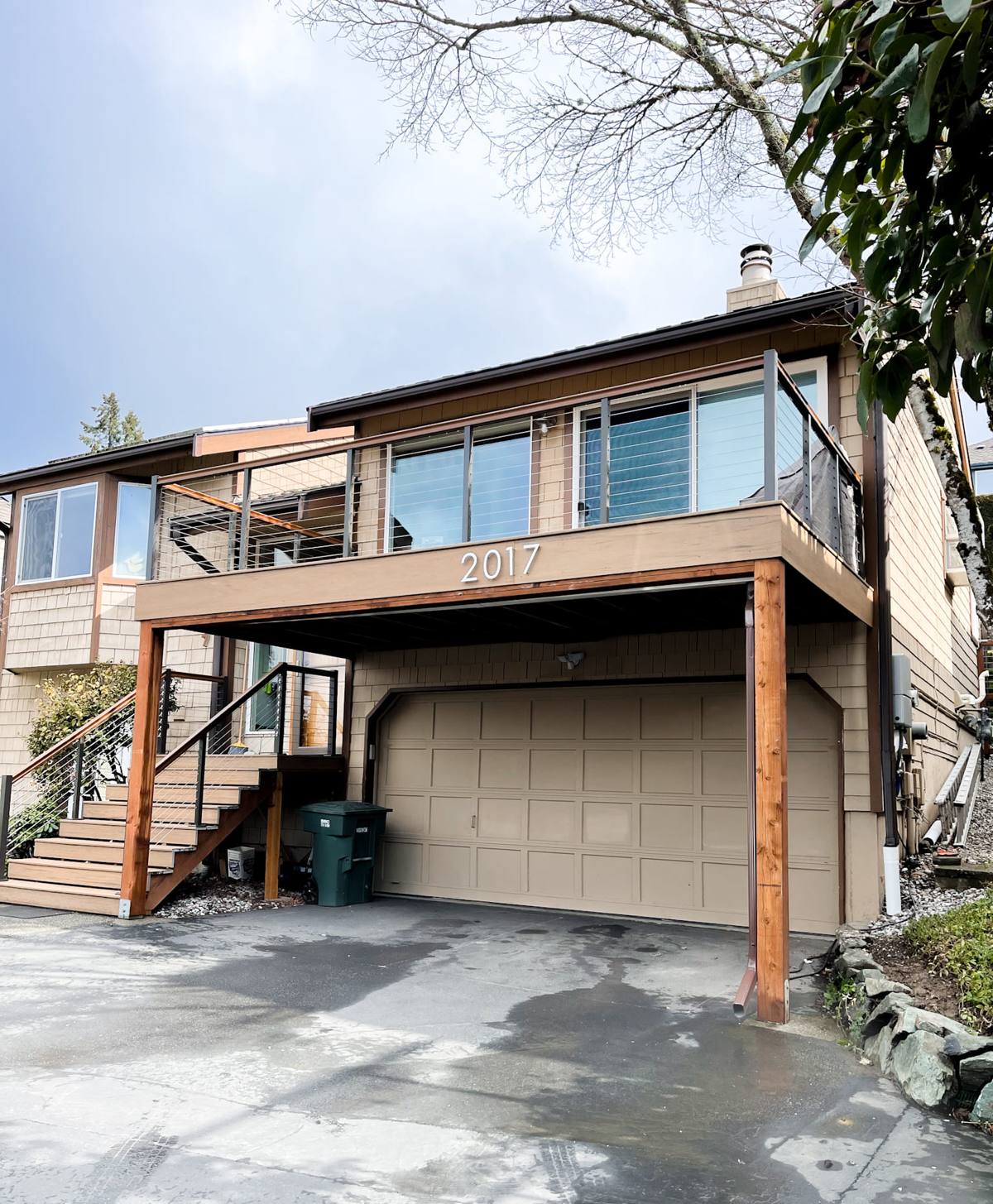
The Repair Problems We See Most Often on Bellingham Decks
Rot at the Ledger Board and Framing
The ledger board — where the deck attaches to the house — is the single most important structural connection on most decks, and it's also the part most exposed to trapped moisture if it wasn't flashed correctly to begin with. Water gets behind the ledger, soaks into the framing, and rot spreads quietly until a board feels soft or a railing starts to wobble. By the time it's visible, the damage is usually further along than it looks from the surface.
Rusted or Failing Fasteners
Salt air accelerates corrosion on any fastener that isn't rated for coastal exposure. We regularly find decks where the boards themselves are still in decent shape, but the nails or screws holding them down have rusted, weakened, or started staining the wood around them. Corroded joist hangers are the more serious version of this problem, since they're structural and hidden from view.
Moss, Algae, and Slippery Surfaces
Shaded, damp decks in this part of Washington grow moss and algae readily, especially on the north side of a house or under tree cover. Beyond being unattractive, a mossy deck surface holds moisture against the wood and gets genuinely slick — a real slip hazard on stairs and near doorways.
Loose or Unsafe Railings
Railings take a lot of abuse — leaned on, gripped, bumped — and their post connections are a common failure point once moisture works into the base. A railing that flexes or shifts underhand is a safety issue, not a cosmetic one.
What a Correct Deck Repair Actually Involves
A repair that only addresses what's visible from the top often misses what's actually failing underneath. Before we touch a board, we look at the structural picture: how the ledger is attached and flashed, whether joist hangers and posts are sound, whether footings are stable, and how water is currently draining (or not draining) around the structure. Surface boards get replaced or refastened, but if the framing underneath is compromised, replacing decking on top of it just delays a bigger problem.
We also check that the repair brings the deck closer to current code where it's reasonably possible — proper ledger flashing, correctly rated joist hangers, adequate railing height and baluster spacing on older decks that may predate current standards. A repair is a good moment to fix these things, not just restore the original condition.
Repair or Replace? What Actually Decides It
Homeowners often ask us to just tell them a number before we've looked at anything, but the honest answer depends on a handful of specific factors. Here's how we actually weigh it:
| Factor | Favors Repair | Favors Replacement |
|---|---|---|
| Ledger & framing condition | Solid, dry, well-attached | Soft wood, rot, or missing flashing |
| Age of structure | Under ~15 years, built to a reasonable standard | Older deck near or past typical service life |
| Extent of damage | Isolated boards, hardware, or railing sections | Rot or corrosion spread across multiple structural members |
| Footings & posts | Stable, no movement or settling | Heaving, rotting, or undersized for current code |
| Typical cost range* | Low hundreds to a few thousand dollars | Full rebuild pricing, scoped after inspection |
*Actual costs depend on deck size, materials, and access — these ranges are general guidance, not a quote. We give you real numbers after we've looked at your deck in person.
How We Handle a Deck Repair
- Inspection. We check the ledger, framing, posts, footings, and railings — not just the decking surface — and tell you honestly what we find, including anything that doesn't need work.
- Written scope. You get a clear description of what's being repaired, what materials and fasteners we're using, and why, before any work starts.
- Removal of compromised material. Rotted framing, corroded hardware, and failing boards come out completely — we don't fasten new material to bad wood underneath.
- Structural correction. Ledger flashing, joist hangers, post connections, and drainage get brought up to a standard that holds up in this climate.
- Rebuild and finish. New boards, hardware, and railing components go in with fasteners rated for coastal exposure, and the deck is cleaned up before we leave.
Materials and Fasteners We Choose for This Climate
Not every fastener or material sold for deck work is a good fit for a house exposed to salt air and heavy rain. Standard coated screws that work fine inland can corrode and stain within a few seasons out here. Our standard is stainless steel or high-grade coated hardware rated for coastal and marine-adjacent exposure on connections that matter — ledger bolts, joist hangers, and structural fasteners — even where it costs more up front, because replacing rusted hardware on a deck we just repaired isn't a callback we want to have.
For decking material, pressure-treated lumber, cedar, and composite boards each have real trade-offs worth understanding rather than a single "best" answer:
| Material | Upside | Trade-off in This Climate |
|---|---|---|
| Pressure-treated lumber | Cost-effective, widely available, easy to repair in sections | Needs regular sealing/staining to shed moisture and resist moss |
| Cedar | Naturally rot-resistant, attractive weathered look | Softer surface, still benefits from periodic finish maintenance |
| Composite | Low maintenance, resists rot and moss buildup | Higher material cost; installation sensitivity around fastening and gaps matters more |
We'll talk through which fits your deck, your budget, and how much upkeep you actually want to do — there's no universally right choice, only the right one for your situation.
A Simple Maintenance Checklist for Whatcom County Decks
A little regular attention goes a long way toward avoiding the bigger repairs we described above. Twice a year is a reasonable rhythm for most Bellingham homes:
- Sweep debris and standing leaves off the surface and out from between boards — trapped organic matter feeds moss and holds moisture.
- Check for soft or spongy spots underfoot, especially near the house and around post bases.
- Look at fasteners for rust staining or heads backing out.
- Test railings by hand for any give or looseness at the posts.
- Clear gutters and downspouts near the deck so runoff isn't draining directly onto it.
- Reapply sealant or stain on wood decking on the manufacturer's recommended schedule, not just when it looks faded.
- Address moss with a gentle wash before it builds up — don't let it sit through a whole wet season.
Why Hiring a Crew That Already Works in Bellingham Matters
Deck repair advice written for Arizona or even Eastern Washington doesn't account for what actually happens to a structure that sits in salt air and heavy coastal rain most of the year. A crew that regularly works in and around Bellingham has already seen how ledger flashing fails in this specific climate, which fasteners actually hold up near the bay, and how fast moss reestablishes itself on a shaded deck here versus a drier part of the state. That's the kind of judgment that comes from doing the work locally and repeatedly, not from a general checklist.
It also means straightforward logistics — someone who knows the area, can get to your property without a long drive tacked onto the job, and is familiar with typical permitting expectations for deck work in Whatcom County.
If your deck has soft spots, rusted hardware, a wobbly railing, or just needs an honest look before another wet season sets in, we're happy to come take a look. Estimates are free and there's no pressure — just a clear rundown of what we find and what it would take to fix it right. Use the form below to get started.