 Lynden
 Roofing Built for Laurel's Specific Weather, Not a National Average
Laurel sits in a part of Whatcom County that takes weather seriously. Winters bring driving rain off the Salish Sea that comes in sideways as often as it comes in straight down. Summers are mild and short. In between, there's a long stretch of damp, low-light months where anything organic on a north-facing slope — moss, algae, lichen — gets a real head start. A roof that was engineered and rated for a drier, sunnier climate somewhere else doesn't automatically perform the same way here. The materials might be identical, but the installation details that keep water out and moss from taking hold have to be matched to this specific corner of Whatcom County.
That's the difference between a shingle roof that looks fine for a few years and one that actually holds up through a couple of decades of Pacific Northwest winters. This page is about asphalt shingle roofing specifically for Laurel homes — what the climate demands, what a correct installation actually involves, and how we approach the work when we're on your roof.
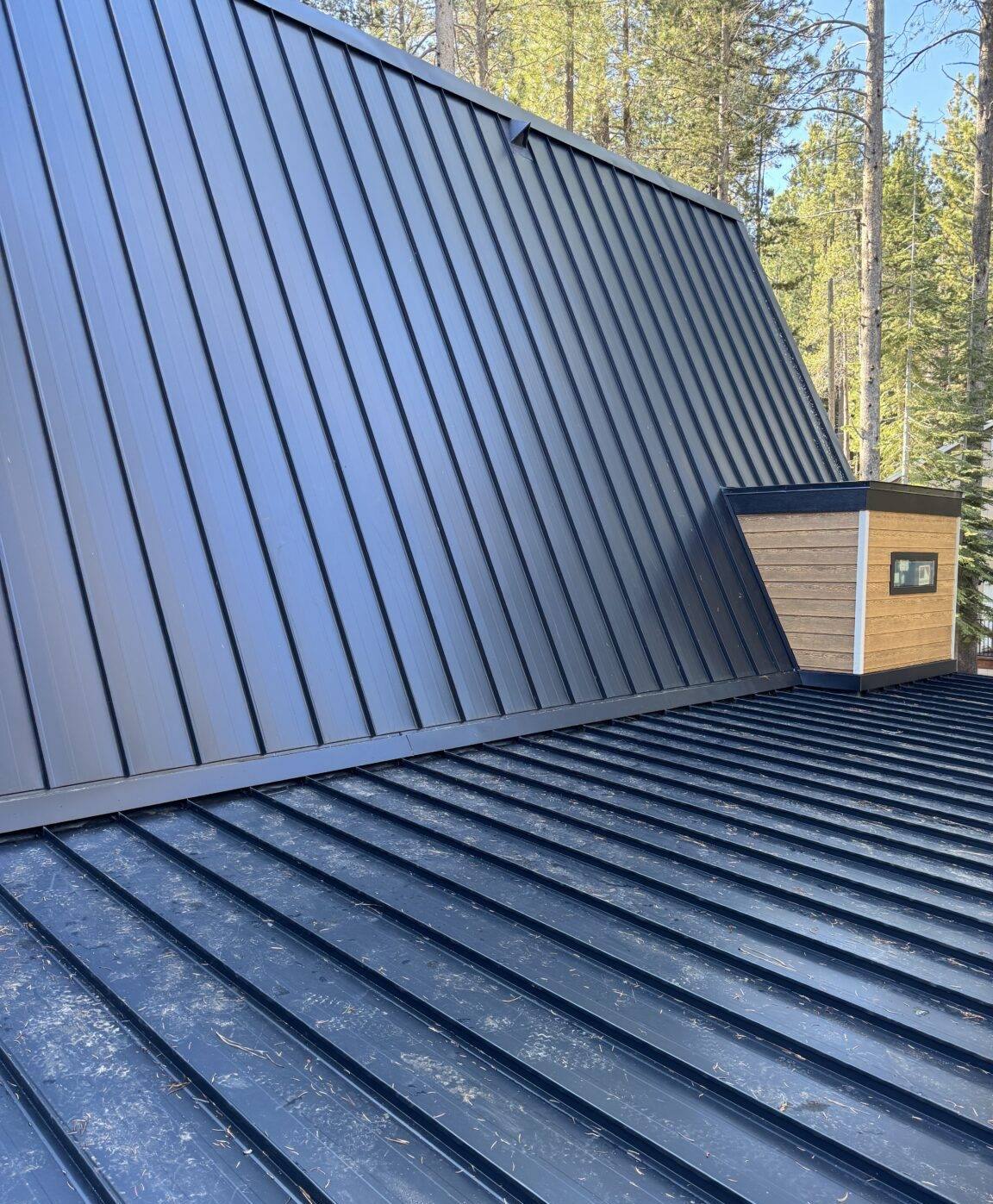
What Salt Air, Rain, and Moss Actually Do to a Roof
Salt-Laden Air
Even inland from the water, air moving through this part of the county carries a mineral and salt content that slowly accelerates corrosion on exposed metal — flashing, fasteners, drip edge, and vent stacks. Cheap galvanized fasteners or unprotected metal flashing will show rust streaks and pinholing years before the shingles themselves are due for replacement. Once flashing corrodes and develops gaps, water finds its way underneath the shingle field, and that's where rot starts — in the decking, not on the surface where you'd notice it.
Driving Rain
Wind-driven rain doesn't just fall on a roof, it pushes sideways and up under shingle edges, especially around valleys, chimneys, skylights, and any place two roof planes meet. A roof that relies purely on shingle overlap without proper underlayment and flashing detail at these transitions will eventually leak — not because the shingles failed, but because the details around them weren't built for horizontal water.
Moss and Algae
Whatcom County's moss season isn't a minor cosmetic issue. Moss holds moisture against the shingle surface for extended periods, which accelerates granule loss, and moss roots work into shingle mat over time. On shaded, north-facing slopes common in Laurel's tree-covered lots, moss can establish itself within a couple of seasons on a roof that isn't set up to shed it.
What a Correctly Installed Shingle Roof Includes
An asphalt shingle roof is a system, not just a layer of shingles. Every component matters, and skipping or downgrading any one of them is where most premature failures start.
- Decking inspection and repair — any soft, delaminated, or water-stained sheathing gets replaced before a single shingle goes down, not covered over.
- Ice and water shield at eaves, valleys, and around penetrations, where wind-driven rain and ice damming are most likely to force water backward under shingles.
- Synthetic underlayment across the full roof deck as a secondary water barrier beneath the shingles.
- Corrosion-resistant flashing at all valleys, chimneys, skylights, and wall intersections — matched to the salt-air exposure common in this area, not the cheapest stock option.
- Balanced ventilation — intake at the eaves, exhaust at the ridge — sized correctly for the attic volume.
- Proper shingle nailing pattern per manufacturer spec, not shortcut with too few fasteners or the wrong placement.
- Drip edge on all eaves and rakes to direct water off the roof edge and away from fascia.
Every one of these items is inexpensive relative to the whole job, but each one is also exactly where a rushed or underbid roofing job gets cut. The shingle brand on the wrapper rarely determines how long a roof lasts — the details underneath it do.
Signs a Laurel Home Needs Roofing Attention
Most roofing problems don't announce themselves with an obvious leak until real damage has already occurred underneath. Here's what to actually watch for:
- Granules collecting in gutters or at downspout outlets, especially after a hard rain
- Shingles that look curled, cupped, or lifted at the edges, particularly on south and west-facing slopes
- Dark streaking or a visible moss mat on north-facing slopes or shaded valleys
- Soft or spongy spots when walking the roof, or sagging visible from the ground
- Daylight visible through the attic roof deck, or damp insulation after a storm
- Rusty streaking below metal flashing, vent boots, or nail heads
- Interior ceiling stains, especially near chimneys, skylights, or where two roof planes meet
Any one of these on its own may not mean a full replacement is needed. But on an older roof, two or more of these together usually means the roof is past the point where patching makes sense.
How Our Asphalt Shingle Roofing Process Works
1. On-Site Assessment
We walk the roof, check the attic from inside where accessible, and look at flashing, valleys, ventilation, and decking condition. We tell you honestly whether you need a full replacement, a repair, or nothing at all yet.
2. Tear-Off and Deck Inspection
We remove existing shingles down to the deck rather than layering over old material. This lets us actually see the sheathing condition and replace anything compromised — which is the single biggest factor in how long the new roof will last.
3. Underlayment and Flashing Installation
Ice and water shield goes down at vulnerable areas, synthetic underlayment covers the rest of the deck, and new corrosion-resistant flashing is installed at every valley, wall, and penetration.
4. Shingle Installation
Shingles go down to manufacturer nailing specifications, with proper offset and exposure to shed wind-driven rain rather than just vertical rainfall.
5. Ventilation Check and Correction
We confirm intake and exhaust ventilation is balanced for the attic space. Under-ventilated attics trap moisture, which shortens shingle life from underneath — a problem you'd never see just by looking at the roof surface.
6. Final Walkthrough
We review the finished roof with you, point out anything worth knowing for future maintenance, and make sure gutters and downspouts are clear before we leave the site.
Choosing a Shingle for This Climate
Not every asphalt shingle product handles wind-driven rain, moss pressure, and salt-air exposure the same way. Here's an honest comparison of the main categories we work with:
| Shingle Type | Wind/Rain Performance | Moss Resistance | Typical Lifespan Locally |
|---|---|---|---|
| Standard 3-tab | Adequate in sheltered areas; weaker at edges in exposed, windy lots | Standard — needs regular cleaning | 15-20 years |
| Architectural / laminate | Stronger wind rating, better edge sealing | Standard unless algae-resistant granules specified | 25-30 years |
| Algae-resistant architectural | Same as standard architectural | Copper/zinc granules slow algae and moss growth significantly | 25-30 years, better appearance longevity |
| Impact-rated / high-wind | Best performance in exposed lots and open tree lines | Varies by product line | 30+ years |
For most Laurel properties, especially those with shaded, tree-covered slopes, we lean toward architectural shingles with algae-resistant granules. The upfront cost difference over standard 3-tab is modest, and it directly addresses the moss and algae pressure this area sees. We'll walk you through the honest trade-offs for your specific roof rather than defaulting to whatever's easiest to install.
What Affects the Cost of a Shingle Roof
| Factor | Why It Matters |
|---|---|
| Roof size and pitch | Steeper roofs take longer and require more safety setup, affecting labor cost |
| Number of valleys, penetrations, and transitions | Each one needs individual flashing work — more complexity means more labor hours |
| Deck condition | Rotted or delaminated sheathing found during tear-off adds material and labor |
| Shingle grade selected | Standard vs. architectural vs. algae-resistant options carry different material costs |
| Existing layers | Removing multiple old layers takes more time and disposal cost than a single-layer tear-off |
| Access and site conditions | Tree cover, tight lot access, or steep terrain can affect setup and staging time |
We're not going to throw out a number without seeing the roof — anyone who quotes a full price over the phone sight-unseen is guessing. What we can tell you honestly: cutting corners on underlayment, flashing, or deck repair to hit a lower number almost always costs more in repairs within the first five to ten years.
Ventilation and Moss Prevention Matter As Much As the Shingles
A lot of roof problems in this climate aren't shingle failures at all — they're ventilation or moisture management failures that happen to show up on the shingle surface. An attic that can't breathe traps warm, moist air against the underside of the roof deck, which speeds up shingle aging from below and can contribute to moss and mildew conditions on the surface above. When we replace a roof, checking and correcting ventilation is a standard part of the job, not an upsell.
After installation, a few habits go a long way toward protecting the investment:
- Keep gutters clear so water isn't backing up under the eave edge, especially during heavy fall and winter rain
- Trim back overhanging branches to reduce shade and debris buildup on north-facing slopes
- Have moss treated or gently removed before it establishes a mat, rather than after
- Schedule a visual roof check every couple of years, especially after major windstorms
Why It Matters That We Already Work in Laurel
Roofing crews that mostly work drier inland climates or standard subdivisions elsewhere don't always default to the flashing grade, underlayment coverage, or ventilation approach that this part of Whatcom County actually needs. We're not guessing at what Laurel's weather does to a roof over time — we see it directly, on homes near yours, season after season. That shows up in the small decisions: which flashing metal we spec, where we add ice and water shield beyond the minimum code requirement, and how we balance ventilation for tree-covered lots that don't get much direct sun.
It also means we're not disappearing after the invoice is paid. If a valley leaks two winters from now or a vent boot needs attention, we're a local call, not a name from a lead-generation site that subcontracted the job out and moved on.
Warranty and What It Actually Covers
Manufacturer warranties on asphalt shingles typically cover material defects, and the terms vary significantly by shingle line and installer certification level. Workmanship warranties — covering the installation itself, not just the shingle material — are separate and matter just as much, since most roof failures trace back to flashing or installation details rather than a defective shingle. We'll walk you through exactly what's covered, for how long, and what voids it, before any work starts, in plain language rather than fine print you have to hunt through later.
If you're dealing with an aging shingle roof in Laurel, or just want an honest read on how many years you've got left before it needs attention, we're happy to take a look. There's a free, no-pressure estimate form below — tell us a bit about your roof and we'll get back to you with straight answers.