 Lynden
 Roofing Built for Aldergrove's Weather, Not Just Any Weather
Aldergrove sits in a stretch of the Pacific Northwest where roofs don't get an easy life. Homes here deal with long, wet winters, driving rain that comes in sideways off the coast, salt-laden air that speeds up corrosion on metal fasteners and flashing, and a moss season that can run most of the year if a roof isn't shedding water and drying out the way it should. A roof that would hold up fine in a drier inland climate can start showing problems here in half the time. That's not a scare tactic, it's just what happens when a roof surface stays damp for weeks at a stretch.
New roof installation in this area isn't just about picking a shingle color and nailing it down. It's about making decisions — on decking condition, ventilation, underlayment, and flashing detail — that account for how much moisture this roof is actually going to see over the next 20 to 30 years.
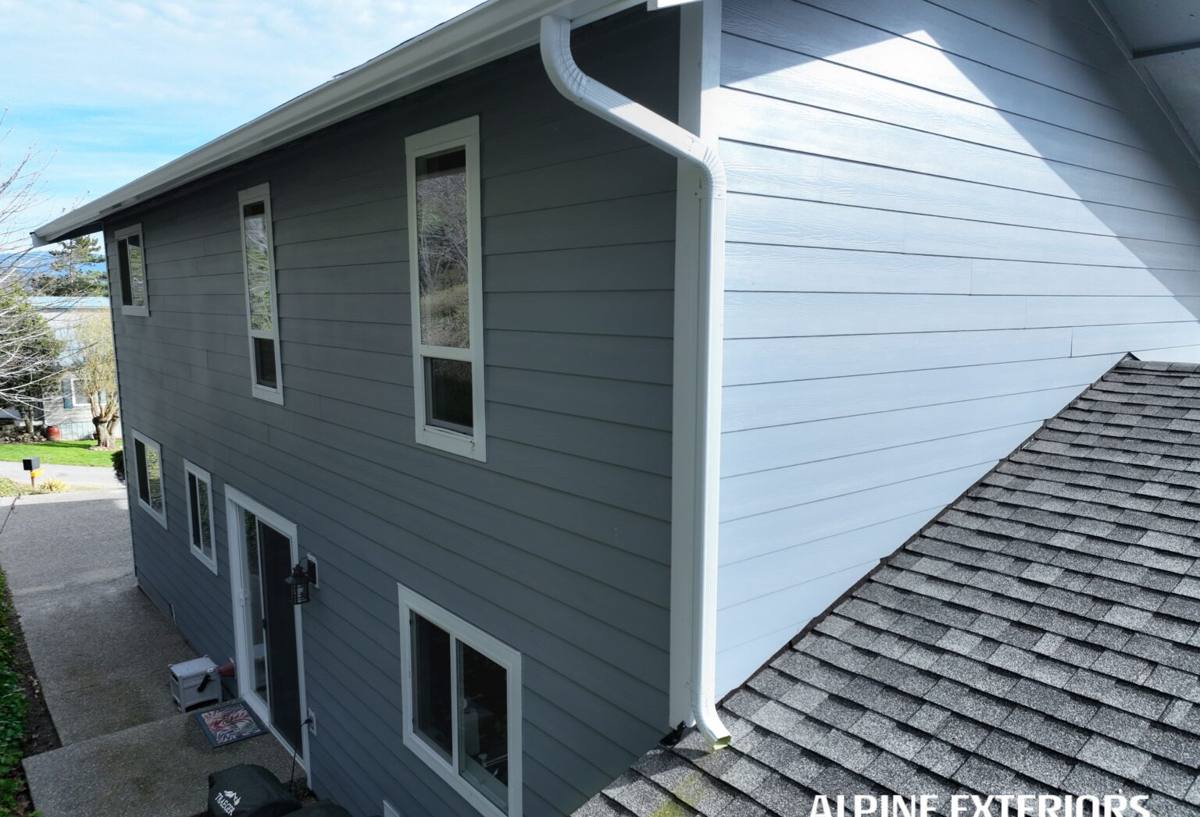
Signs an Aldergrove Roof Needs Replacement, Not Another Repair
Homeowners often ask us to patch a problem that's really a sign the whole roof system is at the end of its service life. A few honest indicators that replacement is the smarter call:
- Granule loss heavy enough that you're finding shingle grit in the gutters every season
- Shingles that are cupping, curling, or cracking across multiple slopes, not just one spot
- Moss or algae staining that comes back within months of cleaning, especially on north-facing slopes
- Soft or spongy decking felt underfoot during inspection — a sign moisture has already gotten past the shingle layer
- Daylight visible through the attic roof boards, or damp insulation near the eaves
- A roof that's already had two or more repair patches in different areas within a few years
If a roof is showing one or two of these, a repair might still make sense. If it's showing several at once, spending money on patchwork usually just delays a bigger bill.
What a Correct New Roof Installation Actually Involves
Tear-Off and Deck Inspection
We remove the old roofing down to the deck rather than layering over it. This is the only way to actually see what condition the plywood or OSB sheathing is in. In this climate, it's common to find soft or delaminated decking near valleys, chimneys, and eaves where water has been finding its way in slowly for years. Any compromised sheathing gets replaced before anything new goes down — installing new shingles over bad decking just hides the problem for a while.
Underlayment and Ice/Water Protection
Given how much sustained rain this area gets, we don't treat underlayment as an afterthought. A synthetic underlayment provides better water resistance and durability than old-style felt, and self-adhered ice-and-water membrane goes down at eaves, valleys, and around penetrations — the spots most likely to see wind-driven rain work its way underneath the shingle layer.
Flashing
Flashing failure is one of the most common causes of leaks we find on roofs that otherwise look fine. Step flashing at walls, counter-flashing at chimneys, and properly formed valley flashing all matter more here than in drier climates, because a small gap that would dry out quickly elsewhere stays wet longer in this region and eventually finds a way in.
Ventilation
A roof that can't breathe traps moisture in the attic, which shortens the life of the decking and the shingles from underneath. We balance intake (soffit) and exhaust (ridge or box vents) so the attic space actually moves air instead of holding humidity.
Material Options for This Climate
There's no single "best" roofing material for every home — it depends on budget, roof pitch, and how much long-term maintenance the homeowner wants to take on. Here's how the common options stack up for a wet, moss-prone climate like this one:
| Material | Moisture & Moss Behavior | Typical Lifespan | Maintenance |
|---|---|---|---|
| Architectural asphalt shingle | Good drainage design, moss-resistant options available with algae-resistant granules | 25-30 years | Periodic moss/debris clearing |
| 3-tab asphalt shingle | Flatter profile sheds water less efficiently, more prone to moss buildup | 15-20 years | More frequent cleaning needed |
| Metal roofing (standing seam) | Excellent water shedding, minimal moss growth, but fasteners near salt air need corrosion-resistant hardware | 40-50+ years | Low, occasional inspection |
| Wood shake | Absorbs moisture, high moss and rot risk without diligent upkeep | 20-30 years with heavy upkeep | High — regular treatment required |
For most Aldergrove homes, we steer people toward a quality architectural asphalt shingle with algae-resistant granules as the balance of cost, appearance, and performance. Where budget and roof design allow, metal is worth a serious look for homeowners who want to minimize moss-related maintenance over the long run — though we're upfront that fastener quality and installation detail matter more with metal in a salt-air environment, since corroded fasteners are the most common failure point.
Our Installation Process, Step by Step
- On-site inspection and honest assessment of whether repair or full replacement is the right call
- Written estimate covering materials, labor, disposal, and any decking repair contingencies
- Scheduling around weather windows — we don't tear off a roof and leave it exposed to a forecast we don't trust
- Tear-off, deck inspection, and any necessary sheathing replacement
- Underlayment, ice-and-water membrane, and flashing installation
- New roofing material installed per manufacturer specification, including proper nailing pattern and exposure
- Ventilation check and adjustment if the existing intake/exhaust balance is off
- Full site cleanup, including magnetic sweep for stray fasteners
- Final walkthrough with the homeowner before we consider the job done
Moss Prevention Doesn't End at Installation
A well-installed roof in this region still needs a bit of ongoing attention. Moss spores are everywhere in the Pacific Northwest, and a shaded, north-facing slope will always be more prone to growth than a slope that gets afternoon sun. A new roof buys you a much better starting position — proper granule coverage, algae-resistant shingles, and clean drainage paths — but it doesn't make moss impossible, just slower and easier to manage.
- Keep gutters clear so water isn't backing up under the shingle edge
- Trim back overhanging branches that keep a slope shaded and damp
- Have moss physically removed (not just chemically killed) every year or two on shaded slopes
- Avoid pressure washing shingles — it strips granules and shortens roof life
- Schedule a quick visual inspection after major windstorms
What Drives the Cost of a New Roof
Every roof is a little different, but the main variables that move the price up or down are consistent:
| Factor | Why It Matters |
|---|---|
| Roof size and pitch | Steeper roofs take longer and require more safety setup |
| Number of layers being removed | Tear-off of multiple old layers adds labor and disposal cost |
| Decking condition | Rotted or soft sheathing found during tear-off adds material and labor |
| Material choice | Architectural shingle, metal, and premium underlayment all carry different price points |
| Roof complexity | Valleys, dormers, chimneys, and skylights all add flashing work |
| Access | Difficult site access can add setup time and equipment cost |
We'd rather walk a roof in person and give a real number than throw out a broad range that doesn't hold up once we're actually up there — too many variables affect the final cost for a ballpark figure to be useful.
Why a Crew That Already Works Aldergrove Matters
Aldergrove sits just across the border from Whatcom County, and a lot of homeowners there end up choosing between contractors based purely out of the Fraser Valley or crews like ours that already know both sides of the line. There's real value in working with a crew that's used to this specific stretch of climate — the way moss behaves on north slopes here, how much rain this area actually gets compared to drier inland regions, and what flashing and ventilation details tend to fail first on local homes. That familiarity means fewer surprises during tear-off and a roof system built for the conditions it's actually going to face, not a generic spec sheet.
It also means straightforward scheduling and communication — no confusion about logistics, no guessing on timelines, just a crew that shows up, does the work correctly, and stands behind it.
Questions Worth Asking Before You Sign a Contract
- Is the estimate itemized, or just a lump sum with no breakdown?
- What happens if decking damage is found once tear-off starts?
- What underlayment and ice-and-water protection is included, not just the shingle brand?
- Is ventilation being assessed and addressed, or just the shingle layer replaced?
- What's covered under workmanship warranty versus manufacturer material warranty?
A contractor who answers these clearly and specifically, without vague reassurances, is usually one worth trusting with a job this size.
If your Aldergrove roof is showing its age or you're just trying to plan ahead before the next wet season, we're happy to take a look and give you a straight, no-pressure estimate. Use the form below to get started.